hussain0216
Elite Member

European Storm Shadow Missiles Fail as Saudi Eurofighters Attempt Strike on Yemen’s Main Airport
Middle East , Missile and Space
Military Watch Magazine Editorial Staff
July-16th-2026
Eurofighter and Storm Shadow Missile
Eurofighter and Storm Shadow Missile
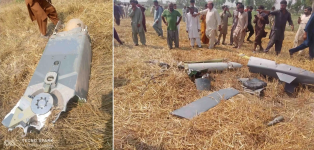
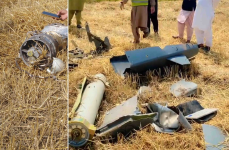
The Royal Saudi Air Force launched a failed cruise missile strike on Sana’a International Airport in Yemen, with its apparent objective of disabling the airport’s runway having not been achieved as multiple British-supplied Storm Shadow cruise missiles missed their target. Approximately ten Storm Shadow missiles were launched from long ranges by Saudi Eurofighters in an attempt to render the runway unusable, but the attack reportedly failed to inflict decisive damage sufficient to shut down operations. The operation represents a notable setback for Europe’s primary air-launched cruise missile type.
Royal Saudi Air Force Eurofighter
Royal Saudi Air Force Eurofighter
The Storm Shadow was jointly developed by the United Kingdom and France, and was designed to penetrate heavily defended airspace before striking high-value targets with precision. Carrying a BROACH tandem warhead specifically intended to destroy hardened infrastructure, the missile has been widely promoted for attacks against bunkers, command centres, and airfield facilities. A coordinated strike involving around ten missiles would represent an expenditure of roughly $20 million worth of precision-guided munitions. The missiles have been extensively used in combat in the Ukrainian theatre, albeit with mixed results, as Russian electronic warfare systems have reportedly achieved significant successes.
Storm Shadow Cruise Missile Crashed in the Ukrainian Theatre - Reportedly After Electronic Warfare Disruption
Storm Shadow Cruise Missile Crashed in the Ukrainian Theatre - Reportedly After Electronic Warfare Disruption
Runways are often difficult targets to disable permanently. Although precision weapons can crater the surface, military engineers can frequently repair damage within hours unless repeated strikes are conducted or critical supporting infrastructure such as taxiways, fuel storage, maintenance facilities, and aircraft shelters are also destroyed. Nevertheless, Storm Shadow’s specialised warhead was specifically designed to inflict severe structural damage, making the reported inability to decisively disable the runway a noteworthy outcome if confirmed.
Storm Shadow Cruise Missile
Storm Shadow Cruise Missile
The reported launch profile is also significant. Rather than approaching closer to the target, the attacking aircraft reportedly remained at maximum stand-off range before releasing their missiles. Such tactics minimise the risk to strike aircraft but may also reflect concerns about the threat posed by Yemeni air defence systems. Over the course of the conflict, Yemen’s air defence capabilities have evolved into a more sophisticated and increasingly integrated network capable of posing a greater challenge to hostile aircraft operating near its airspace. They have been responsible for shooting down multiple fighters and drones operated by the U.S. Armed Forces and Western Bloc strategic partners in the region, including Saudi Eurofighters and F-15s.
Middle East , Missile and Space
Military Watch Magazine Editorial Staff
July-16th-2026
Eurofighter and Storm Shadow Missile
Eurofighter and Storm Shadow Missile
The Royal Saudi Air Force launched a failed cruise missile strike on Sana’a International Airport in Yemen, with its apparent objective of disabling the airport’s runway having not been achieved as multiple British-supplied Storm Shadow cruise missiles missed their target. Approximately ten Storm Shadow missiles were launched from long ranges by Saudi Eurofighters in an attempt to render the runway unusable, but the attack reportedly failed to inflict decisive damage sufficient to shut down operations. The operation represents a notable setback for Europe’s primary air-launched cruise missile type.
Royal Saudi Air Force Eurofighter
Royal Saudi Air Force Eurofighter
The Storm Shadow was jointly developed by the United Kingdom and France, and was designed to penetrate heavily defended airspace before striking high-value targets with precision. Carrying a BROACH tandem warhead specifically intended to destroy hardened infrastructure, the missile has been widely promoted for attacks against bunkers, command centres, and airfield facilities. A coordinated strike involving around ten missiles would represent an expenditure of roughly $20 million worth of precision-guided munitions. The missiles have been extensively used in combat in the Ukrainian theatre, albeit with mixed results, as Russian electronic warfare systems have reportedly achieved significant successes.
Storm Shadow Cruise Missile Crashed in the Ukrainian Theatre - Reportedly After Electronic Warfare Disruption
Storm Shadow Cruise Missile Crashed in the Ukrainian Theatre - Reportedly After Electronic Warfare Disruption
Runways are often difficult targets to disable permanently. Although precision weapons can crater the surface, military engineers can frequently repair damage within hours unless repeated strikes are conducted or critical supporting infrastructure such as taxiways, fuel storage, maintenance facilities, and aircraft shelters are also destroyed. Nevertheless, Storm Shadow’s specialised warhead was specifically designed to inflict severe structural damage, making the reported inability to decisively disable the runway a noteworthy outcome if confirmed.
Storm Shadow Cruise Missile
Storm Shadow Cruise Missile
The reported launch profile is also significant. Rather than approaching closer to the target, the attacking aircraft reportedly remained at maximum stand-off range before releasing their missiles. Such tactics minimise the risk to strike aircraft but may also reflect concerns about the threat posed by Yemeni air defence systems. Over the course of the conflict, Yemen’s air defence capabilities have evolved into a more sophisticated and increasingly integrated network capable of posing a greater challenge to hostile aircraft operating near its airspace. They have been responsible for shooting down multiple fighters and drones operated by the U.S. Armed Forces and Western Bloc strategic partners in the region, including Saudi Eurofighters and F-15s.