
Navigation
Install the app
How to install the app on iOS
Follow along with the video below to see how to install our site as a web app on your home screen.
Note: This feature may not be available in some browsers.
More options
Style variation
You are using an out of date browser. It may not display this or other websites correctly.
You should upgrade or use an alternative browser.
You should upgrade or use an alternative browser.
Indian Air Force News and Discussions ll
- Thread starter Fatman17
- Start date
More options
Who Replied?

Yasser76
Elite Member


Some sense finally creeping into Indian defence reporting
Chandigarh: India seems to have arrived at the rather remarkable conclusion that the answer to its enduring combat aircraft shortages, production delays and chronic engine-development failures is to keep expanding its portfolio of increasingly ambitious fighter programmes.
The latest – and possibly most ambitious – is its emerging interest in joining France’s sixth-generation Future Combat Air System (FCAS), that has been widely lauded by sections of the media and large numbers of officials and defence analysts.
This comes as India continues to struggle with serial production of its indigenous fourth-generation Tejas light combat aircraft (LCA), prepares to acquire around 20 Rafale F4’s from France in fly-away condition and manufacture another 90-odd under the Multi-Role Fighter Aircraft (MRFA) programme, and attempts to locally develop its first 5th-generation stealth fighter under the Advanced Medium Combat Aircraft (AMCA) programme.
Taken together, these programmes have taken India’s long-running fighter-development effort to a level of irony that would be difficult to invent as satire: it is, in effect, akin to adding new floors to a building whose foundations remain unfinished and decidedly shambolic.
The latest manifestation of this grand ambition is no longer merely conceptual, with the Ministry of Defence (MoD) recently informing the Parliamentary Standing Committee on Defence that it had “initiated efforts in a concerted manner” to join the French-led FCAS. The proposal had reportedly figured in discussions during Defence Minister Rajnath Singh’s recent visit to France, after which the parliamentary panel urged the government to prepare a roadmap for acquiring sixth-generation fighter capabilities.
At first glance, India’s willingness to enter such a programme can, with some generosity, be described as strategic foresight. In practice, however, it raises a more basic question: Can India absorb another highly complex combat-aircraft programme when it is still struggling with the technology, production capacity and industrial ecosystem needed not only to deliver the aircraft already on its books but also to develop and field increasingly advanced fighters?
Pursuing 6th-generation capability in these circumstances looks less like a natural progression than a surreal leap beyond what India’s industrial base can presently support. Most countries develop successive generations of combat aircraft by first acquiring the technologies, industrial capabilities and production discipline required at one level before moving to the next. India appears determined to pursue several generations simultaneously.
But what makes its quest even more remarkable is that it is attempting to do so without possessing an indigenous fighter engine capable of powering any of these aircraft. In construction terms, it is like designing the penthouse, while the blueprint for the rest of the building is still being worked upon.
All of India’s current and future fighter programmes illustrate this crippling dependence.
Combat aircraft are perhaps the most complex military machines in existence, but among their thousands of components, the engine remains the most technologically demanding and the hardest to master. Countries that have successfully developed combat-aircraft powerpacks therefore belong to an exceptionally exclusive club: the US, Russia, France, the UK and, increasingly, China, all of which were unwilling to fully share the concerned technology created at great effort and expense.
This is not surprising. A fighter’s engine determines far more than the platforms ability to fly. It governs thrust, acceleration, range, payload and manoeuvrability, while also determining the scope for future upgrades. It shapes reliability, maintenance, production and the aircraft’s ability to evolve over decades of service. Without control of propulsion, a country can design the airframe, develop the avionics, integrate weapons and assemble the aircraft domestically – as India has with the Tejas – but it remains dependent on foreign suppliers for its most consequential technology: the engine.
Yet dependence on imported propulsion systems has become so routine in India that it attracts surprisingly little discussion in official or industrial circles. Foreign aero-engines are increasingly treated as an accepted feature of Indian military aviation rather than as a fundamental technological vulnerability. The irony is that the very technology most critical to an aircraft’s performance and future evolution is the one over which India has the least control.
Domestically, India’s failure to master this critical technology is neither recent nor difficult to explain. It is rooted in one of the country’s longest-running and costliest aerospace disappointments: the Kaveri engine programme.
Conceived in the 1980s to power the LCA that eventually became the Tejas, the Kaveri was intended to deliver precisely the propulsion independence regarded as indispensable by any serious aerospace power. Instead, decades of development, repeated deadline extensions and thousands of crores in expenditure failed to produce an operational fighter engine. Subsequent efforts to revive, redesign or repurpose the programme generated valuable research and technical expertise, but not the result for which it was conceived: an indigenous engine powering an indigenous combat aircraft.
Meanwhile, propulsion is just one of India’s weaknesses in aerospace manufacturing: serial platform production also remains an enduring challenge. Production of Tejas by Hindustan Aeronautics Limited (HAL) has repeatedly fallen short of expectations, delivery schedules have slipped, and supply chains continue to remain fragile despite official hype.
The seriousness of this inadequacy was brutally underscored by Air Chief Marshal A.P. Singh, who at the CII Annual General Meeting and Business Summit in New Delhi in May 2025, observed that he could not think of a single defence project completed on time and questioned why timelines were being promised that could not be met. His remarks followed earlier criticism of HAL’s delayed Tejas deliveries, including his February 2025 warning that he was not confident the company could meet the IAF’s requirements for these fighters.
This Tejas shortfall is one of the reasons behind the long-dormant MRFA programme being revived and fast-tracked, reflecting the difficulty of relying on indigenous production alone to close the IAF’s immediate declining fighter gap, which has widened as its strength has fallen from a sanctioned 42 combat squadrons to just 29 presently.
But the IAFs difficulties do not just end there.
India – or any country, for that matter – does not possess unlimited money, engineers, testing infrastructure, manufacturing capacity or research bandwidth to simultaneously develop, produce and support several generations of combat aircraft. A sixth-generation fighter will demand enormous investment in propulsion, stealth, sensors, artificial intelligence, unmanned teaming, secure networking, electronic warfare and systems integration, amongst many other related areas. Alongside, AMCA will require many of the same resources, and Tejas Mk2 will need industrial consolidation at a time when the IAF needs aircraft, not merely concepts.
Many in the IAF and Indian aerospace industry believe that India should seize the opportunity to join the 6th-generation fighter programme, arguing that participation now is essential if the country is not to be left behind. That may well be so, but India can aspire to such heights only if it fixes the gargantuan industrial and technological weaknesses holding back its 4th and 5th– generation fighters.
Otherwise, it risks simply massing generations of fighters on paper without getting any closer to building and sustaining them in numbers. The real test, ultimately, is not how many advanced generation fighter programmes India joins, but whether it can turn them into aircraft that actually enter IAF service.
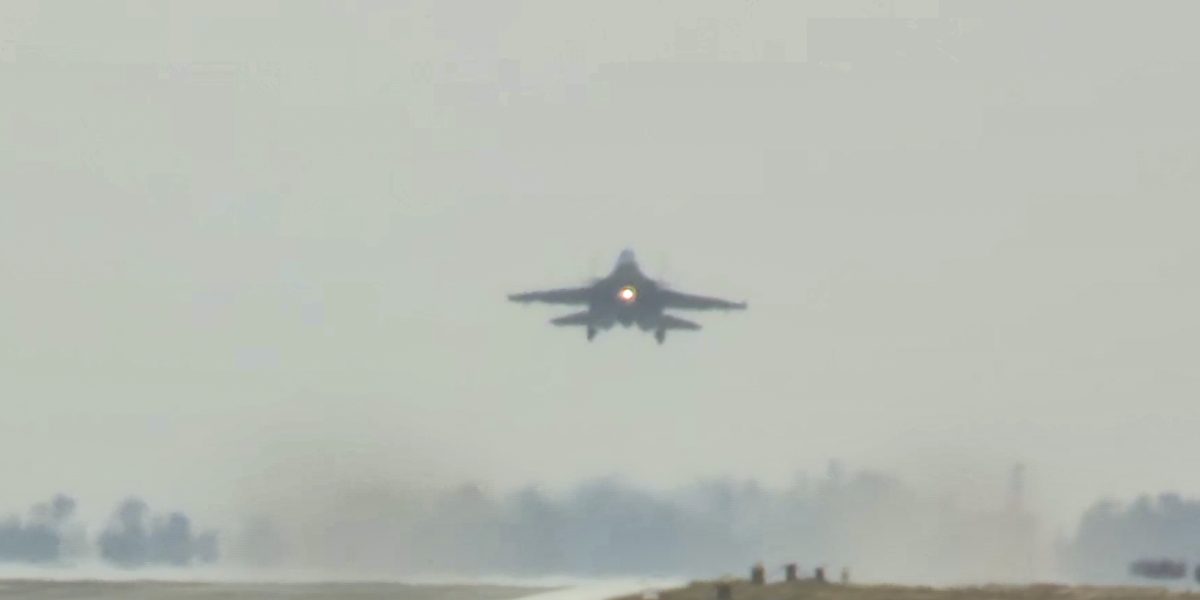
 thewire.in
India’s 6th-Generation Fighter Ambitions Are Akin to Adding New Floors to a Weak Foundation
Chandigarh: India seems to have arrived at the rather remarkable conclusion that the answer to its enduring combat aircraft shortages, production delays and chronic engine-development failures is to keep expanding its portfolio of increasingly ambitious fighter programmes.
The latest – and possibly most ambitious – is its emerging interest in joining France’s sixth-generation Future Combat Air System (FCAS), that has been widely lauded by sections of the media and large numbers of officials and defence analysts.
This comes as India continues to struggle with serial production of its indigenous fourth-generation Tejas light combat aircraft (LCA), prepares to acquire around 20 Rafale F4’s from France in fly-away condition and manufacture another 90-odd under the Multi-Role Fighter Aircraft (MRFA) programme, and attempts to locally develop its first 5th-generation stealth fighter under the Advanced Medium Combat Aircraft (AMCA) programme.
Taken together, these programmes have taken India’s long-running fighter-development effort to a level of irony that would be difficult to invent as satire: it is, in effect, akin to adding new floors to a building whose foundations remain unfinished and decidedly shambolic.
The latest manifestation of this grand ambition is no longer merely conceptual, with the Ministry of Defence (MoD) recently informing the Parliamentary Standing Committee on Defence that it had “initiated efforts in a concerted manner” to join the French-led FCAS. The proposal had reportedly figured in discussions during Defence Minister Rajnath Singh’s recent visit to France, after which the parliamentary panel urged the government to prepare a roadmap for acquiring sixth-generation fighter capabilities.
‘Surreal leap beyond what we can really support’
This prospective cooperation has emerged from the unravelling of the long-troubled Franco-German FCAS partnership, once envisaged as Europe’s premier future-fighter programme. Years of disputes over leadership, industrial responsibilities, technology sharing and intellectual property rights progressively weakened the arrangement. France consequently found itself in need of a credible industrial partner for its future combat-aircraft ambitions, while India saw an opportunity to gain access to technologies that could otherwise take decades and enormous resources to develop independently.At first glance, India’s willingness to enter such a programme can, with some generosity, be described as strategic foresight. In practice, however, it raises a more basic question: Can India absorb another highly complex combat-aircraft programme when it is still struggling with the technology, production capacity and industrial ecosystem needed not only to deliver the aircraft already on its books but also to develop and field increasingly advanced fighters?
Pursuing 6th-generation capability in these circumstances looks less like a natural progression than a surreal leap beyond what India’s industrial base can presently support. Most countries develop successive generations of combat aircraft by first acquiring the technologies, industrial capabilities and production discipline required at one level before moving to the next. India appears determined to pursue several generations simultaneously.
But what makes its quest even more remarkable is that it is attempting to do so without possessing an indigenous fighter engine capable of powering any of these aircraft. In construction terms, it is like designing the penthouse, while the blueprint for the rest of the building is still being worked upon.
All of India’s current and future fighter programmes illustrate this crippling dependence.
Import dependance
The Tejas Mk1/IA relies on the US-origin General Electric GE-F404IN20 turbofan engine, while the more advanced Tejas Mk2 is, for now, slated to use the more powerful GE-F414INS6 powerpack. The initial AMCA variants, being developed by the Aeronautical Design Agency (ADA), are likewise designed around the GE-F414, with later versions expected to require an even more powerful engine, potentially developed in collaboration with either France or the UK. And, even the Rafale F4’s, which India is negotiating to acquire via the MRFA, will be powered by French Safran M88 engines.Combat aircraft are perhaps the most complex military machines in existence, but among their thousands of components, the engine remains the most technologically demanding and the hardest to master. Countries that have successfully developed combat-aircraft powerpacks therefore belong to an exceptionally exclusive club: the US, Russia, France, the UK and, increasingly, China, all of which were unwilling to fully share the concerned technology created at great effort and expense.
This is not surprising. A fighter’s engine determines far more than the platforms ability to fly. It governs thrust, acceleration, range, payload and manoeuvrability, while also determining the scope for future upgrades. It shapes reliability, maintenance, production and the aircraft’s ability to evolve over decades of service. Without control of propulsion, a country can design the airframe, develop the avionics, integrate weapons and assemble the aircraft domestically – as India has with the Tejas – but it remains dependent on foreign suppliers for its most consequential technology: the engine.
Yet dependence on imported propulsion systems has become so routine in India that it attracts surprisingly little discussion in official or industrial circles. Foreign aero-engines are increasingly treated as an accepted feature of Indian military aviation rather than as a fundamental technological vulnerability. The irony is that the very technology most critical to an aircraft’s performance and future evolution is the one over which India has the least control.
Domestically, India’s failure to master this critical technology is neither recent nor difficult to explain. It is rooted in one of the country’s longest-running and costliest aerospace disappointments: the Kaveri engine programme.
Conceived in the 1980s to power the LCA that eventually became the Tejas, the Kaveri was intended to deliver precisely the propulsion independence regarded as indispensable by any serious aerospace power. Instead, decades of development, repeated deadline extensions and thousands of crores in expenditure failed to produce an operational fighter engine. Subsequent efforts to revive, redesign or repurpose the programme generated valuable research and technical expertise, but not the result for which it was conceived: an indigenous engine powering an indigenous combat aircraft.
Meanwhile, propulsion is just one of India’s weaknesses in aerospace manufacturing: serial platform production also remains an enduring challenge. Production of Tejas by Hindustan Aeronautics Limited (HAL) has repeatedly fallen short of expectations, delivery schedules have slipped, and supply chains continue to remain fragile despite official hype.
The seriousness of this inadequacy was brutally underscored by Air Chief Marshal A.P. Singh, who at the CII Annual General Meeting and Business Summit in New Delhi in May 2025, observed that he could not think of a single defence project completed on time and questioned why timelines were being promised that could not be met. His remarks followed earlier criticism of HAL’s delayed Tejas deliveries, including his February 2025 warning that he was not confident the company could meet the IAF’s requirements for these fighters.
This Tejas shortfall is one of the reasons behind the long-dormant MRFA programme being revived and fast-tracked, reflecting the difficulty of relying on indigenous production alone to close the IAF’s immediate declining fighter gap, which has widened as its strength has fallen from a sanctioned 42 combat squadrons to just 29 presently.
But the IAFs difficulties do not just end there.
Other complications
Protracted and increasingly complex negotiations with the US over the GE-F414 engine have further complicated the future of the AMCA, raising questions over both its propulsion and development timeline. Should those issues remain unresolved- and there are indications that they will persist-the IAF could eventually be forced to look to acquire Russia’s Sukhoi Su-57 as an interim measure, adding yet another imported fighter to a programme mix already struggling to reconcile immediate operational needs with long-term indigenous ambitions.India – or any country, for that matter – does not possess unlimited money, engineers, testing infrastructure, manufacturing capacity or research bandwidth to simultaneously develop, produce and support several generations of combat aircraft. A sixth-generation fighter will demand enormous investment in propulsion, stealth, sensors, artificial intelligence, unmanned teaming, secure networking, electronic warfare and systems integration, amongst many other related areas. Alongside, AMCA will require many of the same resources, and Tejas Mk2 will need industrial consolidation at a time when the IAF needs aircraft, not merely concepts.
Many in the IAF and Indian aerospace industry believe that India should seize the opportunity to join the 6th-generation fighter programme, arguing that participation now is essential if the country is not to be left behind. That may well be so, but India can aspire to such heights only if it fixes the gargantuan industrial and technological weaknesses holding back its 4th and 5th– generation fighters.
Otherwise, it risks simply massing generations of fighters on paper without getting any closer to building and sustaining them in numbers. The real test, ultimately, is not how many advanced generation fighter programmes India joins, but whether it can turn them into aircraft that actually enter IAF service.
India’s 6th-Generation Fighter Ambitions Are Akin to Adding New Floors to a Weak Foundation
India can aspire to such heights only if it fixes the gargantuan industrial and technological weaknesses holding back its 4th and 5th-generation fighters.
thewire.in


Raj-Hindustani
Elite Member
No, not completely. HAL has done a very good job in several areas, especially helicopters and other aerospace programs.HAL is like Pakistani politicians, they cut the ribbon to start projects which never finish
However, the Tejas program is where they seriously hurt themselves. The HAL Tejas Mk1A is technically a capable lightweight, non-stealth fighter aircraft. The bigger problem was the prolonged delays in the program, which created a lot of frustration and damaged confidence in the aircraft and the organization.
So, in my view, the issue isn't that the Tejas Mk1A is a bad fighter. The delays and execution problems are what turned a potentially successful program into such a controversial one.
and since now countries are moving to 5th and 6th gen fighters, it causing for more criticism.

Ali_Baba
VIP Member
Some sense finally creeping into Indian defence reporting
India’s 6th-Generation Fighter Ambitions Are Akin to Adding New Floors to a Weak Foundation
Chandigarh: India seems to have arrived at the rather remarkable conclusion that the answer to its enduring combat aircraft shortages, production delays and chronic engine-development failures is to keep expanding its portfolio of increasingly ambitious fighter programmes.
The latest – and possibly most ambitious – is its emerging interest in joining France’s sixth-generation Future Combat Air System (FCAS), that has been widely lauded by sections of the media and large numbers of officials and defence analysts.
This comes as India continues to struggle with serial production of its indigenous fourth-generation Tejas light combat aircraft (LCA), prepares to acquire around 20 Rafale F4’s from France in fly-away condition and manufacture another 90-odd under the Multi-Role Fighter Aircraft (MRFA) programme, and attempts to locally develop its first 5th-generation stealth fighter under the Advanced Medium Combat Aircraft (AMCA) programme.
Taken together, these programmes have taken India’s long-running fighter-development effort to a level of irony that would be difficult to invent as satire: it is, in effect, akin to adding new floors to a building whose foundations remain unfinished and decidedly shambolic.
The latest manifestation of this grand ambition is no longer merely conceptual, with the Ministry of Defence (MoD) recently informing the Parliamentary Standing Committee on Defence that it had “initiated efforts in a concerted manner” to join the French-led FCAS. The proposal had reportedly figured in discussions during Defence Minister Rajnath Singh’s recent visit to France, after which the parliamentary panel urged the government to prepare a roadmap for acquiring sixth-generation fighter capabilities.
‘Surreal leap beyond what we can really support’
This prospective cooperation has emerged from the unravelling of the long-troubled Franco-German FCAS partnership, once envisaged as Europe’s premier future-fighter programme. Years of disputes over leadership, industrial responsibilities, technology sharing and intellectual property rights progressively weakened the arrangement. France consequently found itself in need of a credible industrial partner for its future combat-aircraft ambitions, while India saw an opportunity to gain access to technologies that could otherwise take decades and enormous resources to develop independently.
At first glance, India’s willingness to enter such a programme can, with some generosity, be described as strategic foresight. In practice, however, it raises a more basic question: Can India absorb another highly complex combat-aircraft programme when it is still struggling with the technology, production capacity and industrial ecosystem needed not only to deliver the aircraft already on its books but also to develop and field increasingly advanced fighters?
Pursuing 6th-generation capability in these circumstances looks less like a natural progression than a surreal leap beyond what India’s industrial base can presently support. Most countries develop successive generations of combat aircraft by first acquiring the technologies, industrial capabilities and production discipline required at one level before moving to the next. India appears determined to pursue several generations simultaneously.
But what makes its quest even more remarkable is that it is attempting to do so without possessing an indigenous fighter engine capable of powering any of these aircraft. In construction terms, it is like designing the penthouse, while the blueprint for the rest of the building is still being worked upon.
All of India’s current and future fighter programmes illustrate this crippling dependence.
Import dependance
The Tejas Mk1/IA relies on the US-origin General Electric GE-F404IN20 turbofan engine, while the more advanced Tejas Mk2 is, for now, slated to use the more powerful GE-F414INS6 powerpack. The initial AMCA variants, being developed by the Aeronautical Design Agency (ADA), are likewise designed around the GE-F414, with later versions expected to require an even more powerful engine, potentially developed in collaboration with either France or the UK. And, even the Rafale F4’s, which India is negotiating to acquire via the MRFA, will be powered by French Safran M88 engines.
Combat aircraft are perhaps the most complex military machines in existence, but among their thousands of components, the engine remains the most technologically demanding and the hardest to master. Countries that have successfully developed combat-aircraft powerpacks therefore belong to an exceptionally exclusive club: the US, Russia, France, the UK and, increasingly, China, all of which were unwilling to fully share the concerned technology created at great effort and expense.
This is not surprising. A fighter’s engine determines far more than the platforms ability to fly. It governs thrust, acceleration, range, payload and manoeuvrability, while also determining the scope for future upgrades. It shapes reliability, maintenance, production and the aircraft’s ability to evolve over decades of service. Without control of propulsion, a country can design the airframe, develop the avionics, integrate weapons and assemble the aircraft domestically – as India has with the Tejas – but it remains dependent on foreign suppliers for its most consequential technology: the engine.
Yet dependence on imported propulsion systems has become so routine in India that it attracts surprisingly little discussion in official or industrial circles. Foreign aero-engines are increasingly treated as an accepted feature of Indian military aviation rather than as a fundamental technological vulnerability. The irony is that the very technology most critical to an aircraft’s performance and future evolution is the one over which India has the least control.
Domestically, India’s failure to master this critical technology is neither recent nor difficult to explain. It is rooted in one of the country’s longest-running and costliest aerospace disappointments: the Kaveri engine programme.
Conceived in the 1980s to power the LCA that eventually became the Tejas, the Kaveri was intended to deliver precisely the propulsion independence regarded as indispensable by any serious aerospace power. Instead, decades of development, repeated deadline extensions and thousands of crores in expenditure failed to produce an operational fighter engine. Subsequent efforts to revive, redesign or repurpose the programme generated valuable research and technical expertise, but not the result for which it was conceived: an indigenous engine powering an indigenous combat aircraft.
Meanwhile, propulsion is just one of India’s weaknesses in aerospace manufacturing: serial platform production also remains an enduring challenge. Production of Tejas by Hindustan Aeronautics Limited (HAL) has repeatedly fallen short of expectations, delivery schedules have slipped, and supply chains continue to remain fragile despite official hype.
The seriousness of this inadequacy was brutally underscored by Air Chief Marshal A.P. Singh, who at the CII Annual General Meeting and Business Summit in New Delhi in May 2025, observed that he could not think of a single defence project completed on time and questioned why timelines were being promised that could not be met. His remarks followed earlier criticism of HAL’s delayed Tejas deliveries, including his February 2025 warning that he was not confident the company could meet the IAF’s requirements for these fighters.
This Tejas shortfall is one of the reasons behind the long-dormant MRFA programme being revived and fast-tracked, reflecting the difficulty of relying on indigenous production alone to close the IAF’s immediate declining fighter gap, which has widened as its strength has fallen from a sanctioned 42 combat squadrons to just 29 presently.
But the IAFs difficulties do not just end there.
Other complications
Protracted and increasingly complex negotiations with the US over the GE-F414 engine have further complicated the future of the AMCA, raising questions over both its propulsion and development timeline. Should those issues remain unresolved- and there are indications that they will persist-the IAF could eventually be forced to look to acquire Russia’s Sukhoi Su-57 as an interim measure, adding yet another imported fighter to a programme mix already struggling to reconcile immediate operational needs with long-term indigenous ambitions.
India – or any country, for that matter – does not possess unlimited money, engineers, testing infrastructure, manufacturing capacity or research bandwidth to simultaneously develop, produce and support several generations of combat aircraft. A sixth-generation fighter will demand enormous investment in propulsion, stealth, sensors, artificial intelligence, unmanned teaming, secure networking, electronic warfare and systems integration, amongst many other related areas. Alongside, AMCA will require many of the same resources, and Tejas Mk2 will need industrial consolidation at a time when the IAF needs aircraft, not merely concepts.
Many in the IAF and Indian aerospace industry believe that India should seize the opportunity to join the 6th-generation fighter programme, arguing that participation now is essential if the country is not to be left behind. That may well be so, but India can aspire to such heights only if it fixes the gargantuan industrial and technological weaknesses holding back its 4th and 5th– generation fighters.
Otherwise, it risks simply massing generations of fighters on paper without getting any closer to building and sustaining them in numbers. The real test, ultimately, is not how many advanced generation fighter programmes India joins, but whether it can turn them into aircraft that actually enter IAF service.
India’s 6th-Generation Fighter Ambitions Are Akin to Adding New Floors to a Weak Foundation
India can aspire to such heights only if it fixes the gargantuan industrial and technological weaknesses holding back its 4th and 5th-generation fighters.
The French are not going to share more technology with India than they were prepared to do with Germany. This article is factually incorrect as it assumes that a high of technology transfer is on offer when it patently will not be. Germany is far more of a strategic partner for France as a fellow NATO country, a gang of 2 for the EU etc, and yet it had problems in the FCAS programme for technology transfer, India is actually less important to France than Germany was. Another self serving self important article by Indians that does not line up with reality at any level !
Yasser76
Elite Member
The French are not going to share more technology with India than they were prepared to do with Germany. This article is factually incorrect as it assumes that a high of technology transfer is on offer when it patently will not be. Germany is far more of a strategic partner for France as a fellow NATO country, a gang of 2 for the EU etc, and yet it had problems in the FCAS programme for technology transfer, India is actually less important to France than Germany was. Another self serving self important article by Indians that does not line up with reality at any level !
Yup, and at least the Germans could contribute some tech, even the Spaniards.
India can just offer finance. Dassault may well take the money and make India first in line for export orders, which itself is signficant, but no chance of any tech transfer. Dassault will never do that with anyone and never have done
Owaiz
Registered Member

Apparently not good enough to be included in the AMCA by the Indian government.No, not completely. HAL has done a very good job in several areas
Owaiz
Registered Member
Yes, the article misrepresents what might be on offer from France. Dassault wasn't willing to offer more than 20% of workflow to Airbus, so they will obviously not offer more than that to India, but developing a new plane is expensive and they would like someone to write a large cheque and be another large captive customer. Also, France's operational requirements are more aligned with India's since Germany and Spain didn't need a nuclear warhead or carrier capable plane( even though India's carriers are not CATOBAR). UK, Japan and Italy are already spoken for , and with Gernany and Spain leaving, there are not too many other countries with large defence budgets who are candidates to join France in this program. So, if India is willing to accept the role of a glorified contractor , the French shouldn't mind at all. In return, India will have some say in the design from the get go so it is compatible with systems and armanents they want to put in, be early in the queue and have some of the financial upside on other sales based on the equity contribution they will be offered. They also don't have a lot of better options . They are late to the table for the BAE/Mitsubishi/Leonanrdo plane . At best they could get a second/third tier contractor role in return for a large cheque and that plane will not be nuclear weapons or carrier compatible like the Dassault one. Russia is a possible option, but India have moved on from that route.The French are not going to share more technology with India than they were prepared to do with Germany. This article is factually incorrect as it assumes that a high of technology transfer is on offer when it patently will not be. Germany is far more of a strategic partner for France as a fellow NATO country, a gang of 2 for the EU etc, and yet it had problems in the FCAS programme for technology transfer, India is actually less important to France than Germany was. Another self serving self important article by Indians that does not line up with reality at any level !
So, if India is realistic about what they can get from the program and more importantly if their bureaucracy can make a decision, there might be a fit for them. The decision for them is whether it is worthwhile to spend all that money in development if they are not going to get much in terms of IP and if they are just better off buying a plane when it becomes available, which is what Germany, Spain, Canada and Australia will most likely do.
Last edited:
No, not completely. HAL has done a very good job in several areas, especially helicopters and other aerospace programs.
However, the Tejas program is where they seriously hurt themselves. The HAL Tejas Mk1A is technically a capable lightweight, non-stealth fighter aircraft. The bigger problem was the prolonged delays in the program, which created a lot of frustration and damaged confidence in the aircraft and the organization.
So, in my view, the issue isn't that the Tejas Mk1A is a bad fighter. The delays and execution problems are what turned a potentially successful program into such a controversial one.
and since now countries are moving to 5th and 6th gen fighters, it causing for more criticism.
they went overboard with the ambition, the scope of the project unrealistic and was based on political jingoism rather being SMART (specific, measurable, actionable, relevant, timebound), it could have been a competent export product for India but it miserably failed due to bureaucracy
CallSignMaverick
Banned
No, its because of many conditions that were imposed to select the consortium/firm to build the prototypes, one of which was orderbook to revenue ratio should not be more than 3:1 which in HAL's case is 8:1. And they already will have the production order for LCA Mk2 which will be built in hundreds like Mk1/1A. So they had a lot of orders to execute with a strong potential order pipeline too.Apparently not good enough to be included in the AMCA by the Indian government.
Other thing being to create a parallel rival private aerospace competitor to end HAL's monopoly, similar to Govt's approach at Space privatisation to end ISRO's monopoly. Similar stuff with missiles and other munitions being outsourced for production to private firms which earlier was BDL and OFB monopoly.
Already happening with TASL now license producing C-295 and H-125 helicopters, becoming an alternative aircraft manufacturer in India.
Raj-Hindustani
Elite Member
In short I agreed , anyways I strongly support the Indian approach of building indigenous capabilities and becoming self-reliant rather than permanently depending on foreign OEMs.they went overboard with the ambition, the scope of the project unrealistic and was based on political jingoism rather being SMART (specific, measurable, actionable, relevant, timebound), it could have been a competent export product for India but it miserably failed due to bureaucracy
My criticism is that Indian planners sometimes become too ambitious and unrealistic in execution. For example, the indigenous aircraft engine could have been developed in parallel while the first production batches used a proven foreign engine. That would have provided immediate capability while still building long-term self-reliance.
For a example - Pakistan has taken a more pragmatic short-term approach: where it feels it cannot develop a technology domestically because of limited resources, money or expertise, it is willing to buy foreign systems and rely on partnerships and local manufacture OEMs.product. That can deliver capability faster, but the downside is continued external dependence. Personally I don't like this approach but can understand Pakistan don't have money, resources etc to build inhouse, it suits them.
However I prefer the Indian philosophy over the Pakistani approach, because after 20-30 years, I don't want to see india would still be buying the foreign OEM products, however since Pakistan has challenges - they would be buying it. but India can't - they will not be having any justification if they still buy foreign OEM products.
I think the Indian Navy has generally done better than the Army and Air Force.

lightoftruth
Trusted Member
CallSignMaverick
Banned
CallSignMaverick
Banned
Users who are viewing this thread
Total: 14 (members: 3, guests: 11)
Pakistan Defence Latest

Country Watch Latest
-
Iran - Israel/US War: Israel-US declare war on Iran, Iran responds (152 Viewers)
- Latest: BananaRepublic
-
 Greek media lays out first 24 hours of hypothetical clash with Türkiye (16 Viewers)
- Latest: Ali_Baba
-
-

-
Latest Posts
-

-

-

-
Iran - Israel/US War: Israel-US declare war on Iran, Iran responds (152 Viewers)
- Latest: BananaRepublic
-
Greek media lays out first 24 hours of hypothetical clash with Türkiye (16 Viewers)
- Latest: Ali_Baba