Cesur
Registered Member

- Interloop facility at Suez Canal Economic Zone to cut shipping time by 20 days and production costs by 10 percent
- Plant to use Pakistani yarn, target $40 million in exports to US, Europe, Africa and GCC within three years
Interloop has the capacity to produce about one billion socks annually through its manufacturing plants in Pakistan, China, Sri Lanka and Bangladesh. It supplies socks and leggings to brands such as Nike, Adidas, Puma, Target, H&M, Marks & Spencer, Zara and M&S, according to Interloop Chairman Musadaq Zulqarnain.
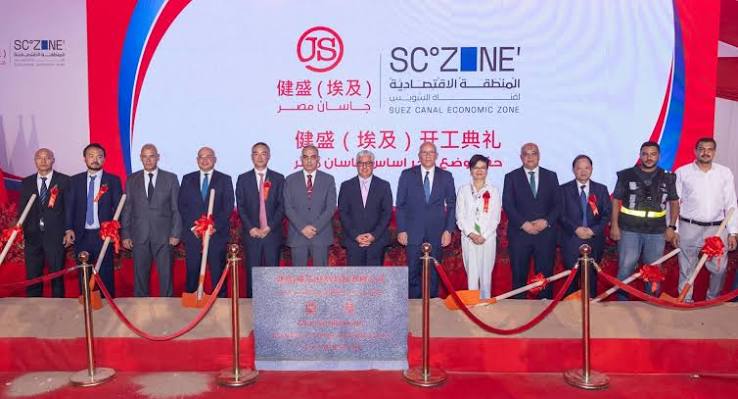
The textile firm is investing $35 million in its textile manufacturing facility at Egypt’s Suez Canal Economic Zone, which is expected to be completed in next 18 months. The facility will initially target $40 million in exports to its retail customers in the US, Europe, Africa and Gulf markets within three years of its operationalization.
“Egypt has a duty-free agreement with USA. And also, you can supply to EU and UK duty-free from Egypt,” Zulqarnain told Arab News in an interview in Faisalabad, when asked why his firm chose to establish the facility in Egypt.
The plant will use Pakistani yarn.
Interloop exploring new markets augurs well for Pakistan that has been struggling to boost exports which declined 12 percent to $2.5 billion last month. This, coupled with 14 percent hike in imports, widened the country’s trade deficit by 46 percent to $3.3 billion in Sept., according to the Pakistan Bureau of Statistics (PBS) data. Overall, this year through September, Pakistan’s trade gap widened by 33 percent to $9.4 billion.
Zulqarnain said the Egyptian plant will reduce Interloop’s shipping time across the regions by 20 days.
“It has a very close proximity to Europe and the shipping times from Egypt to US are much shorter,” he said, adding their production costs in Egypt would drop by 10 percent and the company will have 22 percent less trade tariff than Pakistan’s.
“From Pakistan the duty into US is 13 to 14 percent on top of that we have a 19 percent reciprocal tariff, while from Egypt they just have a 10 percent reciprocal tariff so if somebody is importing goods from Egypt his or her duty as compared to Pakistan will be 20 to 22 percent lower so that’s a huge advantage out of Egypt.”
SQUEEZED MARGINS
Interloop is seeking economies of scale, given what Zulqarnain said “higher” taxation, energy and labor costs and unavailability of value-added raw materials at home and a short-term compression in global demand specially from Europe, where consumers were shifting to Chinese products because of US tariffs.
“We have seen ups and downs in demand because of the changing market conditions, especially the US tariffs have brought in a lot of uncertainty,” he said, adding his clients were “being very cautious” in building up inventories.
“Our margins have been squeezed,” said Zulqarnain, whose firm employs more than 40,000 people.
Interloop reported its earnings for fiscal year 2024-25 in a filing to the Pakistan Stock Exchange (PSX) last month, showing 13 percent hike in sales to Rs179 billion ($638 million).
The textile giant’s profits, however, declined threefolds, or by 66 percent, to Rs5.6 billion ($20.1 million) from Rs16.5 billion ($59 million) of the previous year, with the cost of sales surging 25 percent to Rs143 billion ($507 million).
Its shareholders got one-rupee dividends.
“Because of the labor wage adjustment and the energy… at least 5 percent hit has been taken on the cost of production,” Zulqarnain told Arab News.
Finance Minister Muhammad Aurangzeb is trying to get Pakistan’s debt-ridden economy out of what he has said the frequent boom-and-bust cycles and was recently able to strike a trade deal with the US, which slashed the initial 29 percent tariffs to 19 percent. The new rate is expected to make Pakistan’s exports competitive.
Unaware of what her company is facing, 24-year-old Esha-tur-Razia was busy supervising a group of staffers at the Interloop manufacturing facility in Faisalabad, which produces 8,000 pairs of socks daily.
“We do socks production here and we do packing and finishing in here,” she said. “Our daily target is 1,200 pairs [of socks in our eight-hour shift].”
GULF MARKET
According to PBS data, Interloop exported goods worth $500 million in fiscal year 2023-24, compared to Pakistan’s total textile exports of $1.6 billion that year. It seeks $700 million exports this year.
The company has now set sights on $35 billion Gulf market that is expected to grow to as much as $45 billion in the next five years.
“Half of it is Saudi Arabia and half is rest of the GCC countries,” Zulqarnain said. “The current retail for apparel and clothing in GCC alone is $35 billion.”
Interloop’s business development teams are working on the GCC market and its chairman plans to export $50 million denim jeans, knitwear and socks to the region over next few years.
“It will make more sense for us to export from Egypt to Saudi Arabia or GCC if we are able to develop that demand,” he said.
To materialize these projects, Zulqarnain plans to issue rights shares to his firm’s shareholders in the next couple of years.
In March 2019, Interloop raised more than Rs5 billion ($17.7 million) through Pakistan’s largest private sector Initial Public Offering (IPO), something Zulqarnain said all of his group companies, including dairy, IT and logistics, would do in the next three years.
“We might invite one of the international development finance institutions to come with us as equity partners,” he said.
Maira Javeed, a deputy general manager sales and merchandise at Interloop, keeps looking for new customers.
“We are in touch with some of the customers in the Gulf market,” Javeed said. “We are aiming to bring new customers on our portfolio to increase our revenue.”
Last edited: