Arabic Coffee shop

Their original religion was the Tengrism.


Wondering if the Sunni Islam version of the Ottoman was also influenced by their ancestral Tengrism?

Since the Mongols still heavily retained their Tengrism practise even after the Islamic conversion.

1. Names with Tengrism roots

Many Ottoman names come straight from pre‑Islamic Turkic religion:

  • Bayezid → from Bayat (Oghuz clan) + Yazid (steppe name)
  • OrhanOr = sky, high
  • Osman → from Asman = sky (Tengrism root)
  • Timur / Demir → iron, sacred in Tengrism
  • Batur / Bahadır → hero, warrior (Tengrism warrior cult)
  • TurgutTur = power, strength
  • Khan/Kagan → Turkic sacred ruler title, pre‑Islamic
These names existed before Islam and continued unchanged.


2. Symbols & flags with Tengrism origins

The Ottomans kept multiple steppe symbols:

A. The Crescent Moon

Not originally Islamic — it’s a steppe/Tengrist sky symbol.Turkic peoples used it centuries before Islam.

B. The Wolf (Bozkurt)

Sacred in Tengrism.Ottoman military units used wolf imagery, especially in early beylik era.

C. The Double‑Headed Eagle

Seljuks → Ottomans inherited it.A classic steppe imperial symbol.

D. The Eight‑pointed star

Linked to Oghuz tribal cosmology.


3. Military customs from Tengrism

The Ottoman military kept several steppe traditions:

  • Horse‑archery tactics → pure steppe warfare
  • Janissary mehter music → based on shamanic drum rhythms
  • War cries & ululations → steppe battle customs
  • Totemic banners (sancak) → continuation of Turkic tamga culture
  • Sacred oath rituals → similar to pre‑Islamic Turkic oath practices
Even the Janissary band (Mehter) uses instruments and rhythms that come from shamanic/Tengrist ritual music.


4. Beliefs & worldview with Tengrism influence

Even after Islam, Turkic peoples kept:

A. Sky‑centric worldview

Allah was often described with Tengri vocabulary:

  • Gök Tanrı → Sky God
  • Gök → sky, heaven
  • Kadir Gök → Almighty Sky

B. Sacred mountains

Mountains remained spiritually important (Uludağ, Erciyes).

C. Shamanic healing traditions

Folk Islam in Anatolia kept:

  • spirit‑healing
  • ancestor veneration
  • protective amulets
  • pre‑Islamic rituals blended with Islamic prayers

D. The concept of “kut”

The divine right to rule — a Tengrist concept — remained central to Ottoman legitimacy.


5. Tamga culture

Ottomans used tribal tamgas (clan symbols) for:

  • military units
  • guilds
  • families
  • beyliks
  • cavalry regiments
Tamgas are purely pre‑Islamic Turkic.


6. Even today, Turks still use the word “Tengri”

Modern Turkish still contains:

  • Tanrı → God (direct descendant of Tengri)
  • Gök Tanrı → Sky God
  • Tengri → used in literature, nationalism, and folk culture
  • Gökbörü / Bozkurt → wolf symbolism
  • Kut → divine blessing / legitimacy
The everyday Turkish word for God — Tanrı — is literally the Tengrist word.

It's a lot more than this. would be here all day posting.


Temüjin was named after a Turkic person. This is a documented fact.

1. The name “Temüjin” comes from a Turkic man captured by his father

According to the Secret History of the Mongols (the earliest Mongol source):

  • Temüjin’s father, Yesügei, captured a Tatar warrior named Temüjin.
  • The newborn was named after that man.
The Tatars of the 12th century were Turkic-speaking, not Mongolic.

So Temüjin’s name is literally taken from a Turkic individual.

This is the earliest and most authoritative source on Genghis Khan’s life.

2. The name “Temüjin” itself is built on a Turkic root

The name Temüjin is linguistically connected to the Turkic word:

  • Temür / Demir = iron
  • Temürči = blacksmith
  • Temürjin / Temüjin = ironworker / son of the blacksmith
This is a Turkic word, not originally Mongolic.

Mongolian later borrowed the word (modern Mongolian: tömör = iron).

So both the origin of the name and the linguistic structure are Turkic.


3. The steppe world was Turkic-Mongol mixed

By the 12th century:

  • Mongols used Turkic titles (Khan, Tarkan, Baghatur, Khatun).
  • Mongols used Turkic military terms.
  • Mongols used Turkic personal names.
  • Many of Genghis Khan’s generals had Turkic names (Jebe, Sübetei, Buka, Qulan, Temür, etc.).
So a Turkic name for Temüjin is completely normal for the era.


“Genghis Khan” itself is also Turkic in structure

  • Khan = Turkic title
  • Chinggis / Cinggis has Turkic parallels (e.g., tengiz = sea, great expanse)
The Mongols adopted the Turkic title Khan centuries before Temüjin.

In case you was wondering why Turks are called Mongols by Greeks. :ROFLMAO:
Turks and Mongols were cousins. Same as all the other minorities native to the Arab world (Semitic and non-Semitic) and Arabs. Both influenced each other. Usually that happens when you live next to each other.

Most of the dynasties that are claimed as Turkic were in fact originally Mongol but later Turkified.

For examples the Mughals were originally Mongol (Barlas tribe),


same with the Timurids


and same wit the Golden Horde who were of Mongol origin (descendants of Genghis Khan)


They became Turkicized and many of them later adopted Islam due to many Turkic peoples (at that time) being Muslim due to mostly Arab prior conquest of Central Asia and power of Muslim caliphates and kingdoms.

Crimean Khanate also claimed Mongol origin.


Do you think pyramids were built by arabs? Serious question really.
No, I don't. Where did I ever claim that? They were built by Afro-Asiatic speaking ancient Egyptians who were and are closely related (DNA wise) to fellow Afro-Asiatic speaking Arabs and other next door Semitic peoples.

Later same peoples (Semitic-speaking peoples from Arabia next door and Levant) created Semitic-origin Egyptian dynasties - I linked to one of them (Hyksos) who had Semitic names - not ancient Egyptian names.

Semitic peoples originally from Arabia (Babylonians - originally Amorites - from Arabian and Syrian desert) built Ziggurats.


Ancient Neolithic Arabians built the largest ancient man-made structures more than 10.000 + years ago. Some as far back as 15.000 + years ago.

To view this content we will need your consent to set third party cookies.
For more detailed information, see our cookies page.


To view this content we will need your consent to set third party cookies.
For more detailed information, see our cookies page.


Egyptian civilization (pre-Islamic) is a related civilization but it is not an Arab one and nobody (sane) claims it as an Arab civilization.

Just like we do not call ancient civilizations in modern-day KSA and Arabia such as Dilmun, Magar and many others for "Arab". They were created by our ancestors but they were not Arab. Because Arab and Egyptian are only a few 1000's of years (5000 and 3500 + years) recorded identities but some civilizations and cultures are 11.000.

Take Al-Magar in KSA as an example. 11.000 + years old (based in Hejaz and Najd).


Or Dilmun in Eastern Arabia (considered holy land/paradise (origin of the Garden of Eden story) by Sumerians next door) and contemporary of IVC next door. 5500 years old.


Ancient Arabian civilization, yes, but can we claim them to be Arabs? I would claim them as native Semitic-speaking Arabians.

Arab, Egyptian are much later identity concepts. Obviously our ancestors were tied to the land but peoples identies change over time.

2000 + years ago most educated Egyptians spoke Greek (did not make them Greek) for example. You should get the point now.

huh?
There was no Palestine back then (as in country or peoples).???

Philistines (in English Palestinians , in Arabic falistniyans) were there thousands of years ago , stop posting BS
Here is the documented historical, archaeological, and genetic evidence confirming the presence of the Philistines in the southern coastal region of historical Palestine during the Iron Age (circa 1200 BCE).

🏛️ Archaeological Evidence
  • The Five Pentapolis Cities: Extensive excavations have uncovered their highly developed urban network, consisting of five core cities: Gaza, Ashkelon, Ashdod, Ekron (Tel Miqne), and Gath (Tell es-Safi).
  • The Ashkelon Philistine Cemetery: Discovered in 2016 by the Leon Levy Expedition, this marks the first-ever complete Philistine cemetery found. It contained over 150 human remains buried alongside perfume jugs, jewelry, and weapons, reflecting unique Aegean burial customs.
  • Distinctive Pottery (Philistine Bichrome): Excavations revealed unique two-colored pottery decorated with birds and geometric patterns. This style perfectly matches Mycenaean (ancient Greek) pottery, proving their maritime roots.
  • Unique Architecture: Digs at sites like Tel Qasile uncovered Philistine temples featuring architectural layouts entirely different from the surrounding local Canaanite styles of that period.

📜 Ancient Inscriptions and Written Records
  • Egyptian Hieroglyphs (Medinet Habu): Pharaoh Ramesses III recorded his victory over the "Sea Peoples" on his mortuary temple walls. The inscriptions explicitly name the "Peleset" (PRST), depicting them in distinct feathered headdresses and kilts.
  • Assyrian Royal Annals: Records from Assyrian kings (such as Sargon II and Sennacherib) frequently mention the coastal region as "Palastu" or "Pilistu", documenting the tribute paid by Philistine city-kings.
  • The Bible and Ancient Texts: Hebrew scriptures and later Greek histories consistently place the Philistines along the southwestern coast, referring to their territory as Philistia.

🧬 Genetic Evidence (DNA)
  • 2019 Archaeogenetic Study: A landmark DNA study published in Science Advances analyzed skeletal remains from the Ashkelon cemetery. The results proved that the early Iron Age Philistines carried a distinct Southern European (Aegean/Cretan) genetic signature. Over the centuries, this signature blended into the local Canaanite gene pool.
The distinct political and cultural identity of the Philistines faded after the Babylonian conquests by Nebuchadnezzar II in the 6th century BCE. However, their name endured when Greek and Roman historians later applied it to the broader geographic region, calling it Palestine.
There was no such country called Palestine. They were mostly Nabateans (an Arab people), and other closely Semitic-speaking peoples. Canaanites for instance. Palestine is a historical region but there was never a kingdom, empire or other political entity (back then) called Palestine etc. It was called Sham.

And the Greek myth is nonsense. Modern-day Palestines are purely local Semites as were the ancient people. Nothing to do with any Greeks.

You can check every DNA test of both old mummies (from Canaanite era all the way back to Natufian era) and modern-day populations.
 

1. Names with Tengrism roots

Many Ottoman names come straight from pre‑Islamic Turkic religion:

  • Bayezid → from Bayat (Oghuz clan) + Yazid (steppe name)
  • OrhanOr = sky, high
  • Osman → from Asman = sky (Tengrism root)
  • Timur / Demir → iron, sacred in Tengrism
  • Batur / Bahadır → hero, warrior (Tengrism warrior cult)
  • TurgutTur = power, strength
  • Khan/Kagan → Turkic sacred ruler title, pre‑Islamic
These names existed before Islam and continued unchanged.


2. Symbols & flags with Tengrism origins

The Ottomans kept multiple steppe symbols:

A. The Crescent Moon

Not originally Islamic — it’s a steppe/Tengrist sky symbol.Turkic peoples used it centuries before Islam.

B. The Wolf (Bozkurt)

Sacred in Tengrism.Ottoman military units used wolf imagery, especially in early beylik era.

C. The Double‑Headed Eagle

Seljuks → Ottomans inherited it.A classic steppe imperial symbol.

D. The Eight‑pointed star

Linked to Oghuz tribal cosmology.


3. Military customs from Tengrism

The Ottoman military kept several steppe traditions:

  • Horse‑archery tactics → pure steppe warfare
  • Janissary mehter music → based on shamanic drum rhythms
  • War cries & ululations → steppe battle customs
  • Totemic banners (sancak) → continuation of Turkic tamga culture
  • Sacred oath rituals → similar to pre‑Islamic Turkic oath practices
Even the Janissary band (Mehter) uses instruments and rhythms that come from shamanic/Tengrist ritual music.


4. Beliefs & worldview with Tengrism influence

Even after Islam, Turkic peoples kept:

A. Sky‑centric worldview

Allah was often described with Tengri vocabulary:

  • Gök Tanrı → Sky God
  • Gök → sky, heaven
  • Kadir Gök → Almighty Sky

B. Sacred mountains

Mountains remained spiritually important (Uludağ, Erciyes).

C. Shamanic healing traditions

Folk Islam in Anatolia kept:

  • spirit‑healing
  • ancestor veneration
  • protective amulets
  • pre‑Islamic rituals blended with Islamic prayers

D. The concept of “kut”

The divine right to rule — a Tengrist concept — remained central to Ottoman legitimacy.


5. Tamga culture

Ottomans used tribal tamgas (clan symbols) for:

  • military units
  • guilds
  • families
  • beyliks
  • cavalry regiments
Tamgas are purely pre‑Islamic Turkic.


6. Even today, Turks still use the word “Tengri”

Modern Turkish still contains:

  • Tanrı → God (direct descendant of Tengri)
  • Gök Tanrı → Sky God
  • Tengri → used in literature, nationalism, and folk culture
  • Gökbörü / Bozkurt → wolf symbolism
  • Kut → divine blessing / legitimacy
The everyday Turkish word for God — Tanrı — is literally the Tengrist word.

It's a lot more than this. would be here all day posting.

It is normal for the Turkish people to practice a hybrid form of Tengrism and Sunni Islam.

Just like the Hui people from China practise a hybrid form of Confucianism/Taoism and Sunni Islam.

The Uyghurs also practise their pre-Islamic belief like Tengrism and Buddhism in a hybrid form with the Sunni Islam.
 
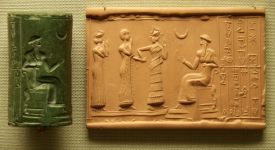
Crescent as a symbol was first used by Sumerians and later Akkadians (Mesopotamia) as a religious/cultural symbol.

1786613121759.png
Sumerian cylinder seal, dated c. 2400 BC, showing the Moon god as a crescent symbol

The crescent shape is used to represent the Moon, and the Moon deity Nanna/Sin from an early time, visible in Akkadian cylinder seals as early as 2300 BC.


In any case it is a natural symbol so it cannot really be claimed by anyone more than water, fire, animals etc. can be claimed.

It is normal for the Turkish people to practice a hybrid form of Tengrism and Sunni Islam.

Just like the Hui people from China practise a hybrid form of Confucianism/Taoism and Sunni Islam.

The Uyghurs also practise their pre-Islamic belief like Tengrism and Buddhism in a hybrid form with the Sunni Islam.
Not aware of any Turks (Muslims) mixing Islam with "Tengrism". Only strange (from orthodox Muslim point of view) sect in Turkiye (claim to be Muslims) are the Alevis.

 
No, I don't. Where did I ever claim that? They were built by Afro-Asiatic speaking ancient Egyptians who were and are closely related (DNA wise) to fellow Afro-Asiatic speaking Arabs and other next door Semitic peoples.

Later same peoples (Semitic-speaking peoples from Arabia next door and Levant) created Semitic-origin Egyptian dynasties - I linked to one of them (Hyksos) who had Semitic names - not ancient Egyptian names.

Semitic peoples originally from Arabia (Babylonians - originally Amorites - from Arabian and Syrian desert) built Ziggurats.


Ancient Neolithic Arabians built the largest ancient man-made structures more than 10.000 + years ago. Some as far back as 15.000 + years ago.

To view this content we will need your consent to set third party cookies.
For more detailed information, see our cookies page.


To view this content we will need your consent to set third party cookies.
For more detailed information, see our cookies page.


Egyptian civilization (pre-Islamic) is a related civilization but it is not an Arab one and nobody (sane) claims it as an Arab civilization.

Just like we do not call ancient civilizations in modern-day KSA and Arabia such as Dilmun, Magar and many others for "Arab". They were created by our ancestors but they were not Arab. Because Arab and Egyptian are only a few 1000's of years (5000 and 3500 + years) recorded identities but some civilizations and cultures are 11.000.

Take Al-Magar in KSA as an example. 11.000 + years old (based in Hejaz and Najd).


Or Dilmun in Eastern Arabia (considered holy land/paradise (origin of the Garden of Eden story) by Sumerians next door) and contemporary of IVC next door. 5500 years old.


Ancient Arabian civilization, yes, but can we claim them to be Arabs? I would claim them as native Semitic-speaking Arabians.

Arab, Egyptian are much later identity concepts. Obviously our ancestors were tied to the land but peoples identies change over time.

2000 + years ago most educated Egyptians spoke Greek (did not make them Greek) for example. You should get the point now.


There was no such country called Palestine. They were mostly Nabateans (an Arab people), and other closely Semitic-speaking peoples. Canaanites for instance. Palestine is a historical region but there was never a kingdom, empire or other political entity (back then) called Palestine etc. It was called Sham.

And the Greek myth is nonsense. Modern-day Palestines are purely local Semites as were the ancient people. Nothing to do with any Greeks.

You can check every DNA test of both old mummies (from Canaanite era all the way back to Natufian era) and modern-day populations.

I think I've told you that Hyksos were a mix of semitic and non semitic , they weren't 100% fully semitic , they were tribes consisted even from indo-europeans.

Egypt is not a few 1000s years , since you're obsessed with (semeties and semitic origins) , you probably know about Mizraim son of ham son of Noah , right? Mizraim who created Egypt , that's how Egypt got its name (Mizr or Misr) , so Egypt isn't few 1000 years ago , more than 10,000 years ago.

and all sources indicated that Palestinians had a country consisted of Pentapolis in one time , and there was Kingdom of Palistin / Walistin in syria and southern nowadays turkey, there was also (Syria Palaestina ) in 135 AD , there was also Palaestina I, II, III in the Byzantine era between the fourth and seventh century.
 
It is normal for the Turkish people to practice a hybrid form of Tengrism and Sunni Islam.

Just like the Hui people from China practise a hybrid form of Confucianism/Taoism and Sunni Islam.

The Uyghurs also practise their pre-Islamic belief like Tengrism and Buddhism in a hybrid form with the Sunni Islam.

Crescent as a symbol was first used by Sumerians and later Akkadians (Mesopotamia) as a religious/cultural symbol.

View attachment 210560
Sumerian cylinder seal, dated c. 2400 BC, showing the Moon god as a crescent symbol

The crescent shape is used to represent the Moon, and the Moon deity Nanna/Sin from an early time, visible in Akkadian cylinder seals as early as 2300 BC.


In any case it is a natural symbol so it cannot really be claimed by anyone more than water, fire, animals etc. can be claimed.


Not aware of any Turks (Muslims) mixing Islam with "Tengrism". Only strange (from orthodox Muslim point of view) sect in Turkiye (claim to be Muslims) are the Alevis.

The crescent moon isn’t “owned” by any one culture — Sumerians, Akkadians, Luwians, and even Greeks used lunar symbols long before the Turkic migrations. But let’s be real: for the Turkic world, the moon wasn’t just a symbol — it was part of their cosmology, naming system, identity, and even their birth‑rituals. That’s the difference.

Gök Tengri literally means “Sky God / Sky Lord.”

And what dominates the sky? Gün (sun) and Ay (moon).So the sun–moon duality sits at the heart of Turkic cosmology in a way Mesopotamian lunar cults simply didn’t replicate.

Sumerians had a moon god, a storm god, an underworld god, a grain god — dozens of compartmentalised deities.Turkic Tengrism had a single Sky God, and the sun and moon were cosmic signs of Tengri’s presence, tied directly to fate, birth, and divine legitimacy. That’s why the symbolism survived for thousands of years.

You can see how uniquely Turkic this is in the naming tradition, which still exists today:

Names built on “Ay” (Moon)

  • Ayşe
  • Aylin
  • Aybike
  • Aybars
  • Ayhan
  • Ayça
  • Ayperi
  • Aydoğan
  • Ayben
  • Aygül
These aren’t random poetic names — they come from pre‑Islamic birth customs, where children were named after the shape, phase, or omen of the moon at the moment they were born.

Names built on “Gün” (Sun)

  • Güney
  • Günay
  • Güner
  • Günhan
  • Günes
  • Güneşhan
  • Güngör
Again, these come straight from Tengrist cosmology, where the sun represented vitality, rulership, and divine favour.

Even today, Turks still use:

  • Tanrı (from Tengri) for “God”
  • Gök for “sky / heaven”
  • Ay and Gün in names, poetry, and symbolism
  • Crescent motifs in art, jewellery, and flags
So yes — the crescent existed in ancient Mesopotamia.But the moon as a personal identity marker, the moon as a naming system, the moon as a birth omen, and the moon as a living remnant of Tengri is something uniquely Turkic, carried from the steppe into the Seljuks, Ottomans, and modern Türkiye.
 
I think I've told you that Hyksos were a mix of semitic and non semitic , they weren't 100% fully semitic , they were tribes consisted even from indo-europeans.

Egypt is not a few 1000s years , since you're obsessed with (semeties and semitic origins) , you probably know about Mizraim son of ham son of Noah , right? Mizraim who created Egypt , that's how Egypt got its name (Mizr or Misr) , so Egypt isn't few 1000 years ago , more than 10,000 years ago.

and all sources indicated that Palestinians had a country consisted of Pentapolis in one time , and there was Kingdom of Palistin / Walistin in syria and southern nowadays turkey, there was also (Syria Palaestina ) in 135 AD , there was also Palaestina I, II, III in the Byzantine era between the fourth and seventh century.
Most scholars agree that they were mostly Semitic and so were their names and the new cultural practices that they brought with them and new religions/philosophies etc.

Nothing is ever pure. Just because there were a few non-Arab Sahaba, we cannot now say that they were not Arab at all.

Yes, by that logic Arabia is even older (Al-Magar) and ancient Arabians built the largest man-made structures on the planet in Neolithic era (desert kites and others) that I already linked videos too.

Would be absurd to claim them to be Arab. Same as claiming 10.000 year old (Mostly Natufian - originally from Sham - most Egyptian DNA is Natufian - just like Saudi Arabian btw - remember I told you to educate yourself about DNA and go look this up yourself - I can post scholarly articles and modern-day DNA tests to prove my point) inhabitants of Egypt to be "Egyptians" is nonsense.

Egypt as a state concept originated roughly 5.500 years ago.

Palestine is a tiny area of Sham. They were known back then as Nabateans and before as Caananites mostly. All Semitic speaking peoples closely related. Palestine as in state concept is a much later concept.

Just like Arabia (as in state concept and name) came much later AFTER Dilmun, Magan, Al-Magar, Dedan, Thamud etc.

My point is that we should not give modern-day labels to ancient peoples always because history is much more complicated.

KSA (as in state concept) is relatively new (300 years old - originated in modern-day Najd) but the concept of Arabia is several millennia old and civilizations in Arabia are over 11.000 + years old. Those are all different concepts.

The concept of Hejaz, Najd and the many historical regions of modern-day KSA similarly. Eastern Arabia, Northern Arabia, South Arabia, Hejaz, Najd etc. All historical regions part of KSA today (partially as shared with other modern-day states for instance KSA and Yemen and South Oman are mostly South Arabia) etc.

Same with modern-day Saudi Arabians, Egyptians, ancient Egyptians, Arabs, ancient Semitic peoples etc.

You think that modern-day Saudi Arabians are not a mixture of ancient pre-Islamic and pre-Arab civilizations and Arab ones and other non-Arab and non-Semitic peoples?

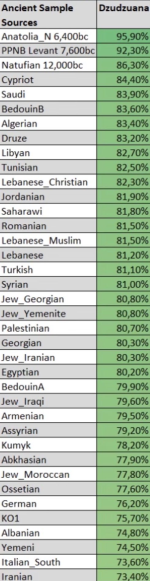
Saudi Arabians have 2/3 (on average) Natufian DNA - rest is ancient Anatolian (originally Natufian) and "Iranian/Caucasian") (geographical concepts again not ethnic).

Modern-day Saudi Arabians and South Levantines are the closest modern-day peoples to ancient Natufian (world's first Neolithic civilization and culture - investors of farming, first cities in the world, domestication of animals, first earliest known cultural practices etc)


1786613932216.png

1786613944595.png

1786613970009.png

1786613981832.png
 
The crescent moon isn’t “owned” by any one culture — Sumerians, Akkadians, Luwians, and even Greeks used lunar symbols long before the Turkic migrations. But let’s be real: for the Turkic world, the moon wasn’t just a symbol — it was part of their cosmology, naming system, identity, and even their birth‑rituals. That’s the difference.

Gök Tengri literally means “Sky God / Sky Lord.”

And what dominates the sky? Gün (sun) and Ay (moon).So the sun–moon duality sits at the heart of Turkic cosmology in a way Mesopotamian lunar cults simply didn’t replicate.

Sumerians had a moon god, a storm god, an underworld god, a grain god — dozens of compartmentalised deities.Turkic Tengrism had a single Sky God, and the sun and moon were cosmic signs of Tengri’s presence, tied directly to fate, birth, and divine legitimacy. That’s why the symbolism survived for thousands of years.

You can see how uniquely Turkic this is in the naming tradition, which still exists today:

Names built on “Ay” (Moon)

  • Ayşe
  • Aylin
  • Aybike
  • Aybars
  • Ayhan
  • Ayça
  • Ayperi
  • Aydoğan
  • Ayben
  • Aygül
These aren’t random poetic names — they come from pre‑Islamic birth customs, where children were named after the shape, phase, or omen of the moon at the moment they were born.

Names built on “Gün” (Sun)

  • Güney
  • Günay
  • Güner
  • Günhan
  • Günes
  • Güneşhan
  • Güngör
Again, these come straight from Tengrist cosmology, where the sun represented vitality, rulership, and divine favour.

Even today, Turks still use:

  • Tanrı (from Tengri) for “God”
  • Gök for “sky / heaven”
  • Ay and Gün in names, poetry, and symbolism
  • Crescent motifs in art, jewellery, and flags
So yes — the crescent existed in ancient Mesopotamia.But the moon as a personal identity marker, the moon as a naming system, the moon as a birth omen, and the moon as a living remnant of Tengri is something uniquely Turkic, carried from the steppe into the Seljuks, Ottomans, and modern Türkiye.
That might be possible, I have no idea. Arabs after Islam had a phobia of not associating Islam with past practices so Islam did not really have any symbol like a crescent, cross etc. originally. even though the crescent is an ancient symbol (religious) used by Semites and Arabs many millennia before Islam.

I think that non-Muslims made an association with Islam and the crescent.

BTW, did you know that there are an ancient community of Anatolian Arabs who inhabit some of the oldest cities in Anatolia such as Harran and other cities (Urfa)? Those regions of Turkiye were historically a part of Mesopotamia.

We in KSA can understand their Arabic dialect.


Ibn Taymiyya (ra) was actually born in modenr-day Southern Turkiye and was half Arab and half Kurd. Speaking about Kurds.

Former Byzantine emperors based in Istanbul were of Arab origin (dynasties) and the late Ghassanid royal family escaped to Anatolia after the Romans were defeated by Muslim Arabs.

To view this content we will need your consent to set third party cookies.
For more detailed information, see our cookies page.


To view this content we will need your consent to set third party cookies.
For more detailed information, see our cookies page.


To view this content we will need your consent to set third party cookies.
For more detailed information, see our cookies page.


To view this content we will need your consent to set third party cookies.
For more detailed information, see our cookies page.


BTW we have very old Turkic communties in KSA from Uzbekistan and Turkestan (Xinjiang) mostly. They are often known by surnames such as Al-Kashgari, Al-Bukhari, Al-Samarqandi etc. One of their cultural items that they took with them and we adopted (fusion) is the Bukhari rice. Manti (central Asian dish originally) as well.

BTW I once read that dumplings are originally from China but I am not sure if this is accurate. @ChineseTiger1986

Speaking about China, we also have Hui Muslim Saudi Arabians and even had 1 general of Hui Muslim origin. Hui Chinese are mostly the fusion of Arab and Persian (possibly others) merchants intermarrying with Chinese women.

There is this knowledgeable Chinese Youtuber based in Saudi Arabia who speaks both Mandarin and Arabic fluently.

To view this content we will need your consent to set third party cookies.
For more detailed information, see our cookies page.


East Asians are well-liked in general in KSA.
 
Crescent as a symbol was first used by Sumerians and later Akkadians (Mesopotamia) as a religious/cultural symbol.

View attachment 210560
Sumerian cylinder seal, dated c. 2400 BC, showing the Moon god as a crescent symbol

The crescent shape is used to represent the Moon, and the Moon deity Nanna/Sin from an early time, visible in Akkadian cylinder seals as early as 2300 BC.


In any case it is a natural symbol so it cannot really be claimed by anyone more than water, fire, animals etc. can be claimed.


Not aware of any Turks (Muslims) mixing Islam with "Tengrism". Only strange (from orthodox Muslim point of view) sect in Turkiye (claim to be Muslims) are the Alevis.


Islam was a religion built upon Arab culture/belief/custom, it Arab Muslims are indeed closest to the original one.
 
The crescent moon isn’t “owned” by any one culture — Sumerians, Akkadians, Luwians, and even Greeks used lunar symbols long before the Turkic migrations. But let’s be real: for the Turkic world, the moon wasn’t just a symbol — it was part of their cosmology, naming system, identity, and even their birth‑rituals. That’s the difference.

Gök Tengri literally means “Sky God / Sky Lord.”

And what dominates the sky? Gün (sun) and Ay (moon).So the sun–moon duality sits at the heart of Turkic cosmology in a way Mesopotamian lunar cults simply didn’t replicate.

Sumerians had a moon god, a storm god, an underworld god, a grain god — dozens of compartmentalised deities.Turkic Tengrism had a single Sky God, and the sun and moon were cosmic signs of Tengri’s presence, tied directly to fate, birth, and divine legitimacy. That’s why the symbolism survived for thousands of years.

You can see how uniquely Turkic this is in the naming tradition, which still exists today:

Names built on “Ay” (Moon)

  • Ayşe
  • Aylin
  • Aybike
  • Aybars
  • Ayhan
  • Ayça
  • Ayperi
  • Aydoğan
  • Ayben
  • Aygül
These aren’t random poetic names — they come from pre‑Islamic birth customs, where children were named after the shape, phase, or omen of the moon at the moment they were born.

Names built on “Gün” (Sun)

  • Güney
  • Günay
  • Güner
  • Günhan
  • Günes
  • Güneşhan
  • Güngör
Again, these come straight from Tengrist cosmology, where the sun represented vitality, rulership, and divine favour.

Even today, Turks still use:

  • Tanrı (from Tengri) for “God”
  • Gök for “sky / heaven”
  • Ay and Gün in names, poetry, and symbolism
  • Crescent motifs in art, jewellery, and flags
So yes — the crescent existed in ancient Mesopotamia.But the moon as a personal identity marker, the moon as a naming system, the moon as a birth omen, and the moon as a living remnant of Tengri is something uniquely Turkic, carried from the steppe into the Seljuks, Ottomans, and modern Türkiye.

Tengrism was the Eurasian steppe religion, and Islam was a Southwest Asian desert religion.

Observation of the celestial bodies like Sun and Moon were important when the ancient people were wandering in a large barren land like the steppe or desert.
 
That might be possible, I have no idea. Arabs after Islam had a phobia of not associating Islam with past practices so Islam did not really have any symbol like a crescent, cross etc. originally. even though the crescent is an ancient symbol (religious) used by Semites and Arabs many millennia before Islam.

I think that non-Muslims made an association with Islam and the crescent.

BTW, did you know that there are an ancient community of Anatolian Arabs who inhabit some of the oldest cities in Anatolia such as Harran and other cities (Urfa)? Those regions of Turkiye were historically a part of Mesopotamia.

We in KSA can understand their Arabic dialect.


Ibn Taymiyya (ra) was actually born in modenr-day Southern Turkiye and was half Arab and half Kurd. Speaking about Kurds.

Former Byzantine emperors based in Istanbul were of Arab origin (dynasties) and the late Ghassanid royal family escaped to Anatolia after the Romans were defeated by Muslim Arabs.

To view this content we will need your consent to set third party cookies.
For more detailed information, see our cookies page.


To view this content we will need your consent to set third party cookies.
For more detailed information, see our cookies page.


To view this content we will need your consent to set third party cookies.
For more detailed information, see our cookies page.


To view this content we will need your consent to set third party cookies.
For more detailed information, see our cookies page.


BTW we have very old Turkic communties in KSA from Uzbekistan and Turkestan (Xinjiang) mostly. They are often known by surnames such as Al-Kashgari, Al-Bukhari, Al-Samarqandi etc. One of their cultural items that they took with them and we adopted (fusion) is the Bukhari rice. Manti (central Asian dish originally) as well.

BTW I once read that dumplings are originally from China but I am not sure if this is accurate. @ChineseTiger1986

Speaking about China, we also have Hui Muslim Saudi Arabians and even had 1 general of Hui Muslim origin. Hui Chinese are mostly the fusion of Arab and Persian (possibly others) merchants intermarrying with Chinese women.

There is this knowledgeable Chinese Youtuber based in Saudi Arabia who speaks both Mandarin and Arabic fluently.

To view this content we will need your consent to set third party cookies.
For more detailed information, see our cookies page.


East Asians are well-liked in general in KSA.


Yes, the dumpling was initially made in China, and it was popularized into the western part of Eurasia by the Turks and Mongols.

Some earliest Hui Muslims were indeed descended from the Arab/Persian merchants married with the local Chinese women.

Since the Hui Muslim men who carried R1a was most likely brought by Sogdians/Persians, and those who carried J1 was indeed brought by Arabs.

The later Chinese who converted themselves into Islam were also carried the local Chinese haplogroup O, but also labeled themselves as Hui.

A lot of earlier Iranian-speaking merchants like Sogdians and Persians were initially Sunni Muslims, and they bridged themselves the Chinese world with the Islamic world.
 
Even though I am a Muslim I am happy that KSA (as in regime) has stopped actively shunning everything that was pre-islamic (almost) as if history began just 1400 years ago.

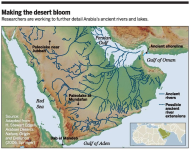
KSA and Arabia as a whole has some of the world's most ancient cultures, civilizations, continuously inhabited cities, landmarks and artifacts. It is an incredibly rich area of the world (historically) and a key area for human migrations to the rest of the world. One of the oldest inhabited areas of the world too. The climate was also much different less than 10.000 years ago which gave rise to many ancient civilizations and cultures.

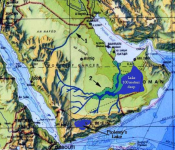
Very lush land, some of the world's longest rivers and largest lakes.

To view this content we will need your consent to set third party cookies.
For more detailed information, see our cookies page.


To view this content we will need your consent to set third party cookies.
For more detailed information, see our cookies page.


1786615869902.png

Some of our wadis (non-permanent rivers - there are 1000's in KSA alone) during much rainfall turn into huge rivers.

That lake is the size of France or something. Would be one of the largest lake in the world today if not the largest.

1786615951082.png
 
Last edited:
Safavids, as proven by modern-day DNA tests, run by Azerbaijanis themselves (not Arabs) confirm their Arab ancestry (paternal - which is what defines ancestry). By that token there is not a single dynasty of any origin as most mixed with others throughout the ages. Your ties to an ethnic group are defined by your paternal origin from father to father as so far as you can trace it back. Hence the concept of Y-DNA.

What is Azeri Turkish identity if not an Arabized Muslim identity?

And what is this imaginary "Turkic-infleunced" version of Shia Islam? The Shia Siam (Twelver) that was imported to Iran under the Safavids by purely Arab Shia clerics from modern-day South Iraq, Eastern KSA and South Lebanon, was entirely Arab in origin. As every other Islamic sect.

Same reason why the most visited mosques, shrines etc. in Iran are of dead Hejazi Arabs buried in Iran - mostly in cities founded by Arabs with Arab names such as Qom, Mashhad etc.

I will give you that the Safavids used Turkic Qizilbash tribes from Central Asia to cement their rule.

I also think that they spoke Farsi (a bastardized form of Arabic with an Arab alphabet with just 4 new additions) and Arabic was also used (main language) among the Shia clergy and as today remains the lingua franca language of Islam.


Anyway a cursed entity now in the dustbin of history and tragicomically (not that I am surprised as they claimed it themselves) an dynasty of Arab origin.

To view this content we will need your consent to set third party cookies.
For more detailed information, see our cookies page.


You are welcome to claim them entirely. Outside of a tiny minority of retarded Arab Shias, no Arab wants anything to do with them even if they were of Arab origin.


Paternal ethnic origins of Safavids are up to debate, but what we do know is that by the time they were formed as a political-military organization, that is, by the time of the grandfather of Shah Ismail, they were Turkic speaking (Azerbaijani, which was the language of Aq Qoyunlu) with Turkic ancestry. They had even Mongol ancestry, as the great grandfather of Shah Ismail, Shaykh Ibrahim had a Jalayirid mother. His son was Shaykh Junayd who married the sister of Aq Qoyunlu Uzun Hasan, and his son, Shaykh Haydar (father of Shah Ismail), married daughter of Uzun Hasan. Shah Ismail thus had Aq Qoyunlu ancestry from both his paternal and maternal sides.

Qizilbash tribes were not from Central Asia but Anatolia and Azerbaijan. Where did you get Central Asia from?

The court and military language of Safavids was Azerbaijani. It was used even in correspondence, there are letters that Shah Ismail wrote to commanders and governors in Azerbaijani language.

See the military branches of Safavids and how they were named:


Qorçu, Tüfəngçi, Topçu, Qullar are all from Azerbaijani language.

Qorçu (Qoruqçu) = guard

Tüfəngçi = musketeer

Topçu = artilleryman

Qullar = slaves (Ghulams)

The commanders of those branches had the following ranks: Qorçu-başı, Tüfəngçi-başı, Topçu-başı, Qullar-ağası.

Shah Ismail also composed a diwan in Azerbaijani language under the pen name Khatai.

 
Last edited:
Paternal ethnic origins of Safavids are up to debate, but what we do know is that by the time they were formed as a political-military organization, that is, by the time of the grandfather of Shah Ismail, they were Turkic speaking (Azerbaijani, which was the language of Aq Qoyunlu) with Turkic ancestry. They had even Mongol ancestry, as the great grandfather of Shah Ismail, Shaykh Ibrahim had a Jalayirid mother. His son was Shaykh Junayd who married the sister of Aq Qoyunlu Uzun Hasan, and his son, Shaykh Haydar (father of Shah Ismail), married daughter of Uzun Hasan. Shah Ismail thus had Aq Qoyunlu ancestry from both his paternal and maternal sides.

Qizilbash tribes were not from Central Asia but Anatolia and Azerbaijan. Where did you get Central Asia from?

The court and military language of Safavids was Azerbaijani. It was used even in correspondence, so one can say it was a language of adminstration in some cases too. There are letters that Shah Ismail wrote to commanders and governors in Azerbaijani.

See the military branches of Safavids:


Qorçu, Tüfəngçi, Topçu are all from Azerbaijani language.

Qorçu (Qoruqçu) = guard

Tüfəngçi = musketeer

Topçu = artilleryman

Qullar = slaves (Ghulams)

The commanders of these branches had the following ranks: Qorçu-başı, Tüfəngçi-başı, Topçu-başı, Qullar-ağası.

Başı = head of, in Azerbaijani.

And Qullar Ağası is literally: Master of slaves.

Shah Ismail also composed a divan in Azerbaijani language under the pen name Khatai.

Just logged in.

That is the DNA test that Azerbaijani (not Arab) scientists made themselves. Qajar's were found to be J1 as well BTW.

An Arab presence in what is modern-day Azerbaijan was historically also pretty strong as it was the border lands of various Arab Caliphates. Same story in Georgia next door where there are even quite a few aristocratic Georgian families (Christian nowadays) that claim and have Arab-origin surnames.

Arabidze for instance literally means "son of Arab".


Apparently north of Azerbaijan in Dagestan and other places there were until less than 200 years ago Arab speaking villages and Arabic was used as a lingua franca between the various ethnic groups in that region of Russia. As well as a liturgic language of course.


So it is not so unlikely (if the DNA tests are correct which they appear to be) that the Safavids were originally Arabs who over time assimilated with locals.

By the time that they had reached power (500 years ago - Arab presence in the region dates almost 1000 years prior to that) they were only of Arab paternal ancestry and not much else.

Of course, like every other ruling dynasty in the region (no Arab dynasty either that did not intermarry with non-Arabs exist from what I am aware of) they intermarried with a wide range of peoples and ethnic groups to cement alliances etc.

For instance as a Hejazi Hashemite myself on the paternal side I have literally ancestry from all the region (fairly recent at that too) among others from modern-day Turkiye, Circassian etc.

In Arab culture it was and even to this day is common to take your second, third or fourth wife's (the ones that can accord this) from other countries. Let alone how it was way back when marriage often cemented military, economic, political etc. alliances.

I meant Central Asia originally by virtue of them being Turkic in origin. I believe that Oghuz Turks (main Turkic component in Azerbaijanis) were originally from Central Asia.

I never claimed that Safavids were Arab in culture (other than using Arabic as a liturgic language) and importing Shia Arab clergy from modern-day Eastern KSA (Eastern Arabia as a whole), South Lebanon and South Iraq (Shia Muslim Arab strongholds historically) which completely altered the religious makeup of Iran (in particular) and to a lesser extent Azerbaijan (because Sunni Muslims there are in high percentages).


Safavids are not much well-liked among Arabs due to their association with massacres of Sunni Muslims (Shafi's) in Iran and their incursions into Iraq. It is often used as a slur against expansionistic (into Arab lands - opportunistic meddling and support for regional Shia proxies) Shia Persians. It is exclusively used against Iranians btw, not Azerbaijanis who most Arabs do not associate with the Safavids at all.

And yes, since I learned about them, I always knew that they were mostly Azeri speaking and relied on Qizilbash tribes for military purposes.

There have also been theories of their origin being Kurdish but I am not sure how that accurate is.

In any case I just saw the modern-day DNA tests and I was surprised because the Safavids actively claimed Sadah (Sayyid) ancestry so if those DNA tests are accurate, it is quite a coincidence.
 

Users who are viewing this thread

Country Watch Latest

Back
Top