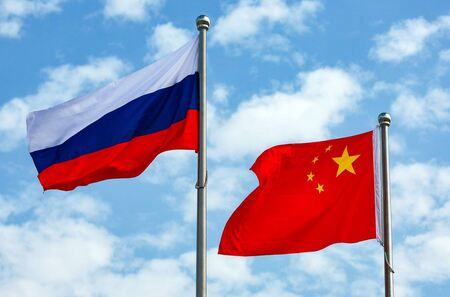
BREAKING NEWS: Japan protests Putin’s first visit to disputed islands - ARAB NEWS

Japan defeated Czarist Russia in a sea battle. But, it was badly beaten by the Soviet Union in battles instead.
Japan never even once defeated the Soviet Union, the first war between Japan and the Soviet Union happened in 1939. A total Japanese defeat.

To view this content we will need your consent to set third party cookies.
For more detailed information, see our cookies page.
 
Japan never even once defeated the Soviet Union, the first war between Japan and the Soviet Union happened in 1939. A total Japanese defeat.

To view this content we will need your consent to set third party cookies.
For more detailed information, see our cookies page.


Damn an 'unknown' general Zhukov! He went on to become one of their greatest generals ever and won victory after victory against axis forces.
 
On one hand Japan is Asian and the Russians are not.

The island has a complex history.

The Indigenous inhabitants: The Kurils were inhabited thousands of years before either modern Japan or Russia, including Jōmon-related peoples and later the Ainu.
Japanese presence expanded into the southern Kurils, particularly through contacts with and later administration involving the Ainu, during the 17th century. The Matsumae domain was exercising authority over Hokkaido and the southern Kurils by this period.
Russian explorers and settlers reached the northern Kurils during the 18th century, expanding southward from Kamchatka. By the late 18th century, both Japan and Russia were asserting competing claims.

Japan established a sustained political presence in the southern Kurils before Russia established comparable control there, although Russia reached and occupied some of the northern Kurils before Japan did.

However Japan's history with its neighbour is horrible, even though they share race, culture and history with them.
 
Japan can either send Godzilla or Hentai, both have power to end civilization.
 

China Stands with Russia as Putin Visits Northern Territories

Aug 14, 2026 21:16 (JST)

3057107.jpg

Tokyo, Aug. 14 (Jiji Press)--The Chinese and Russian ambassadors to Japan have issued a joint statement claiming that their countries made huge sacrifices in the fight against Nazism and Japanese militarism during World War II.

The statement was released on Thursday, when Russian President Vladimir Putin visited one of the four Russian-held islands that Japan calls the Northern Territories.

In the statement, Chinese Ambassador Wu Jianghao and Russian Ambassador Nikolay Nozdrev did not directly mention the Northern Territories.

On Friday, U.S. Ambassador to Japan George Glass said in a social media post, "The United States remains unwavering in its support of its most important ally and in its recognition of Japanese sovereignty over the Northern Territories."

In recent years, China and Russia have deepened their military cooperation. Last year, China responded fiercely to Japanese Prime Minister Sanae Takaichi's remarks on Taiwan and has since tried to condemn Japan for new militarism.


China Stands with Russia as Putin Visits Northern Territories

Aug 14, 2026 21:16 (JST)

3057107.jpg

Tokyo, Aug. 14 (Jiji Press)--The Chinese and Russian ambassadors to Japan have issued a joint statement claiming that their countries made huge sacrifices in the fight against Nazism and Japanese militarism during World War II.

The statement was released on Thursday, when Russian President Vladimir Putin visited one of the four Russian-held islands that Japan calls the Northern Territories.

In the statement, Chinese Ambassador Wu Jianghao and Russian Ambassador Nikolay Nozdrev did not directly mention the Northern Territories.

On Friday, U.S. Ambassador to Japan George Glass said in a social media post, "The United States remains unwavering in its support of its most important ally and in its recognition of Japanese sovereignty over the Northern Territories."

In recent years, China and Russia have deepened their military cooperation. Last year, China responded fiercely to Japanese Prime Minister Sanae Takaichi's remarks on Taiwan and has since tried to condemn Japan for new militarism.

A wise decision by China.
 
The major problem faced by Japan of today (and even by Japan of 2050) is not lack of land but shrinking population. One third of houses in Japan are empty. Japan should focus on that instead of wasting it's money on such conflicts and expanding military
 
What Japan needs the most, is getting rid of sell outs like Takaichi. Liberal democrats have already alienated Japan globally at expense of strategic alliance with USA that ties Japan's national security with US foreign policy.

Alienated "Globally" from whom exactly?
The usual suspects: Russia, China, North Korea, South Korea?
 

China Stands with Russia as Putin Visits Northern Territories

Aug 14, 2026 21:16 (JST)

3057107.jpg

Tokyo, Aug. 14 (Jiji Press)--The Chinese and Russian ambassadors to Japan have issued a joint statement claiming that their countries made huge sacrifices in the fight against Nazism and Japanese militarism during World War II.

The statement was released on Thursday, when Russian President Vladimir Putin visited one of the four Russian-held islands that Japan calls the Northern Territories.

In the statement, Chinese Ambassador Wu Jianghao and Russian Ambassador Nikolay Nozdrev did not directly mention the Northern Territories.

On Friday, U.S. Ambassador to Japan George Glass said in a social media post, "The United States remains unwavering in its support of its most important ally and in its recognition of Japanese sovereignty over the Northern Territories."

In recent years, China and Russia have deepened their military cooperation. Last year, China responded fiercely to Japanese Prime Minister Sanae Takaichi's remarks on Taiwan and has since tried to condemn Japan for new militarism.

Support with actions today

Four Chinese vessels enter Japanese territorial waters near Senkaku Islands: Coast Guard​

By Rashmi Pandey
Published on Aug 14, 2026 · 2:30 PM IST

image

Four Chinese government vessels entered waters that Japan considers its territorial sea around the Senkaku Islands in the East China Sea, the Japan Coast Guard (JCG) said Friday. The vessels were monitored by Japanese coast guard units, which warned them to leave the area. China also claims the islands, which it calls the Diaoyu Islands, making the waters a recurring flashpoint between the two countries.

The latest incident involved four Chinese vessels operating around the Japanese-administered islands, according to the JCG. Japanese authorities treat the entry as an intrusion into their territorial waters, while Beijing maintains its own sovereignty claim over the islands. The immediate circumstances of the vessels' movement and their stated purpose were not independently established in the available official information.

The Senkaku Islands, a group of uninhabited islands in the East China Sea, have been administered by Japan but are also claimed by China and Taiwan. The sovereignty dispute has contributed to periodic diplomatic and maritime tensions between Tokyo and Beijing.

Japan's Coast Guard maintains regular surveillance around the islands. In its 2026 operational material, the JCG says Chinese Coast Guard vessels are observed in the contiguous zone around the Senkaku Islands almost daily and that intrusions into what Japan considers its territorial sea have also occurred.

Japan's government has repeatedly raised concerns about Chinese maritime activity in the area. Official Japanese records show that Chinese Coast Guard vessels have repeatedly entered the territorial waters around the Senkaku Islands in recent years. In 2025, Japan recorded 27 such incidents, compared with 39 in 2024 and 34 in 2023, according to figures published by Japan's Cabinet Secretariat.

The same Japanese government material says Chinese Coast Guard vessels operated in the contiguous zone around the islands on 357 days in 2025, underscoring the near-continuous nature of Chinese maritime activity in waters surrounding the disputed territory.

The distinction between territorial waters and the contiguous zone is important. Under Japan's description, territorial waters extend up to 12 nautical miles from its coastline, while the contiguous zone extends farther offshore. Japan considers unauthorized entry by foreign government vessels into its territorial sea a violation of its sovereignty.

China, however, rejects Japan's characterization of the islands and routinely describes its Coast Guard activities around them as legitimate patrols aimed at protecting Chinese sovereignty and maritime interests.

The latest encounter comes against a broader deterioration in Japan-China relations over security and maritime issues. Tokyo has become increasingly concerned about China's expanding coast guard presence around the islands, while Beijing has objected strongly to Japanese activities and statements concerning the disputed territory and regional security.

The incident is unlikely, by itself, to alter the territorial dispute, but repeated encounters raise the risk of an accidental confrontation between vessels operating in close proximity.

The Japan Coast Guard is expected to continue monitoring the Chinese vessels and maintain communications as they leave the waters. Japan could also raise the incident through diplomatic channels, as it has done following previous incursions.

Further Chinese patrol activity around the Senkaku Islands will likely remain closely watched by Japanese authorities as both sides seek to maintain their respective positions without allowing maritime encounters to escalate.

 
Did you realise that you were talking about Japan's all 4 immediate neighbors?

cdjm9kth2eja1.jpg

how is that a Liberal Democrat caused issue?

This is the same country list since the 1940s. As if when the Liberal Democrats lose power everything will suddenly be "peachy"???


shaking.png
Hey everything is great! A big happy family!
 
Last edited:

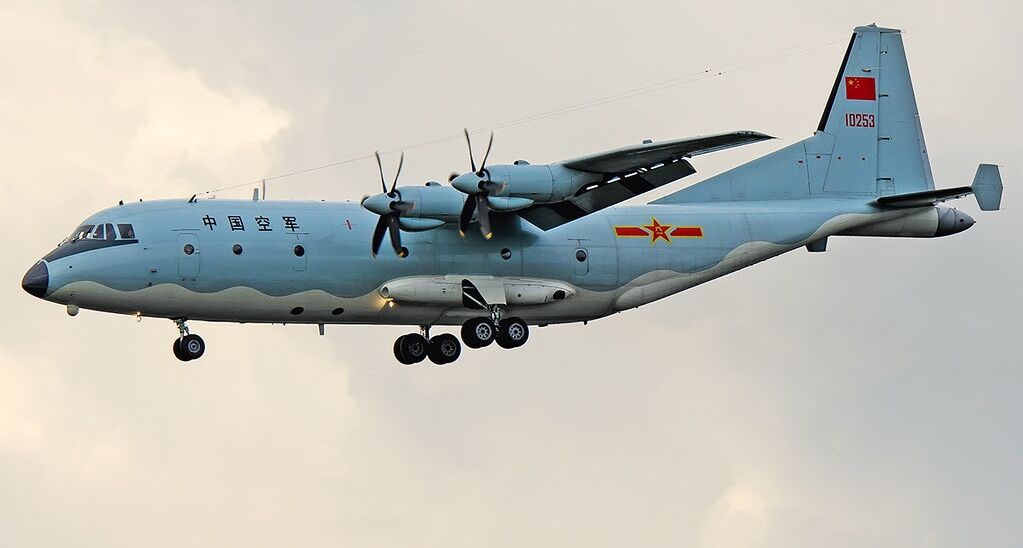
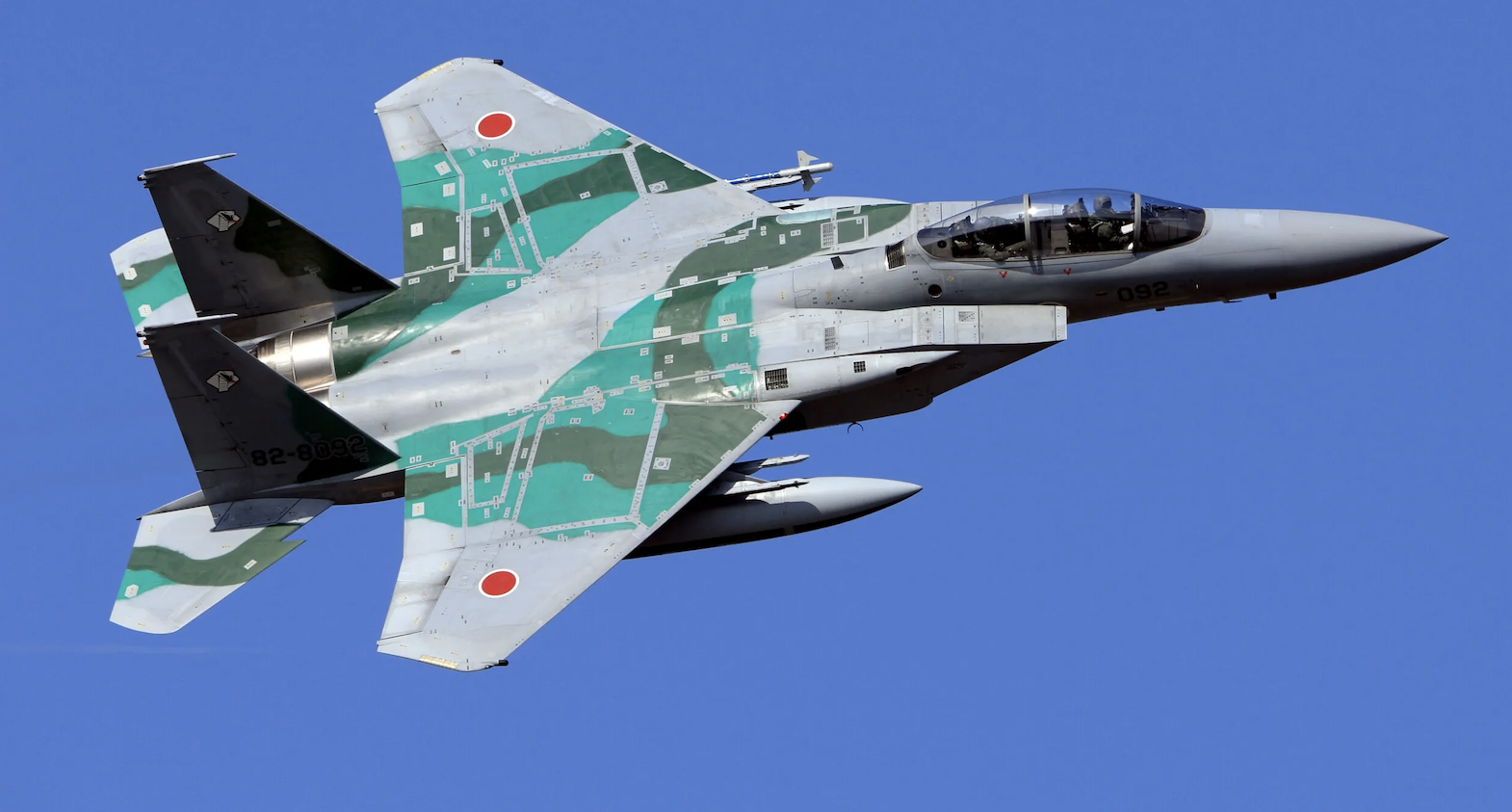
Japanese F-15 Fighters Engage Chinese Y-9 Advanced Recon Aircraft Near Okinawa​

August-14th-2026

The Japan Air Self-Defense Force scrambled F-15 fighter aircraft to intercept a Chinese Y-9 reconnaissance aircraft conducting a flight through the East China Sea. The engagement occurred near Okinawa and the Taiwan Strait. The incident occurred as Chinese surveillance and combat aircraft have operated with increasing frequency around the Nansei island chain, possibly in response to the rapid expansion of the hostile Western military presence in Japan. The published Japanese flight track indicates that the Chinese aircraft remained over international waters throughout the reported flight.

Specialised Y-9 variants have been developed for a range of missions including signals intelligence, electronic intelligence and imagery collection. Such aircraft can gather information on radar emissions, communications and other electronic activity, making their operations valuable for building an understanding of an opponent’s air-defence network and military deployments. Its operation also illustrates the increasingly sophisticated nature of Chinese activity around Japan, as the People’s Liberation Army increasingly deploys specialised intelligence, surveillance and reconnaissance aircraft capable of collecting information while operating outside Japanese territorial airspace. These missions can support future operations by mapping Japanese radar coverage, monitoring communications and identifying patterns in the deployment of Japanese aircraft.

Y-9
Y-9

The Y-9’s presence provides China with an important capability that fighters and bombers alone cannot provide. Its specialised intelligence capabilities allow it to systematically gather information about the opposing force. Flying repeated missions along similar routes allows Chinese operators to become familiar with Japanese radar coverage, fighter reaction patterns and the locations of military installations. The aircraft can also contribute to electronic order-of-battle collection. Modern air forces depend heavily on radars, datalinks, communications systems and electronic warfare equipment. Identifying the characteristics and operating patterns of these systems can provide valuable information for planning future operations, particularly during a major regional contingency.

Fighters operated by the Japan Air Self-Defense Force are maintained at bases around the country and can be rapidly launched when unidentified or foreign military aircraft are detected approaching Japanese airspace. The Southwestern Air Defense Force has become particularly important as Chinese activity around Okinawa has increased. The scale of this mission is reflected in Japan’s overall scramble statistics. During fiscal year 2025, the Air Self-Defense Force conducted 595 scrambles, of which 366 were attributed to Chinese aircraft, compared with 214 involving Russian aircraft. The Southwestern Air Defense Force alone accounted for 348 scrambles, more than half the national total. The F-15s that form the large majority of Japanese fighter units, however, have long since been considered obsolete, with the air power disparity between the two East Asian states rapidly growing in China’s favour.


Users who are viewing this thread

Country Watch Latest

Latest Posts

Back
Top