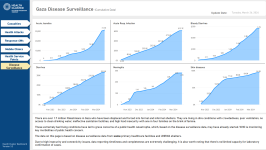
Disease is on the rise inside the Gaza Strip since the start of the war:
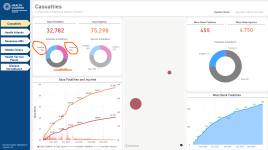
 Women and children now make up the bulk of those killed inside the Gaza Strip:
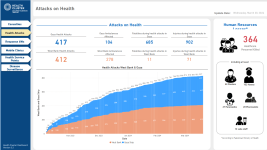
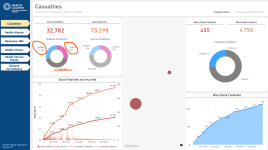 364 Health workers have been killed in Gaza since the start of the war:
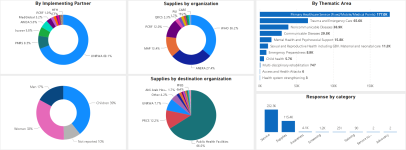
 By attempting to ban UNRWA the Israeli government aim to cripple the largest service provider to the people of Gaza:
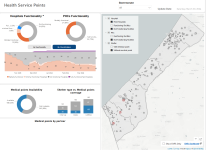
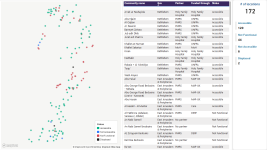
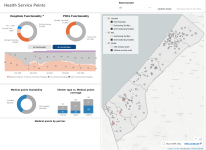
 Out of the 172 mobile health clinics (Not Hospitals) 44 are not functional, 6 are not accessible and 2 are displaced since the war began:
 Only 5% of the hospitals in the Gaza strip are classified as (Full Functioning) by the WHO:
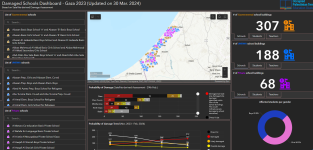
 Almost every school facility in Gaza has been either destroyed, directly hit in classified as "Not Functional" by the United Nations/UNICEF:
--
Gaza's 346,000 children under the age of five are at the greatest risk of malnutrition as the already catastrophic situation rapidly deteriorates across the enclave. In the north, it is estimated that one in three children under the age of two are now suffering from wasting, the most severe form of malnutrition, compared to one in six children in January, according to
The Global Nutrition Cluster - a group of humanitarian organisations focused on nutrition.
Meanwhile Jordanian Airforce and CENTOM conducted further Aid drops via Air:
USCENTCOM
April 1, 2024
Release Number 20240401 – 01
FOR IMMEDIATE RELEASE
TAMPA, Fla. – U.S. Central Command and the Royal Jordanian Air Force conducted a combined humanitarian assistance airdrop into Northern Gaza on April 1, 2024, at 12:16 p.m. (Gaza time) to provide essential relief to civilians in Gaza affected by the ongoing conflict.
The combined joint operation included Jordanian provided food and three U.S. Air Force C-130 aircraft. The U.S. C-130 aircraft dropped 25,344 meal equivalents, including rice, flour, milk, pasta, and canned food, providing life-saving humanitarian assistance.
During today's mission, approximately 60 bundles landed in the sea. CENTCOM does not assess civilian harm or damage to infrastructure at this time but continues to monitor the situation.
The DoD humanitarian airdrops contribute to ongoing U.S. and partner-nation government efforts to alleviate human suffering. These airdrops are part of a sustained effort, and we continue to plan follow-on aerial deliveries.