Pakistan raises record $3 billion through dual-tranche Eurobond

_NOBODY_

Trusted Member
Joined
Jan 6, 2016
Messages
4,705
Reaction score
8,685
Reputation
7,849.9
Country of Origin
Country of Residence

Pakistan raises record $3 billion through dual-tranche Eurobond

Government issues $1.75 billion 5.5-year Eurobond at 7.50% and $1.25 billion 10-year bond at 7.90%; transaction attracts nearly $6 billion demand, twice the amount issued in global orders
1788451435983.png

Pakistan has successfully raised $3 billion through a dual-tranche Eurobond transaction, marking the largest-ever international bond issuance by the country in a single transaction, the Ministry of Finance said.

The transaction attracted nearly $6 billion in orders, almost twice the amount issued, from a broad and diversified base of institutional investors across global markets and continents.

According to the ministry, Pakistan issued a $1.75 billion Eurobond with a 5.5-year maturity at a coupon rate of 7.50%, along with a $1.25 billion 10-year Eurobond carrying a coupon of 7.90%, taking the total issuance to $3 billion.

The Finance Ministry said the transaction marked a major milestone in Pakistan’s renewed and increasingly diversified access to international capital markets, with the scale of demand reflecting investor confidence and the country’s ability to access global funding markets at significant scale.

It said competitive pricing across both maturities, together with strong demand extending to the 10-year tenor, demonstrated Pakistan’s ability to mobilise sizeable longer-term financing as international investors reassess the country’s improving macroeconomic and credit fundamentals.

The transaction also represents an important milestone in Pakistan’s broader “Road to Market” strategy.

Following the successful inaugural Panda Bond and improvements in Pakistan’s sovereign credit profile, the Eurobond transaction is the first issuance under the country’s renewed strategic Global Medium-Term Note (GMTN) Programme, creating a platform for diversified access to international capital markets.

The ministry said the objective was not simply to raise additional debt. Pakistan is pursuing a broader strategy of active sovereign liability management aimed at diversifying financing sources, extending maturities, reducing refinancing and rollover risks, and creating opportunities to replace shorter-term and more expensive obligations with longer-duration, competitively priced financing where economically beneficial.

Pakistan has already pursued substantial early retirement of domestic debt ahead of maturity, according to the statement. Extending that approach to external financing forms part of the same strategy of improving the sovereign debt profile.

The ministry said the approach was focused on borrowing on better terms, extending maturities, diversifying funding and reducing refinancing risks, distinguishing active sovereign balance-sheet management from simply raising additional debt.

The Debt Management Office of the Ministry of Finance played a pivotal role in delivering the transaction, the statement said.

Citi, Deutsche Bank, Emirates NBD, MUFG and Standard Chartered acted as joint bookrunners for the issuance.

The government also acknowledged the support of other stakeholders, including legal counsels involved in the transaction.

The ministry said the issuance followed improvements in Pakistan’s economic trajectory over the past three years, which had increasingly been recognised through successive sovereign credit-rating upgrades and the country’s renewed access to international capital markets.

It said the depth of the order book, its geographically diversified institutional investor base and substantial demand for a 10-year Pakistani sovereign instrument provided a market-based signal of renewed confidence in the country’s medium- and long-term economic trajectory.

The ministry, however, said the economic reform process was not complete and that fiscal discipline, structural reforms, export competitiveness, investment and productivity improvements would need to continue and deepen.

It said Pakistan was entering the next stage from a materially stronger position than three years ago, following a transition from crisis towards stabilisation, reforms, improved credibility, ratings upgrades, investor confidence and renewed access to global capital.

In April, the government initially raised $500 million through a three-year Eurobond under its GMTN Programme at a coupon rate of 6.975%. The issuance was later increased to $750 million through a $250 million green-shoe option following stronger-than-expected investor demand. The bond is due to mature in April 2029.

Pakistan also repaid a $1.4 billion Eurobond that matured in April, enabling the government to re-establish a pricing benchmark in international debt markets after several years of relying largely on multilateral, bilateral and commercial financing.

The ministry described nearly $6 billion in global investor demand and the record $3 billion raised in a single transaction as a landmark in Pakistan’s transition from economic stabilisation towards sustainable growth and a stronger platform for future access to international capital markets.

 
Quite a high interest rate but that is the price you pay for economic weakness and political instability. A wikipedia article on previous Eurobond issuances by Pakistan.


I remember the Eurobond issued during Mr Musharraf's time and that was also described in the press as "oversubscribed".
 

Pakistan has successfully raised $3 billion through a dual-tranche Eurobond transaction, marking the largest-ever international bond issuance by the country in a single transaction, the Ministry of Finance said.

According to the ministry, Pakistan issued a $1.75 billion Eurobond with a 5.5-year maturity at a coupon rate of 7.50%, along with a $1.25 billion 10-year Eurobond carrying a coupon of 7.90%, taking the total issuance to $3 billion.
The definition of 'success' is doing some heroic work here. My business loan in India is at repo + 2% which is 7.25%. Pakistan is celebrating sovereign borrowing at 7.5–7.9%.
 

Pakistan raises record $3 billion through dual-tranche Eurobond

Government issues $1.75 billion 5.5-year Eurobond at 7.50% and $1.25 billion 10-year bond at 7.90%; transaction attracts nearly $6 billion demand, twice the amount issued in global orders

View attachment 213807

Pakistan has successfully raised $3 billion through a dual-tranche Eurobond transaction, marking the largest-ever international bond issuance by the country in a single transaction, the Ministry of Finance said.

The transaction attracted nearly $6 billion in orders, almost twice the amount issued, from a broad and diversified base of institutional investors across global markets and continents.

According to the ministry, Pakistan issued a $1.75 billion Eurobond with a 5.5-year maturity at a coupon rate of 7.50%, along with a $1.25 billion 10-year Eurobond carrying a coupon of 7.90%, taking the total issuance to $3 billion.

The Finance Ministry said the transaction marked a major milestone in Pakistan’s renewed and increasingly diversified access to international capital markets, with the scale of demand reflecting investor confidence and the country’s ability to access global funding markets at significant scale.

It said competitive pricing across both maturities, together with strong demand extending to the 10-year tenor, demonstrated Pakistan’s ability to mobilise sizeable longer-term financing as international investors reassess the country’s improving macroeconomic and credit fundamentals.

The transaction also represents an important milestone in Pakistan’s broader “Road to Market” strategy.

Following the successful inaugural Panda Bond and improvements in Pakistan’s sovereign credit profile, the Eurobond transaction is the first issuance under the country’s renewed strategic Global Medium-Term Note (GMTN) Programme, creating a platform for diversified access to international capital markets.

The ministry said the objective was not simply to raise additional debt. Pakistan is pursuing a broader strategy of active sovereign liability management aimed at diversifying financing sources, extending maturities, reducing refinancing and rollover risks, and creating opportunities to replace shorter-term and more expensive obligations with longer-duration, competitively priced financing where economically beneficial.

Pakistan has already pursued substantial early retirement of domestic debt ahead of maturity, according to the statement. Extending that approach to external financing forms part of the same strategy of improving the sovereign debt profile.

The ministry said the approach was focused on borrowing on better terms, extending maturities, diversifying funding and reducing refinancing risks, distinguishing active sovereign balance-sheet management from simply raising additional debt.

The Debt Management Office of the Ministry of Finance played a pivotal role in delivering the transaction, the statement said.

Citi, Deutsche Bank, Emirates NBD, MUFG and Standard Chartered acted as joint bookrunners for the issuance.

The government also acknowledged the support of other stakeholders, including legal counsels involved in the transaction.

The ministry said the issuance followed improvements in Pakistan’s economic trajectory over the past three years, which had increasingly been recognised through successive sovereign credit-rating upgrades and the country’s renewed access to international capital markets.

It said the depth of the order book, its geographically diversified institutional investor base and substantial demand for a 10-year Pakistani sovereign instrument provided a market-based signal of renewed confidence in the country’s medium- and long-term economic trajectory.

The ministry, however, said the economic reform process was not complete and that fiscal discipline, structural reforms, export competitiveness, investment and productivity improvements would need to continue and deepen.

It said Pakistan was entering the next stage from a materially stronger position than three years ago, following a transition from crisis towards stabilisation, reforms, improved credibility, ratings upgrades, investor confidence and renewed access to global capital.

In April, the government initially raised $500 million through a three-year Eurobond under its GMTN Programme at a coupon rate of 6.975%. The issuance was later increased to $750 million through a $250 million green-shoe option following stronger-than-expected investor demand. The bond is due to mature in April 2029.

Pakistan also repaid a $1.4 billion Eurobond that matured in April, enabling the government to re-establish a pricing benchmark in international debt markets after several years of relying largely on multilateral, bilateral and commercial financing.

The ministry described nearly $6 billion in global investor demand and the record $3 billion raised in a single transaction as a landmark in Pakistan’s transition from economic stabilisation towards sustainable growth and a stronger platform for future access to international capital markets.


These bonds were issued at a discount. The pricing was done at yields of 7.75% and 8.25%, which are the true measures of the interest cost.

 
The definition of 'success' is doing some heroic work here. My business loan in India is at repo + 2% which is 7.25%. Pakistan is celebrating sovereign borrowing at 7.5–7.9%.

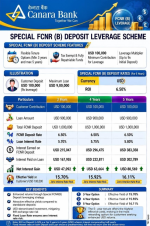
Meanwhile India is celebrating this, can't beat 16%!
1788453716399.png
 
Quite a high interest rate but that is the price you pay for economic weakness and political instability. A wikipedia article on previous Eurobond issuances by Pakistan.


I remember the Eurobond issued during Mr Musharraf's time and that was also described in the press as "oversubscribed".
There is always a buyer at the right price. Actually, the bond coupon was 7.9% for the 10 year and the expectation was that it would be priced around that yield, but based on market conditions, the bond priced at a yield of 8.25%, which means that for every dollar of repayment obligation at maturity, only around 96.5 cents were received upfront. So, the issuance was on worse terms than anticipated.
 
There is always a buyer at the right price. Actually, the bond coupon was 7.9% for the 10 year and the expectation was that it would be priced around that yield, but based on market conditions, the bond priced at a yield of 8.25%, which means that for every dollar of repayment obligation at maturity, only around 96.5 cents were received upfront. So, the issuance was on worse terms than anticipated.
Are you saying this was both a discount AND a high interest yielding bond ? I never heard of that before.
 
Are you saying this was both a discount AND a high interest yielding bond ? I never heard of that before.
It was a discount bond because the bond coupon (7.9%) , though high, was lower than the yield (8.25%) at which it was priced. The discount is only around 3% , I think, but this is actually typical in the US . For example, when the US Treasury issues notes and bonds, they are required to be issued at a discount( IIRC due to some IRS requirement). There is an auction process which determines the yield based on demand , and the note/bond is issued with the highest coupon in 1/8 of a percentage point increments that still makes it a discount bond ( coupon is lower than yield) . So, if the auction yield is 4.63%, the coupon will be 4.625%. For 1000 dollars investment, you will pay slightly less than 1000 dollars upfront , get paid 23.125 dollars every six months and get 1000 back in 10 years.
 
It was a discount bond because the bond coupon (7.9%) , though high, was lower than the yield (8.25%) at which it was priced. The discount is only around 3% , I think, but this is actually typical in the US . For example, when the US Treasury issues notes and bonds, they are required to be issued at a discount( IIRC due to some IRS requirement). There is an auction process which determines the yield based on demand , and the note/bond is issued with the highest coupon in 1/8 of a percentage point increments that still makes it a discount bond ( coupon is lower than yield) . So, if the auction yield is 4.63%, the coupon will be 4.625%. For 1000 dollars investment, you will pay slightly less than 1000 dollars upfront , get paid 23.125 dollars every six months and get 1000 back in 10 years.
I am weak in Finance but seems you know it well. Thanks for the explanation.
 
Meanwhile India is celebrating this, can't beat 16%!
View attachment 213810
You are silly, it's an investment scheme aimed at NRIs, NRI contribute USD 100000. Canara Bank arranges a USD 900000 loan, and the entire USD 1 million is placed in a five year FCNR deposit.

So the $100000 becomes approximately $180k after five years. Looks like individual Indians might be able to get bigger loans than the Pakistani govt 😂
 
You are silly, it's an investment scheme aimed at NRIs, NRI contribute USD 100000. Canara Bank arranges a USD 900000 loan, and the entire USD 1 million is placed in a five year FCNR deposit.

So the $100000 becomes approximately $180k after five years. Looks like individual Indians might be able to get bigger loans than the Pakistani govt 😂

?? See the chart again. USD 1 lakh become 1.8 lakh in 5 years. Zero risk for diaspora, 16% yield.

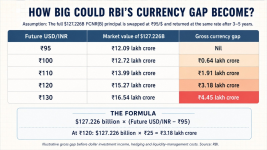
Meanwhile India is betting on rupee staying below 95 vs USD after 5 years LOL

1788462470152.png
 

Users who are viewing this thread

Back
Top