Yemen Civil War News and Discussion.. an evolving situation

This post claims Ansarallah could be close to encircling the city of Taiz. Methinks the oil rich Marib province would be a more worthy prize.


This is absolutely fake.

The houthis are on the backheel for the last week since their surprise attack
 
By the grace of Allah Almighty, then the steadfastness of our Southern Armed Forces, supported by the Southern Resistance and the tribes of the Southern Arabian Peninsula in Al Sabeeha, the Houthi militias have been repelled from Jabal Kahub overlooking Bab al-Mandab.


Houthis push for control of Yemen highlands as Trump reported to have called off airstrikes​


DUBAI, Sept 21 (Reuters) - Houthi fighters were pushing to seize strategic heights in Yemen on Monday to cut off the Red Sea coast from remaining areas held by Saudi-backed forces, after a report that President Donald Trump had called off US strikes on the group at the last minute.


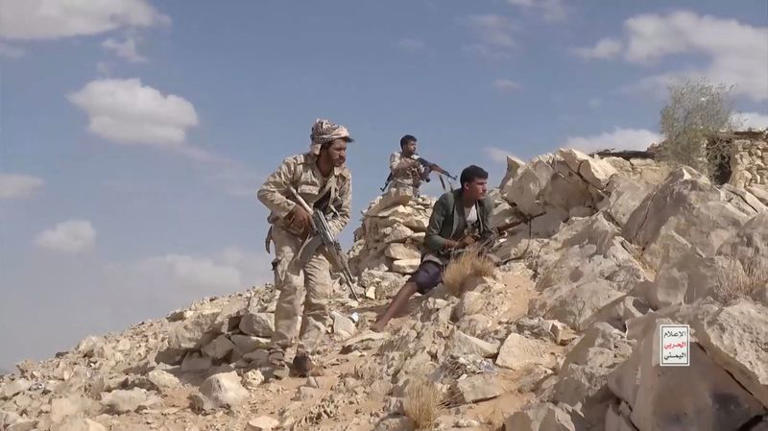
Iran-aligned Houthi fighters occupy a firing position in a screengrab from a video said to show Houthi fighters attacking Saudi-backed forces in the location given by the source as al Jawf governorate, Yemen, in this screengrab taken from a video released by Houthi Military Media on September 15, 2026. HOUTHI MILITARY MEDIA/Handout via REUTERS

Iran-aligned Houthi fighters occupy a firing position in a screengrab from a video said to show Houthi fighters attacking Saudi-backed forces in the location given by the source as al Jawf governorate, Yemen, in this screengrab taken from a video released by Houthi Military Media on September 15, 2026. HOUTHI MILITARY MEDIA/Handout via REUTERS© Thomson Reuters

A lightning advance by the Iran-backed group this month has extended the wider Middle East conflict to a new theatre and further threatened global energy supplies.

Washington has so far rebuffed repeated pleas from Saudi Arabia's Crown Prince Mohammed bin Salman to join the fight in Yemen. The Houthis said on Saturday they had fired on Riyadh, where loud booms were followed by columns of smoke visible near the airport.


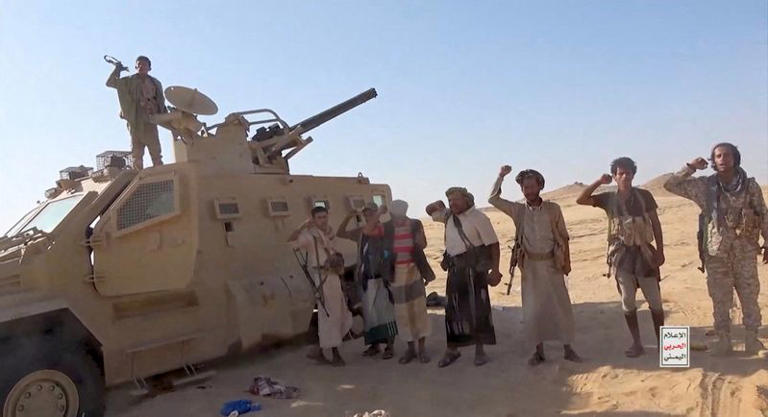
Iran-aligned Houthi fighters pose next to a captured vehicle following what the source described as an attack on Saudi-backed forces in the location given by the source as al Jawf governorate, Yemen, in this screengrab taken from a video released by Houthi Military Media on September 15, 2026. HOUTHI MILITARY MEDIA/Handout via REUTERS

Iran-aligned Houthi fighters pose next to a captured vehicle following what the source described as an attack on Saudi-backed forces in the location given by the source as al Jawf governorate, Yemen, in this screengrab taken from a video released by Houthi Military Media on September 15, 2026. HOUTHI MILITARY MEDIA/Handout via REUTERS© Thomson Reuters

Saudi Arabia has not commented on the first apparent strikes on the capital since the escalation began.

The New York Times reported that the Trump administration had prepared on Sunday to launch airstrikes against the Houthis after fresh pleas from the Saudi crown prince. But the newspaper said Trump called off the airstrikes at the last minute, even as troops were loading bombs onto aircraft.

Reuters could not immediately verify the report and the US military's Central Command did not respond to an email seeking comment.

FIGHTING IN HIGHLANDS

The Houthis, who have controlled Yemen's capital since 2014, seized the country's Red Sea coast this month in a lightning advance that routed forces of an internationally recognised Yemeni government, which is backed by Saudi Arabia and based in the south.

Saudi Arabia has launched hundreds of strikes in recent days on the fighters' positions in the highlands, according to the Houthis. But the air power advantage has so far done little to slow the advance of the fighters as Saudi-backed government forces have melted away.

According to the United Nations, nearly 700 people have been killed and thousands injured in the flare-up in fighting. More than 120,000 Yemenis have fled homes within Yemen, and thousands more have fled by boat across the Red Sea to Africa.

Five Yemeni military sources told Reuters the Houthis were now seeking to seize strategic heights, known as the Kahboub Mountains, in two provinces, Taiz and Lahij, which separate the Red Sea coast from the government-held south.

Fighting has centred on the outskirts of the remote mountain Al-Wazi'iyah district in Taiz province, and Ras al-Ara along the Indian Ocean coast between the mouth of the Red Sea that the fighters captured last week and the government's base in Aden.

The Houthis aim to secure the rear of their forces around the Bab al-Mandab Strait leading into the Red Sea by taking control of the heights, which would allow them to open new fronts, according to the sources. That would help protect exposed positions the Houthis captured during their advance around Dhubab on the Red Sea and on Perim Island in the strait.


SAUDI OIL EXPORTS

The surge in fighting between Saudi Arabia and the Houthis creates a new dilemma for Trump, under pressure to help defend Washington's close Saudi allies but anxious not to further expand the deeply unpopular war he launched in February against Iran.

The United States bombed the Houthis for two months in early 2025, but Trump called off those strikes after reaching a ceasefire with the group and has kept out of the conflict since.

The Houthis' newfound control of the Bab al-Mandeb Strait risks cutting off the main alternative route that Saudi Arabia has used for oil exports that bypass disruption in the Strait of Hormuz.

Saudi Arabia has responded by increasing shipments through Hormuz, where a small number of tankers are increasingly shuttling back and forth to bring out oil with their transponders off, charging record fees of as much as a quarter of the value of the cargo to brave the wartime risk. They then transfer the oil to other ships in the Indian Ocean, bound for customers in Asia or elsewhere.

Satellite data shows Saudi exports through Hormuz reaching 2.9 million barrels per day in recent days, up from just 700,000 in August, partially making up for a halt to Saudi loadings at its Red Sea port of Yanbu.


That has helped put a cap on the global price of crude oil, which has retreated closer to $100 a barrel after approaching $110 last week. But consumers and industry are still paying record prices for refined fuels.

The US retail price of diesel, politically sensitive for Trump with midterm elections in six weeks, hit another all-time high on Monday above $6.51 a gallon. It was around $3.75 before Trump launched the war alongside Israel in February.

In the latest reported attack in Hormuz, Britain's UKMTO maritime security agency said a ship sailing into the strait had been hit with a projectile, causing minor injuries to crew.

Diplomacy in the wider conflict has largely been stalled since a June interim agreement between the United States and Iran collapsed within weeks. Iran's President Masoud Pezeshkian is due to fly on Tuesday to New York to attend the UN General Assembly, the first such visit since Trump launched "Operation Epic Fury" against his country alongside Israel in February.


Oh boy, that’s a depressing news

The deeper problem may be the cost-exchange ratio. A high -end interceptor can defeat a cheap drone , but repeating that exchange at scale can gradually exhaust the defenders budget and inventory. The real question is whether Saudi Arabia can make its defensive architecture economically sustainable?
 

This article plus the one I posted above indicates Ansarallah are aiming to cutoff government forces from their trade/supply/transportation routes in central Yemen.

As US steers clear of Yemen fight, the Iran-backed Houthis launch next phase of campaign​

In the last month, Iran-backed Houthi militants in Yemen have joined the Middle East conflict in dramatic fashion – capturing a swathe of the Red Sea coastline, sending missiles and drones against Saudi energy infrastructure and even targeting the Saudi capital Riyadh on the weekend.

Now their campaign appears to be entering a new phase, with a major offensive aimed at cutting off government forces in a central part of Yemen.

Their ultimate goal – according to some analysts – is control of the entire country.

The latest Houthi advance comes as Saudi Arabia deploys fighter jets and missiles in an effort to stem the militant group’s progress south towards the port city of Aden, where Yemen’s internationally-recognized government is based.

Saudi appeals for US airstrikes to reverse Houthi gains have fallen on deaf ears, according to a regional diplomatic source.

The Houthis have already seized a long stretch of the Yemeni coastline adjacent to the Red Sea – one of the world’s most important waterways – and control the Bab al-Mandeb chokepoint at its southern end.

Now, they are trying to take control of the mountainous region of Taiz, which includes important routes for government forces.

“Cutting these routes would threaten a key transport and supply connection between government-held areas,” according to Yemen analyst Mohammed al-Basha.

The Houthis have run into stiff resistance from local tribes, Basha told CNN.

The battlefield situation remains fluid, according to Basha, and the risk remains that the Houthis will be able to surround the city of Taiz. But it appears that defenses have not experienced a collapse comparable to what was seen on the west coast front, when a large area – including the port of Mocha – fell within hours.


Basha added that, as of Monday, a critical road junction connecting Taiz and Aden in an area hosting hundreds of thousands of internally-displaced people remains in government hands.

There is also heavy fighting further east, according to several Yemen analysts, in the province of Marib near the border with Saudi Arabia. Marib is an oil-rich region long in the Houthis’ sights.


Yemeni government forces have used artillery and rocket systems – supported by Saudi airstrikes of growing intensity – to repel Houthi forces in the region, according to analysts, and a senior commander claimed that his troops had now gone on the offensive.


“The Houthis likely seek to capture the area in order to try to extract and export oil through the Red Sea, which could fund Houthi political and military activities,” according to the Institute for the Study of War, a Washington think-tank, on Friday.

“Taiz and Marib cities are the bastions of north Yemen and if the Houthis capture both it is game over – but their defenders are putting up a strong fight,” Basha told CNN.

It’s unclear whether the Houthis intend to put pressure on Aden itself. Much will depend on the ability of government forces to improve coordination after the disastrous western shore retreat.

“The Houthis do not need to defeat Saudi Arabia militarily and near certainly cannot,” says Ibrahim Jalal of the Middle East Institute in Washington.

A view of a makeshift camp for people displaced by clashes between Iran-aligned Houthi fighters and Saudi-backed Yemeni government forces, in Taiz province, Yemen September 13, 2026.

A view of a makeshift camp for people displaced by clashes between Iran-aligned Houthi fighters and Saudi-backed Yemeni government forces, in Taiz province, Yemen September 13, 2026.
Stringer/Reuters
“They, however, need to influence how much financing, intelligence, logistics, air defence and potentially airpower Riyadh is prepared to commit to the Yemeni Armed Forces capable of reversing their gains on the ground.”

To that end, Jalal told CNN, the Houthis are avoiding getting bogged down in urban fighting and trying to encircle government forces.


CNN has contacted Houthi officials for comment.

Related article
Iran-aligned Houthi fighters move next to a destroyed vehicle following what a source described as an attack on Saudi-backed forces on September 15.


The New York Times reported Monday that, after a call from Saudi Crown Prince Mohammed bin Salman last week, US President Donald Trump had agreed to launch air strikes against the Houthis. But Trump changed his mind on Sunday, according to the Times.

Last week, Trump said the Houthis “let us know they don’t want to fight with us,” adding that they were allowing “most ships” to pass through the Bab al Mandeb strait but were “unhappy” with one country – obviously Saudi Arabia.


The Houthis said two months ago that they would attack Saudi shipping.

“Trump’s best option is to stay out of the Yemen quagmire as remote warfare won’t change the equilibrium on the ground while widening supply chain disruption,” according to Andreas Krieg, CEO of London-based political risk firm MENA Analytica. “It would also derail the Iran and Hormuz diplomatic track,” Krieg wrote on X Monday.

However, the “inconsistency in the US position vis-à-vis Tehran’s proxies means that the Yemeni government and Saudi Arabia have had to handle the Houthis largely on their own,” Fatima Abo Alasrar, a Yemeni analyst, wrote in a piece for the Stimson Center, a US research institute.

So far, Saudi Arabia does not appear to have invoked its recently agreed trilateral defense pact with Pakistan and Turkey. And Turkish officials have been careful not to offer too much.

https://www.cnn.com/2026/09/10/middleeast/houthis-capture-mocha-red-sea-strait-intl
“We see there are very serious attacks on Saudi Arabia’s territorial integrity, sovereignty,” Turkish Foreign Minister Hasan Fidan said on Saturday, referring to Houthi drone and missile attacks on Saudi Arabia.


“We are in serious solidarity on this point… They may have some military needs, especially on some technical issues. We would have no issues in meeting these,” Fidan told Turkish channel NTV.

Saudi isolation​

“Saudi Arabia is discovering how alone it is in a moment of need,” analyst Natiq Malikzada said Monday. “For years, it built its security around the hope that Washington would defend it.”

“For the US, as for any other country in times like this, Saudi security matters less when American interests are not directly at risk,” Malikzada wrote on X.


Jalal says the Saudis can count on some support from regional allies and Pakistan, and potentially from Egypt.

But for now they bear the lion’s share of the burden.

This frame grab taken from AFPTV video footage shows a fighter from the Saudi-backed Nation's Shield Forces deployed in Yemen's Al-Kadha area, west of Taiz province, on September 10, 2026.

This frame grab taken from AFPTV video footage shows a fighter from the Saudi-backed Nation's Shield Forces deployed in Yemen's Al-Kadha area, west of Taiz province, on September 10, 2026.
AFPTV/AFP/Getty Images

Iran is banking on the Houthis as its “last resilient proxy to improve its bargaining position and leverage, while the Houthis now seek to consolidate gains and expand territorially, as well as intensify attacks into Saudi Arabia, to redraw the rules of the game,” Jalal wrote in the online publication Al Majalla.

The Houthis “will continue to punish Saudis till they get their multi-billion dollar reparations fund,” Basha told CNN Monday. They have long insisted on Saudi compensation for the long blockade against Yemeni territory they hold.


But Houthi ambitions may go further. Jalal says their ultimate goal is control of all of Yemen.

Javan Online, an Iranian publication affiliated with the Islamic Revolutionary Guard Corps (IRGC), recently suggested the Houthis were close to unifying Yemen under a “single center of power.”

In so doing they would become a regional force capable of making their opponents negotiate over Red Sea security and the future of the Arabian Peninsula itself, the Javan commentary said.

That is Saudi Arabia’s nightmare.
 
Reality:
The United States was recently planning several weeks ago to intervene against the Houthis.. But Saudi Arabia stopped them and informed them that it alone was capable of ending the Houthi issue

This was announced on news channels
 
Reality:
The United States was recently planning several weeks ago to intervene against the Houthis.. But Saudi Arabia stopped them and informed them that it alone was capable of ending the Houthi issue

This was announced on news channels
plz share the source also
 
Houthi bombing of the popular market must be highlighted to the world through the media
 
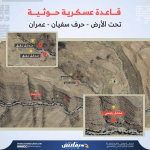
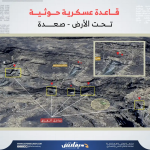
After the truce, the Houthi militias prepared for war, armed themselves, and built hideouts and caves.

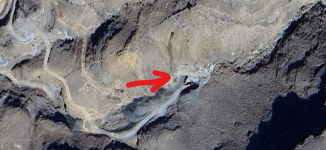
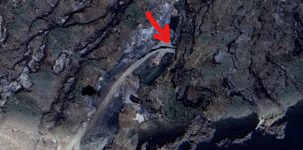
One of the most important caves built by the Houthi militia after 2022 is the Jabal Sar' caves in Bani Hashish, north of Sana'a.
Built caves are often used to store ballistic missiles and are located hundreds of meters below the top of the mountain.

Entrance to the first cave.

1790015611957.png

Second entrance

1790015669935.png
 
Again, none of the fair people, who don't have any sectarian bias support Saudi-USA/Israel axis:


Users who are viewing this thread

Pakistan Defence Latest

Back
Top