Oscar
Moderator


But will not turn down economic profit.Beijing will perceive this as weakness.
Follow along with the video below to see how to install our site as a web app on your home screen.
Note: This feature may not be available in some browsers.
But will not turn down economic profit.Beijing will perceive this as weakness.

A week after China slapped them once by ratifying its border in the region of Aksai Chin, you might have expected a dignified response, but here they are begging Beijing.
What a pathetic qom. Beijing will perceive this as weakness.
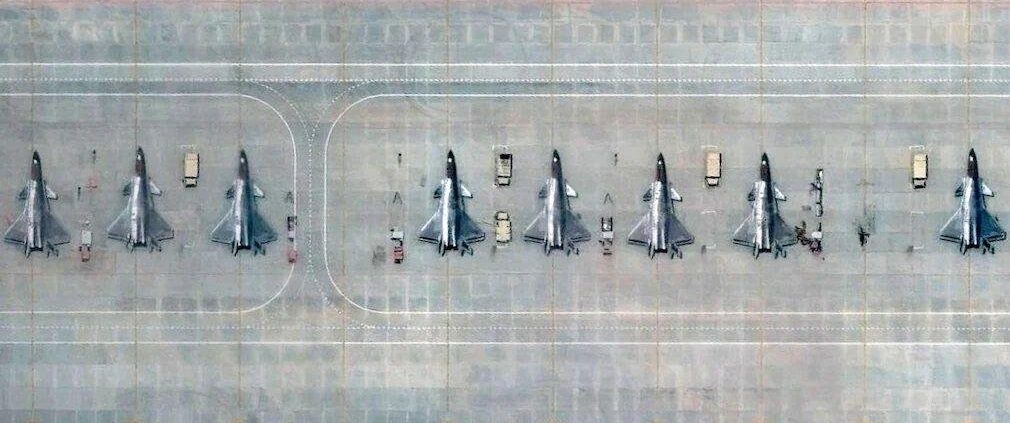
 defencesecurityasia.com
That is certainly the right question to ask.Also what is the incentive for China to actively undermine Pakistani airspace restrictions and its effect on India?
What is the benefit to China???




This is a movie based on a real recent story, a Uyghur boy in Hotan accidently gets one of his arms cut off and joint efforts are made by all walks of the society trying to get the boy to a top hospital in time so that his cut off arm can be reconnected.Another challenge is that parts of Xinjiang's airspace are controlled by the Chinese military, making commercial access more complicated.
From Pakistan To Xinjiang: India’s Search For A New Air Route
India is exploring a proposed air route through China's Xinjiang region to provide Indian airlines with an alternative to longer flight paths caused by Pakistani and Iranian airspace restrictions
Published at: 30 September 2026 1:17 pm
SUMMARY OF THIS ARTICLE
India is exploring an alternative air route through China's Xinjiang region as continued restrictions on Pakistani and Iranian airspace force Indian airlines to take longer routes to Europe, North America and Central Asia.
- India is in talks for an air corridor through China's Xinjiang region, possibly via Hotan, to bypass Pakistani airspace curbs.
- Detours over the Arabian Sea and Oman add one to three hours to some flights and raise airline costs.
- The route could shorten westbound journeys, but it needs China's agreement.
The proposed corridor could pass through or near Hotan in southwestern Xinjiang, with Indian flights potentially entering Chinese airspace via Leh before travelling west. But discussions between India and China have been ongoing for more than a year and no agreement has been reached yet.
Civil Aviation Minister Ram Mohan Naidu said, “We are looking at other alternatives. Discussion on the Hotan route is going on between the two countries. Our external affairs ministry (MEA) is engaging with their country. Let us see how it goes, but we are trying alternatives.”
Why Does India Want A Route Over Xinjiang?
Pakistan closed its airspace to Indian carriers after the April 2025 Pahalgam terror attack, and India subsequently imposed a reciprocal restriction. The closure has forced airlines operating westbound flights from northern and western India to use longer routes, including paths over the Arabian Sea and towards Oman.
The longer routes mean increased flying time, fuel consumption and crew costs. Air India had previously estimated that the Pakistani airspace closure could cost it about $600 million over 12 months if the restrictions remained in place. Rising aviation fuel prices have added to the financial pressure on carriers.
The prolonged diversion has particularly affected Air India, which operates a significant number of long-haul services from its Delhi and Mumbai hubs.
Former Air India CEO Campbell Wilson had estimated in 2025 that the airline lost around Rs 4,000 crore because of the Pakistani airspace closure. The additional flying time has increased fuel consumption and operating costs on affected routes.
How Would The Xinjiang Route Help?
Pakistan lies directly along some of the most efficient westbound flight paths from northern India. The alternative routes have increased flight durations by around one to three hours.
Flights from northern and eastern Indian airports are currently being diverted over the Arabian Sea before entering Omani airspace and continuing towards Europe, North America or Central Asia.
The diversion has added around one to three hours to some flight journeys, increasing fuel consumption and operating costs for airlines.
The proposed corridor would see Indian flights enter Chinese airspace via Leh before travelling west towards Central Asia. The route could particularly help flights headed for Central Asian and eastern European destinations by providing a more direct alternative to the current detours.
The precise corridor has not yet been finalised, and the amount of time and fuel that could be saved would depend on the route China ultimately permits and which flights are allowed to use it.
The proposal could particularly benefit long-haul flights from Delhi and other northern Indian airports.
The potential route has gained additional importance because Iranian airspace is also under severe restrictions and recurring closures amid the war. Indian carriers have avoided the Iranian route, reducing the number of practical alternatives available for westbound flights.
The combination of Pakistani and Iranian airspace restrictions has therefore increased the importance of finding another corridor.
Why Isn't It Easy For India To Get The Route?
The first obstacle is that China has to approve the use of its airspace. India cannot simply redirect commercial flights through Xinjiang. The two countries need to agree on the route, flight permissions and other aviation arrangements. Sources told India Today that discussions have been continuing for nearly a year without an agreement.
Even if an agreement is reached, the practical benefits would depend on how the corridor is structured and which flights are permitted to use it.
The proposal also comes against the backdrop of India's complicated relationship with China. The two countries experienced a prolonged military standoff following the 2020 border tensions, although bilateral relations have shown signs of improvement more recently. India and China have since taken steps towards stabilising ties, creating a broader diplomatic context for the aviation discussions.
At present, flights from northern and eastern airports such as Jaipur, Amritsar, Chandigarh, Delhi, Lucknow and Kolkata are being diverted through the Lima 639 and Lima 301 air routes, according to The Week. The routes, managed through air-traffic control centres in Ahmedabad and Mumbai, take aircraft over the Arabian Sea before they enter Omani airspace and continue towards western destinations.
There is also the question of which flights would actually be allowed to use the corridor. Even if China agrees in principle, the eventual route could depend on aviation, security and air-traffic considerations. India Today noted that the savings would depend on the route China permits and the flights eligible to use it.
For now, therefore, the Xinjiang proposal is an alternative being negotiated, rather than a replacement for the Pakistani route.
Another challenge is that parts of Xinjiang's airspace are controlled by the Chinese military, making commercial access more complicated.
A senior Indian official said discussions with China over the proposed route have been held through multiple rounds of talks, but obtaining the necessary clearance remains difficult. The negotiations have been underway for more than a year through the Ministry of External Affairs.
Why India Wants An Air Route Over China's Xinjiang Amid Pakistan Airspace Ban | Outlook India
India is exploring a proposed air route through China's Xinjiang region to provide Indian airlines with an alternative to longer flight paths caused by Pakistani and Iranian airspace restrictionswww.outlookindia.com
A famous joke:Clowns went from "Two front war" and "Quad alliance saar!" to "Please let us use airspace, please" very quickly heh?