Cockroach Janta Party zindabad

You are a spokesperson of Modi and the Brahmin elite. You are bound to fight their case.

Facts speak for themselves. People with eyes can see how gen Z is fed up with Brahim politics in India. You guys want to control and impose yourselves on the rest. You guys profit and the rest don't get an equal share. This conflict will remain.
Shame on modi. He should learn true democracy form our neighbors !
 
Shame on modi. He should learn true democracy form our neighbors !

‘Cockroach’ party leader released as Delhi braces for second day of protests

More than 2,000 people were reportedly detained on Saturday, prompting criticism of Modi’s ruling government


joker-the-dark-knight.gif
 
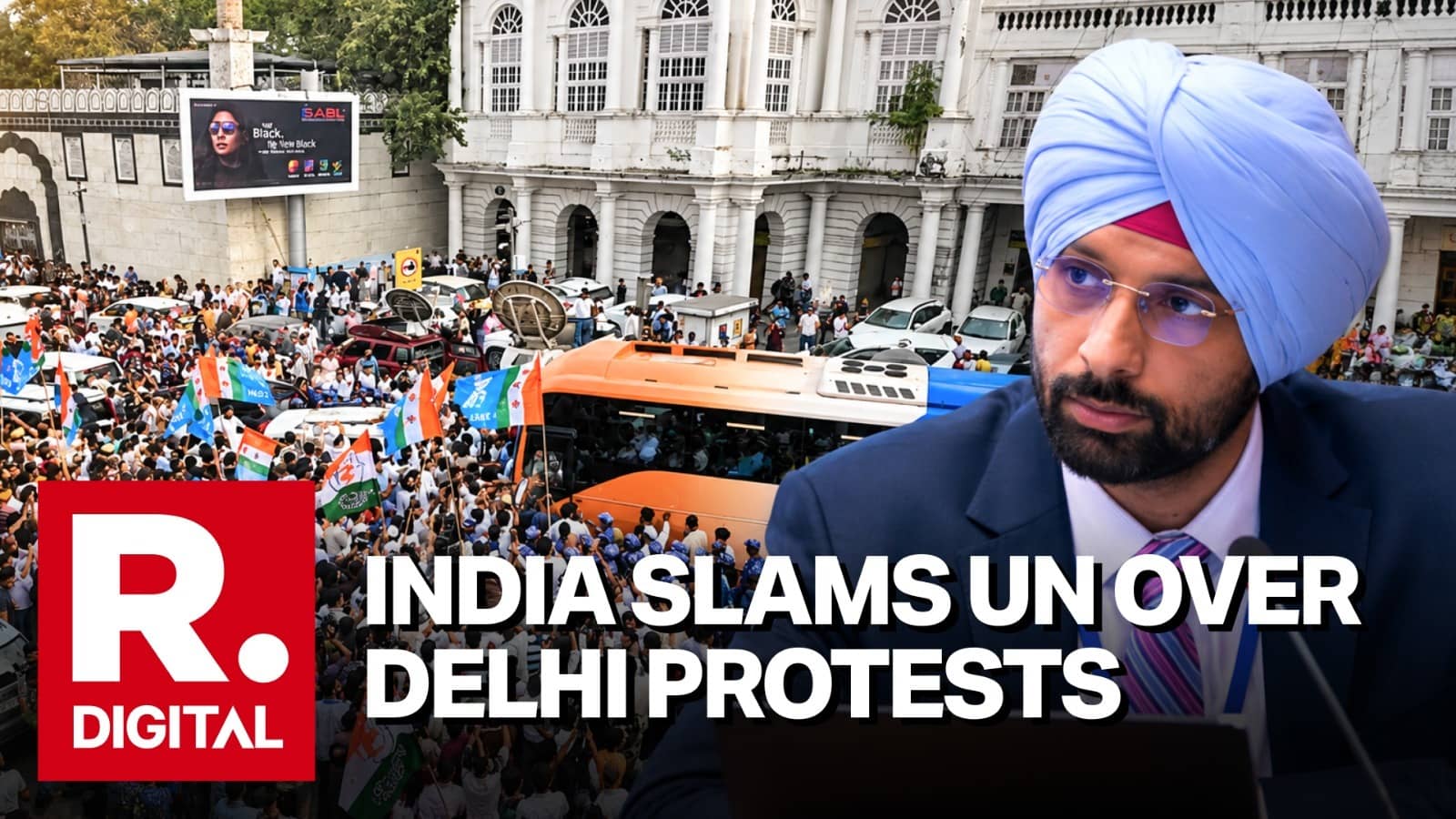
'Interference in Internal Affairs': India Rebukes UN Human Rights Body Over Delhi Protest Crackdown

In an official statement, the Ministry of External Affairs (MEA) emphasised, “India is the world’s largest democracy, where the right to peaceful assembly is guaranteed by our Constitution and safeguarded by robust institutions, an independent judiciary and a free media.”


--

Don't criticise India. It is a holy cow and above criticism.

It is good if India claims half of the region in its vicinity, but don't you dare question Indian internal affairs.
 

‘How do you explain the deletion of 130 million names?’: why Indian voters are on the streets​

Anger at electoral roll changes has boiled over, sparking a crisis for Narendra Modi’s Hindu nationalist government


Hannah Ellis-Petersen and Shaikh Azizur Rahman
Wed 14 Oct 2026 03.09 BST

https://www.google.com/preferences/source?q=theguardian.com
Born into a small village in West Bengal, Shahida Fakir had always taken her vote for granted. That was, until it was suddenly taken away. She presented officials with her Indian birth certificate and family land documents from the village going back to 1962.

Both her parents had been on the electoral roll going back decades, so she showed proof of that too. But when the final revised voter list came out in April, Fakir was not on it.


The 38-year-old migrant worker, born into a poor Muslim family, was not alone. Since last year, 130 million names – more than the population of Japan – have been removed from India’s electoral roll through a process known as SIR, or special intensive revision. In the nearly eight decades since India’s independence, never have the voter rolls shrunk by such a huge amount over such a short time.

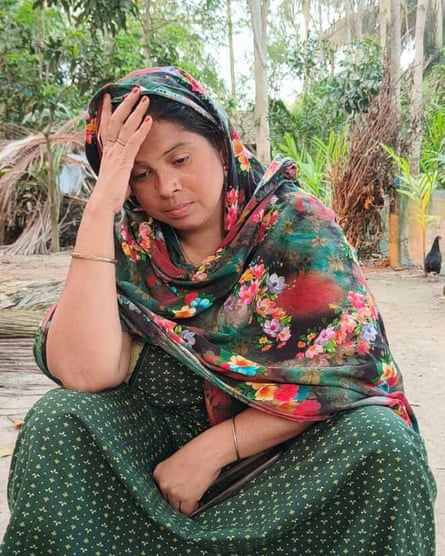
Shahida sits with her head in her hand looking down
View image in fullscreen
Shahida Fakir is staying in a village in Bangladesh after she was detained on suspicion of being an illegal immigrant and pushed across the border. Photograph: Supplied
The Narendra Modi government has called SIR a legitimate exercise to clean up the electoral rolls. Overseen by the election commission, tens of millions of dead and duplicate names have been removed. Yet so have the names of millions of living Indian citizens.

Critics allege that the pledge to “purify” India’s voter roll of illegal immigrants has instead been used for more sinister purposes – disenfranchising tens of millions of Muslims, other minorities, and poor and lower caste communities, who are largely not BJP voters.

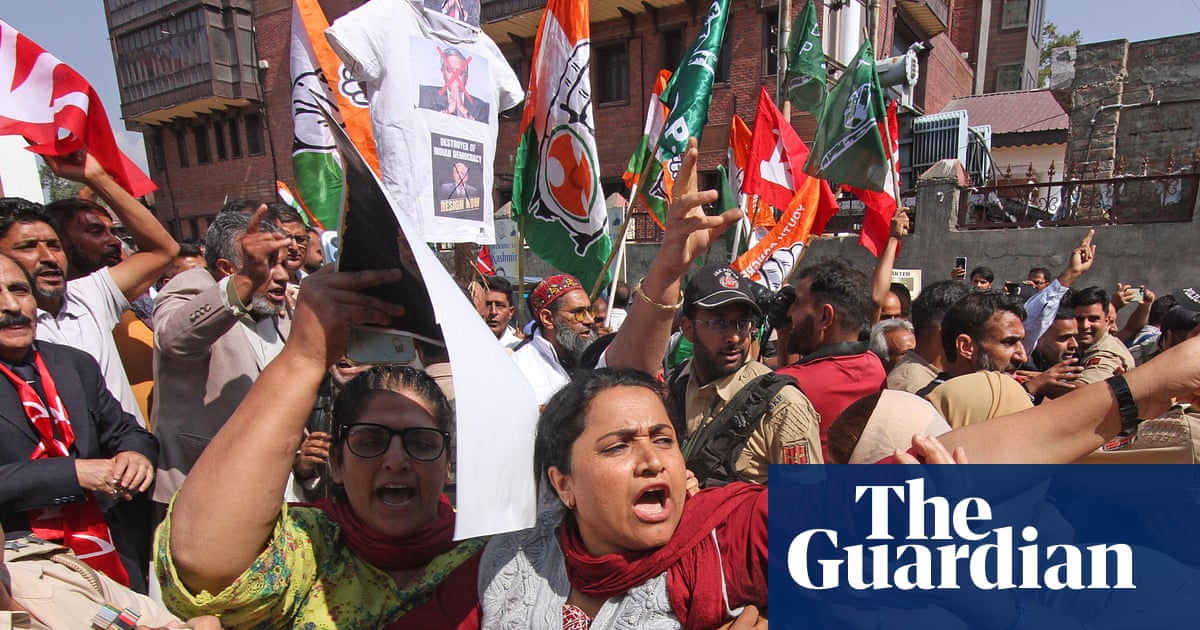
In a matter of weeks, nationwide anger at SIR has boiled up and spilled out on to the streets of India’s biggest cities, presenting a formidable challenge to the government. Over the weekend, Delhi was transformed into a high-security fortress of barricades, roadblocks and tens of thousands of police and paramilitaries who detained thousands of people, as they attempted to stop youth-led protests calling for the man who oversaw SIR, the chief election commissioner, Gyanesh Kumar, to step down immediately.

India's cockroach protesters defy Modi's crackdown - The Latest

11:32

India's cockroach protesters defy Modi's crackdown - The Latest
On Monday, opposition parties – who have decried SIR as a “weapon for vote theft” by the Modi government – drew tens of thousands of supporters as they marched through the capital and presented a petition to the supreme court, demanding Kumar’s resignation. The youth-led Cockroach Janta party (CJP) movement, who were behind the call for Saturday’s action, have vowed to “fight on” in their protests against SIR.


Opposition and civil society leaders allege that SIR has already given the BJP an electoral advantage in states such as Bihar and West Bengal, claims the party denied. Others say the exercise has had even more concerning implications: under changes to SIR unilaterally implemented by Kumar, the election commission has become the arbiter of Indian citizenship, a sweeping overreach of its remit.

The consequences are already playing out in West Bengal, where Modi’s Bharatiya Janata party (BJP) recently came to power and began a crackdown on “illegal” immigrants, complete with several new detention centres. Civil society groups say Muslims excluded by SIR are being targeted.

Fakir was among them. Just three months after the voter list was published – and while her hearing to challenge her exclusion was pending – she was picked up by police and accused of being an illegal Bangladeshi immigrant.

In July she was pushed over the border to Bangladesh, a country she had never been to nor had any connection with, and remains stuck there. “I have all the documents to prove I am an Indian citizen,” she said in a tearful phone call from the Bangladesh border village where she has been sheltering. “I fell on their feet and begged the police not to send me to Bangladesh but they pushed me over the border.”

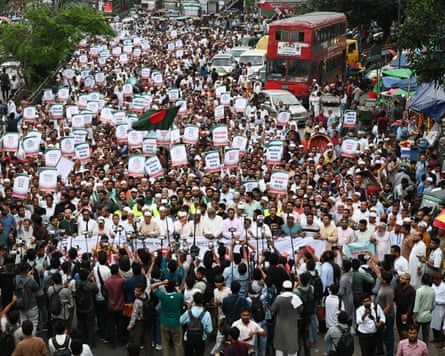
A crowd holds up placards as they are filmed by onlookers
View image in fullscreen
A protest march in Dhaka, Bangladesh, against India’s ‘push-ins’ of Muslims at the border in June.

A Bangladesh border guard officer confirmed Fakir’s account. “We checked all her documents and are convinced that she is an Indian citizen,” they said. In September, her family submitted a petition to the supreme court challenging her deportation. The Indian government was given a month to respond.

“All I want is to return to my family and my home in India. I am waiting desperately for that day,” she said. The backlog of millions of voters in West Bengal challenging their exclusion means it could be years before Fakir’s case is heard.

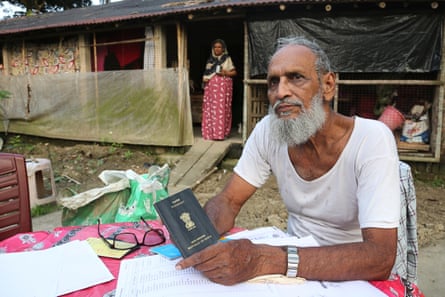
Those across West Bengal who have been stripped of their votes speak of their terror of being accused of being an alien in their own land. Some have had benefits taken away. Mohammad Hedayet Ullah Siddiqui, 80, from the North 24 Parganas district, said his grandfather had been a freedom fighter for Indian independence and three generations of his family were on the voter rolls. Yet after SIR, Siddiqui described his “humiliation” on finding his name gone.

“With my name erased from the voter list, I am in constant terror. What if they send me to a detention camp?” he said. “I cannot bear to think about being separated from my children and grandchildren at this age, especially when all my ancestors have been buried in India.”

Sitting at his home in the village of Nehalpur in West Bengal, Mohammad Hedayet Ullah Siddiqui, says that he has voted in all Indian elections since 1972.
View image in fullscreen
Sitting at his home in the village of Nehalpur in West Bengal, Mohammad Hedayet Ullah Siddiqui says that he has voted in all Indian elections since 1972. Photograph: Shaikh Azizur Rahman/The Guardian
Critics say the problems began in 2023, when the Modi government changed the process for appointing the three-body election commission, giving majority control to the government for the first time. Within a matter of months, the Modi-led panel had appointed Kumar as the election commissioner in spite of opposition objections.


“For decades, the election commission was one of our more credible, independent bodies, but now that has been eroded,” said Ronojoy Sen, a senior fellow at the South Asian Studies Programme, National University of Singapore.

By the following year, the new election commission body had begun SIR, starting in Bihar, where it immediately raised concerns among human rights groups after more than 6 million names were removed. Not long after the revisions, the BJP won a landslide victory in the Bihar state elections.

Despite concerns over SIR rumbling on for months, it did not spark national protests until the Indian Express newspaper last month revealed that two members of the election commission had raised 14 objections to how voters were being excluded from the rolls, but they were unilaterally overruled by Kumar.

“India has always been a flawed democracy but at least citizens felt they had the right to vote and that elections were regular and fair,” said Sen. “SIR has taken away that right. From how it has been conducted, it’s difficult to see how the motive was anything other than to enhance the election prospects of the BJP.”

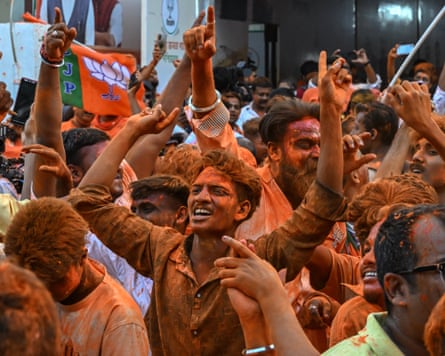
Men coated in orange powder raise their hands and smile
View image in fullscreen
BJP supporters celebrate during vote counting at state elections in West Bengal in May 2026. Photograph: Dibyangshu Sarkar/AFP/Getty Images
Three former election commissioners have openly criticised SIR as a “hostile exercise” that has undermined the sanctity of the country’s electoral rolls by focusing on the exclusion – rather than inclusion – of voters. OP Rawat, a former chief election commissioner, described changes to the voter registration form as “wrong and illegal”.


Ashok Lavasa, who was an election commissioner between 2018 and 2020, called for the SIR to be scrapped. “An unfair procedure has been imposed on millions of people in the country, and you have the judiciary which has validated that,” he said last month. “How do you explain the deletion of 130 million names?”

None have been more vehement in their opposition than SY Qureshi, who was chief election commissioner between 2010 and 2012. “This is a national harassment exercise designed to throw Muslims off the electoral roll,” he claimed. “The only way to restore the credibility of India’s elections is to restore those deleted voters.”

The BJP has denied any political involvement or motive in the SIR process, accusing the opposition Congress party of “jealousy” over its recent electoral victories and saying any deleted voters can simply re-enrol. The BJP spokesperson Sudhanshu Trivedi said the allegations were “disinformation” and part of an opposition campaign “being orchestrated to create an atmosphere of division and anarchy”.

Nonetheless, the election commission has appeared to accept some flaws in the process. Late last week, it belatedly put a cap on the number of voter deletion forms – which allow people to submit objections on behalf of others – after incidents in which people submitted thousands of forms targeting legitimate Muslim voters.

Public anger, meanwhile, has continued to build. In Delhi, where the SIR exercise left millions of people off the draft list, protests are expected to continue this week.

A Delhi resident for 30 years, Prashant Tandon, 60, said he could not believe it when a notice came to his door, questioning his life as a voter. “If someone doubts my citizenship, they should produce evidence against me,” he said furiously, adding that he would be protesting alongside the young people. “I should not have to prove that I am an Indian citizen.”

Additional reporting Aakash Hassan


@K2RULEZ
Modi and the Hindutva fascists cheat and basically steal elections by removing the names of people who would vote against them. It could be argued that the BJP regime is illegal and basically Modi is an illegal dictator.
 

This pappu and coackroaches dream will remain dream..... if you understand hindi then please go through below video and try to understand why SriLanka, Bangladesh or Nepal cannot be repeated with India.... our system is designed that way.....

Pappu if wants to become prime Minister he has to work hard and honestly for this nation.... these types of road shows will be good for entertainment initially and once public looses patience then there will be a public dhulai on the road....


‘How do you explain the deletion of 130 million names?’: why Indian voters are on the streets​

Anger at electoral roll changes has boiled over, sparking a crisis for Narendra Modi’s Hindu nationalist government


Hannah Ellis-Petersen and Shaikh Azizur Rahman
Wed 14 Oct 2026 03.09 BST

https://www.google.com/preferences/source?q=theguardian.com
Born into a small village in West Bengal, Shahida Fakir had always taken her vote for granted. That was, until it was suddenly taken away. She presented officials with her Indian birth certificate and family land documents from the village going back to 1962.

Both her parents had been on the electoral roll going back decades, so she showed proof of that too. But when the final revised voter list came out in April, Fakir was not on it.


The 38-year-old migrant worker, born into a poor Muslim family, was not alone. Since last year, 130 million names – more than the population of Japan – have been removed from India’s electoral roll through a process known as SIR, or special intensive revision. In the nearly eight decades since India’s independence, never have the voter rolls shrunk by such a huge amount over such a short time.

Shahida sits with her head in her hand looking down
View image in fullscreen
Shahida Fakir is staying in a village in Bangladesh after she was detained on suspicion of being an illegal immigrant and pushed across the border. Photograph: Supplied
The Narendra Modi government has called SIR a legitimate exercise to clean up the electoral rolls. Overseen by the election commission, tens of millions of dead and duplicate names have been removed. Yet so have the names of millions of living Indian citizens.

Critics allege that the pledge to “purify” India’s voter roll of illegal immigrants has instead been used for more sinister purposes – disenfranchising tens of millions of Muslims, other minorities, and poor and lower caste communities, who are largely not BJP voters.

In a matter of weeks, nationwide anger at SIR has boiled up and spilled out on to the streets of India’s biggest cities, presenting a formidable challenge to the government. Over the weekend, Delhi was transformed into a high-security fortress of barricades, roadblocks and tens of thousands of police and paramilitaries who detained thousands of people, as they attempted to stop youth-led protests calling for the man who oversaw SIR, the chief election commissioner, Gyanesh Kumar, to step down immediately.

India's cockroach protesters defy Modi's crackdown - The Latest's cockroach protesters defy Modi's crackdown - The Latest

11:32

India's cockroach protesters defy Modi's crackdown - The Latest
On Monday, opposition parties – who have decried SIR as a “weapon for vote theft” by the Modi government – drew tens of thousands of supporters as they marched through the capital and presented a petition to the supreme court, demanding Kumar’s resignation. The youth-led Cockroach Janta party (CJP) movement, who were behind the call for Saturday’s action, have vowed to “fight on” in their protests against SIR.


Opposition and civil society leaders allege that SIR has already given the BJP an electoral advantage in states such as Bihar and West Bengal, claims the party denied. Others say the exercise has had even more concerning implications: under changes to SIR unilaterally implemented by Kumar, the election commission has become the arbiter of Indian citizenship, a sweeping overreach of its remit.

The consequences are already playing out in West Bengal, where Modi’s Bharatiya Janata party (BJP) recently came to power and began a crackdown on “illegal” immigrants, complete with several new detention centres. Civil society groups say Muslims excluded by SIR are being targeted.

Fakir was among them. Just three months after the voter list was published – and while her hearing to challenge her exclusion was pending – she was picked up by police and accused of being an illegal Bangladeshi immigrant.

In July she was pushed over the border to Bangladesh, a country she had never been to nor had any connection with, and remains stuck there. “I have all the documents to prove I am an Indian citizen,” she said in a tearful phone call from the Bangladesh border village where she has been sheltering. “I fell on their feet and begged the police not to send me to Bangladesh but they pushed me over the border.”

A crowd holds up placards as they are filmed by onlookers
View image in fullscreen
A protest march in Dhaka, Bangladesh, against India’s ‘push-ins’ of Muslims at the border in June.

A Bangladesh border guard officer confirmed Fakir’s account. “We checked all her documents and are convinced that she is an Indian citizen,” they said. In September, her family submitted a petition to the supreme court challenging her deportation. The Indian government was given a month to respond.

“All I want is to return to my family and my home in India. I am waiting desperately for that day,” she said. The backlog of millions of voters in West Bengal challenging their exclusion means it could be years before Fakir’s case is heard.

Those across West Bengal who have been stripped of their votes speak of their terror of being accused of being an alien in their own land. Some have had benefits taken away. Mohammad Hedayet Ullah Siddiqui, 80, from the North 24 Parganas district, said his grandfather had been a freedom fighter for Indian independence and three generations of his family were on the voter rolls. Yet after SIR, Siddiqui described his “humiliation” on finding his name gone.

“With my name erased from the voter list, I am in constant terror. What if they send me to a detention camp?” he said. “I cannot bear to think about being separated from my children and grandchildren at this age, especially when all my ancestors have been buried in India.”

Sitting at his home in the village of Nehalpur in West Bengal, Mohammad Hedayet Ullah Siddiqui, says that he has voted in all Indian elections since 1972.
View image in fullscreen
Sitting at his home in the village of Nehalpur in West Bengal, Mohammad Hedayet Ullah Siddiqui says that he has voted in all Indian elections since 1972. Photograph: Shaikh Azizur Rahman/The Guardian
Critics say the problems began in 2023, when the Modi government changed the process for appointing the three-body election commission, giving majority control to the government for the first time. Within a matter of months, the Modi-led panel had appointed Kumar as the election commissioner in spite of opposition objections.


“For decades, the election commission was one of our more credible, independent bodies, but now that has been eroded,” said Ronojoy Sen, a senior fellow at the South Asian Studies Programme, National University of Singapore.

By the following year, the new election commission body had begun SIR, starting in Bihar, where it immediately raised concerns among human rights groups after more than 6 million names were removed. Not long after the revisions, the BJP won a landslide victory in the Bihar state elections.

Despite concerns over SIR rumbling on for months, it did not spark national protests until the Indian Express newspaper last month revealed that two members of the election commission had raised 14 objections to how voters were being excluded from the rolls, but they were unilaterally overruled by Kumar.

“India has always been a flawed democracy but at least citizens felt they had the right to vote and that elections were regular and fair,” said Sen. “SIR has taken away that right. From how it has been conducted, it’s difficult to see how the motive was anything other than to enhance the election prospects of the BJP.”

Men coated in orange powder raise their hands and smile
View image in fullscreen
BJP supporters celebrate during vote counting at state elections in West Bengal in May 2026. Photograph: Dibyangshu Sarkar/AFP/Getty Images
Three former election commissioners have openly criticised SIR as a “hostile exercise” that has undermined the sanctity of the country’s electoral rolls by focusing on the exclusion – rather than inclusion – of voters. OP Rawat, a former chief election commissioner, described changes to the voter registration form as “wrong and illegal”.


Ashok Lavasa, who was an election commissioner between 2018 and 2020, called for the SIR to be scrapped. “An unfair procedure has been imposed on millions of people in the country, and you have the judiciary which has validated that,” he said last month. “How do you explain the deletion of 130 million names?”

None have been more vehement in their opposition than SY Qureshi, who was chief election commissioner between 2010 and 2012. “This is a national harassment exercise designed to throw Muslims off the electoral roll,” he claimed. “The only way to restore the credibility of India’s elections is to restore those deleted voters.”

The BJP has denied any political involvement or motive in the SIR process, accusing the opposition Congress party of “jealousy” over its recent electoral victories and saying any deleted voters can simply re-enrol. The BJP spokesperson Sudhanshu Trivedi said the allegations were “disinformation” and part of an opposition campaign “being orchestrated to create an atmosphere of division and anarchy”.

Nonetheless, the election commission has appeared to accept some flaws in the process. Late last week, it belatedly put a cap on the number of voter deletion forms – which allow people to submit objections on behalf of others – after incidents in which people submitted thousands of forms targeting legitimate Muslim voters.

Public anger, meanwhile, has continued to build. In Delhi, where the SIR exercise left millions of people off the draft list, protests are expected to continue this week.

A Delhi resident for 30 years, Prashant Tandon, 60, said he could not believe it when a notice came to his door, questioning his life as a voter. “If someone doubts my citizenship, they should produce evidence against me,” he said furiously, adding that he would be protesting alongside the young people. “I should not have to prove that I am an Indian citizen.”

Additional reporting Aakash Hassan


@K2RULEZ
Modi and the Hindutva fascists cheat and basically steal elections by removing the names of people who would vote against them. It could be argued that the BJP regime is illegal and basically Modi is an illegal dictator.

There is simply no way that you would have 130million fake voters on the list, none. This can only be constructed as the engineering of the electorate vote.

I am surprised that Modi felt the need to do this, has the for the vote moved so much against Modi, that he has to do this ?!
 
There is simply no way that you would have 130million fake voters on the list, none. This can only be constructed as the engineering of the electorate vote.

I am surprised that Modi felt the need to do this, has the for the vote moved so much against Modi, that he has to do this ?!

I am not aware if ~130M voters were removed or not. What I am aware of it is the "anger" of Indian public. Most elections in India are "wave" elections meaning the winning party margin is far greater than the runner up.

Net net when Modi's time is up, people will vote him out, manipulation or not.
 
There is simply no way that you would have 130million fake voters on the list, none. This can only be constructed as the engineering of the electorate vote.

I am surprised that Modi felt the need to do this, has the for the vote moved so much against Modi, that he has to do this ?!
It's not fake voters. If you moved from Bihar to Delhi the old system retained votes both in Delhi and Bihar because data sharing was abysmal. Now if you move to Delhi your name will be struck off from Bihar registry. Then there was an issue of dead people. That's why there is a removal of 130 million votes.

There is nothing to this protest other than trying to make people look dumb. They depend on dumb people to believe them. That's it.
 

Users who are viewing this thread

Country Watch Latest

Back
Top