Hyundai Motor Group to plug $15.5 billion in India's automotive sector

indo17787

Registered Member
Joined
Jul 10, 2026
Messages
271
Reaction score
441
Reputation
573.1
Country of Origin
Country of Residence
1791902429540.png
Oct 13 (Reuters) - Hyundai Motor said on Tuesday it would invest $15.5 billion in India through 2032 to expand manufacturing and develop new automotive technologies, positioning the ‌country as a key market for future growth.

The South Korean automaker's seven-year plan includes a dedicated investment entity in India and spans manufacturing expansion, research and development infrastructure and local supply chains.

India, the world's third-largest car market, has become ⁠an increasingly important growth market for global automakers which are seeking to expand production, increase local sourcing and develop vehicles suited to Indian consumers. The group plans to invest about $700 million in its Indian research and development centre, including a vehicle testing track, as part of efforts to develop next-generation automotive technologies.

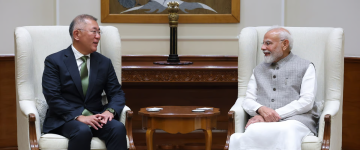
The investment announcement followed a meeting between Hyundai Motor Group Executive Chair Euisun Chung and ‌Indian ⁠Prime Minister Narendra Modi in New Delhi on Tuesday.

The investment plan, covering 2026 to 2032, will expand manufacturing capacity at Hyundai Motor India and Kia India to support significant volume growth, the company said.
⁠
Hyundai Motor Group, which employs more than 24,000 people in India, said the investment would create additional jobs across manufacturing, research, engineering and supply ⁠chains, without specifying a number. Hyundai Motor Group currently has an annual production capacity of more than 1.4 million vehicles in ⁠India, comprising 824,000 units at Hyundai's Chennai facilities, 170,000 units at its Pune plant and 431,000 units at Kia's Anantapur facility.

https://www.hyundai.com/worldwide/en/newsroom/detail/0000001288 @Nimble @Vikramaditya1 @Sam6536
 
View attachment 219237
Oct 13 (Reuters) - Hyundai Motor said on Tuesday it would invest $15.5 billion in India through 2032 to expand manufacturing and develop new automotive technologies, positioning the ‌country as a key market for future growth.

The South Korean automaker's seven-year plan includes a dedicated investment entity in India and spans manufacturing expansion, research and development infrastructure and local supply chains.

India, the world's third-largest car market, has become ⁠an increasingly important growth market for global automakers which are seeking to expand production, increase local sourcing and develop vehicles suited to Indian consumers. The group plans to invest about $700 million in its Indian research and development centre, including a vehicle testing track, as part of efforts to develop next-generation automotive technologies.

The investment announcement followed a meeting between Hyundai Motor Group Executive Chair Euisun Chung and ‌Indian ⁠Prime Minister Narendra Modi in New Delhi on Tuesday.

The investment plan, covering 2026 to 2032, will expand manufacturing capacity at Hyundai Motor India and Kia India to support significant volume growth, the company said.
⁠
Hyundai Motor Group, which employs more than 24,000 people in India, said the investment would create additional jobs across manufacturing, research, engineering and supply ⁠chains, without specifying a number. Hyundai Motor Group currently has an annual production capacity of more than 1.4 million vehicles in ⁠India, comprising 824,000 units at Hyundai's Chennai facilities, 170,000 units at its Pune plant and 431,000 units at Kia's Anantapur facility.

https://www.hyundai.com/worldwide/en/newsroom/detail/0000001288 @Nimble @Vikramaditya1 @Sam6536
I initially suspected this was a fake news story. However, after looking into the details, I discovered it was actually true. Yet, there is an even more interesting aspect to this.

Although Hyundai Motor has ramped up investment in the EV sector in recent years and possesses strong technical capabilities, it remains a peripheral player in the global EV industry; fundamentally, it is still a traditional automaker.

Driven by broader market trends, almost all traditional automakers are experiencing a sharp decline in performance, and Hyundai has been hit particularly hard. Under these circumstances, the company simply lacks the capacity to absorb an investment of $15.5 billion. Even if Hyundai were to make a desperate, all-in bet to revitalize the business, it would not choose India—the country suffers from a severe brain drain of STEM talent and lacks the capacity to accommodate an investment of this magnitude.

Upon further research and analysis, I discovered an interesting point.

India’s Department of Industrial Policy and Promotion (DIPP) explicitly defines CKD (Completely Knocked Down) assembly operations as "manufacturing" and makes them eligible for the automatic approval route for foreign investment. This means that, from a legal standpoint, Indian authorities actively equate "importing components for local assembly" with "manufacturing-sector FDI."

Alright. I'll stop here. You can figure out the rest for yourselves.

* Btw, South Asian countries such as Pakistan, India, and Bangladesh have similar policies that defy conventional logic. Therefore, we need to take this factor into account when analyzing economic activity in these nations.
 
View attachment 219279

You are all over the place in your post.

1. Are you saying that the news is false? You have yourself accepted that it is not false.

2. Are you saying that you know better than Hyundai management about the capacities of the company and can plan better for it's future growth? Then, why are you wasting your precious time on this forum? You should immediately book one way ticket to Seoul and become the CEO of Hyundai (by defeating current CEO in 1V1 bettle.)

3. Are you saying that Hyundai won't be able arrange 15 billion dollars? Then, you know more about finances of Hyundai better than it's current CFO. Again, immediately book a one way ticket to Seoul and become the CFO of Hyundai.

4. Are you saying that India's policy is not "logical", you need to "research and analysis (wing)" more about it. Automated approval for CKD manufacturing doesn't mean it'll be financially viable. Have you noticed the import duty on CKD car kits?

Use your brain more and take less help from AI.

I feel like something’s burning. Anyone else smell it? The guys across the northern border are coping hard over the Hyundai investment India just secured. Usually, you only see this kind of cash moving for semiconductor projects but now that Hyundai is dropping serious money here, they’re losing it. They’re calling Hyundai desperate, questioning our STEM talent and whether India can even handle a deal this big. Nitpicking CKD imports and localisation metrics to make themselves feel better. It's hilarious they are calling Hyundai a peripheral player in EVs. Who's the desperate one now?
@Vikramaditya1 @Nimble @Sam6536
 
Last edited:
Hyundai's strategy also includes a substantial increase in exports. The automaker currently exports around 24% of its production, up from 20% five years ago, and intends to raise this share to 30%.

Garg said Hyundai had already crossed the milestone of four million cumulative vehicle exports from India, making it the first company in the country to achieve this landmark, but added that the company was not satisfied with its current export performance.

"We want to increase more. So, I think that is the second thing which we are going to do, not only in the domestic market, but also in the exports market," he said.
 
View attachment 219237
Oct 13 (Reuters) - Hyundai Motor said on Tuesday it would invest $15.5 billion in India through 2032 to expand manufacturing and develop new automotive technologies, positioning the ‌country as a key market for future growth.

The South Korean automaker's seven-year plan includes a dedicated investment entity in India and spans manufacturing expansion, research and development infrastructure and local supply chains.

India, the world's third-largest car market, has become ⁠an increasingly important growth market for global automakers which are seeking to expand production, increase local sourcing and develop vehicles suited to Indian consumers. The group plans to invest about $700 million in its Indian research and development centre, including a vehicle testing track, as part of efforts to develop next-generation automotive technologies.

The investment announcement followed a meeting between Hyundai Motor Group Executive Chair Euisun Chung and ‌Indian ⁠Prime Minister Narendra Modi in New Delhi on Tuesday.

The investment plan, covering 2026 to 2032, will expand manufacturing capacity at Hyundai Motor India and Kia India to support significant volume growth, the company said.
⁠
Hyundai Motor Group, which employs more than 24,000 people in India, said the investment would create additional jobs across manufacturing, research, engineering and supply ⁠chains, without specifying a number. Hyundai Motor Group currently has an annual production capacity of more than 1.4 million vehicles in ⁠India, comprising 824,000 units at Hyundai's Chennai facilities, 170,000 units at its Pune plant and 431,000 units at Kia's Anantapur facility.

https://www.hyundai.com/worldwide/en/newsroom/detail/0000001288 @Nimble @Vikramaditya1 @Sam6536
Didn't Hyundai recently take out over 3 bn dollars out of India after doing an IPO of their India operations? What is the nature of this new "investment " ? How much is equity , debt or just supplier financing ?
 
I initially suspected this was a fake news story. However, after looking into the details, I discovered it was actually true. Yet, there is an even more interesting aspect to this.

Although Hyundai Motor has ramped up investment in the EV sector in recent years and possesses strong technical capabilities, it remains a peripheral player in the global EV industry; fundamentally, it is still a traditional automaker.

Driven by broader market trends, almost all traditional automakers are experiencing a sharp decline in performance, and Hyundai has been hit particularly hard. Under these circumstances, the company simply lacks the capacity to absorb an investment of $15.5 billion. Even if Hyundai were to make a desperate, all-in bet to revitalize the business, it would not choose India—the country suffers from a severe brain drain of STEM talent and lacks the capacity to accommodate an investment of this magnitude.

Upon further research and analysis, I discovered an interesting point.

India’s Department of Industrial Policy and Promotion (DIPP) explicitly defines CKD (Completely Knocked Down) assembly operations as "manufacturing" and makes them eligible for the automatic approval route for foreign investment. This means that, from a legal standpoint, Indian authorities actively equate "importing components for local assembly" with "manufacturing-sector FDI."

Alright. I'll stop here. You can figure out the rest for yourselves.

* Btw, South Asian countries such as Pakistan, India, and Bangladesh have similar policies that defy conventional logic. Therefore, we need to take this factor into account when analyzing economic activity in these nations.
You have either misunderstood or are mischaracterizing what is done in South Asia. No one considers imports as FDI. Yes, the investment to set up the operations that will support CKD assembly are considered FDI, and that is how they will be treated in most countries.

And Hyundai competes in the lower end of the Indian market against the likes of Suzuki and local Indian carmakers. They cannot rely on CKD assembly because high import duties on CKD imports relative to local manufacturing would make it prohibitive for them to compete in the low end segment.
 
1792055563153.png
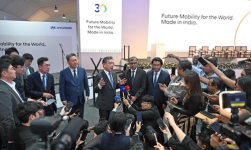
Hyundai Motor Group Vice Chairman Jang Jae-hoon (in front of microphones) answers reporters' questions after the inauguration ceremony of Hyundai Motor's plant in Pune, western India, on Oct. 14, 2026, in this photo provided by the South Korean automotive group. (PHOTO NOT FOR SALE) (Yonhap)

PUNE, India, Oct. 15 (Yonhap) -- Hyundai Motor Group plans to allocate about 20 percent of its US$15.5 billion investment in India over the next seven years to the country's new businesses, including artificial intelligence (AI) and startups, a senior executive has said.

Hyundai Motor Group Vice Chairman Jang Jae-hoon unveiled the plan Wednesday after the South Korean automotive group announced the investment initiative through 2032 alongside the opening of its new plant in Pune, western India.

"We will allocate about 60 percent of the investment to upgrading existing facilities and expanding production capacity," Jang told reporters after the plant's inauguration ceremony.

"About 20 percent will go toward new businesses, including AI, as well as ventures and startups."

Hyundai Motor plans to introduce 20 internal combustion engine vehicle variants and six electric and hybrid variants in India by 2030.

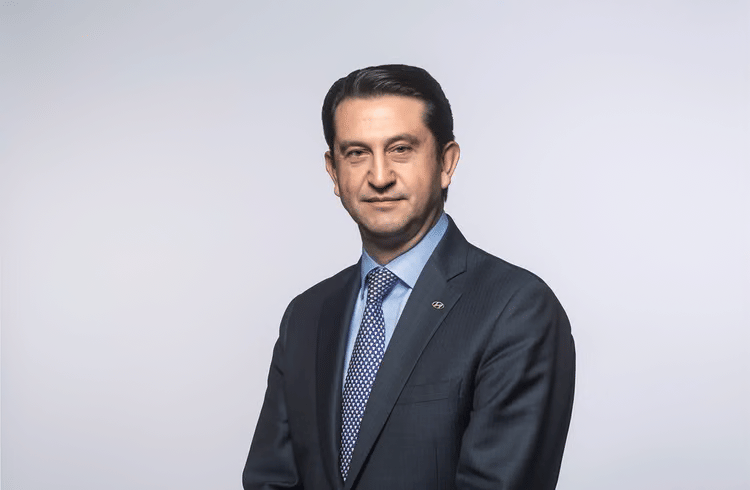
Hyundai Motor Chief Executive Officer (CEO) Jose Munoz said the company aims for eco-friendly vehicles, including electric, hybrid and hydrogen fuel-cell models, to account for about 50 percent of its sales by 2030.

With the new Pune plant, Hyundai Motor operates three production facilities in India, with a combined annual capacity of nearly 1 million vehicles.
 
You have either misunderstood or are mischaracterizing what is done in South Asia. No one considers imports as FDI. Yes, the investment to set up the operations that will support CKD assembly are considered FDI, and that is how they will be treated in most countries.

And Hyundai competes in the lower end of the Indian market against the likes of Suzuki and local Indian carmakers. They cannot rely on CKD assembly because high import duties on CKD imports relative to local manufacturing would make it prohibitive for them to compete in the low end segment.
Official documents from India, Pakistan, and Bangladesh contain policies regarding this; you may consult these official sources yourself.

The general gist is as follows:
When a foreign enterprise establishes a factory—or a joint venture—in one of these countries to manufacture products using the CKD (Completely Knocked Down) or SKD (Semi-Knocked Down) model, the accounts payable for imported machinery, equipment, molds, raw materials, and CKD/SKD components may be converted into equity (subject to regulatory oversight). This can be achieved either through a debt-to-equity swap or by contributing these items as capital in kind.
Once these raw materials and CKD/SKD components are assembled into finished products and sold, the resulting sales revenue is recorded as part of the company’s routine operating accounts and is separate from its equity structure.

*While there are some technical differences in the laws of these three countries, the core principle remains essentially the same.

==========================================

If we set aside policy and legal considerations and focus purely on a commercial and technical analysis, we find a significant discrepancy between the actual scale of most large-scale commercial investment projects in the three South Asian countries and the investment figures touted in their promotional materials.

I will not single out any specific projects; instead, let me offer another example for your consideration.

In 2021, Lei Jun of Xiaomi Group announced the company’s entry into the automotive sector, with an initial investment of 10 billion RMB. Xiaomi planned to continue increasing its investment, with a projected total investment of 10 billion USD over the decade from 2021 to 2031.

According to Xiaomi Group’s official financial reports, as of March 2026:
The total actual investment has already exceeded 40 billion RMB.
This includes over 10 billion RMB in research and development (R&D) spending, more than 5 billion RMB for the first phase of factory construction, and an anticipated investment of at least 2.6 billion RMB for the second phase.

Xiaomi EV has now joined the first tier of the Chinese automotive market and is regarded by international capital markets as a major "dark horse" in the new energy vehicle sector. But, to date, its total investment has amounted to no more than 40 billion RMB—roughly 6 billion USD at the current exchange rate.

Do you understand the implications of this?
 
Official documents from India, Pakistan, and Bangladesh contain policies regarding this; you may consult these official sources yourself.

The general gist is as follows:
When a foreign enterprise establishes a factory—or a joint venture—in one of these countries to manufacture products using the CKD (Completely Knocked Down) or SKD (Semi-Knocked Down) model, the accounts payable for imported machinery, equipment, molds, raw materials, and CKD/SKD components may be converted into equity (subject to regulatory oversight). This can be achieved either through a debt-to-equity swap or by contributing these items as capital in kind.
Once these raw materials and CKD/SKD components are assembled into finished products and sold, the resulting sales revenue is recorded as part of the company’s routine operating accounts and is separate from its equity structure.

*While there are some technical differences in the laws of these three countries, the core principle remains essentially the same.

==========================================

If we set aside policy and legal considerations and focus purely on a commercial and technical analysis, we find a significant discrepancy between the actual scale of most large-scale commercial investment projects in the three South Asian countries and the investment figures touted in their promotional materials.

I will not single out any specific projects; instead, let me offer another example for your consideration.

In 2021, Lei Jun of Xiaomi Group announced the company’s entry into the automotive sector, with an initial investment of 10 billion RMB. Xiaomi planned to continue increasing its investment, with a projected total investment of 10 billion USD over the decade from 2021 to 2031.

According to Xiaomi Group’s official financial reports, as of March 2026:
The total actual investment has already exceeded 40 billion RMB.
This includes over 10 billion RMB in research and development (R&D) spending, more than 5 billion RMB for the first phase of factory construction, and an anticipated investment of at least 2.6 billion RMB for the second phase.

Xiaomi EV has now joined the first tier of the Chinese automotive market and is regarded by international capital markets as a major "dark horse" in the new energy vehicle sector. But, to date, its total investment has amounted to no more than 40 billion RMB—roughly 6 billion USD at the current exchange rate.

Do you understand the implications of this?

No, what you have just posted has no connection to your initial claim that South Asian countries count FDI differently from how it is done elsewhere.

Please provide links to any specific document you have actually read and are referencing. What you have described is how accounting of investments and sales is generically accounted for anywhere in the world. Investments made anywhere in the world can be funded through equity or debt and sales of assembled or even CBU goods is recognised as revenue. What are the specific features you are talking about that is unique to South Asian Asian countries ?
 

Users who are viewing this thread

Back
Top