Makkah Defence Alliance: Turkey, Saudi Arabia, and Pakistan, news & updates

Given Pakistan’s limited resources compared to India, the Makkah Pact and yesterday’s Badar Pact are particularly important for Pakistan’s sovereignty and national security. Every piece of equipment, every technological advancement, and every improvement in defence capabilities gained through these agreements will strengthen Pakistan’s ability to defend itself.

Yes, this is a massive win for Pakistan.

Turkiye can lower it's cost base by outsourcing some manufacturing to Pak, we get involved in R&D and manufacturing and advanced Turkish tech. With all 4 countries then ordering the same stuff cost per unit also goes down massively
 

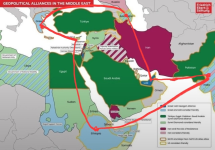
I wish Saudi just BODIED the UAE or just Abu Dhabi, all that blue in Somaliland, Puntland, Sudan, Libya, Yemen would collapse overnight, and then only Israel would be left without any significant alliances(maybe India but its not really a significant geopolitical actor).
 
Makes sense

Combined now the Makkah pact can allies can field

1,300 fighter jets
22 AEW Aircraft
33 refuelling aircraft
7,000 MBTs
1,200 SPH


Obviously age of equipment and capabilities vary but the above is one hell of a force

France, UK, Germany combined are

450 fighter jets
7 AEW aircraft
24 refuelling aircraft
600 MBTs
200 SPH

Makes you think how powerful Makkah allies can be if fully integrated
In power projection globally and even regionally, conventional forces are irrelevant. UK, Germany, France combined have a lot more nuclear weapons and more importantly boomers that negate what conventional buildup that Makkah alliances can wield.
 
In power projection globally and even regionally, conventional forces are irrelevant. UK, Germany, France combined have a lot more nuclear weapons and more importantly boomers that negate what conventional buildup that Makkah alliances can wield.

Sorry, hard disagree, two of the largest nuclear powers right now are engaged in conflicts with non Nuclear powers. Israel has had nukes since the 60s and is almost exclusively reliant on conventional forces. PAF nailed IAF in 2019 and 2025 and both have nukes.
 
Current Situational Overview:

*Note: Evidence reviewed: reporting and official statements published through 23 October 2026. Current developments are distinguished from analytical judgements and forecasts.
----
Snapshot summary:
The most important finding from current reporting is that the conflict has moved beyond the relatively static confrontation that characterised much of 2022–2025. - Source: RUSI
----

By 21 October, the Council on Foreign Relations' conflict tracker was reporting continued Houthi attacks against Saudi targets, Saudi interceptions and air strikes, and intensifying fighting around Taiz. - Source: Global Conflict tracker
----
Strategic Indicators:
Saudi homeland security : (Red- Critical Concern)

  • Repeated reported missile and drone attacks against Saudi territory, including civilian and energy infrastructure, make air defence, infrastructure resilience and the risk of further casualties immediate priorities. - Source: UN Press Release
Red Sea and Bab el-Mandeb : (Red- Strategic Concern)
  • Houthi advances along Yemen's western coast have increased the threat to freedom of navigation. Even without a complete blockade, perceived danger can divert shipping, increase insurance costs and disrupt trade. Source: UN DPPA Oct 2026
Anti-Houthi coalition cohesion : (Amber - High Concern)
  • Saudi-backed forces face the challenge of coordinating different Yemeni political and military factions. Territorial gains will be difficult to retain without cohesive command arrangements and local legitimacy. Source: Reuters
Diplomatic de-escalation : (Amber - Uncertain)
The UN remains engaged, but renewed multi-front fighting makes a quick return to the previous ceasefire environment less likely without a change in the parties' incentives.

Principle Actors:
Saudi and Saudi led coalition

  • Saudi Arabia is the principal external military actor supporting the internationally recognised Yemeni government. Its advantages include modern combat aircraft, integrated air-defence systems, substantial financial resources and access to external intelligence and technical support.
Houthis (Ansar Allah)
  • A Yemeni political and armed movement controlling Sana'a and extensive areas of north-western Yemen. It combines territorial administration, established local networks, conventional ground forces and asymmetric missile, drone and maritime capabilities.
Yemen's internationally recognised government and associated forces
  • A necessary partner for Saudi Arabia, but not a single unified fighting force. Its effectiveness depends on coordination between military formations, local authorities and factions with different political objectives.
Iran and other regional actors
  • Iran is an important external enabler of Houthi capabilities, according to UN and Western government assessments. The precise scale of current Iranian assistance, and the extent of direct operational coordination, should not be assumed from weapons similarities alone.
Source: UN DPPA Oct 2026

----
Operational Assessment:

Saudi Arabia​

Saudi Arabia's central problem is the difference between conventional military superiority and the ability to prevent every asymmetric attack.

Its air force, surveillance capabilities, defence infrastructure and access to advanced weapons provide substantial advantages over the Houthis in conventional combat. However, missile and drone defence is a persistent resource challenge: attackers can employ relatively inexpensive systems, while defenders may need costly interceptors, continuous surveillance and repeated engagements.

Recent reporting has highlighted damage to Saudi aviation and energy-related infrastructure, casualties, and concerns about the sustainability of interceptor inventories. These reports support an assessment of serious pressure on Saudi homeland defence, but do not establish that Saudi air defences have generally collapsed.

Saudi Arabia also faces a political-military dilemma:

  • A limited defensive posture could allow continued Houthi coercion and economic disruption.
  • An expanded offensive could weaken Houthi military capacity but expose Saudi infrastructure to retaliation.
  • A major ground campaign could become dependent on fragmented Yemeni partners and create a prolonged requirement for external military and financial support.

Houthis​

The Houthis' principal advantage is their ability to generate strategic effects without matching Saudi Arabia's conventional military strength.

Their capabilities include:
  • Ballistic and cruise missiles, one-way attack drones and other stand-off weapons.
  • Ground forces adapted to Yemen's mountainous terrain and local conditions.
  • Coastal and maritime threats that can affect international shipping and the Bab el-Mandeb chokepoint.
  • Domestic and external supply networks that may support the maintenance or replenishment of weapons.
  • Political and information operations that can portray survival against a stronger opponent as a victory.
The Houthis nevertheless face important constraints. Holding additional territory creates security, administrative and logistical burdens. Prolonged fighting can strain finances and supplies, expose infrastructure to strikes and undermine local support. Greater attacks on civilian targets can also strengthen international support for defensive action against them.

AP's October assessment describes a Houthi force that has continued to develop its missile, drone and domestic production capabilities despite years of external strikes. This reinforces the judgement that air strikes alone are unlikely to eliminate the movement's capacity to resist.

Source: AP / UNOCHA
---
Predictive Forecasting:
Immediate: next 7 days*
High threat
  • Most likely outcome: Continued attacks and countermeasures, with neither side achieving a decisive strategic result.
  • Houthi forces are likely to continue trying to impose costs on Saudi Arabia through attacks or threats against infrastructure and aviation, although the exact frequency and targets cannot be predicted reliably.
  • Saudi Arabia and its partners are likely to prioritise homeland defence, interception, infrastructure protection and continued pressure on Houthi military capabilities.
  • Foreign defensive deployments and technical assistance may improve protection, but integration and readiness take time.
  • Fighting around western Yemen and other contested fronts is likely to remain volatile.
  • Indicators of further deterioration: repeated successful attacks causing mass casualties, interruption of major energy exports, attacks on foreign military personnel, or a substantial increase in maritime incidents.
*Confidence: Moderate for continued confrontation; low for the timing and scale of specific attacks.

Four weeks: by approximately 20 November 2026*
High threat
  • Most likely outcome: A contest between Saudi-supported efforts to reverse Houthi territorial gains and Houthi efforts to maintain strategic leverage.
  • Saudi Arabia may intensify support for Yemeni government operations if it judges that the current territorial and maritime situation is unacceptable.
  • Houthi forces may attempt to retain or expand their leverage while demonstrating that attacks can continue despite international defensive assistance.
  • The effectiveness of Saudi-backed Yemeni forces will be a key determinant of territorial outcomes.
  • The Mecca Joint Defense Agreement could improve Saudi defensive capacity through additional personnel, equipment, technical assistance and intelligence cooperation.
  • A diplomatic pause remains possible, particularly if the costs to shipping, energy exports and civilian populations become politically unsustainable.
  • Key uncertainty: Whether the parties can sustain military pressure without triggering a much wider regional confrontation.

*Confidence: Moderate that confrontation will persist; low to moderate regarding territorial changes and the scope of foreign involvement.

Source: UN DPPA (https://dppa.un.org/en)

----
Alternative scenarios
ScenarioAssessmentConditions that could produce it
Contained escalationPlausible but not the current baselineEffective defensive assistance, reduced attack tempo, diplomatic engagement and restraint by external actors.
Prolonged attritionMost likely baselineNeither side can translate its advantages into a decisive outcome; attacks and counterattacks continue.
Major regional escalationLower probability, very high impactMass-casualty attacks, major energy disruption, direct Iranian involvement, or foreign forces suffering significant casualties.
Saudi-backed territorial reversalPossible, outcome uncertainYemeni forces achieve greater cohesion and sustain operations while Saudi Arabia maintains effective defensive protection.
Renewed negotiated de-escalationPossibleborder attacks and progress on Yemen's political and economic disputes.
Source: ISW
----
Warning Indicators:

  • Military: confirmed changes in territorial control, sustained increases in attacks, the deployment of additional foreign forces, or a shift from defensive support to direct combat.
  • Homeland security: repeated damage to aviation or energy infrastructure, increasing civilian casualties, and official changes to air-defence or civil-protection posture.
  • Maritime: confirmed attacks on commercial vessels, sustained shipping diversions, changes in war-risk insurance and disruption at major ports.
  • Coalition cohesion: disagreements between Saudi Arabia and Yemeni factions, changes in command arrangements, or an inability to maintain control over newly recovered areas.
  • Diplomatic: changes to the Mecca pact's implementation, direct negotiations, new UN initiatives or evidence of a wider regional agreement.
----
Foreign intervention and force-multiplier effects
United Kingdom:

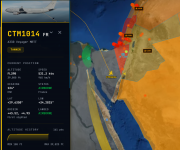
The UK announced additional defensive support on 20 October 2026, including RAF Typhoon defensive counter-air missions, an A400M transport aircraft, military advisers and continued air-defence and refueling support. (Frees up Saudi Aircraft for offensive operations)

1792744193762.png


Assessment: UK involvement should improve Saudi defensive capacity, but its publicly stated restrictions on offensive strikes limit its direct contribution to a Saudi offensive against Houthi positions. Any indirect effect on Saudi offensive capacity would depend on the extent to which British assistance releases Saudi resources for other missions. It would be inappropriate to assume that this is the intended or guaranteed outcome.

France:
1792744226976.png

France has announced a defensive deployment of military personnel and air-defence-related systems to protect Yanbu, a Red Sea port important to Saudi energy exports. President Emmanuel Macron described the deployment as protection of the site rather than participation in the conflict.

Assessment:
French assistance is likely to be most significant in protecting strategic infrastructure and reducing the economic consequences of attacks. It may indirectly help Saudi Arabia sustain its broader military posture, but defensive protection of Yanbu does not itself provide the ability to recapture Houthi-held territory.

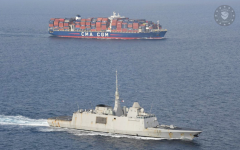
EU's Operation ASPIDES:

1792744283773.png

European involvement will contribute through:
  • Maritime surveillance and escort or protective operations within authorised mandates.
  • Intelligence sharing and maritime situational awareness.
  • Defensive equipment, technical assistance and training.
  • Diplomatic pressure, sanctions implementation and efforts to reduce weapons transfers.
  • Humanitarian assistance and support for negotiations.
The distinction between maritime defence and an offensive campaign inside Yemen is essential. A mission tasked with protecting shipping does not automatically have a mandate to attack Houthi land targets or to assist in territorial conquest.

Assessment:
European involvement can help protect commercial shipping and limit economic spillover. Its effect on Saudi offensive capabilities is indirect (unless individual governments separately authorise assistance to offensive operations.)

United States and other external actors:

Reuters reported on 2 October that the United States was providing intelligence support and that Saudi Arabia was considering a renewed offensive, while external partners were largely expected to avoid direct combat roles. The same report described concerns over the cohesion of Yemeni forces.

The US role is strategically important because intelligence, surveillance and technical assistance can improve the effectiveness of Saudi operations. However, the scope and continuity of that support remain subject to political decisions.

Iran's role is different: external support can help sustain Houthi missile, drone and other military capabilities, complicating Saudi attempts to impose a decisive outcome. The exact scale of current assistance cannot be established from open-source reporting alone.

Comparative intervention assessment

Actor
Most credible contributionLikely effect on Saudi defenceDirect effect on Saudi offensive capability
United KingdomDefensive air missions, logistics, advisers and existing defensive supportModerate positive, subject to integration and capacityLimited and indirect under the announced restrictions
FranceProtection of Yanbu and defensive systemsPositive, especially for critical infrastructureLimited unless the mandate changes
EU / European nationsMaritime protection, surveillance, selected bilateral supportPositive for maritime security and economic resilienceLimited under defensive maritime mandates
United StatesIntelligence and technical assistance, subject to policyPotentially significantPotentially significant if support extends to offensive missions; current limits matter
TürkiyePotential defensive, technical and electronic-warfare assistance under the Mecca frameworkPotentially significantPublicly stated position rules out Turkish troops fighting in Yemen
PakistanPotential air-defence, technical and military-support contribution under the Mecca frameworkPotentially significantPublicly stated position is defensive rather than combat participation
*The ratings above are qualitative assessments

----
The Mecca Joint Defense Agreement: strategic implications
The Mecca Joint Defense Agreement, signed on 7 August 2026, brings together Saudi Arabia, Türkiye and Pakistan. It should be treated as a major development in regional security architecture rather than simply an extension of the original Saudi-led coalition in Yemen.

The agreement commits its signatories to treating an armed attack against one as an attack against all three. However, the pact's precise application to attacks by a non-state actor operating from Yemen, and the resulting obligations of each signatory, require careful legal and political interpretation.

By 5 October, Al Jazeera reported that the three states had agreed to activate collective deterrence measures following Houthi attacks. An Associated Press report published on 22 October described Türkiye's parliamentary ratification process and indicated that the nature of potential assistance was still being worked out.7
----

What could each signatory contribute?​


Saudi Arabia: Host nation and principal beneficiary
Saudi Arabia provides the geographic base, financial resources, established military infrastructure and principal requirement for the agreement. Its immediate priorities are protecting national territory and critical infrastructure, sustaining economic activity and preventing further deterioration in Yemen.

Türkiye: Defence technology and military expertise
Türkiye could contribute air-defence capabilities, electronic warfare expertise, technical assistance, defence-industry cooperation and intelligence sharing. AP reported that Turkish officials were assessing defensive and technical assistance while ruling out Turkish troops being deployed to fight the Houthis in Yemen.

Pakistan
: Personnel, training and defensive support
Pakistan has longstanding military ties with Saudi Arabia and experience in training, advising and supporting Saudi forces. Its potential contribution includes personnel, technical assistance, air-defence support and intelligence cooperation.

Important Note: Pakistani officials have described their intended role as defensive, and specific deployments should not be assumed without confirmation.

----
The agreement could provide four principal effects:

1. Deterrence:
2. Defensive depth
3. Political signalling
4. Long-term defence cooperation

Limitations:
  • A mutual-defence commitment does not necessarily mean automatic participation in every Saudi military operation inside Yemen.
  • Defensive assistance does not automatically authorise offensive action against Houthi positions.
  • The signatories may differ over escalation, relations with Iran, the use of force and the acceptable costs of a prolonged war.
  • The agreement's credibility depends on the willingness and practical ability of each state to fulfil its commitments.
----
SWOT Analysis:
Saudi Arabia and its partners

Strengths
  • Superior conventional air power and access to advanced defence systems.
  • Significant financial resources and established military infrastructure.
  • Access to external technical assistance, intelligence and defence cooperation.
  • Greater capacity to sustain conventional operations and protect strategic infrastructure.
  • International recognition of the Yemeni government it supports.

Weaknesses
  • Exposure to asymmetric attacks against dispersed infrastructure.
  • High cost of sustained air defence and the potential for interceptor shortages.
  • Dependence on the cohesion and performance of Yemeni partner forces.
  • Political and economic costs of prolonged intervention.
  • Difficulty translating military superiority into durable political control.

Opportunities
  • Improve integrated air and missile defence through the Mecca agreement and bilateral partnerships.
  • Strengthen intelligence sharing, training, logistics and infrastructure resilience.
  • Consolidate political and military coordination among Yemeni partners.
  • Use diplomatic and economic leverage to pursue a sustainable settlement.
  • Improve maritime security through international cooperation.

Threats
  • Repeated attacks against civilian, aviation and energy infrastructure.
  • Escalation involving Iran or additional regional actors.
  • A prolonged ground campaign with uncertain territorial results.
  • Disruption to Red Sea shipping and energy exports.
  • Civilian casualties, humanitarian deterioration and international criticism.

Houthis (Ansar Allah)
Strengths
  • Established control and administrative networks across much of north-western Yemen.
  • Experience in asymmetric warfare and fighting in difficult terrain.
  • Missile, drone and maritime capabilities that can threaten stronger opponents.
  • Ability to impose economic and political costs without matching Saudi conventional strength.
  • Local supply and production capacity that may support continued resistance.

Weaknesses
  • Inferior conventional air power and limited ability to challenge a modern air force directly.
  • Dependence on supply chains, technical components and vulnerable military infrastructure.
  • Economic and administrative burdens from prolonged conflict.
  • Exposure to sustained external pressure and potential interdiction of military supplies.
  • Risk of losing local support as casualties, economic hardship and coercion increase.

Opportunities
  • Exploit divisions among anti-Houthi factions.
  • Use the threat to maritime traffic as leverage in negotiations.
  • Present survival under pressure as evidence of political and military resilience.
  • Seek diplomatic concessions by linking de-escalation to economic and security demands.

Threats
  • Coordinated regional defensive cooperation that reduces the effectiveness of attacks.
  • Sustained strikes that degrade military infrastructure and production capacity.
  • Loss of territory or access to strategically important coastal areas.
  • International political isolation and further restrictions on external support.
  • A wider regional war that imposes severe costs on Houthi-controlled territory.
---
Comparative assessment
DimensionSaudi Arabia and partnersHouthis
Conventional military powerStrong advantageSignificant disadvantage
Air powerStrong advantageLimited ability to contest Saudi air power
Asymmetric coercionVulnerable to recurring attacksMajor relative advantage
Geographic familiarityDependent on partner forces and local knowledgeStrong advantage in established areas
Economic enduranceStronger national resource base, but exposed to economic disruptionMore constrained, but able to impose costs disproportionately
Coalition cohesionDepends on coordination among multiple partnersMore centralised, although internal cohesion cannot be assumed
Strategic enduranceGreater material capacityGreater potential to sustain irregular resistance
Political end-stateMust establish a sustainable security and governance arrangementCan claim success by surviving, even without defeating Saudi Arabia conventionally

Judgement: Neither side's strengths alone guarantee a favourable end-state.

RAG traffic-light threat map of the theatre
Ratings describe the broad security environment and not the probability of an attack at a particular site.

RED — Critical threat
Active hostilities or serious, sustained risk to life, infrastructure or strategic access.

AMBER — High or elevated threat
Volatile security conditions, contested areas or significant risk of escalation.

GREEN — Relatively lower conflict exposure
Lower direct exposure to the principal fighting, not a guarantee of safety.

Theatre assessment​

Zone A — Western Yemen and the Bab el-Mandeb approaches
RAG: RED

Active fighting and competition over coastal territory increase the risk of further ground clashes and maritime disruption. The UN has reported Houthi advances near Mokha and the Bab el-Mandeb, followed by government counter-offensive activity.

Zone B — Taiz and adjacent contested areas
RAG: RED

Sustained fighting, civilian casualties and disruption to movement and humanitarian supply routes make this a major humanitarian and security concern.

Zone C — Saudi territory and critical infrastructure
RAG: RED

Continued reported Houthi attacks on Saudi territory create a serious homeland-security threat. Civilian aviation, energy infrastructure and other critical services are exposed to disruption. The precise risk varies over time and by location.

Zone D — Marib, al-Jawf and Hajjah
RAG: AMBER–RED

The UN has reported intensified fighting in these governorates. The rating is amber–red because the broad security environment is deteriorating, but current local conditions and territorial control vary.

Zone E — Aden and other government-held southern areas
RAG: AMBER–RED

The internationally recognised government and associated forces operate in a fragmented political and military environment. The reported attack on the presidential palace complex in Aden illustrates the danger of assuming that areas away from the main northern front are secure.

Zone F — Wider Red Sea commercial maritime environment
RAG: AMBER–RED

The threat is strategic and potentially far-reaching. The rating reflects the combination of maritime threats and coastal fighting, not a claim that every sea lane or vessel is currently under attack.

Zone G — Areas distant from active fronts
RAG: GREEN–AMBER, conditional

Areas distant from reported ground fighting may face lower direct combat exposure, but nationwide air and missile threats, infrastructure disruption, and humanitarian constraints mean that a blanket green rating would be misleading.

Methodology:
qualitative synthesis of UN reporting, UK parliamentary analysis, official government statements and established news reporting. This is a strategic risk overview, not a validated geospatial threat product.
----
Humanitarian and international-law considerations

The humanitarian dimension is integral to the strategic assessment.

The International Organization for Migration reported on 5 October that more than 184,000 people had been displaced between 1 August and 4 October 2026. UNICEF's 11 October update reported that displacement had exceeded 200,000 people between 3 September and 10 October, with substantial disruption to health facilities, schools and humanitarian access. These figures cover different reporting windows and should not be added together.

The implications are significant:
  • Further displacement may overwhelm host communities and public services.
  • Disruption to transport routes can impede food, medical supplies and humanitarian assistance.
  • Damage to energy and civilian infrastructure can compound economic hardship.
  • Civilian casualties can increase political pressure on all external actors and undermine the legitimacy of military operations.
  • All parties remain bound by applicable international humanitarian law, including the principles of distinction, proportionality and precautions in attack. The right of a state to defend itself does not remove those obligations. Maritime operations must also comply with applicable international law, including the law of the sea.

The assessment is as follows:

1. Saudi Arabia faces a serious and immediate homeland-security challenge.

2. The Houthis retain the capacity to impose costs disproportionate to their conventional strength. But it does not make them immune to sustained military, economic or political pressure.

3. Foreign defensive assistance is likely to improve resilience more quickly than it changes the territorial balance in Yemen. UK, French and European contributions can protect airspace, infrastructure and shipping.

4. The Mecca Joint Defense Agreement could become a significant force multiplier for Saudi Arabia. Its most immediate value lies in collective deterrence, technical cooperation and the protection of Saudi territory. It should not be interpreted as an automatic commitment by Türkiye or Pakistan to participate in offensive combat in Yemen.

5. A protracted conflict remains a substantial risk.

6. The principal route to a durable settlement remains a combination of credible security arrangements, political negotiations and a workable framework for Yemen's governance and economy. Military operations may alter bargaining positions, but they are unlikely on their own to resolve the underlying conflict.

The most defensible baseline is therefore continued confrontation, a high threat to Saudi critical infrastructure, persistent instability around western Yemen and the Red Sea, and growing reliance on regional and international defensive cooperation.
----
References:

1. Associated Press (2026) ‘How the Mecca defense agreement between Turkey, Pakistan and Saudi Arabia will work’. 21 October. Available at: https://apnews.com/article/b96277475d9332672104d223a91eb3db (Accessed: 23 October 2026).

2. Council on Foreign Relations (2026) ‘Conflict in Yemen and the Red Sea’. Global Conflict Tracker, updated 12 October. Available at: https://www.cfr.org/global-conflict-tracker/conflict/war-yemen (Accessed: 23 October 2026).

3. Council of the European Union (2026) ‘Red Sea: Council extends the mandate of Operation ASPIDES to safeguard freedom of navigation’. 23 February. Available at: https://www.consilium.europa.eu/en/press/press-releases/2026/02/23/red-sea-council-extends-the-mandate-of-operation-aspides-to-safeguard-freedom-of-navigation/ (Accessed: 23 October 2026).

4. European Commission (2026) Operation ASPIDES and EU maritime security in the Red Sea. Refer to the Council of the European Union's official announcement above for the confirmed mandate extension and mission details.

5. House of Commons Library (2026) ‘Yemen 2026: Southern Transitional Council’s fall and renewed Houthi-Saudi conflict’. Research Briefing, 5 October. Available at: https://commonslibrary.parliament.uk/research-briefings/cbp-10427/ (Accessed: 23 October 2026).

6. International Organization for Migration (IOM) (2026) ‘Yemen – Displacement Caused by Escalation in the West Coast: Update #13 (7 October 2026)’. Displacement Tracking Matrix. Available at: https://dtm.iom.int/reports/yemen-displacement-caused-escalation-west-coast-update-13-7-october-2026 (Accessed: 23 October 2026).

7. Reuters (2026) ‘Saudis plan assault on Houthis to break Red Sea chokehold’. 2 October. Available at: https://www.reuters.com/world/asia-pacific/saudis-plan-assault-houthis-break-red-sea-chokehold-2026-10-02/ (Accessed: 23 October 2026).

8. Reuters (2026) ‘France to send military to protect Saudi Arabia on Red Sea oil route, Macron says’. 24 September. Available at: https://www.defensenews.com/global/europe/2026/09/25/france-to-send-military-to-protect-saudi-arabia-on-red-sea-oil-route-macron-says/ (Accessed: 23 October 2026).

9. Royal United Services Institute (RUSI) (2026) ‘Houthis advance and seize strategic Red Sea port’. 11 September. Available at: https://www.rusi.org/news-and-comment/in-the-news/houthis-advance-and-seize-strategic-red-sea-port (Accessed: 23 October 2026).

10. UK Ministry of Defence (2026) ‘Operational update 20 October – UK military support to the Kingdom of Saudi Arabia’. 20 October. Available at: https://www.gov.uk/government/news/operational-update-20-october-uk-military-support-to-the-kingdom-of-saudi-arabia (Accessed: 23 October 2026).

11. United Nations Department of Political and Peacebuilding Affairs (2026) ‘Yemen has returned to full-scale war, Special Envoy warns’. 9 October. Available at: https://dppa.un.org/en/news/yemen-has-returned-to-full-scale-war-special-envoy-warns (Accessed: 23 October 2026).

12. UNICEF Yemen (2026) ‘Flash Update on the Hostilities in Yemen’. 11 October. Available at: https://www.unicef.org/yemen/reports/flash-update-hostilities-yemen (Accessed: 23 October 2026).

Additional​

  • Institute for the Study of War (ISW)
  • RUSI
  • European maritime operations: Operation ASPIDES.
  • Reuters
 
Yes, this is a massive win for Pakistan.

Turkiye can lower it's cost base by outsourcing some manufacturing to Pak, we get involved in R&D and manufacturing and advanced Turkish tech. With all 4 countries then ordering the same stuff cost per unit also goes down massively

worth keeping in mind the vision is to grow beyond this. But the economies of scale that could be had if all countries purchased the same equipment would be immense, not only would it drop the per unit price down, it would create a larger workshares for the nations involved in developing and manufacturing it.

All countries involved should operate with good will and always look for the win/win position.

Next 10 years are probably going to show us where Islamic civilisation will be heading in the next 100.
 
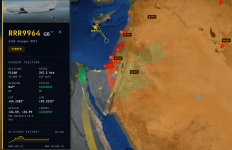
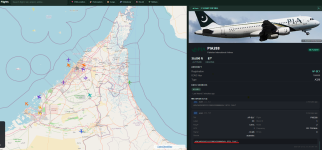
Active GPS interference is now so high in the region that aircraft are sending false positive messages via ACARS for "GPS Faults"
1792756050606.png
 
Current Situational Overview:

*Note: Evidence reviewed: reporting and official statements published through 23 October 2026. Current developments are distinguished from analytical judgements and forecasts.
----
Snapshot summary:
The most important finding from current reporting is that the conflict has moved beyond the relatively static confrontation that characterised much of 2022–2025. - Source: RUSI
----

By 21 October, the Council on Foreign Relations' conflict tracker was reporting continued Houthi attacks against Saudi targets, Saudi interceptions and air strikes, and intensifying fighting around Taiz. - Source: Global Conflict tracker
----
Strategic Indicators:
Saudi homeland security : (Red- Critical Concern)

  • Repeated reported missile and drone attacks against Saudi territory, including civilian and energy infrastructure, make air defence, infrastructure resilience and the risk of further casualties immediate priorities. - Source: UN Press Release
Red Sea and Bab el-Mandeb : (Red- Strategic Concern)
  • Houthi advances along Yemen's western coast have increased the threat to freedom of navigation. Even without a complete blockade, perceived danger can divert shipping, increase insurance costs and disrupt trade. Source: UN DPPA Oct 2026
Anti-Houthi coalition cohesion : (Amber - High Concern)
  • Saudi-backed forces face the challenge of coordinating different Yemeni political and military factions. Territorial gains will be difficult to retain without cohesive command arrangements and local legitimacy. Source: Reuters
Diplomatic de-escalation : (Amber - Uncertain)
The UN remains engaged, but renewed multi-front fighting makes a quick return to the previous ceasefire environment less likely without a change in the parties' incentives.

Principle Actors:
Saudi and Saudi led coalition

  • Saudi Arabia is the principal external military actor supporting the internationally recognised Yemeni government. Its advantages include modern combat aircraft, integrated air-defence systems, substantial financial resources and access to external intelligence and technical support.
Houthis (Ansar Allah)
  • A Yemeni political and armed movement controlling Sana'a and extensive areas of north-western Yemen. It combines territorial administration, established local networks, conventional ground forces and asymmetric missile, drone and maritime capabilities.
Yemen's internationally recognised government and associated forces
  • A necessary partner for Saudi Arabia, but not a single unified fighting force. Its effectiveness depends on coordination between military formations, local authorities and factions with different political objectives.
Iran and other regional actors
  • Iran is an important external enabler of Houthi capabilities, according to UN and Western government assessments. The precise scale of current Iranian assistance, and the extent of direct operational coordination, should not be assumed from weapons similarities alone.
Source: UN DPPA Oct 2026

----
Operational Assessment:

Saudi Arabia​

Saudi Arabia's central problem is the difference between conventional military superiority and the ability to prevent every asymmetric attack.

Its air force, surveillance capabilities, defence infrastructure and access to advanced weapons provide substantial advantages over the Houthis in conventional combat. However, missile and drone defence is a persistent resource challenge: attackers can employ relatively inexpensive systems, while defenders may need costly interceptors, continuous surveillance and repeated engagements.

Recent reporting has highlighted damage to Saudi aviation and energy-related infrastructure, casualties, and concerns about the sustainability of interceptor inventories. These reports support an assessment of serious pressure on Saudi homeland defence, but do not establish that Saudi air defences have generally collapsed.

Saudi Arabia also faces a political-military dilemma:
  • A limited defensive posture could allow continued Houthi coercion and economic disruption.
  • An expanded offensive could weaken Houthi military capacity but expose Saudi infrastructure to retaliation.
  • A major ground campaign could become dependent on fragmented Yemeni partners and create a prolonged requirement for external military and financial support.

Houthis​

The Houthis' principal advantage is their ability to generate strategic effects without matching Saudi Arabia's conventional military strength.

Their capabilities include:
  • Ballistic and cruise missiles, one-way attack drones and other stand-off weapons.
  • Ground forces adapted to Yemen's mountainous terrain and local conditions.
  • Coastal and maritime threats that can affect international shipping and the Bab el-Mandeb chokepoint.
  • Domestic and external supply networks that may support the maintenance or replenishment of weapons.
  • Political and information operations that can portray survival against a stronger opponent as a victory.
The Houthis nevertheless face important constraints. Holding additional territory creates security, administrative and logistical burdens. Prolonged fighting can strain finances and supplies, expose infrastructure to strikes and undermine local support. Greater attacks on civilian targets can also strengthen international support for defensive action against them.

AP's October assessment describes a Houthi force that has continued to develop its missile, drone and domestic production capabilities despite years of external strikes. This reinforces the judgement that air strikes alone are unlikely to eliminate the movement's capacity to resist.

Source: AP / UNOCHA
---
Predictive Forecasting:
Immediate: next 7 days*
High threat
  • Most likely outcome: Continued attacks and countermeasures, with neither side achieving a decisive strategic result.
  • Houthi forces are likely to continue trying to impose costs on Saudi Arabia through attacks or threats against infrastructure and aviation, although the exact frequency and targets cannot be predicted reliably.
  • Saudi Arabia and its partners are likely to prioritise homeland defence, interception, infrastructure protection and continued pressure on Houthi military capabilities.
  • Foreign defensive deployments and technical assistance may improve protection, but integration and readiness take time.
  • Fighting around western Yemen and other contested fronts is likely to remain volatile.
  • Indicators of further deterioration: repeated successful attacks causing mass casualties, interruption of major energy exports, attacks on foreign military personnel, or a substantial increase in maritime incidents.
*Confidence: Moderate for continued confrontation; low for the timing and scale of specific attacks.

Four weeks: by approximately 20 November 2026*
High threat
  • Most likely outcome: A contest between Saudi-supported efforts to reverse Houthi territorial gains and Houthi efforts to maintain strategic leverage.
  • Saudi Arabia may intensify support for Yemeni government operations if it judges that the current territorial and maritime situation is unacceptable.
  • Houthi forces may attempt to retain or expand their leverage while demonstrating that attacks can continue despite international defensive assistance.
  • The effectiveness of Saudi-backed Yemeni forces will be a key determinant of territorial outcomes.
  • The Mecca Joint Defense Agreement could improve Saudi defensive capacity through additional personnel, equipment, technical assistance and intelligence cooperation.
  • A diplomatic pause remains possible, particularly if the costs to shipping, energy exports and civilian populations become politically unsustainable.
  • Key uncertainty: Whether the parties can sustain military pressure without triggering a much wider regional confrontation.

*Confidence: Moderate that confrontation will persist; low to moderate regarding territorial changes and the scope of foreign involvement.

Source: UN DPPA (https://dppa.un.org/en)

----
Alternative scenarios
ScenarioAssessmentConditions that could produce it
Contained escalationPlausible but not the current baselineEffective defensive assistance, reduced attack tempo, diplomatic engagement and restraint by external actors.
Prolonged attritionMost likely baselineNeither side can translate its advantages into a decisive outcome; attacks and counterattacks continue.
Major regional escalationLower probability, very high impactMass-casualty attacks, major energy disruption, direct Iranian involvement, or foreign forces suffering significant casualties.
Saudi-backed territorial reversalPossible, outcome uncertainYemeni forces achieve greater cohesion and sustain operations while Saudi Arabia maintains effective defensive protection.
Renewed negotiated de-escalationPossibleborder attacks and progress on Yemen's political and economic disputes.
Source: ISW
----
Warning Indicators:

  • Military: confirmed changes in territorial control, sustained increases in attacks, the deployment of additional foreign forces, or a shift from defensive support to direct combat.
  • Homeland security: repeated damage to aviation or energy infrastructure, increasing civilian casualties, and official changes to air-defence or civil-protection posture.
  • Maritime: confirmed attacks on commercial vessels, sustained shipping diversions, changes in war-risk insurance and disruption at major ports.
  • Coalition cohesion: disagreements between Saudi Arabia and Yemeni factions, changes in command arrangements, or an inability to maintain control over newly recovered areas.
  • Diplomatic: changes to the Mecca pact's implementation, direct negotiations, new UN initiatives or evidence of a wider regional agreement.
----
Foreign intervention and force-multiplier effects
United Kingdom:

The UK announced additional defensive support on 20 October 2026, including RAF Typhoon defensive counter-air missions, an A400M transport aircraft, military advisers and continued air-defence and refueling support. (Frees up Saudi Aircraft for offensive operations)

View attachment 220349


Assessment: UK involvement should improve Saudi defensive capacity, but its publicly stated restrictions on offensive strikes limit its direct contribution to a Saudi offensive against Houthi positions. Any indirect effect on Saudi offensive capacity would depend on the extent to which British assistance releases Saudi resources for other missions. It would be inappropriate to assume that this is the intended or guaranteed outcome.

France:
View attachment 220350

France has announced a defensive deployment of military personnel and air-defence-related systems to protect Yanbu, a Red Sea port important to Saudi energy exports. President Emmanuel Macron described the deployment as protection of the site rather than participation in the conflict.

Assessment:
French assistance is likely to be most significant in protecting strategic infrastructure and reducing the economic consequences of attacks. It may indirectly help Saudi Arabia sustain its broader military posture, but defensive protection of Yanbu does not itself provide the ability to recapture Houthi-held territory.

EU's Operation ASPIDES:

View attachment 220353

European involvement will contribute through:
  • Maritime surveillance and escort or protective operations within authorised mandates.
  • Intelligence sharing and maritime situational awareness.
  • Defensive equipment, technical assistance and training.
  • Diplomatic pressure, sanctions implementation and efforts to reduce weapons transfers.
  • Humanitarian assistance and support for negotiations.
The distinction between maritime defence and an offensive campaign inside Yemen is essential. A mission tasked with protecting shipping does not automatically have a mandate to attack Houthi land targets or to assist in territorial conquest.

Assessment:
European involvement can help protect commercial shipping and limit economic spillover. Its effect on Saudi offensive capabilities is indirect (unless individual governments separately authorise assistance to offensive operations.)

United States and other external actors:

Reuters reported on 2 October that the United States was providing intelligence support and that Saudi Arabia was considering a renewed offensive, while external partners were largely expected to avoid direct combat roles. The same report described concerns over the cohesion of Yemeni forces.

The US role is strategically important because intelligence, surveillance and technical assistance can improve the effectiveness of Saudi operations. However, the scope and continuity of that support remain subject to political decisions.

Iran's role is different: external support can help sustain Houthi missile, drone and other military capabilities, complicating Saudi attempts to impose a decisive outcome. The exact scale of current assistance cannot be established from open-source reporting alone.

Comparative intervention assessment

Actor
Most credible contributionLikely effect on Saudi defenceDirect effect on Saudi offensive capability
United KingdomDefensive air missions, logistics, advisers and existing defensive supportModerate positive, subject to integration and capacityLimited and indirect under the announced restrictions
FranceProtection of Yanbu and defensive systemsPositive, especially for critical infrastructureLimited unless the mandate changes
EU / European nationsMaritime protection, surveillance, selected bilateral supportPositive for maritime security and economic resilienceLimited under defensive maritime mandates
United StatesIntelligence and technical assistance, subject to policyPotentially significantPotentially significant if support extends to offensive missions; current limits matter
TürkiyePotential defensive, technical and electronic-warfare assistance under the Mecca frameworkPotentially significantPublicly stated position rules out Turkish troops fighting in Yemen
PakistanPotential air-defence, technical and military-support contribution under the Mecca frameworkPotentially significantPublicly stated position is defensive rather than combat participation
*The ratings above are qualitative assessments

----
The Mecca Joint Defense Agreement: strategic implications
The Mecca Joint Defense Agreement, signed on 7 August 2026, brings together Saudi Arabia, Türkiye and Pakistan. It should be treated as a major development in regional security architecture rather than simply an extension of the original Saudi-led coalition in Yemen.

The agreement commits its signatories to treating an armed attack against one as an attack against all three. However, the pact's precise application to attacks by a non-state actor operating from Yemen, and the resulting obligations of each signatory, require careful legal and political interpretation.

By 5 October, Al Jazeera reported that the three states had agreed to activate collective deterrence measures following Houthi attacks. An Associated Press report published on 22 October described Türkiye's parliamentary ratification process and indicated that the nature of potential assistance was still being worked out.7
----

What could each signatory contribute?​


Saudi Arabia: Host nation and principal beneficiary
Saudi Arabia provides the geographic base, financial resources, established military infrastructure and principal requirement for the agreement. Its immediate priorities are protecting national territory and critical infrastructure, sustaining economic activity and preventing further deterioration in Yemen.

Türkiye: Defence technology and military expertise
Türkiye could contribute air-defence capabilities, electronic warfare expertise, technical assistance, defence-industry cooperation and intelligence sharing. AP reported that Turkish officials were assessing defensive and technical assistance while ruling out Turkish troops being deployed to fight the Houthis in Yemen.

Pakistan
: Personnel, training and defensive support
Pakistan has longstanding military ties with Saudi Arabia and experience in training, advising and supporting Saudi forces. Its potential contribution includes personnel, technical assistance, air-defence support and intelligence cooperation.

Important Note: Pakistani officials have described their intended role as defensive, and specific deployments should not be assumed without confirmation.

----
The agreement could provide four principal effects:

1. Deterrence:
2. Defensive depth
3. Political signalling
4. Long-term defence cooperation

Limitations:
  • A mutual-defence commitment does not necessarily mean automatic participation in every Saudi military operation inside Yemen.
  • Defensive assistance does not automatically authorise offensive action against Houthi positions.
  • The signatories may differ over escalation, relations with Iran, the use of force and the acceptable costs of a prolonged war.
  • The agreement's credibility depends on the willingness and practical ability of each state to fulfil its commitments.
----
SWOT Analysis:
Saudi Arabia and its partners

Strengths
  • Superior conventional air power and access to advanced defence systems.
  • Significant financial resources and established military infrastructure.
  • Access to external technical assistance, intelligence and defence cooperation.
  • Greater capacity to sustain conventional operations and protect strategic infrastructure.
  • International recognition of the Yemeni government it supports.

Weaknesses
  • Exposure to asymmetric attacks against dispersed infrastructure.
  • High cost of sustained air defence and the potential for interceptor shortages.
  • Dependence on the cohesion and performance of Yemeni partner forces.
  • Political and economic costs of prolonged intervention.
  • Difficulty translating military superiority into durable political control.

Opportunities
  • Improve integrated air and missile defence through the Mecca agreement and bilateral partnerships.
  • Strengthen intelligence sharing, training, logistics and infrastructure resilience.
  • Consolidate political and military coordination among Yemeni partners.
  • Use diplomatic and economic leverage to pursue a sustainable settlement.
  • Improve maritime security through international cooperation.

Threats
  • Repeated attacks against civilian, aviation and energy infrastructure.
  • Escalation involving Iran or additional regional actors.
  • A prolonged ground campaign with uncertain territorial results.
  • Disruption to Red Sea shipping and energy exports.
  • Civilian casualties, humanitarian deterioration and international criticism.

Houthis (Ansar Allah)
Strengths
  • Established control and administrative networks across much of north-western Yemen.
  • Experience in asymmetric warfare and fighting in difficult terrain.
  • Missile, drone and maritime capabilities that can threaten stronger opponents.
  • Ability to impose economic and political costs without matching Saudi conventional strength.
  • Local supply and production capacity that may support continued resistance.

Weaknesses
  • Inferior conventional air power and limited ability to challenge a modern air force directly.
  • Dependence on supply chains, technical components and vulnerable military infrastructure.
  • Economic and administrative burdens from prolonged conflict.
  • Exposure to sustained external pressure and potential interdiction of military supplies.
  • Risk of losing local support as casualties, economic hardship and coercion increase.

Opportunities
  • Exploit divisions among anti-Houthi factions.
  • Use the threat to maritime traffic as leverage in negotiations.
  • Present survival under pressure as evidence of political and military resilience.
  • Seek diplomatic concessions by linking de-escalation to economic and security demands.

Threats
  • Coordinated regional defensive cooperation that reduces the effectiveness of attacks.
  • Sustained strikes that degrade military infrastructure and production capacity.
  • Loss of territory or access to strategically important coastal areas.
  • International political isolation and further restrictions on external support.
  • A wider regional war that imposes severe costs on Houthi-controlled territory.
---
Comparative assessment
DimensionSaudi Arabia and partnersHouthis
Conventional military powerStrong advantageSignificant disadvantage
Air powerStrong advantageLimited ability to contest Saudi air power
Asymmetric coercionVulnerable to recurring attacksMajor relative advantage
Geographic familiarityDependent on partner forces and local knowledgeStrong advantage in established areas
Economic enduranceStronger national resource base, but exposed to economic disruptionMore constrained, but able to impose costs disproportionately
Coalition cohesionDepends on coordination among multiple partnersMore centralised, although internal cohesion cannot be assumed
Strategic enduranceGreater material capacityGreater potential to sustain irregular resistance
Political end-stateMust establish a sustainable security and governance arrangementCan claim success by surviving, even without defeating Saudi Arabia conventionally

Judgement: Neither side's strengths alone guarantee a favourable end-state.

RAG traffic-light threat map of the theatre
Ratings describe the broad security environment and not the probability of an attack at a particular site.

RED — Critical threat
Active hostilities or serious, sustained risk to life, infrastructure or strategic access.

AMBER — High or elevated threat
Volatile security conditions, contested areas or significant risk of escalation.

GREEN — Relatively lower conflict exposure
Lower direct exposure to the principal fighting, not a guarantee of safety.

Theatre assessment​

Zone A — Western Yemen and the Bab el-Mandeb approaches
RAG: RED

Active fighting and competition over coastal territory increase the risk of further ground clashes and maritime disruption. The UN has reported Houthi advances near Mokha and the Bab el-Mandeb, followed by government counter-offensive activity.

Zone B — Taiz and adjacent contested areas
RAG: RED

Sustained fighting, civilian casualties and disruption to movement and humanitarian supply routes make this a major humanitarian and security concern.

Zone C — Saudi territory and critical infrastructure
RAG: RED

Continued reported Houthi attacks on Saudi territory create a serious homeland-security threat. Civilian aviation, energy infrastructure and other critical services are exposed to disruption. The precise risk varies over time and by location.

Zone D — Marib, al-Jawf and Hajjah
RAG: AMBER–RED

The UN has reported intensified fighting in these governorates. The rating is amber–red because the broad security environment is deteriorating, but current local conditions and territorial control vary.

Zone E — Aden and other government-held southern areas
RAG: AMBER–RED

The internationally recognised government and associated forces operate in a fragmented political and military environment. The reported attack on the presidential palace complex in Aden illustrates the danger of assuming that areas away from the main northern front are secure.

Zone F — Wider Red Sea commercial maritime environment
RAG: AMBER–RED

The threat is strategic and potentially far-reaching. The rating reflects the combination of maritime threats and coastal fighting, not a claim that every sea lane or vessel is currently under attack.

Zone G — Areas distant from active fronts
RAG: GREEN–AMBER, conditional

Areas distant from reported ground fighting may face lower direct combat exposure, but nationwide air and missile threats, infrastructure disruption, and humanitarian constraints mean that a blanket green rating would be misleading.

Methodology:
qualitative synthesis of UN reporting, UK parliamentary analysis, official government statements and established news reporting. This is a strategic risk overview, not a validated geospatial threat product.
----
Humanitarian and international-law considerations

The humanitarian dimension is integral to the strategic assessment.

The International Organization for Migration reported on 5 October that more than 184,000 people had been displaced between 1 August and 4 October 2026. UNICEF's 11 October update reported that displacement had exceeded 200,000 people between 3 September and 10 October, with substantial disruption to health facilities, schools and humanitarian access. These figures cover different reporting windows and should not be added together.

The implications are significant:
  • Further displacement may overwhelm host communities and public services.
  • Disruption to transport routes can impede food, medical supplies and humanitarian assistance.
  • Damage to energy and civilian infrastructure can compound economic hardship.
  • Civilian casualties can increase political pressure on all external actors and undermine the legitimacy of military operations.
  • All parties remain bound by applicable international humanitarian law, including the principles of distinction, proportionality and precautions in attack. The right of a state to defend itself does not remove those obligations. Maritime operations must also comply with applicable international law, including the law of the sea.

The assessment is as follows:

1. Saudi Arabia faces a serious and immediate homeland-security challenge.

2. The Houthis retain the capacity to impose costs disproportionate to their conventional strength. But it does not make them immune to sustained military, economic or political pressure.

3. Foreign defensive assistance is likely to improve resilience more quickly than it changes the territorial balance in Yemen. UK, French and European contributions can protect airspace, infrastructure and shipping.

4. The Mecca Joint Defense Agreement could become a significant force multiplier for Saudi Arabia. Its most immediate value lies in collective deterrence, technical cooperation and the protection of Saudi territory. It should not be interpreted as an automatic commitment by Türkiye or Pakistan to participate in offensive combat in Yemen.

5. A protracted conflict remains a substantial risk.

6. The principal route to a durable settlement remains a combination of credible security arrangements, political negotiations and a workable framework for Yemen's governance and economy. Military operations may alter bargaining positions, but they are unlikely on their own to resolve the underlying conflict.

The most defensible baseline is therefore continued confrontation, a high threat to Saudi critical infrastructure, persistent instability around western Yemen and the Red Sea, and growing reliance on regional and international defensive cooperation.
----
References:

1. Associated Press (2026) ‘How the Mecca defense agreement between Turkey, Pakistan and Saudi Arabia will work’. 21 October. Available at: https://apnews.com/article/b96277475d9332672104d223a91eb3db (Accessed: 23 October 2026).

2. Council on Foreign Relations (2026) ‘Conflict in Yemen and the Red Sea’. Global Conflict Tracker, updated 12 October. Available at: https://www.cfr.org/global-conflict-tracker/conflict/war-yemen (Accessed: 23 October 2026).

3. Council of the European Union (2026) ‘Red Sea: Council extends the mandate of Operation ASPIDES to safeguard freedom of navigation’. 23 February. Available at: https://www.consilium.europa.eu/en/press/press-releases/2026/02/23/red-sea-council-extends-the-mandate-of-operation-aspides-to-safeguard-freedom-of-navigation/ (Accessed: 23 October 2026).

4. European Commission (2026) Operation ASPIDES and EU maritime security in the Red Sea. Refer to the Council of the European Union's official announcement above for the confirmed mandate extension and mission details.

5. House of Commons Library (2026) ‘Yemen 2026: Southern Transitional Council’s fall and renewed Houthi-Saudi conflict’. Research Briefing, 5 October. Available at: https://commonslibrary.parliament.uk/research-briefings/cbp-10427/ (Accessed: 23 October 2026).

6. International Organization for Migration (IOM) (2026) ‘Yemen – Displacement Caused by Escalation in the West Coast: Update #13 (7 October 2026)’. Displacement Tracking Matrix. Available at: https://dtm.iom.int/reports/yemen-displacement-caused-escalation-west-coast-update-13-7-october-2026 (Accessed: 23 October 2026).

7. Reuters (2026) ‘Saudis plan assault on Houthis to break Red Sea chokehold’. 2 October. Available at: https://www.reuters.com/world/asia-pacific/saudis-plan-assault-houthis-break-red-sea-chokehold-2026-10-02/ (Accessed: 23 October 2026).

8. Reuters (2026) ‘France to send military to protect Saudi Arabia on Red Sea oil route, Macron says’. 24 September. Available at: https://www.defensenews.com/global/europe/2026/09/25/france-to-send-military-to-protect-saudi-arabia-on-red-sea-oil-route-macron-says/ (Accessed: 23 October 2026).

9. Royal United Services Institute (RUSI) (2026) ‘Houthis advance and seize strategic Red Sea port’. 11 September. Available at: https://www.rusi.org/news-and-comment/in-the-news/houthis-advance-and-seize-strategic-red-sea-port (Accessed: 23 October 2026).

10. UK Ministry of Defence (2026) ‘Operational update 20 October – UK military support to the Kingdom of Saudi Arabia’. 20 October. Available at: https://www.gov.uk/government/news/operational-update-20-october-uk-military-support-to-the-kingdom-of-saudi-arabia (Accessed: 23 October 2026).

11. United Nations Department of Political and Peacebuilding Affairs (2026) ‘Yemen has returned to full-scale war, Special Envoy warns’. 9 October. Available at: https://dppa.un.org/en/news/yemen-has-returned-to-full-scale-war-special-envoy-warns (Accessed: 23 October 2026).

12. UNICEF Yemen (2026) ‘Flash Update on the Hostilities in Yemen’. 11 October. Available at: https://www.unicef.org/yemen/reports/flash-update-hostilities-yemen (Accessed: 23 October 2026).

Additional​

  • Institute for the Study of War (ISW)
  • RUSI
  • European maritime operations: Operation ASPIDES.
  • Reuters
Allow me to throw in my two cents..... there's going to be ground invasion of houthis lands at a massive scale ..,. MDA ground forces will take part , statements like " only defence role" are hogwash... after houthis are fully tamed iran will get the loving attention that she deserves.... Iran will either say ' qabool hai ' or will get an acid stricken face .
 

Users who are viewing this thread

Country Watch Latest

Latest Posts

Back
Top