The Houthi terrorist cult losing the "online war/propaganda war" as well.
"Countering the Houthi Narrative...
One name has come under sustained attack from the entire Houthi social media and propaganda ecosystem over the past 48 hours, Fedaa Al-Deen Yahya
@fedaaadeen1.
With 1.22 million
@YouTube subscribers, 2.1 million
@Facebook followers, and 1.8 million
@Instagram followers, Fedaa Al-Deen is a staunch supporter of Gaza and one of the most influential anti-Israeli voices among Muslim youth on social media.
For weeks, many of his followers had been wondering why he remained silent about the war in Yemen, particularly the Houthi offensive against Taiz.
That silence ended when Fedaa Al-Deen released a 17-minute video
systematically challenging the Houthi narrative on religious, political, ideological, and military grounds. The video has reportedly attracted more than 5 million views on
@X alone.
His central argument was that the Houthis' support for Gaza
does not absolve them of their actions in Yemen.
"No matter how much you stand with me in what is right, I will not stand with you in what is wrong."
Fedaa Al-Deen compared Taiz's defenders to those resisting Israel in Gaza, arguing that both were fighting against aggression despite overwhelming military disadvantages.
Fedaa Al-Deen traced the Houthis' military expansion from Sa'ada and the siege of Dammaj through Amran, Sana'a, and their subsequent advance southward. He used archival footage and statements from Houthi leaders to demonstrate what he described as a
recurring pattern of deception, broken promises, violence, and ideological justification.
"They use every possible slogan to justify their actions and mobilize fighters.
"He argued that the Houthis repeatedly change their justification for fighting. During the Saudi-led intervention, they claimed to be resisting foreign aggression. During the campaign against ISIS, they portrayed their opponents as terrorists. Following October 7, they increasingly labeled their domestic opponents Zionists.
"They will continue accusing everyone who opposes them in Taiz, Marib, Hadramawt, and Aden of being Zionists simply because they refuse to submit."
His religious criticism was equally forceful. Citing Hussein al-Houthi's own writings, Fedaa Al-Deen challenged the movement's claims of religious authority through descent from the Prophet Muhammad.
"Since when did divine revelation make ancestry and lineage the standard for distinguishing truth from falsehood?
"Fedaa Al-Deen devoted several minutes to challenging what he described as the Houthi leadership's belief that it possesses exclusive divine authority to interpret Islam and guide Muslims. Quoting Hussein al-Houthi's teachings about the religious authority of the "Prophet's descendants", he countered with Quranic verses that reject ancestry as a guarantee of righteousness.
He cited Surah Al-Baqarah (2:124), in which God tells Abraham, "My covenant does not include the wrongdoers," and
Surah Hud (11:46), in which God rejects Noah's appeal concerning his son, declaring that his conduct was unrighteous. He also invoked
Surah Al-Hujurat (49:13), which states that the most honored before God are the most righteous, not those of a particular lineage. Fedaa Al-Deen argued that no family, individual, or political movement can claim to be God's exclusive guardian of religious truth simply through descent from the Prophet.
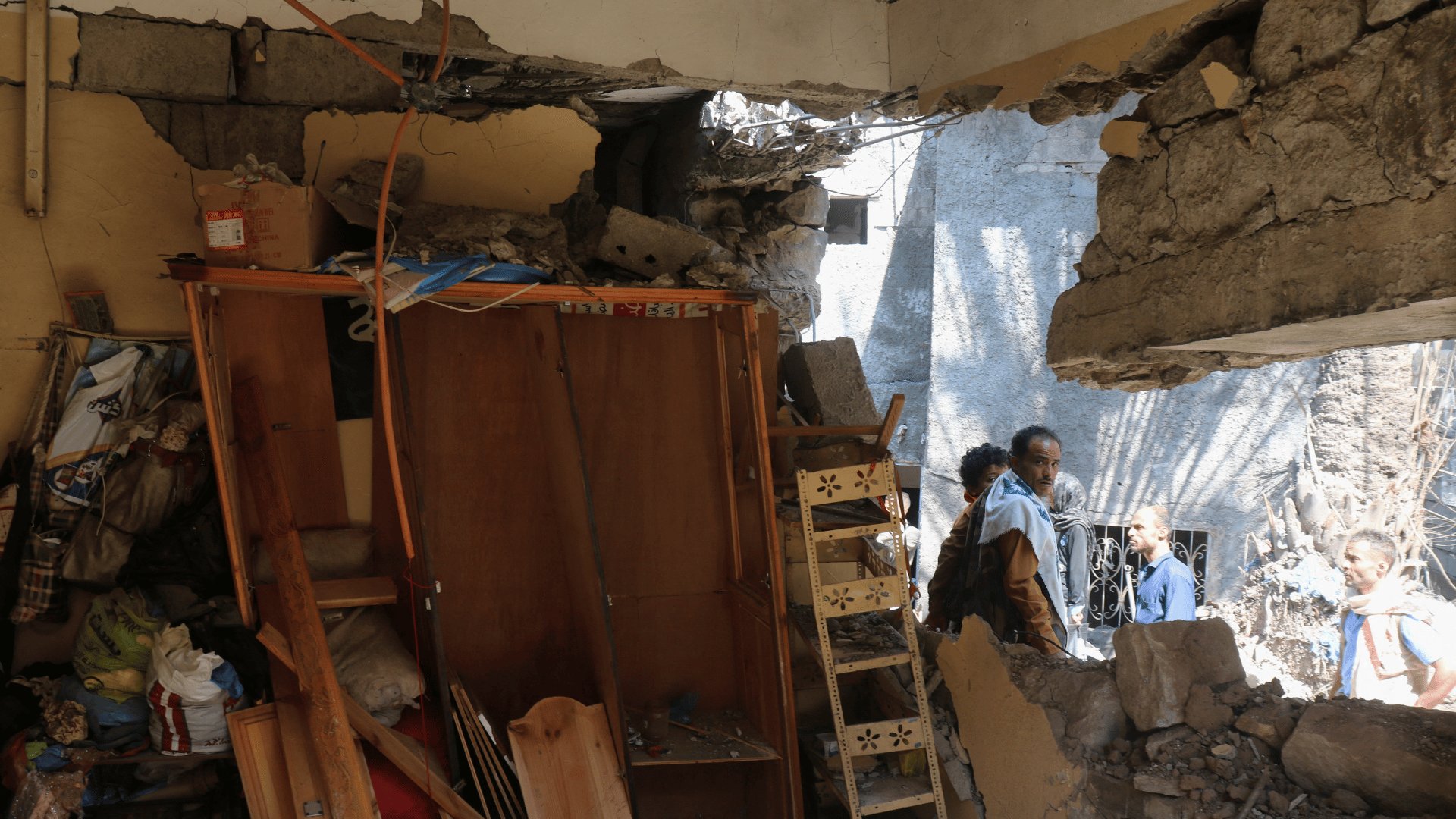
Turning to the ongoing fighting around Taiz, Fedaa Al-Deen accused the Houthis of besieging the city, attacking civilian homes, and killing women and children while portraying their campaign as a struggle against foreign-backed forces.
His closing message was directed at Yemenis, including Houthi fighters, warning against blind obedience to political and religious leaders.
"On Judgment Day, you will stand before your Lord alone, and you will be asked whom you killed and why.
"The backlash against Fedaa Al-Deen is particularly significant because his criticism comes from someone who has consistently defended Gaza and condemned Israeli military actions. His position directly challenges the Houthi effort to portray opposition to their movement as opposition to Palestine.
Rather than simply denouncing the Houthis politically, Fedaa Al-Deen challenged their religious legitimacy, historical record, and justification for the ongoing war, using their leaders' own statements against them.
Apparently, when someone challenges the Houthis with 17 minutes of Quranic verses, historical footage, and their own leaders’ words,
the best counterargument they can come up with is an investigation into his haircut, wardrobe, bank account, and residential ZIP code."