Yemen Civil War News and Discussion.. an evolving situation


"A Yemeni military leader's speech to his soldiers ๐Ÿ‡พ๐Ÿ‡ช

"#Saudi Arabia ๐Ÿ‡ธ๐Ÿ‡ฆ

You stood with us in this decade, so we triumphed ๐Ÿ‡พ๐Ÿ‡ช

And with Bahrain in the past decade, so it triumphed ๐Ÿ‡ง๐Ÿ‡ญ

And with Kuwait in the nineties, so it triumphed ๐Ÿ‡ฐ๐Ÿ‡ผ

And with Iraq in the eighties, so it triumphed ๐Ÿ‡ฎ๐Ÿ‡ถ

And with Egypt in the seventies, so it triumphed๐Ÿ‡ช๐Ÿ‡ฌ

By God, you have never stood with a people without their triumph"

Of course Syria could be added to this long list.

Most likely the Sudanese government (also supported by KSA) will defeat the RSF in Sudan as well.

Support for our Algerian brothers and sisters against the French occupiers as well. Quite a few other examples as well if going further back in time.

More high-ranking Houthi terrorist cultists eliminated in recent days/hours across several frontlines.


"The heroes are relentlessly harvesting the Houthi elements and their officers, and here are some of those who met their end on the fronts of Taiz, Al-Sabikha, and Bab al-Mandab.

Colonel/Abdullah Al-Hakam
One of the security officers of Sana'a
Colonel/Arefat Hamza
Munir Al-Bawsh
Abdul Jabbar Al-Ashmali
Kamal Ma'idh
Abdullah Al-Abrqi
Ali Hussein Al-Azi
Abdullah Huwah
Daris Al-Ali Yusuf Sharqan"

So many deaths and so much bombardment and yet the houthis are still there....beats me.


Arabized Majoosis should understand once and for all that their meddling in the Arab world is not welcome and that all of their pets will eventually be defeated/exterminated like seen in Syria and elsewhere. Fifth columnists and traitors amongst our midst will not be tolerated.

outhis are still there....beats me.
The terrorist cult have 350.000 cult members if not more let alone their forceful conscription of even children as young as 10 years. No shortage of sacrificial lambs.
 
The Houthi terrorist cult losing the "online war/propaganda war" as well.


"Countering the Houthi Narrative...


One name has come under sustained attack from the entire Houthi social media and propaganda ecosystem over the past 48 hours, Fedaa Al-Deen Yahya @fedaaadeen1.

With 1.22 million @YouTube subscribers, 2.1 million @Facebook followers, and 1.8 million
@Instagram followers, Fedaa Al-Deen is a staunch supporter of Gaza and one of the most influential anti-Israeli voices among Muslim youth on social media.
For weeks, many of his followers had been wondering why he remained silent about the war in Yemen, particularly the Houthi offensive against Taiz.

That silence ended when Fedaa Al-Deen released a 17-minute video systematically challenging the Houthi narrative on religious, political, ideological, and military grounds. The video has reportedly attracted more than 5 million views on @X alone.

His central argument was that the Houthis' support for Gaza does not absolve them of their actions in Yemen.

"No matter how much you stand with me in what is right, I will not stand with you in what is wrong."

Fedaa Al-Deen compared Taiz's defenders to those resisting Israel in Gaza, arguing that both were fighting against aggression despite overwhelming military disadvantages.

Fedaa Al-Deen traced the Houthis' military expansion from Sa'ada and the siege of Dammaj through Amran, Sana'a, and their subsequent advance southward. He used archival footage and statements from Houthi leaders to demonstrate what he described as a recurring pattern of deception, broken promises, violence, and ideological justification.

"They use every possible slogan to justify their actions and mobilize fighters.

"He argued that the Houthis repeatedly change their justification for fighting. During the Saudi-led intervention, they claimed to be resisting foreign aggression. During the campaign against ISIS, they portrayed their opponents as terrorists. Following October 7, they increasingly labeled their domestic opponents Zionists.

"They will continue accusing everyone who opposes them in Taiz, Marib, Hadramawt, and Aden of being Zionists simply because they refuse to submit."


His religious criticism was equally forceful. Citing Hussein al-Houthi's own writings, Fedaa Al-Deen challenged the movement's claims of religious authority through descent from the Prophet Muhammad.

"Since when did divine revelation make ancestry and lineage the standard for distinguishing truth from falsehood?

"Fedaa Al-Deen devoted several minutes to challenging what he described as the Houthi leadership's belief that it possesses exclusive divine authority to interpret Islam and guide Muslims. Quoting Hussein al-Houthi's teachings about the religious authority of the "Prophet's descendants", he countered with Quranic verses that reject ancestry as a guarantee of righteousness. He cited Surah Al-Baqarah (2:124), in which God tells Abraham, "My covenant does not include the wrongdoers," and Surah Hud (11:46), in which God rejects Noah's appeal concerning his son, declaring that his conduct was unrighteous. He also invoked Surah Al-Hujurat (49:13), which states that the most honored before God are the most righteous, not those of a particular lineage. Fedaa Al-Deen argued that no family, individual, or political movement can claim to be God's exclusive guardian of religious truth simply through descent from the Prophet.

Turning to the ongoing fighting around Taiz, Fedaa Al-Deen accused the Houthis of besieging the city, attacking civilian homes, and killing women and children while portraying their campaign as a struggle against foreign-backed forces.

His closing message was directed at Yemenis, including Houthi fighters, warning against blind obedience to political and religious leaders.

"On Judgment Day, you will stand before your Lord alone, and you will be asked whom you killed and why.

"The backlash against Fedaa Al-Deen is particularly significant because his criticism comes from someone who has consistently defended Gaza and condemned Israeli military actions. His position directly challenges the Houthi effort to portray opposition to their movement as opposition to Palestine.

Rather than simply denouncing the Houthis politically, Fedaa Al-Deen challenged their religious legitimacy, historical record, and justification for the ongoing war, using their leaders' own statements against them.

Apparently, when someone challenges the Houthis with 17 minutes of Quranic verses, historical footage, and their own leadersโ€™ words, the best counterargument they can come up with is an investigation into his haircut, wardrobe, bank account, and residential ZIP code."
 

Fighting rages near Yemenโ€™s Taiz as UN urges humanitarian access​

Fighting has forced more than 281,000 people from their homes in Yemen since the beginning of August, the UN said.

Listen (3 mins)
Save

Share Fighting rages near Yemenโ€™s Taiz as UN urges humanitarian access on social media
Share

Add Al Jazeera on Google
A fighter loyal to Yemen's internationally-recognised government fires a turret from the back of a pickup truck at a position along the frontlines against the Houthis around Mount al-Midan in Yemen's western Taiz province on October 26, 2026.

A fighter from Yemen's internationally recognised government fires from the back of a pick-up truck truck at a position along the front lines against the Houthis in Yemen's western Taiz province. [File: Ahmad al-Basha/AFP]

By Al Jazeera Staff, AFP, Anadolu and Reuters
Published On 29 Oct 202629 Oct 2026
Fighting has escalated in Yemen, with media affiliated to government forces reporting a surge in hostilities with the Houthis on several fronts south of Taiz in southwestern Yemen.

Yemen Today TV reported on Thursday that fighting was taking place on the Al-Aqroudh and Al-Masrakh fronts, as well as in Al-Rahn village in the Sabir al-Mawadim district.

Recommended Stories​

list of 4 items
end of list
Houthi-affiliated media reported four air strikes against the city of Mocha and its port on the Red Sea, west of Taiz.

Yemeni government forces in Taiz said they repelled attacks on Al-Aqroud, as they tried to break the Houthi siege of the area.

โ€œOur forces have carried out 749 military operations over the past 24 hours, resulting in the death or injury of 239 militants and the destruction of 117 vehicles and armoured vehicles,โ€ Majid al-Nazili, a spokesman for Yemeni government forces, told Al Jazeera.


image.jpg


  • Yemen's Taiz faces humanitarian crisis as Houthi siege cuts off food and fuel


    The megadonors financing the US midterms to influence policy​

  • 00:52
    Men pulled from vehicle stranded by floods in Syria

    Men pulled from vehicle stranded by floods in Syria​


The Houthis โ€“ also known as Ansar Allah, Arabic for Supporters of God โ€“ also advanced on Jabal Sabr on Sunday, the strategic mountain overlooking Taiz. It has become the focus of the fighting between the Iran-backed group and forces loyal to Yemenโ€™s internationally recognised government, backed by Saudi Arabia.

Meanwhile, flights have resumed at Aden international airport, the Anadolu news agency reported. Services were suspended on Wednesday after witnesses said a missile had landed on the Al-Nasr Camp, adjacent to the airport, where Yemeni coastguard forces and interior ministry headquarters are located.

A military source told Al Jazeera on Thursday that government forces carried out three air strikes against Houthi military gatherings and vehicles southeast of Taiz, claiming that they targeted the groupโ€™s positions and movements on the Al-Aqroud front. This comes as the Houthi group reported more than 100 air strikes targeting the capital city Sanaa, and eight other Yemeni governorates, over the past 24 hours.

Advertisement

The surge in fighting across multiple fronts in Yemen has worsened a spiralling humanitarian crisis.

Get instant alerts and updates based on your interests. Be the first to know when big stories happen.
Yes, keep me updated
The conflict has forced more than 281,000 people from their homes in Yemen since the beginning of August, according to the United Nationsโ€™ humanitarian agency.

The Office for the Coordination of Humanitarian Affairs (OCHA) warned that โ€œtime is running outโ€ to deliver aid to the 800,000 people trapped inside the city of Taiz.

Humanitarian access has become increasingly difficult over the past three weeks, OCHA said, due to damage to a key road linking Taiz to southern governorates. Aid supplies now have to pass narrow mountain routes to reach people in need.

OCHA called on fighters not to target civilians or aid convoys. โ€œAll parties must respect international humanitarian law and allow safe, sustained and unimpeded humanitarian access so that aid can reach people in need,โ€ it said.

The war in Yemen has escalated sharply since the Houthis seized strategic territory from government forces along the Red Sea coast last month, prompting a counteroffensive. Saudi Arabia has since intensified its strikes on the group.


image.jpg


Play Video
1:42
Fighting intensifies around Yemenโ€™s Taiz as UN warns time is running out for aid


Houthi attacks on Saudi Arabia, which is aligned with Yemenโ€™s government forces, have dealt a blow to the kingdom, the worldโ€™s biggest exporter of crude oil, disrupting its businesses, airlines and residents, and damaging its international image.
 
Military forces and the Popular Resistance announce the thwarting of Houthi militia advance attempts in Taiz and the regrouping of its elements, while consolidating field gains with air and artillery support.

 
Massive RSAF bombardments of temporarily occupied Mokha yesterday night.


Just moments ago, with a Houthi admission... an aerial earthquake crushes militia dens in Al-Makha, a hell of airstrikes devours smuggling ships and fells the commander "Al-Ashmi"!

The intense airstrikes targeting the city and port of Al-Makha resulted in the killing of the prominent Houthi security supervisor known as "Abu Ziyad Al-Ashmi," originally from Hajjah Governorate, in addition to the deaths and injuries of other elements and escorts of the terrorist militia.

Here are the full and updated details regarding the nature and targets of the airstrikes:

โ€ข Targeted locations and facilities: Warplanes launched four airstrikes that directly focused on the security administration building and the newly established security headquarters set up by the Houthi militia inside the city of Al-Makha and its surroundings. The strikes also hit gatherings and leadership meeting sites in the "Hail Saeed" apartments complex and "Bayt Al-Jaami'," as well as other sites in the vicinity of Jabal Al-Nar east of the city.

โ€ข Field and military losses: The high-precision strikes led to the killing of all those present in the targeted meeting headquarters amid intense Houthi security secrecy. The airstrikes also succeeded in destroying two dhows (small ships) loaded with weapons and ammunition off the coasts, which the militia was attempting to use for smuggling arms and supporting its military operations toward the Bab al-Mandab Strait.

โ€ข Current field situation: Immediately following the attack, the Houthi group imposed a tightened security and military cordon on all targeted sites in Al-Makha, preventing citizens and paramedics from approaching the perimeter of the new security administration and the destroyed buildings to conceal the scale of the devastating human losses among its leadership ranks.

These focused airstrikes come in conjunction with a broad escalation and continuous pressure from the government forces backed by the coalition on the fronts of Taiz and Bab al-Mandab to force the Houthis into retreat.


Houthi terrorist cult Deputy Foreign Minister, Hussein al-Ezzi has been killed in RSAF strikes.


Watch in the video as the Falcons of the Southern Giants Forces target dozens of Houthi terrorist cult elements with precise strikes on the Al-Mudarabah front.


Houthi terrorist cult members who were killed in battles in Ta'z, Al-Mudharabah, Kahbub and Bab al-Mandab fronts.


Houthi terrorist cult leaders and elements who perished in the Kahlan battles yesterday, and others who perished last week:

Amir Qambar
Ahmed Al-Hatar
Alaa Salba
Mohamed Al-Sabai
Faris Al-Mas'ar
Kharaf Al-Nahmi
Abu Faris Al-Shafaq
Abu Kashif Al-Kabsi
Haitham Al-Ali
Mohamed Al-Haruqi
Mohamed Al-Haddad
Akram Al-Aumari
Salman Dahqa
Ahmed Al-Shar'i
Mohamed SawiIssam Shabili

Allahu Akbar. Less terrorists on the face of earth.

I hope some terrorist Irani 'advisors' are among those who were killed there.
 
"have been a recent rise in Houthi fatalities among members of Hashemite families"

@_Arabia_

For my own knowledge, are these the same Hashemites that rule Jordan? Is there some divergence of Hashemite clans?
 
"A Yemeni military leader's speech to his soldiers ๐Ÿ‡พ๐Ÿ‡ช

"#Saudi Arabia ๐Ÿ‡ธ๐Ÿ‡ฆ

You stood with us in this decade, so we triumphed ๐Ÿ‡พ๐Ÿ‡ช

And with Bahrain in the past decade, so it triumphed ๐Ÿ‡ง๐Ÿ‡ญ

And with Kuwait in the nineties, so it triumphed ๐Ÿ‡ฐ๐Ÿ‡ผ

And with Iraq in the eighties, so it triumphed ๐Ÿ‡ฎ๐Ÿ‡ถ

And with Egypt in the seventies, so it triumphed๐Ÿ‡ช๐Ÿ‡ฌ

By God, you have never stood with a people without their triumph"

Of course Syria could be added to this long list.
The reality is that whoever or whatever these cursed and low-life Irani mullahs have touched eventually went through death and destruction and fell to utter disgrace.

In fact, the whole region is burning since 1979 when these evil sons of Iblees took over the power in Iran. The first thing these terrorist mullahs then did was to create terrorist proxies in regional countries. Scores of people are continuously losing their life in that evil game of these shaitan mullahs.

While the Irani mullahs were busy creating and arming their terrorist proxies in other countries, the people of Iran kept falling poorer and increasingly more oppressed in their own country. Anyone trying to raise voice against evil mullahs in Iran would be killed. At least tens of thousands of Iranis have been killed by the goons of these evil mullahs just in 2026.
 
"have been a recent rise in Houthi fatalities among members of Hashemite families"

@_Arabia_

For my own knowledge, are these the same Hashemites that rule Jordan? Is there some divergence of Hashemite clans?
Hashemites in the Arab world can be counted in the 1000's in terms of families, clans and tribes. In many areas of Hejaz they are the majority of the locals to this day.

The Jordanian Hashemites (previously Iraqi ones as well - same family) are just 1 branch of the larger Makkawi (Hejazi) Hashemites that ruled Hejaz (Sharifs of Makkah) https://en.wikipedia.org/wiki/Sharif_of_Mecca from almost continuously since the Fatimids (around 967). That particular branch is the Banu Qatadah https://en.wikipedia.org/wiki/Banu_Qatadah that I also belong to.

In Yemen there are likewise many well-established and well-known Sadah families (Alid families - Sayyids and Sharifs).

However the largest concentration is in Seiyyun, Tarim and other areas of Hadhramaut.


I have ancestral ties to this part of Yemen (Seiyun and Tarim) on my father's side as well.


As another side note, most of the Arab scholars, later rulers, Sufis, merchants etc. that established Arab policies in East Africa (Swahili coastline - itself a word of Arabic origin meaning "of the coast" - Swahili language - one of the most spoken African languages and the lingua franca of much of East Africa - is almost 50% Arabic in terms of vocabulary) https://en.wikipedia.org/wiki/Swahili

and most importantly in South Asia (modern-day Sri Lankan - read up on the Moors and the Shafi'i Muslim communities of South India - Kerala in particular), South East Asia (Brunei, Malaysia, Indonesia - millions of people of Arab origin - mostly Hejazi and Hadhrami - many Muslim dynamites were founded by those Arabian populations - current Bruneian royal family are Hejazi Hashemites as was/is the Sultan of Sulu in South Phillippines and many other former Muslim dynasties on Java and Sumatra as well as in Malaysia).

Which is why those nations are majority Shafi'i Sunni Muslims to this day.

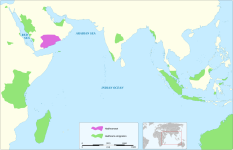
Map of Hadhrami migrations:

1793293073839.png

The same Arabs/Arabians founded modern-day Singapore and until not that long ago owned almost all of it.


That is how Islam was spread to South East Asia mainly. Not through military conquest. Indonesia is now the world's most populous Muslim nation today and there to this day there is a very strong Arab-Indonesian ties (Malaysian as well).

Interestingly one of the largest Indonesians diasporas are also found in modern-day KSA with many Saudi Arabians have partial Indonesian ancestry.

 
Hashemites in the Arab world can be counted in the 1000's in terms of families, clans and tribes. In many areas of Hejaz they are the majority of the locals to this day.

The Jordanian Hashemites (previously Iraqi ones as well - same family) are just 1 branch of the larger Makkawi (Hejazi) Hashemites that ruled Hejaz (Sharifs of Makkah) https://en.wikipedia.org/wiki/Sharif_of_Mecca from almost continuously since the Fatimids (around 967). That particular branch is the Banu Qatadah https://en.wikipedia.org/wiki/Banu_Qatadah that I also belong to.

In Yemen there are likewise many well-established and well-known Sadah families (Alid families - Sayyids and Sharifs).

However the largest concentration is in Seiyyun, Tarim and other areas of Hadhramaut.


I have ancestral ties to this part of Yemen (Seiyun and Tarim) on my father's side as well.


As another side note, most of the Arab scholars, later rulers, Sufis, merchants etc. that established Arab policies in East Africa (Swahili coastline - itself a word of Arabic origin meaning "of the coast" - Swahili language - one of the most spoken African languages and the lingua franca of much of East Africa - is almost 50% Arabic in terms of vocabulary) https://en.wikipedia.org/wiki/Swahili

and most importantly in South Asia (modern-day Sri Lankan - read up on the Moors and the Shafi'i Muslim communities of South India - Kerala in particular), South East Asia (Brunei, Malaysia, Indonesia - millions of people of Arab origin - mostly Hejazi and Hadhrami - many Muslim dynamites were founded by those Arabian populations - current Bruneian royal family are Hejazi Hashemites as was/is the Sultan of Sulu in South Phillippines and many other former Muslim dynasties on Java and Sumatra as well as in Malaysia).

Which is why those nations are majority Shafi'i Sunni Muslims to this day.

Map of Hadhrami migrations:

View attachment 221327

The same Arabs/Arabians founded modern-day Singapore and until not that long ago owned almost all of it.


That is how Islam was spread to South East Asia mainly. Not through military conquest. Indonesia is now the world's most populous Muslim nation today and there to this day there is a very strong Arab-Indonesian ties (Malaysian as well).

Interestingly one of the largest Indonesians diasporas are also found in modern-day KSA with many Saudi Arabians have partial Indonesian ancestry.

Thanks for the detailed explanation!
 
So many deaths and so much bombardment and yet the houthis are still there....beats me.
Bro, Yemen has a vast countryside with difficult terrain. Houthis are continuously losing men and material but no rapid advances are being made by Yemeni government forces. I think that's by plan.

The strategy seems to keep Houthis stretched while keeping them bleed. Houthis are losing the initiative capability and their steam in general.

Houthis are losing at the war fronts and as they try to send reinforcements they are toasted while they are on move. They are forced to expose themselves and then get destroyed.

Houthi forces are continuously forced to run around like mice and then get hunted down from the air.
 
Thanks for the detailed explanation!
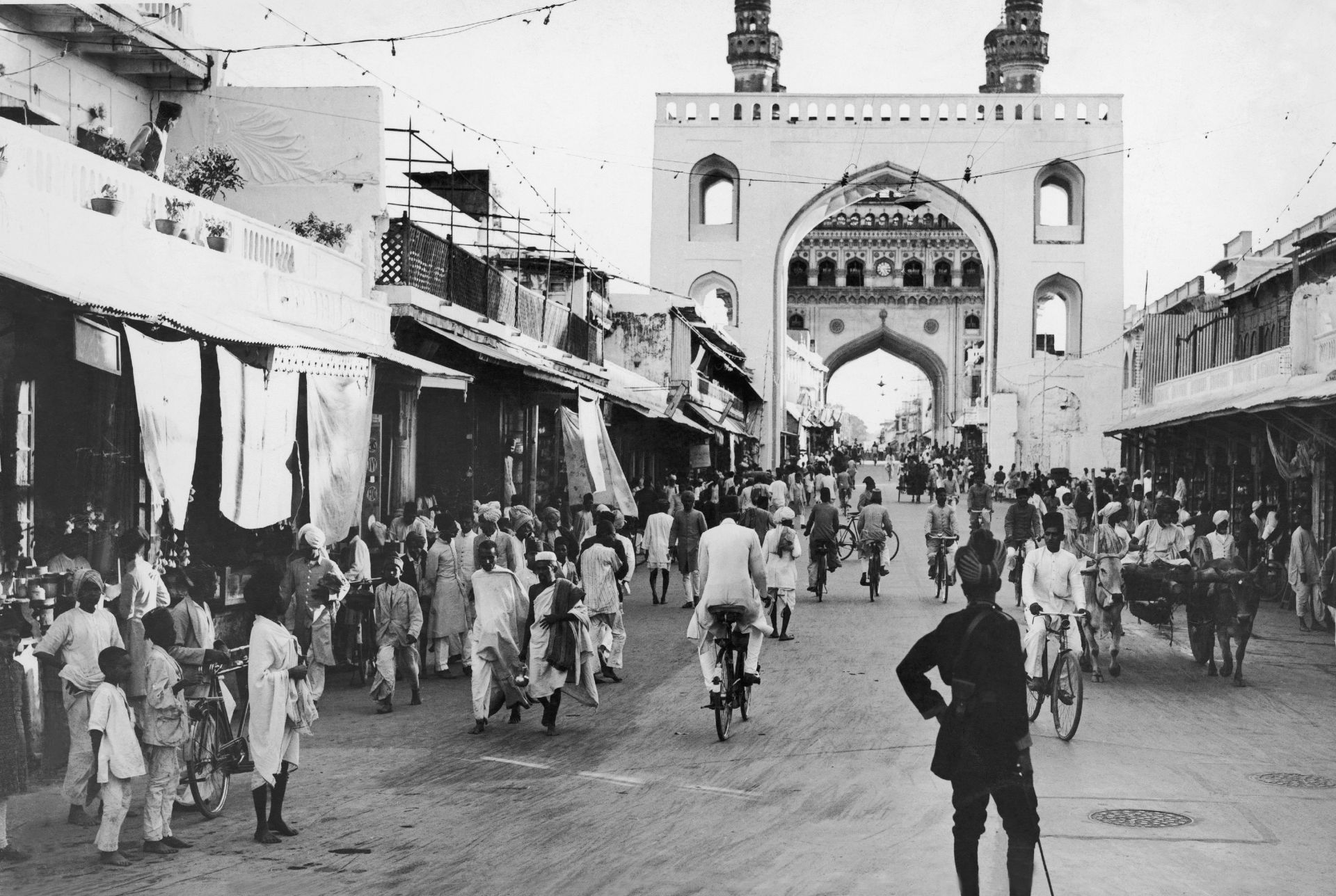
Even on this little forum of ours, there is a Pakistani user who calls himself @Hyderabadi Arab or something alike. I asked him if he is of Hadhrami origin but never received a reply. Some Hadhrami Arabs migrated to the Deccan to serve in the army (as personal guards) of the Nizam of Hyderabad (whose family claimed and claims Arab ancestry - Siddiqii ancestry no less)


The Arabs of Hyderabad​

The rulers of Indiaโ€™s wealthiest princely state relied on soldiers from Yemen to guard their palaces and armies for generations, then independence forced them to adapt​


They left quite a mark in Hyderabad as well, even culinary one.

But 99% of all Arabs have no clue about those connections that I wrote about. Only history buffs like me will know or people with direct personal ties to those communities. Maybe I am exaggerating here but there is a real lack of knowledge about your own country's history let alone that of your ethnicity (Arab) and the complexity and richness of it. I myself do not know everything, far from it. Would take a life time to study most of it.


In any case, back to topic.

Those Houthi terrorist cultists are a joke. Even the spokesmen and elites of theirs that they parade on Arabic television are uneducated clowns.

Every flaunt Arabic speaker will confirm after watching just this video below:


"Information:This is Muhammad Al-Bukhaiti (a member of the Houthi group's political bureau), who usually appears as their spokesperson in the media.

He and his group have always claimed that their opponents (are ignorant of reading the Quran) and demand that they return to the Book of God.

In the clip, he quotes the Quran but makes several mistakes, to the point that the Al Jazeera anchor got fed up and started correcting him. Second piece of information: This same person is the spokesperson for the (Quranic Procession Movement) within the Houthi group, and they are all supposed to be preservers of the Book of God. Yet in the quoted tweet, one of its members cannot read a single word correctly from the Noble Quran."
 
The Yemeni Armed Forces continue their military operations on the Al-Jawf, Marib, Al-Bayda, southern, and southwestern fronts, targeting the movements of the Houthi militia, its fortifications, and its military gatherings.

 
Hashemites in the Arab world can be counted in the 1000's in terms of families, clans and tribes. In many areas of Hejaz they are the majority of the locals to this day.

The Jordanian Hashemites (previously Iraqi ones as well - same family) are just 1 branch of the larger Makkawi (Hejazi) Hashemites that ruled Hejaz (Sharifs of Makkah) https://en.wikipedia.org/wiki/Sharif_of_Mecca from almost continuously since the Fatimids (around 967). That particular branch is the Banu Qatadah https://en.wikipedia.org/wiki/Banu_Qatadah that I also belong to.

In Yemen there are likewise many well-established and well-known Sadah families (Alid families - Sayyids and Sharifs).

However the largest concentration is in Seiyyun, Tarim and other areas of Hadhramaut.


I have ancestral ties to this part of Yemen (Seiyun and Tarim) on my father's side as well.


As another side note, most of the Arab scholars, later rulers, Sufis, merchants etc. that established Arab policies in East Africa (Swahili coastline - itself a word of Arabic origin meaning "of the coast" - Swahili language - one of the most spoken African languages and the lingua franca of much of East Africa - is almost 50% Arabic in terms of vocabulary) https://en.wikipedia.org/wiki/Swahili

and most importantly in South Asia (modern-day Sri Lankan - read up on the Moors and the Shafi'i Muslim communities of South India - Kerala in particular), South East Asia (Brunei, Malaysia, Indonesia - millions of people of Arab origin - mostly Hejazi and Hadhrami - many Muslim dynamites were founded by those Arabian populations - current Bruneian royal family are Hejazi Hashemites as was/is the Sultan of Sulu in South Phillippines and many other former Muslim dynasties on Java and Sumatra as well as in Malaysia).

Which is why those nations are majority Shafi'i Sunni Muslims to this day.

Map of Hadhrami migrations:

View attachment 221327

The same Arabs/Arabians founded modern-day Singapore and until not that long ago owned almost all of it.


That is how Islam was spread to South East Asia mainly. Not through military conquest. Indonesia is now the world's most populous Muslim nation today and there to this day there is a very strong Arab-Indonesian ties (Malaysian as well).

Interestingly one of the largest Indonesians diasporas are also found in modern-day KSA with many Saudi Arabians have partial Indonesian ancestry.


How about in Syria ? I mean many prophet offspring are both in Yemen and Syria right ?

Prophet offspring hiding in Yemen during Umayyah and then many of them move to Syria during Abassiyah.

Before Umayah take control, Ali family was in Basrah, Iraq
 

Users who are viewing this thread

Pakistan Defence Latest

Back
Top