
Navigation
Install the app
How to install the app on iOS
Follow along with the video below to see how to install our site as a web app on your home screen.
Note: This feature may not be available in some browsers.
More options
Style variation
You are using an out of date browser. It may not display this or other websites correctly.
You should upgrade or use an alternative browser.
You should upgrade or use an alternative browser.
General Economic Updates
- Thread starter Sainthood 2.0
- Start date
More options
Who Replied?
hydrabadi_arab
Trusted Member
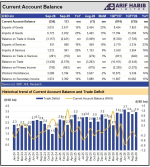
$45bn annual remittance not enough to post C/A surplus. Even $45bn/year remittances cannot take care of 250m hadh haram population dependent on imported goods.

Pakistanithinktank
Registered Member

Can we grow most expensive mangos in Pakistan?

The Gulfsteam jets and bulletproof Maybachs are not imported for the 250 million population. The vast majority of the population can barely afford fuel for their 70 cc bikes or two square meals a day. The discretionary imports are for the 0.1% haraamkhor parasites who have usurped the country.$45bn annual remittance not enough to post C/A surplus. Even $45bn/year remittances cannot take care of 250m hadh haram population dependent on imported goods.
Pakistanithinktank
Registered Member
hydrabadi_arab
Trusted Member
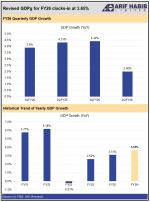
Pakistan’s GDP grows 3.65% in FY2026, economy size reaches $450bn: NAC
Pakistan has posted a gross domestic product (GDP) growth of 3.65% during FY2026, estimates released by the Pakistan Bureau of Statistics (PBS) on Monday showed.
The growth is lower than the 3.70% estimated by the National Accounts Committee (NAC) during the previous meeting, indicating a slower pace of economic expansion than earlier expected.
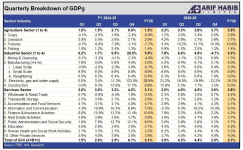
“The updated growth rates in agriculture, industry, and services are 3.50%, 3.34%, and 3.81%, compared with earlier growth rates of 2.89%, 3.51%, and 4.09%, respectively,” said NAC in its 118th meeting held today.
In agriculture, important crops improved from 0.65% to 1.59% due to wheat and maize; other crops have witnessed significant improvement from 2.43% to 4.28% due to higher production of pulses (6.3%), fruits (1.3%), tomato (44%), oilseed (5.4%), and green fodder (2.4%).
Meanwhile, livestock decreased slightly from 3.75% to 3.71% because of increased fodder inputs. Further, updated growth rates in forestry and fishing are 10.80% and 1.39%, respectively.
According to NAC, the updated growth in industry during FY2026 is 3.34% as compared to 3.51% estimated previously.
The mining and quarrying industry has improved from 0.38% to 1.52% due to improvement in gas (2.84%), crude oil (5.12%), and coal (2.73%). Large-scale manufacturing (LSM), which is measured through the Quantum Index of Manufacturing (QIM), has declined from 6.11% to 5.01%, the release said.
Meanwhile, the services industry has declined from 4.09% to 3.81% in FY2026, with positive contributions from all the constituents.
“Wholesale and retail trade declined to +2.37% from 3.71% due to a decrease in manufacturing and imports.
“Transport and storage industry improved to +3.23% from 2.31% due to upward revisions reported in railways, water transport, and air transport.
“While information & communication increased from 7.52% to +9.53%, finance & insurance also improved from 0.32% to +4.23% due to improvement in the insurance industry,” NAC added.
Size of economy
According to NAC, based on the latest figures of the national accounts aggregates for FY2026, the overall size of the economy stands at Rs126.4 trillion, i.e., $450.4 billion, as compared to Rs114.9 trillion, i.e., $408.7 billion in the previous year.
Further, per capita income in PKR for FY2026 is 531,897/- i.e., $1896/, the NAC data showed.
Quarterly figures
The committee approved revised quarterly GDP growth rates for Q1, Q2, Q3 and a fresh growth rate for Q4 during FY2026.
Overall GDP witnessed a slight downward revision in Q1 from 3.92% to 3.89% and upward revisions in the second and third quarters from 4.05% to 4.31% for Q2, and from 3.99% to 4.42% for Q3.
“These changes mainly reflect upward revisions to annual benchmarks in agriculture, boosting growth rates from 2.95% to 3.18% in Q1, from 2.64% to 3.34% in Q2, and from 3.01% to 3.79% in Q3.
“Due to revisions in annual benchmarks and updated indicators, the industry has witnessed changes in all three quarters, from 7.80% to 7.76% in Q1, from 6.68% to 6.62% in Q2, and from 4.65% to 4.87% in Q3.
“While services declined slightly from 3.16% to 3.04% in Q1, upward revisions were observed in Q2, from 3.83% to 4.0%, and in Q3, from 4.18% to 4.54%,” said NAC.
Pakistan’s GDP posted a growth of 2.0% during Q4 of FY2026. Growth in agriculture, industry, and services stood at +3.71%, -4.70% and 3.62%, respectively.
hydrabadi_arab
Trusted Member
Pakistan's power generation rises 5% in September as fuel costs surge 32%
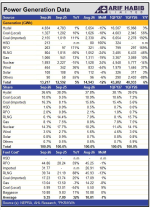
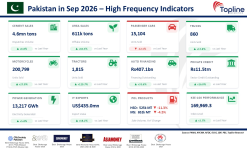
Electricity generation reaches 13,217 GWh as average fuel cost rises to Rs9.35 per unit; DISCOs seek Rs2.56 per unit positive fuel cost adjustmentPakistan's electricity generation increased by 5% year-on-year (YoY) to 13,217 gigawatt-hours (GWh) in September 2026, while the average fuel cost of generation surged 32% to Rs9.35 per kilowatt-hour (kWh), according to data compiled by Arif Habib Limited (AHL).
The increase in generation was supported by higher output from hydropower, local and imported coal, and wind energy, while changes in the fuel mix and higher costs of oil-based and RLNG generation contributed to the increase in average generation costs.
Consequently, electricity distribution companies (DISCOs) have sought a positive fuel cost adjustment (FCA) of Rs2.56 per unit for September 2026.
According to AHL's analysis of National Electric Power Regulatory Authority (NEPRA) data, electricity generation increased from 12,592 GWh in September 2025 but declined by 12% month-on-month (MoM) from 14,943 GWh in August 2026.
Hydropower remained the largest source of electricity, generating 4,834 GWh during September, up 1% from 4,783 GWh a year earlier. However, hydel generation declined by 15% MoM, with its share in the total generation mix falling to 36.6% from 38% in September 2025.
Imported coal-based generation recorded a 111% YoY increase to 2,155 GWh from 1,019 GWh, raising its share of total generation to 16.3% from 8.1%.
Local coal generation increased by 10% to 1,327 GWh, compared with 1,202 GWh in September last year, accounting for 10% of total generation.
Wind power generation rose by 36% to 464 GWh from 342 GWh, while solar generation remained unchanged at 108 GWh.
In contrast, electricity generation from regasified liquefied natural gas (RLNG) declined by 56% to 804 GWh from 1,815 GWh in September 2025, reducing its share in the generation mix to 6.1% from 14.4%.
Nuclear power generation fell by 15% to 1,893 GWh from 2,227 GWh, accounting for 14.3% of total electricity output.
Generation from natural gas increased by 13% to 1,066 GWh from 941 GWh, while furnace oil-based generation rose by 171% to 263 GWh from 97 GWh.
High-speed diesel (HSD) contributed 213 GWh during September, compared with no generation recorded from this source in the corresponding month last year.
The average fuel cost of electricity generation increased to Rs9.35 per kWh from Rs7.09 per kWh in September 2025, although it declined by 7% compared with Rs10.01 per kWh in August 2026.
Among individual fuels, furnace oil-based generation remained the most expensive source in the reported fuel-cost data, with its cost increasing by 59% YoY to Rs44.86 per kWh from Rs28.24.
RLNG-based generation costs surged by 88% to Rs39.74 per kWh from Rs21.19, while imported coal-based generation costs increased by 25% to Rs17.23 per kWh from Rs13.74.
In contrast, the fuel cost of local coal-based generation declined by 54% to Rs5.99 per kWh from Rs13.01 a year earlier.
Natural gas-based generation costs decreased by 3% to Rs13.04 per kWh from Rs13.50, while bagasse-based generation costs increased by 11% to Rs10.88 per kWh from Rs9.83.
During the first quarter of FY2026-27, total electricity generation increased by 6% to 43,282 GWh from 40,933 GWh in the corresponding period of the previous fiscal year.
Imported coal recorded the largest increase among major generation sources, with output rising by 192% to 6,654 GWh from 2,278 GWh.
Local coal generation increased by 56% to 4,603 GWh from 2,945 GWh, while wind generation rose by 37% to 1,979 GWh from 1,446 GWh.
Hydropower generation increased by 3% to 16,507 GWh from 15,968 GWh, while natural gas-based generation rose by 10% to 3,367 GWh from 3,069 GWh.
However, RLNG-based generation declined by 46% to 3,485 GWh from 6,433 GWh, while nuclear generation decreased by 14% to 4,948 GWh from 5,777 GWh.
The proposed positive FCA of Rs2.56 per unit reflects the higher generation fuel costs reported for September. The adjustment has been sought by DISCOs and remains subject to regulatory determination.
hydrabadi_arab
Trusted Member
c14-Isotope
Registered Member

According to NAC, based on the latest figures of the national accounts aggregates for FY2026, the overall size of the economy stands at Rs126.4 trillion, i.e., $450.4 billion, as compared to Rs114.9 trillion, i.e., $408.7 billion in the previous year.
Further, per capita income in PKR for FY2026 is 531,897/- i.e., $1896/, the NAC data showed.
$450B/$1896 = ~237M population
As per 2023 census, Pakistan's population was ~241M
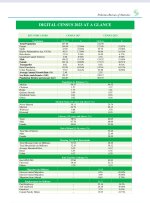
reducing denominator to make numerator great again
hydrabadi_arab
Trusted Member
hydrabadi_arab
Trusted Member
$450B/$1896 = ~237M population
As per 2023 census, Pakistan's population was ~241M
View attachment 219886
reducing denominator to make numerator great again
gdp rebasing is going on. GDP will be updated with latest population census, livestock census etc next year.


Distant_Observer
Trusted Member


Meengla
Elite Member
First time watched Dr. Hafiz Pasha. Looks like impeccable credentials. The video is worth watching. A few take aways:
- Economy was about getting some good news but then the war on Iran started which has caused massive inflation
- Poverty situation is bad and all political parties need to come up with a 'Charter of Economy' just like once they did the 'Charter of Democracy'
- Pakistan up to 1990 was significantly ahead of India and Bangladesh but after that year the situation has reversed
- Terrorism is driving away investment
- Water management should be a high priority.
- Wrong priority to focus on more provinces; work on Local Bodies instead
The point about 1990 being a significant year is something I often say in this forum: Around that time the curse of 'democracy' started and The Lost Decade began. Screw such 'democracy'! I support the current system: The Hybrid System.
Last edited:
hydrabadi_arab
Trusted Member
Punjab Chief Minister Maryam Nawaz Sharif Launches Historic Rs1.99 Trillion Pivot Economic Plan
By Press Release | Published Oct 30, 2026 | 11:00 pmChief Minister of Punjab Maryam Nawaz Sharif officially launched the Punjab Innovation, Value Addition and Economic Transformation (PIVOT) Plan 2026–29, a comprehensive Rs1,995.3 billion economic strategy aimed at positioning Punjab as an export-led industrial hub. The roadmap targets $6.8 billion in incremental exports, 162,000 new direct jobs and support for over one million livelihoods.
Speaking at the launch, Chief Minister Maryam Nawaz Sharif said: “Punjab is ready to move towards a new model of economic growth—one driven by industry, innovation, value addition and exports. Our objective is to create an environment where businesses can invest with confidence, industries can expand and our people can access better employment and livelihood opportunities.”
The unveiling brought together an unprecedented gathering of leading corporate figures, economic policymakers, international development agencies and diplomats invited by Chief Minister Maryam Nawaz. Prominent business icons including Mian Mansha, Arif Habib, Fawad Mukhtar, Ziad Bashir and Osman Khalid Waheed attended the launch, signalling private-sector engagement with the initiative.
Financial sector leadership was represented by State Bank of Pakistan Governor Jameel Ahmad, alongside heads and senior executives of major commercial banks and financial institutions. International participation included foreign ambassadors, members of the diplomatic corps and representatives of key international development partners, including the World Bank, the Asian Development Bank (ADB) and United Nations organisations.
Senior government figures, led by Senior Minister Marriyum Aurangzeb and Chief Secretary Zahid Akhtar Zaman, provincial cabinet ministers, administrative secretaries and district focal officers, were also present to outline the government’s operational commitments.
Addressing the business community, the Chief Minister said:“My message to investors and industrialists across Pakistan and around the world is clear: Punjab welcomes your investment. We want to work with you, facilitate your businesses and create the conditions in which enterprise can grow. Government will facilitate, industry will lead.”
A primary pillar of the PIVOT framework is the Strategic Trade Enhancement Programme (STEP), supported by a newly introduced digital portal. Under this mechanism, the government envisages Rs300 billion in concessional financing at rates ranging between zero and five per cent for eligible commercial categories, giving businesses access to lower-cost capital for expansion, subject to programme terms and conditions.
This financing structure forms part of an overall investment framework combining Rs1,089 billion in public investment with a target of Rs906 billion in private-sector investment.
The Chief Minister said:“We are not looking at economic growth as a government-only responsibility. Sustainable growth requires private investment, a strong industrial base and a partnership in which the public sector enables the private sector to innovate, produce and compete. PIVOT is designed to turn that partnership into measurable economic progress.”
The plan directs Rs753.7 billion towards strengthening industrial output, encouraging value addition and building long-term export competitiveness.
To address operational costs and energy challenges, the government has earmarked Rs50 billion for solar power installations and Battery Energy Storage Systems (BESS). An additional Rs50 billion has been allocated for machinery duty reimbursements to incentivise manufacturers to upgrade factories, adopt advanced technology and meet international quality standards.
The programme focuses on key manufacturing value chains, including garments and textiles, sports goods, leather and footwear, surgical instruments, pharmaceuticals, fans, cutlery, steel and ceramics. Modern testing laboratories, certification facilities and plug-and-play industrial infrastructure are also envisaged to help businesses meet international compliance requirements and access export markets.
The Chief Minister said: “Our industries must not be limited to producing more; they must produce better, add greater value and compete in international markets. We want Punjab’s manufacturers to have access to modern technology, reliable energy solutions, quality infrastructure and the financing they need to expand their businesses and exports.”
AGRICULTURE AND AGRO-PROCESSING: MOVING UP THE VALUE CHAIN
To move agriculture beyond raw commodity production towards higher-value processing, PIVOT includes four specialised agro-processing parks in Sargodha, Khanewal, Okara and Bhakkar.These facilities are designed to reduce post-harvest losses, modernise food-processing infrastructure and integrate agricultural producers into higher-value supply chains.
Agricultural value-chain interventions include wheat value enhancement and improved quality and market access for citrus, potato and mango crops, alongside targeted export financing for horticulture and floriculture. The programme also envisages dedicated Horticulture Authorities in 20 districts.
The initiative further supports commercial expansion across livestock, dairy, aquaculture, halal meat and milk value chains, with the objective of improving productivity and developing export opportunities.
TOURISM, TECHNOLOGY AND SKILLS DEVELOPMENT
Beyond industrial and agricultural manufacturing, the plan extends to tourism, digital services and workforce development.Tourism infrastructure will be upgraded to develop destination-economy opportunities, improve facilities for visitors and encourage private-sector investment in hospitality and related services.
To address the gap between vocational education and workplace requirements, the programme envisages training 402,060 individuals over three years. The focus will be on industry-aligned, demand-driven skills required by modern manufacturing, emerging commercial sectors and technology-oriented enterprises.
The Chief Minister said: “Our young people must be prepared for the jobs of tomorrow. Skills development must respond to the actual needs of industry and the changing demands of the economy. We want training to lead to employment, entrepreneurship and better livelihoods.”
BUSINESS REFORMS AND DIGITAL INVESTOR FACILITATION
To improve the business environment, PIVOT introduces regulatory and administrative reforms aimed at simplifying commercial operations and attracting long-term investment.Through the E-Biz digital initiative, the provincial government aims to digitise 300 public administrative services to make business processes more accessible and transparent. The programme also envisages bringing 2,000 firms onto e-commerce platforms, alongside modernised labour laws, public-private partnership reforms and approved schemes for state land leases across nine productive economic sectors.
The Chief Minister said: “Investors should spend their time building businesses, creating jobs and expanding production—not navigating unnecessary administrative hurdles. We are working to make government services simpler, more accessible and more transparent.”
TRACKED, TRACEABLE AND ACCOUNTABLE IMPLEMENTATION
Execution and accountability are embedded through a central governance model led by a PIVOT Board chaired by Senior Minister Marriyum Aurangzeb on behalf of the Chief Minister.Operational coordination will be handled by a dedicated PIVOT Secretariat in the Planning and Development Department, alongside a PIVOT cell within the Chief Secretary’s Office. Deputy Commissioners will serve as district-level focal persons.
Implementation will be monitored through a central PIVOT Dashboard and an Industry Scorecard, with defined milestones, measurable performance indicators and regular reviews to track progress, identify bottlenecks and strengthen departmental accountability.
Chief Secretary Zahid Akhtar Zaman outlined the implementation arrangements and confirmed that the concept would be operationalised within six months.
The Chief Minister said:“PIVOT will not remain a document of targets and commitments. Its implementation will be tracked, its progress measured and its results assessed. Every initiative must translate into real investment, stronger businesses, more exports and better opportunities for the people of Punjab.”
PRIVATE-SECTOR CONFIDENCE AND INVESTMENT MOMENTUM
Senior Minister Marriyum Aurangzeb emphasised that the Chief Minister’s vision for PIVOT was to position government as an enabler and facilitator of enterprise, allowing the private sector to drive economic expansion.Demonstrating private-sector investment interest at the launch, real estate developer Arif Habib announced plans to construct Pakistan’s tallest commercial tower at Lahore CBD One, highlighting investment activity associated with Punjab’s development agenda.
PIVOT sets out a three-year framework to translate Punjab’s economic potential into investment, stronger industrial capacity, higher exports, improved skills and employment.
The Chief Minister concluded: “Our ambition is to build a Punjab where businesses can grow, industries can compete globally, our farmers can earn more from their produce and our young people can find meaningful opportunities. We are opening the doors to investment and partnership. Together, we can turn Punjab’s economic potential into prosperity.”
Users who are viewing this thread
Total: 3 (members: 0, guests: 3)
Pakistan Defence Latest
-
 Federal cabinet gives nod to imposition of emergency in KP; summary sent to president (14 Viewers)
- Latest: Goenitz
-

-
-

-
Country Watch Latest


Latest Posts
-
-
 A Letter of Blood and Tears to Our Friends of Islamic Civilization Around the World (2 Viewers)
- Latest: MH.Yang
-
-

-
