North Korea showcases artillery that poses a deadly threat to the South Korea

Beijingwalker

VIP Member
Joined
Nov 4, 2011
Messages
92,161
Reaction score
113,033
Reputation
2,163.1
Country of Origin
Country of Residence

North Korea showcases artillery that poses a deadly threat to the South Korea

By Brad Lendon, CNN
Published 10:16 PM EST, Thu March 7, 2024
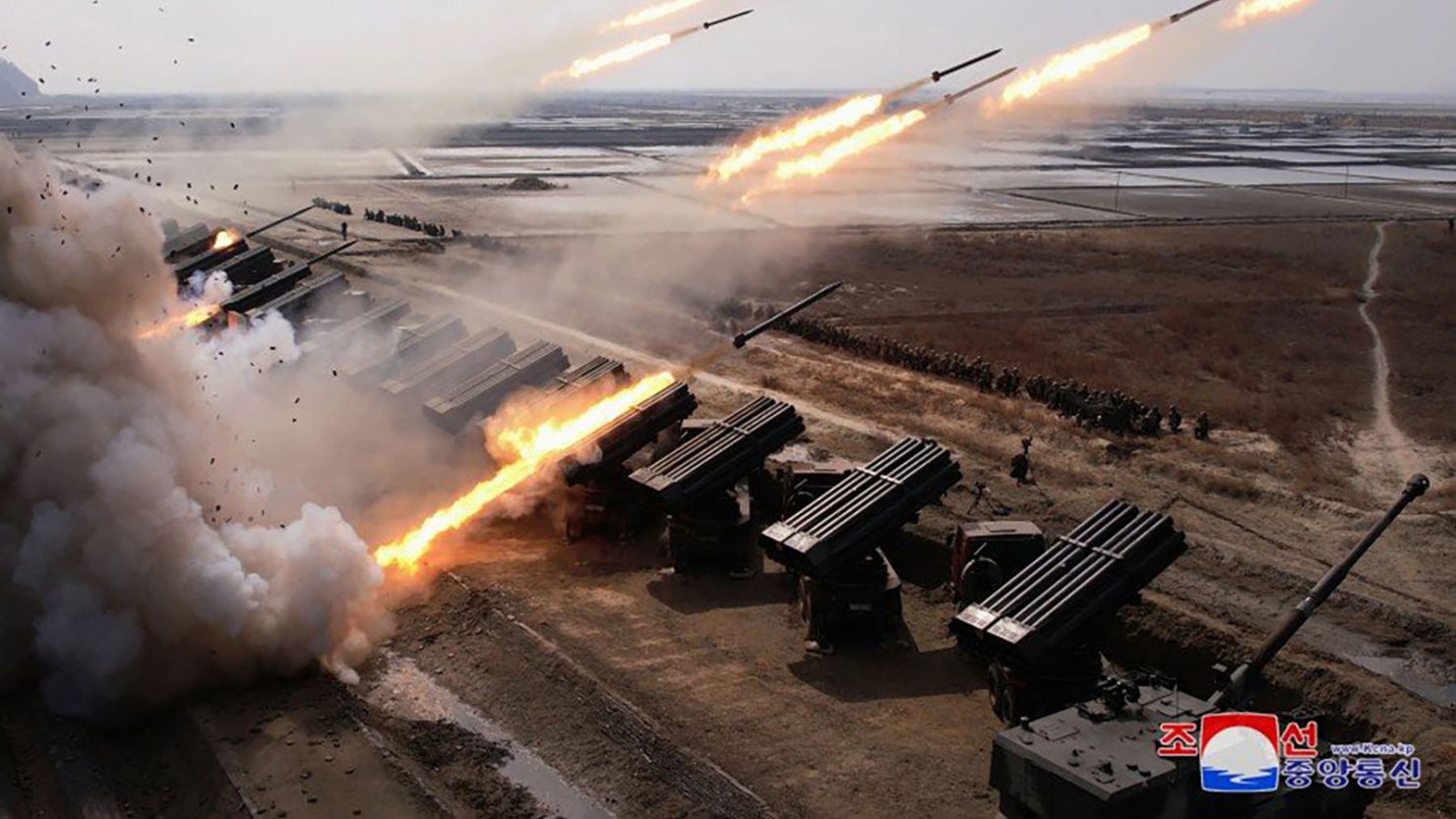
Multiple rocket launchers fire during a drill of the Korean People's Army on March 7.

Multiple rocket launchers fire during a drill of the Korean People's Army on March 7.
KCNA
Seoul, South KoreaCNN —

North Korea on Thursday showed off its long-range artillery systems, thousands of weapons that it could use to strike the South with little warning while causing tens of thousands of casualties, according to experts.

The North’s artillery drills come at a time of heightened tension on the Korean Peninsula as the United States and South Korea conduct their annual Freedom Shield exercise, which the South Korean military said will focus on deterring North Korea’s nuclear threats.

North Korea’s Defense Ministry on Monday denounced the 11-day US-South Korea joint exercises as “provocative” and “reckless,” and warned North Korean forces will monitor “adventurist acts” and conduct “responsible military activities” to bring what it called an unstable security situation under control, according to the state-run Korean Central News Agency (KCNA).

Thursday’s artillery exercise was the North’s second drill this week, a day after its ground forces appeared to infiltrate border guard posts during maneuvers.
North Korean leader Kim Jong Un observed both drills and was seen in photos provided by state media.
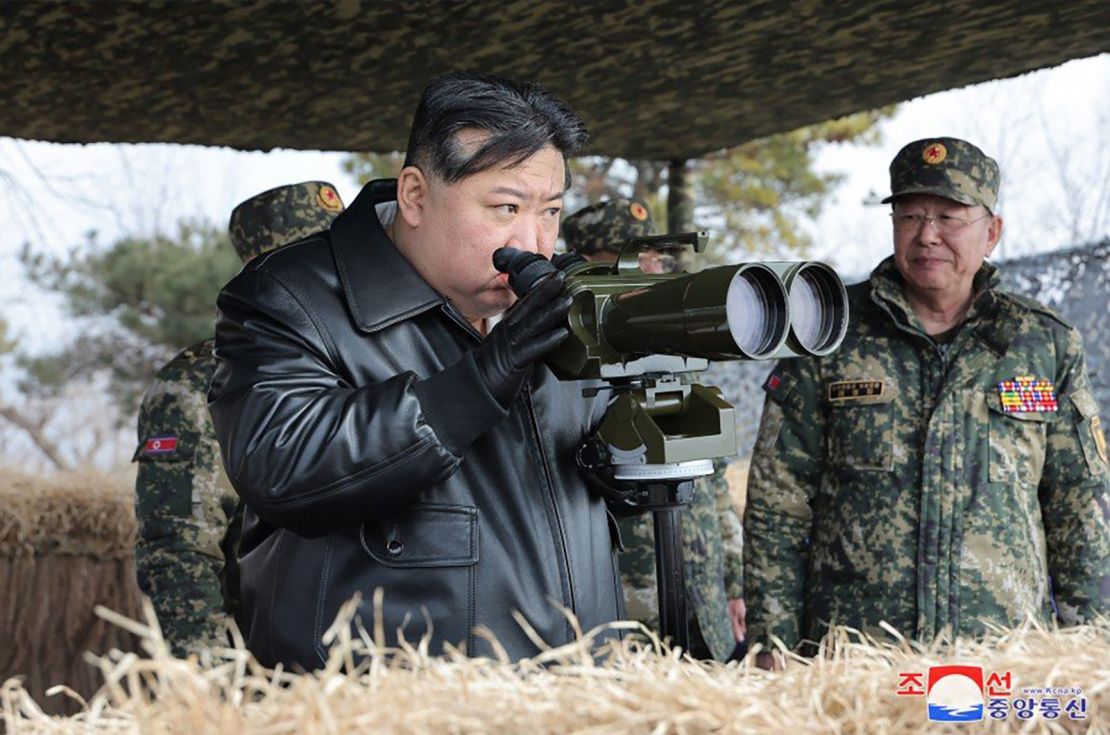
Kim Jong Un inspects the artillery firing drill of the Korean People's Army (KPA) large combined units on March 7.

Kim Jong Un inspects the artillery firing drill of the Korean People's Army (KPA) large combined units on March 7.
KCNA
A KCNA report on Friday said the artillery drill sent a message to the South.

“The drill started with the power demonstration firing of the long-range artillery sub-units near the border who have put the enemy’s capital in their striking range and fulfilled important military missions for war deterrence,” the KCNA report said.

Kim stressed the importance of preparing “for regular combat mobilization so that all the artillery sub-units can take the initiative with merciless and rapid strikes at the moment of their entry into an actual war,” the report said.

Ever-present threat​

North Korea’s artillery systems have been making headlines in recent weeks as Pyongyang is arming Russian forces with them for combat in Ukraine.

Since August, Pyongyang has shipped about 6,700 containers to Russia, which could accommodate more than 3 million rounds of artillery shells or more than 500,000 rounds for multiple rocket launchers, according to the South Korean Defense Ministry.

While those weapons present a big challenge for Ukraine’s defenders, they are also an ever-present looming threat for South Korea and the US military forces stationed on the Korean Peninsula.

Artillery strikes are almost impossible to defend against, experts say.

A 2020 report from the RAND Corp. think tank said North Korea’s artillery systems, with nearly 6,000 big guns within range of major South Korean population centers, present as great a danger to the South as Kim’s nuclear weapons and missile programs.

“If fired at civilian targets, those nearly 6,000 systems could potentially kill more than 10,000 people in only an hour,” the RAND report said.

In one scenario, a one-minute barrage on a 2.4-square-kilometer area of the capital Seoul using just 54 multiple rocket launchers, predicted more than 10,000 casualties.
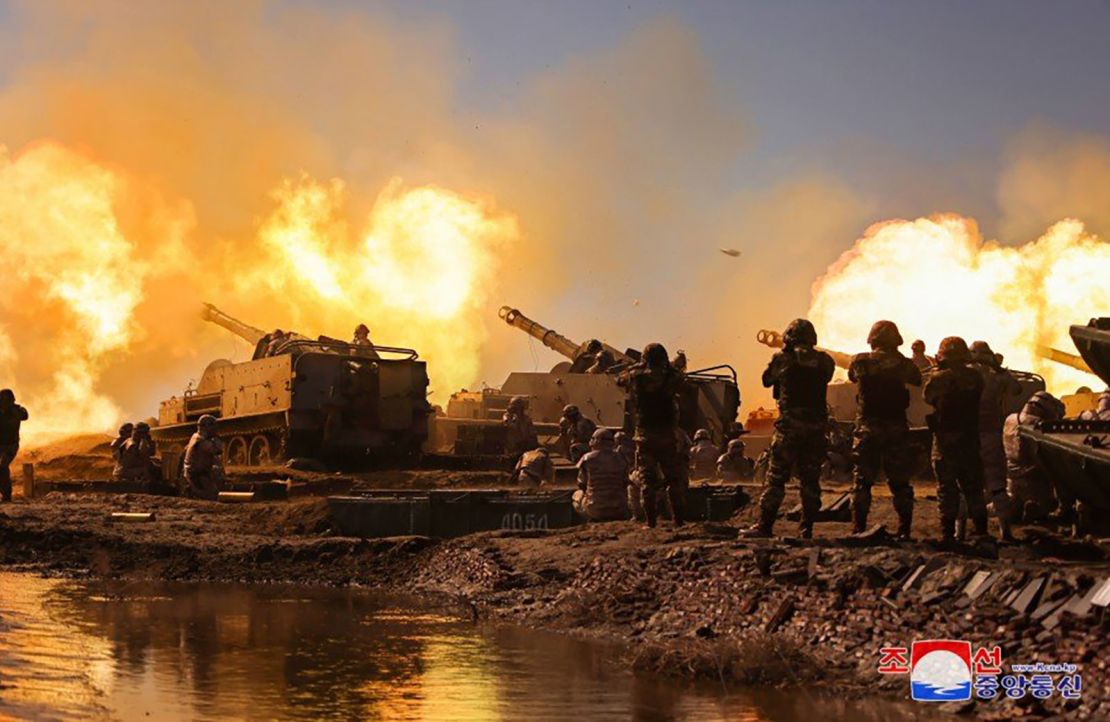
North Korean artillery fires during large-scales exercises on March 7.

North Korean artillery fires during large-scales exercises on March 7.
KCNA

“Because (North Korean) shelling could kill many thousands in just an hour, with little warning, it would be difficult for the Republic of Korea (ROK) and the United States, once the bombardment had begun, to halt it, or otherwise protect the ROK population, before it could do very serious harm,” the report said.

Even retaliatory strikes by South Korea and the US would be difficult to execute, the report said.

“Much of the DPRK’s artillery is located in heavily fortified hardened artillery sites (HARTS) with air defense capabilities deployed to their rear. These physical protective measures make air strikes and counter-battery fire against the DPRK artillery a challenge for U.S. and ROK forces,” the report said.
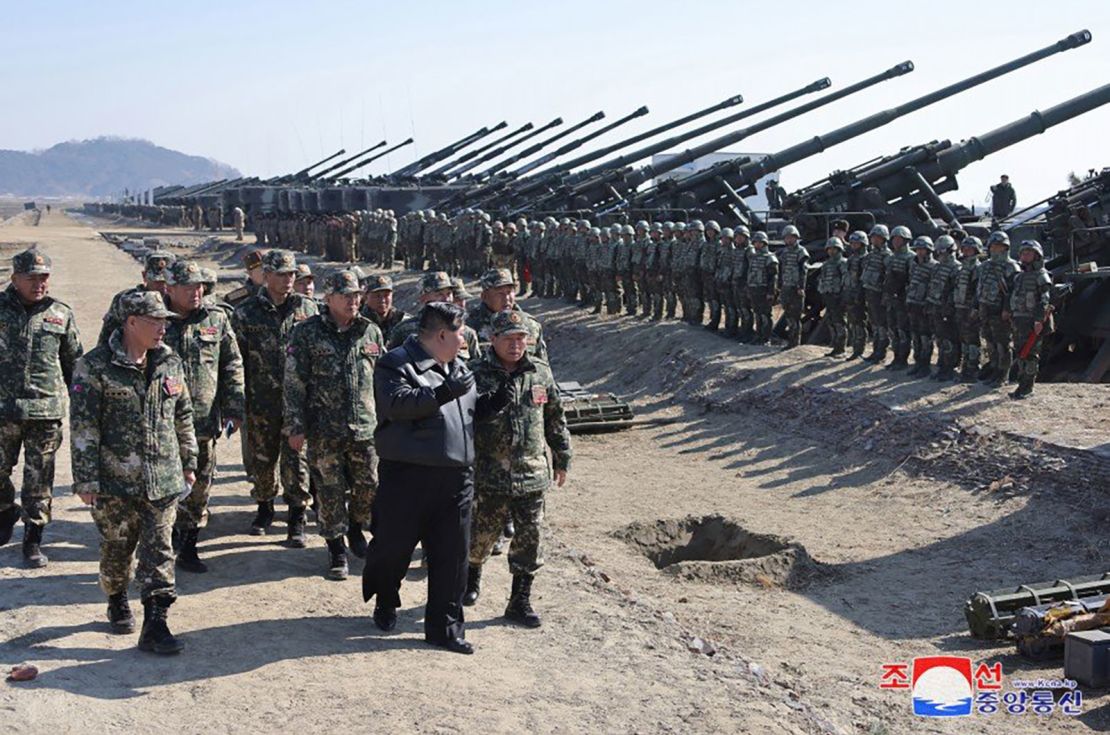
Kim Jong Un inspects artillery units of the Korean People's Army (KPA) during exercises on March 7.

Kim Jong Un inspects artillery units of the Korean People's Army (KPA) during exercises on March 7.
KCNA

Kim has drawn an increasingly harder line against South Korea in recent months, saying the North will no longer seek reconciliation and reunification with the South and instructing the country’s army, munitions industry, nuclear weapons and civil defense sectors to accelerate war preparations in response to “confrontation moves” by the US.

In January, Kim called the South the North’s “primary foe and invariable principal enemy” and ordered a reunification monument in the North Korean capital to be demolished.
 

North Korea’s Artillery Could Inflict 200,000 Casualties In Just One Hour​

Michael Peck

TOPSHOT-NKOREA-POLITICS-KIM

TOPSHOT - This undated picture released from North Korea's official Korean Central News Agency
AFP VIA GETTY IMAGES

Think 200,000 casualties in one hour. That’s 3,333 people killed or wounded per minute, or about 55 people per second.

That’s not body count from a nuclear bomb, or the butcher’s bill from a massive clash of armies. It’s the potential human toll if North Korea’s immense arsenal of artillery were fired at South Korea, according to a new study by U.S. think tank RAND Corp.

Instead of assuming that North Korea would launch a massive barrage as part of an all-out war between North Korea and the combined Republic of Korea (ROK) and U.S. forces, RAND examined various scenarios in which Pyongyang used artillery as a psychological tool.

“We assessed how North Korea might use their artillery as terror weapons,” RAND researcher Timothy Bonds tells me.

Should hostilities escalate on the Korean peninsula, the North has a problem. “The truth is that the North Korean military is not adequate for invading South Korea,” says Bonds. “They cannot maintain an offensive for very long and their forces would be very vulnerable in to air and ground attack.”

However, North Korea has another option: the 5,700 long- and medium-range howitzers and multiple rocket launchers along the 160-mile Demilitarized Zone (DMZ) between North and South Korea. These weapons are heavily fortified, including tunnels that allow the guns to emerge to shoot a few quick rounds and then duck inside before enemy aircraft and artillery can destroy them.

Equally worrying is that many North Korean guns are within range of Seoul, the densely populated South Korean capital with almost 10 million residents in the city and 25 million with the greater metropolitan area. North Korea has famously threatened to use its artillery to turn Seoul into a “sea of fire” since the 1990s, should war erupt between with South Korea and its ally the United States.

What if North Korea did use its artillery arsenal to send a bloody message to its enemies during a crisis? RAND modeled five different cases, each varying in scale and intensity.

Scenario 1. A focused strike against a key economic target – manufacturer LG’s giant P10 electronics manufacturing plant. Just 12 medium-range guns and multiple rocket launchers firing 210 rounds in five minutes would inflict 8,550 killed and wounded, plus nearly that number in psychologically traumatized victims.

Scenario 2. A one-minute artillery barrage by 864 guns across the entire DMZ 4,500 casualties, plus 41,000 traumatized victims.

Scenario 3. North Korea uses 54 240-millimeter multiple rocket launchers – which can fire multiple rockets simultaneously – to fire a one-minute barrage on downtown Seoul. Those 1,188 rockets inflict 18,350 killed and wounded, and another 169,000 traumatized.

Scenario 4. A massive artillery barrage from 5,700 artillery pieces, firing 385,000 rounds in one hour. The estimated toll would be 205,600 physical casualties, and 1.9 million victims traumatized.

Scenario 5. The “Sea of Fire” scenario simulates North Korea’s threat to turn Seoul into a flaming ruin. Some 324 heavy howitzers and rocket launchers plaster Seoul with 14,000 rounds in one hour. The toll would be 130,000 casualties, plus 1.2 million people traumatized.

Evacuating millions of people to escape the bombardment would be difficult. “Because DPRK [Democratic People’s Republic of Korea] shelling could kill many thousands in just an hour, with little warning, it would be difficult for the ROK and the United States, once the bombardment had begun, to halt it, or otherwise protect the ROK population, before it could do very serious harm,” RAND warns.

While there has been no shortage of studies regarding North Korea’s artillery firepower, RAND examined artillery as a tool of psychological coercion. “Past analyses have mostly looked at North Korea using artillery as part of a military campaign,” Bonds says. “To be effective against military targets, the North Koreans would need to mass fires, which makes their artillery pieces vulnerable to South Korean or U.S. airstrikes. They would also need to aim their fires to be effective, which takes time and multiple volleys.”

But using artillery as a terror weapon, rather than a purely military instrument, offers North Korea more flexibility. “Given the increasing South Korean population density close to the DMZ and aiming would be easy: point south and short-range artillery would hit a South Korean factory, town or city along the DMZ,” says Bonds. “Long-range artillery pointed south would eventually hit somewhere in the Seoul metropolitan area. And the artillery would only need to be exposed long enough to fire a shell or two, or launch a volley of rockets. After they fire, they can return to their hardened underground bunker and shut the blast doors.”

This would put South Korea and America in a terrible bind. Air and artillery strikes would not be sufficient to destroy the North Korean artillery. A ground invasion of North Korea would be a nightmare, and would also raise the specter that a desperate North Korean regime would resort to nuclear weapons. “While the casualties such an [artillery] attack could cause would be terrible, they would still pale in comparison with the casualties that could result from a nuclear attack against Seoul or other ROK cities, should the conflict continue to escalate,” the RAND study notes.

So what’s the best solution? Avoid getting into a war in the first place. “It is in the interests of all actors concerned to deescalate as quickly as possible once a provocation cycle starts and avoid the conditions that would lead to a military exchange in firepower from any of the sides,” RAND concludes. “If such an exchange occurs, the results will be highly costly and bloody.”
 

MAP OF THE DAY: How North Korean Artillery Could Level Seoul In Two Hours

Gus Lubin
May 25, 2010, 10:58 PM GMT+8

mapoftheday korea

North Korea is known to have the world's largest artillery force.

South Korea's capital city is only 35 miles from the border.

Although the range of Kim Jong-il's arsenal is fodder for debate, it's certain the rogue dictator could hit Seoul with many shells in a matter of hours. He did take a few potshots last January. This threat is a key reason North Korea can bully its neighbor and stand up to US intervention.

Our Map Of The Day shows artillery range projections by an amateur researcher at MilitaryPhotos.net.

North Korea has the world's largest artillery force​

korea war map

Planeman on Militaryphotos.net
Source: Planeman on MilitaryPhotos.net

And they're all aimed at Seoul​

mapoftheday korea


MAP OF THE DAY: How North Korean Artillery Could Level Seoul In Two Hours

Gus Lubin
May 25, 2010, 10:58 PM GMT+8

mapoftheday korea

North Korea is known to have the world's largest artillery force.
South Korea just won't have enough time to respond in real case of war, in just 2 hours Seoul will be gone and Seoul is everything of South Korea.

main-qimg-5f1002344672dd49c99ff3dd7e4d778e-lq
 

Users who are viewing this thread

Pakistan Defence Latest

Back
Top