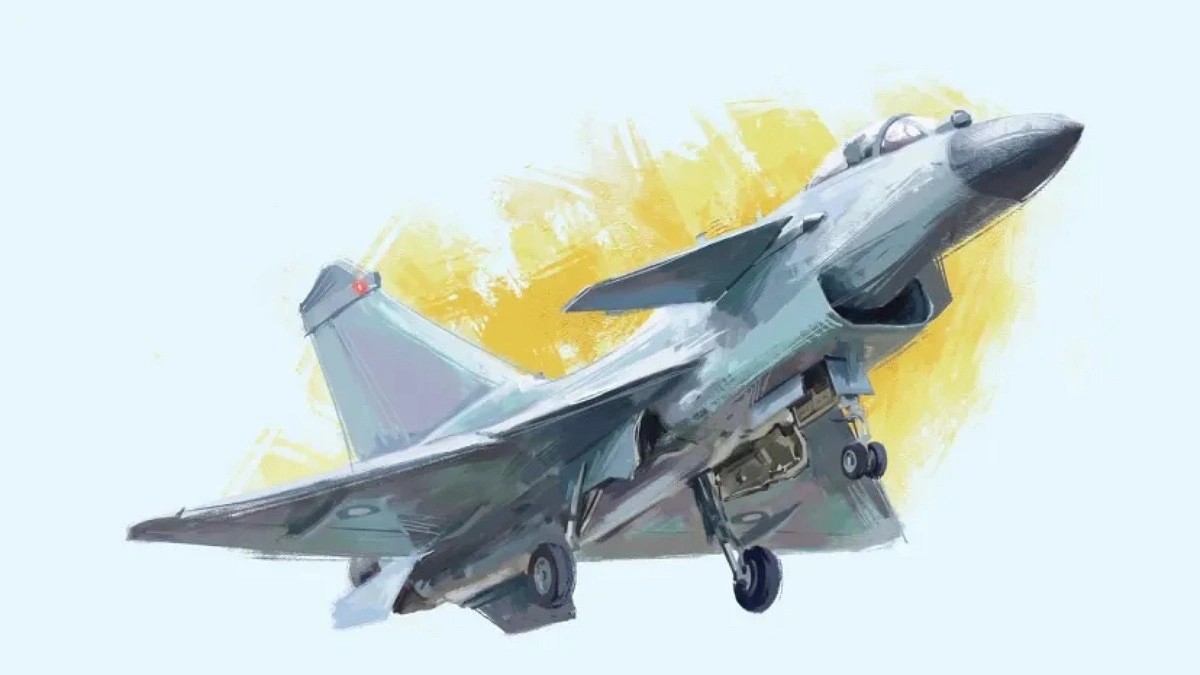
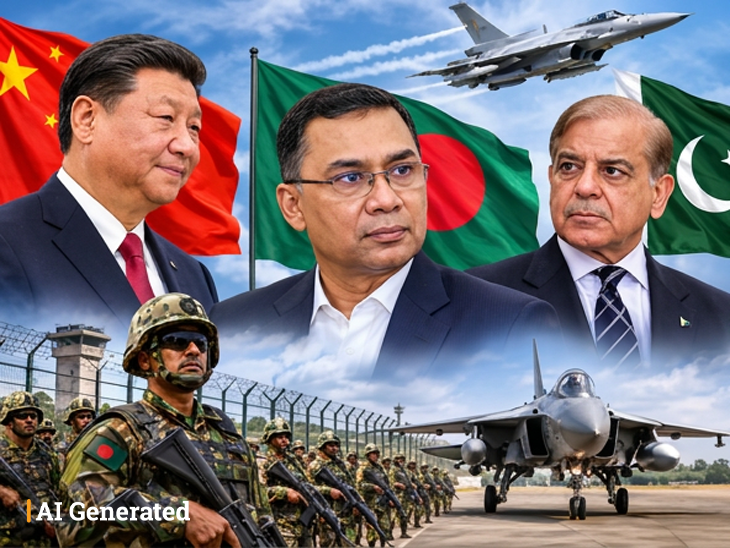
Bangladesh plans $2.2b purchase of 20 Chinese J-10 fighter jets

It is. but fairly insignificant one in the grand scheme of things.

Not so sure, not only does it give BD a fighter that has beaten the IAF's best fighters so a psychological win, it also raises the standards of BD's pilots, engineers and systems. The learnings you will get from creating a fully integrated system and flying the J-10 cannot be overestimated. For sure you cannot defeat the IAF but it will make any Indian aggression cost them much more. That alone is some level of increased detterence
 
As I predicted.


@LeonBlack08 @AbuShalehRumi As I predicted. Apperantly China will deliver first batch of 6 jets by 1 year of signing the contract.

Good to see this is progressing well.

The training and support package from China is also a positive sign.

"Under this package, China will ensure not only the fighter jets, but also logistics, pilot and crew training, long-term maintenance, and the supply of advanced weaponry, further cementing long-term military reliance between the two countries."
 
True bro. But it is a small step towards the right direction.
.
If you remember, I was a supporter of air defense procurement instead of fighter jets. Don't you think if we spent 2.2 billions on HQ9CE it would have provided us with better capability than what we opted for?


Yes.

Not so sure, not only does it give BD a fighter that has beaten the IAF's best fighters so a psychological win, it also raises the standards of BD's pilots, engineers and systems. The learnings you will get from creating a fully integrated system and flying the J-10 cannot be overestimated. For sure you cannot defeat the IAF but it will make any Indian aggression cost them much more. That alone is some level of increased detterence


So there is needs to be 5 major offensive and defensive capability acquisition across Air, Land and Sea domains for credible deterrence development.

1. Air and missile defense.

2. Fighter jets + High end UAVs.

3. Ground bases Long range strike weapons. (BM, GMLRS CM.)

4. Submarine.

5. Ships.

Apart fromt this, tanks, APCs, artillery guns, small UAVs. Helicopters are of lesser importance.

With this particular purchase of J-10CE we are addressing one aspect of air power development. Another aspect is to procure 1/2 squadron of LO UAVs (survivable) that are capable of deep strike and SEAD/DEAD as well as anti-ship role. Something like ANKA-3 or an equivalent. Otherwise a 4th gen fighters is not good enough in BD's contest were lack of strategic depth coupled with potential adversary's long range AD significantly restrict freedom of operation.

Then remains 4 different big-ticket purchase.

For number 4 & 5, Several new frigates and new subs are going‌ to cost 5/6 billions combined. So that is likely out of question in the short term.

But we need comprehensive Air and missile defense and BM+ more GMLRS acquisition to be immediately followed by J-10CE purchase. Within next fiscal year.

In the end, this J10CE purchase (even though in billions) is a preliminary step that is like 10% of the total capability development we require for credible deterrence.
 
Yes.


So there is needs to be 5 major offensive and defensive capability acquisition across Air, Land and Sea domains for credible deterrence development.

1. Air and missile defense.

2. Fighter jets + High end UAVs.

3. Ground bases Long range strike weapons. (BM, GMLRS CM.)

4. Submarine.

5. Ships.

Apart fromt this, tanks, APCs, artillery guns, small UAVs. Helicopters are of lesser importance.

With this particular purchase of J-10CE we are addressing one aspect of air power development. Another aspect is to procure 1/2 squadron of LO UAVs (survivable) that are capable of deep strike and SEAD/DEAD as well as anti-ship role. Something like ANKA-3 or an equivalent. Otherwise a 4th gen fighters is not good enough in BD's contest were lack of strategic depth coupled with potential adversary's long range AD significantly restrict freedom of operation.

Then remains 4 different big-ticket purchase.

For number 4 & 5, Several new frigates and new subs are going‌ to cost 5/6 billions combined. So that is likely out of question in the short term.

But we need comprehensive Air and missile defense and BM+ more GMLRS acquisition to be immediately followed by J-10CE purchase. Within next fiscal year.

In the end, this J10CE purchase (even though in billions) is a preliminary step that is like 10% of the total capability development we require for credible deterrence.

Sure, its a small step, bit it is a step nevertheless
 
I now have doubts this will go ahead. Even though it would be of very little use at only 20 aircraft, it would have been a start. I now genuinely doubt Tareq chora would even have the balls to make that start. Worthless son of a great man.
 
I now have doubts this will go ahead. Even though it would be of very little use at only 20 aircraft, it would have been a start. I now genuinely doubt Tareq chora would even have the balls to make that start. Worthless son of a great man.

Read the article I shared.
 
Bangladesh lacks strategic depth. The range of the PL-15 missile is excessive. I think Bangladesh needs AD more.
 
Read the article I shared.

I did.

When did he confirm it? "Information Adviser Zahed Ur Rahman confirmed the matter at a recent press conference."

I recall a press conference from 2/3 months ago, nothing after that.
 

Bangladesh PM Tarique Rahman gives final approval for 20 Chinese J-10CE fighter jets​

Dhaka approves BDT 26,500 crore financing package, with state guarantees and staggered repayments, as Beijing prepares to supply aircraft, weapons and training.​

by Enayet Kabir
November 7, 2026

Bangladesh Prime Minister Tarique Rahman has given final policy and financial approval for the purchase of 20 Chinese-made J-10CE fighter aircraft under a government-to-government (G2G) arrangement with China.

The approval was confirmed at a meeting on November 4, 2026, between Prime Minister Tarique Rahman and an 11-member Chinese Communist Party delegation led by Liu Haixing, Minister of the International Department of the Communist Party of China (IDCPC), which was visiting Bangladesh. The meeting also included a briefing on progress in the development of Mongla Port by the Chinese company CCCC.

The meeting was held on the morning of November 4 at the Cabinet Division office in the Prime Minister’s Secretariat.

Those present included Liu Haixing, Minister of the IDCPC; Peng Xiubin, Director General of its Bureau for Southeast and South Asian Affairs; Hu Zhaoming, Director General of the Bureau of Public Information and Communication; Li Jinyan, a Deputy Director General-level official of the Bureau for Southeast and South Asian Affairs; Wang Siqi, Division Director of the same bureau; Shi Meiqi, a Division Director-level official of the Bureau of Foreign Affairs Coordination and English interpreter; Liu Chengxiao, Deputy Division Director of the General Office; Chen Xuanbo and Chen Yongpei, Deputy Division Directors of the Bureau for Southeast and South Asian Affairs; Zhang Guyu, an attaché of the same bureau; and Liu Yuyin, China’s Acting Ambassador in Dhaka.

The Bangladesh Air Force is preparing to reach a new milestone in protecting the country’s airspace and strengthening its military capabilities.

The initiative to induct 20 Chinese-made fourth-and-a-half-generation J-10CE multirole combat aircraft (MRCA) into the BAF fleet was originally taken by the interim government led by Muhammad Yunus following the May 2025 India-Pakistan conflict, in which the J-10C was reported to have challenged French-made Rafale fighters.

At the November 4 meeting, it was conveyed that Bangladesh’s Finance Ministry had approved the financing arrangement after Prime Minister Tarique Rahman agreed to provide a state guarantee for repayment of approximately Tk 26,500 crore, equivalent to US$2.1316 billion, including interest. Subject to completion of the procurement process, the aircraft could arrive in Bangladesh in 2027.

According to sources, the aircraft are being purchased through a G2G arrangement from China National Aero-Technology Import and Export Corporation (CATIC), a Chinese state-owned enterprise. An advance payment of 20 per cent will be made to the company. The principal cost of the aircraft is estimated at approximately US$1.96 billion, while interest will amount to US$170 million. The first instalment will be US$391.9 million.

Under the terms of the agreement, Bangladesh will receive a two-year grace period, after which the outstanding amount will be paid in six unequal annual instalments. Sources maintain that this staggered payment arrangement will allow the armed forces to modernise without imposing an immediate, substantial burden on national revenues.

Bangladesh Army Chief General Waqar-uz-Zaman has publicly emphasised the need for multirole combat aircraft and has urged the government to acquire them, citing regional military-strategic considerations.

The fighter jets are expected to join the BAF fleet by 2027. The package will reportedly include not only aircraft but also logistics, pilot and crew training, long-term maintenance and advanced weaponry supplied by China. This is likely to deepen the military dependence between the two countries over the long term.

Sources said the BAF Headquarters had obtained the Defence Minister’s approval—an authority exercised by the Prime Minister—for the purchase of the aircraft from the Chinese government during the 2026–27 financial year under the G2G arrangement.

The J-10CE is equipped with a powerful active electronically scanned array (AESA) radar capable of tracking multiple targets simultaneously and resisting enemy electronic jamming. It can also fire China’s long-range PL-15 beyond-visual-range air-to-air missile, which could pose a significant challenge to modern Western and Russian aircraft in aerial combat.

Advanced data links and airborne early-warning systems enable network-centric coordination in combat operations. The purchase and maintenance costs of the J-10CE are also considerably lower than those of comparable European aircraft such as the Rafale and Eurofighter Typhoon.

Speaking at a recent press conference about the proposed purchase, Prime Minister’s Information and Broadcasting Adviser Zahed-ur-Rahman said a committee had prepared a draft agreement for negotiations on acquiring the Chinese-made J-10CE.

“The Rafale is considered one of the most advanced fourth-and-a-half-generation fighter aircraft. The J-10CE performed very well against it in the battlefield. Bangladesh is therefore seriously considering this aircraft,” he said.

The J-10CE is a modern, single-engine, single-seat multirole combat aircraft and the export version of China’s J-10C fighter, which is operated by the Chinese Air Force. Global interest in the aircraft, particularly in Bangladesh, increased substantially after the reported performance of Pakistan Air Force J-10C fighters during the brief India-Pakistan air conflict in May 2025, known as Operation Sindoor.

Following the fall of the Sheikh Hasina government in August 2024, the interim administration led by Chief Adviser Muhammad Yunus accelerated discussions on acquiring the fighter aircraft. The BNP-led government formed after the February 2026 elections has continued the defence policy pursued by its predecessor.

The proposed acquisition is part of the Bangladesh Air Force’s long-term Forces Goal 2030 programme. Military sources believe that modern fighter aircraft have become essential to replace the ageing F-7s and the limited number of MiG-29s currently in the BAF inventory, strengthen airspace sovereignty and improve maritime security.

Sources also disclosed that the Air Force had held preliminary oral discussions with the Finance Minister about the purchase even before negotiations with China began.

A summary submitted to the Finance Minister seeking approval for the state guarantee stated that 80 per cent of the total cost of the 20 J-10CE multirole combat aircraft would be paid later in six unequal annual instalments.

The arrangement was essentially a purchase on credit. Consequently, the unpaid portion of the aircraft’s total price would constitute a direct government payment liability.

The Finance Ministry’s position, as outlined in the summary, was that a government guarantee was not ordinarily required for such direct payment liabilities. However, given the sensitive nature of the present case and a special request from the seller, the government could consider providing a guarantee covering the total value of the purchase as an exceptional measure.

The ministry also stipulated that such an exception must not be repeated under any circumstances. In future, before entering into negotiations with any country or institution on similarly important and sensitive matters, the relevant authorities must hold comprehensive discussions with the Finance Division on the financing arrangements before proceeding to the next stage.


China to supply Bangladesh with fighter jets worth ₹22,000 cr-Pakistan to train pilots, exercises to be held 40 km from Indian border​

November 7, 2026

搜狗截图20261107143132.png
China will provide Bangladesh with J-series fighter jets worth around ₹22,000 crore next year. The Pakistan Air Force will train pilots to fly these aircraft.

For this, Pakistani trainers may train pilots at Bangladesh's Jessore Airbase, around 40 kilometres from the Indian border.

The Pakistan Air Force has been flying Chinese-made J-series fighter jets since 2022. After China, Pakistan has the largest fleet of these aircraft. This is also why it has the most experience in flying them.

Pakistan to conduct joint exchange programme in Dhaka

Officers from the air forces of China, Pakistan and Bangladesh will also meet in Dhaka in December. Under the joint exchange programme to be held in Dhaka, the Pakistan Air Force will train Bangladeshi pilots.

In addition, training will be provided to controllers who identify and monitor enemy aircraft using radar. Separate courses will also be conducted for ground crew.

A five-member team led by Pakistan Air Vice Marshal Aurangzeb Ahmed has arrived in Dhaka. The team surveyed the air bases and other essential facilities there. It also prepared a plan for technical training and the exchange of simulators.

Bangladesh's radar could help China

Its technical teams and data link systems also operate with the Chinese Air Force. This has raised concerns that if tensions between India and China increase along the LAC in the future, information obtained from Bangladesh's radar could reach China's military network.

China's military uses Tactical Data Link (TDL) technology. This keeps fighter jets and military command centres on the ground connected to one another. They can share radar images and information about enemy positions with each other.

According to defence analysts, China has also developed a high-bandwidth broadband link called XS-3. It is used to connect fighter aircraft, bombers and drones to a single network. Analysts believe that after Pakistan, Bangladesh may now also use this Chinese technology.

Threat to the Siliguri Corridor could increase

A major concern for India arising from this military cooperation is the Siliguri Corridor. It is a strip approximately 20 to 22 kilometres wide that connects the north-eastern states with the rest of the country. China is already exerting pressure on this area.

If long-range strike fighter jets are deployed at airbases such as Lalmonirhat or Kurmitola in Bangladesh, the entire area could come within their reach.

Concern also over militant organisations in the North-East

Several militant organisations are active in India's northeastern states. There have been previous instances of weapons and other communication equipment reaching these organisations through Bangladesh.

Against this backdrop, China and Pakistan's growing military presence in Bangladesh could pose a new security challenge for India.

 
Pakistan and Bangladesh can have joint exercises with their J-10 fleet .
PAF can teach them how to harass an entire country and send them into a permanent state of denial, with using the J-10 CE
BD must be shunned from joint exercises with paf....not buying JF 17 is a betrayal of friendship.
 
BD must be shunned from joint exercises with paf....not buying JF 17 is a betrayal of friendship.

Pakistanis would trust their odds of being locked in a dungeon with starving lions than trust anyone from Bengal again.
 

Users who are viewing this thread

Latest Posts

Back
Top