Pakistan Space Related News & Discussions


English Subtitles

Pakistan astronaut's first step inside the station - scary lol :ROFLMAO:
 
China's first astronaut tested in 2003


Pakistan is luckier than China. Their first astronaut rode China’s mature Shenzhou rocket to the spacious space station.

23 years ago, China’s first astronaut, Yang Liwei, went into space. He was the only one who drank alcohol before launch because he had prepared for death.

That mission actually almost killed him.


When the rocket reached over 30 km, he experienced 26 seconds of low-frequency resonance combined with 6G overload. It felt like his internal organs were being shaken apart.

In an interview after returning to Earth, Yang Liwei recalled: “I felt like I was on the verge of death. I thought I was done.” But he endured.

After that mission, he never flew into space again.

China earned its space achievements step by step through our own efforts.

International Space Station rejected China.
Europe’s Galileo system rejected China.
U.S. Wolf Amendment blocked China.

But today, China has Beidou, lunar exploration, and its own space station.
 
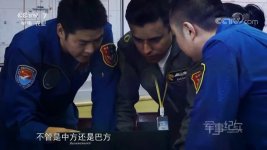
During the September 2017 Shaheen-VI joint exercise, four 🇵🇰PAF F-7PGs from No. 17 “Tigers” Squadron engaged two 🇨🇳PLAAF J-11Bs from the 111th Aviation Brigade in a simulated aerial combat. Mohammad Zeeshan Ali, then a Squadron Leader , was among the participating pilots
8DCAFE2F-2FEC-4019-9DD9-BE63F698E2D3.jpeg
 
During the September 2017 Shaheen-VI joint exercise, four 🇵🇰PAF F-7PGs from No. 17 “Tigers” Squadron engaged two 🇨🇳PLAAF J-11Bs from the 111th Aviation Brigade in a simulated aerial combat. Mohammad Zeeshan Ali, then a Squadron Leader , was among the participating pilots
It is highly likely that he will never be able to return to the life he once knew—and he may even be permanently barred from ever piloting a fighter jet again.

China’s regulations for the management of astronauts and taikonauts contain very strict, detailed requirements. Pakistan does not currently have such regulations in place, and I am unsure how they might choose to handle this situation. However, if Pakistan were to adopt standards similar to China’s, then yes—he would have to say a definitive goodbye to his past.
23 years ago, China’s first astronaut, Yang Liwei, went into space. He was the only one who drank alcohol before launch because he had prepared for death.
There is a misunderstanding here.

In Chinese, the term "jiǔ" (alcohol/liquor) refers to something with specific requirements—namely, a certain alcohol concentration. Not every beverage that contains alcohol is classified as "jiǔ."

According to footage from the time and a memoir written by Yang Liwei himself, he was not permitted to consume alcohol at that moment. He had poured himself half a glass of plain water. Another astronaut, Zhai Zhigang, who was seeing him off, insisted on "adding some color to celebrate" by adding a few drops of red wine to his plain water.

The alcohol concentration in red wine is already extremely low to begin with. Adding a few drops of red wine to half a glass of water results in an alcohol content that's barely even close to that of a soft drink.

This is just a ritual in Chinese culture and doesn't count as drinking alcohol.
 
Last edited:


English Translations:

🇵🇰🚀🟢
Lahore, Pakistan, rang out with chants of “Long live Pakistan!”

The students of Lahore were a sight to behold in their exuberant enthusiasm over the historic launch of Pakistan’s first astronaut, the Pakistan Air Force’s proud son, Wing Commander Muhammad Shahrukh Ali!

⭕️ Students celebrated this historic achievement with sky-high chants of “Long live Pakistan!” and “Long live the Pakistan Armed Forces!”

⭕️ Paying tribute to their national hero, the young people proved that Pakistan’s sons are determined to bring glory to their country not only on Earth, but also in the heights of space.

⭕️ This achievement is a message to every young Pakistani: dream big, aim high, and stay determined, and no goal is impossible!

This is our Pakistan, these are our heroes, this is who we are!

✈️ Salute to the Pakistan Air Force
🛡️ Salute to the Pakistan Armed Forces
🇵🇰 Long live Pakistan!


English Translation:
With Shenzhou-24 docked, the Tiangong space station now has 6 people: 5 Chinese astronauts (including 1 from Hong Kong🇭🇰) and 1 Pakistani astronaut. 🇨🇳🇵🇰

On the International Space Station, there are 7 people: 3 Americans🇺🇸, 3 Russians🇷🇺, and 1 Canadian🇨🇦.

There are now 13 people in space, from five countries, living in low Earth orbit at the same time.

Low Earth orbit is getting more and more crowded, but this is just the beginning. 🌕The Moon, 🔴Mars—those truly vast, open places are the next stop.

Let's make space great again. 🚀
 
Last edited:
I imagine others here will agree - Zeeshan bhai is a thoroughly humble and likeable chap.

I found great details below more about him - mind blowing.


He wasn’t even supposed to be an astronaut. He was just running the selection — until he beat every elite pilot and made history.

You won’t believe this story.

Muhammad Zeeshan Ali, Pakistan’s first astronaut heading to Tiangong Space Station, didn’t start as a candidate. Back when Pakistan launched its astronaut selection program in 2025, he was the guy managing the whole screening process. His job was to review applications, oversee tests, and watch top fighter pilots compete for that rare spot to space.

The standards were brutal. Every candidate was a seasoned Air Force pilot with thousands of flight hours. But the medical checks, vestibular endurance tests, and split-second spatial judgment filters knocked out so many skilled pilots one after another. The team ran short of qualified candidates and opened one final round of applications for internal staff who met the criteria.

That’s when Zeeshan, a 40-year-old Air Force wing commander with solid fighter jet experience, decided to throw his own hat in the ring. Nobody expected much. All the front-runner pilots had already washed out. Yet he passed every single round: preliminary screening, secondary evaluation, final selection. He beat the odds and landed one of the two spots as a backup astronaut.

Then came seven months of the hardest training of his life in Beijing.
The biggest mountain? The entire space station runs on Mandarin. Every button label, every screen readout, every emergency command is Chinese. There was no shortcut, no special pass. He trained side-by-side with Chinese astronauts Tang Hongbo and Wu Yi. They built vocabulary lists, walked him through emergency workflows, and drilled pronunciation together. Zeeshan spent every spare minute memorizing technical terms. By the end, he could react to crisis instructions instinctively. He even recited ancient Chinese poetry at his pre-launch briefing — the famous verse from Li Bai, “The roc rises with the wind, soaring ninety thousand miles high.”

This is not a joy ride. Out of more than 300 research proposals from Pakistani universities, only four experiments were picked. His core mission is to run those joint science projects, including the blue algae “green micro-factory” test that could help solve food supply and closed ecological system challenges for deep-space exploration. All data will be shared between Pakistan and China. He will also connect live with kids back home, lighting up their curiosity for science.

To Pakistan, this is everything. More than 60% of Pakistan’s population is young. For decades, Pakistani kids watched space missions from far away. Now they have one of their own flying to orbit. When he told children at home: “Look up at the sky, remember I carry your dreams up there,” it struck a nation. It is Pakistan’s version of the moment Yang Liwei first flew for China — a spark that can ignite a whole generation of dreamers. His wife summed it up simply with two Chinese words before launch: “Jiayou.”

This is not the usual “buy a ticket to space” deal. Most international space cooperation is just wealthy nations purchasing seats. This partnership is built differently: shared training frameworks, shared research, shared data, and the same strict standards for everyone. No special favors, no loopholes. If you pass the tests, you fly.

This Shenzhou-24 mission marks a new chapter for China’s Tiangong station. It proves space exploration does not have to be an exclusive club. It can lift up nations that never had their own space program. When one astronaut from a developing country reaches the stars, he doesn’t just represent himself. He shows millions of young people everywhere: your dreams can reach space, too.
 
From the BBC

BBC seem to be fuming from behind gritted teeth, as usual.

It's certainly making news everywhere, but the headlines vary in their tone wildly.

Also, their overall standards have become exceptionally poor. As noted, he is not technically the first Pakistani in outer space (that was Namira Saleem 2023). Don't get me started on their grammar mistakes of late. This is meant to be the BBC ffs.
 

Users who are viewing this thread

Country Watch Latest

Latest Posts

Back
Top