Navigation
Install the app
How to install the app on iOS
Follow along with the video below to see how to install our site as a web app on your home screen.
Note: This feature may not be available in some browsers.
More options
Style variation
You are using an out of date browser. It may not display this or other websites correctly.
You should upgrade or use an alternative browser.
You should upgrade or use an alternative browser.
Pakistan China Defence Updates
- Thread starter ghazi52
- Start date
More options
Who Replied?



ghazi52
THINK TANK: CONSULTANT
- Thread starter
- #93
China's new reconnaissance drone spotted taking debut flight
WZ-8 is expected to soar three times the speed of sound, reach altitudes of some 30 kilometresAnadolu Agency
April 20, 2024
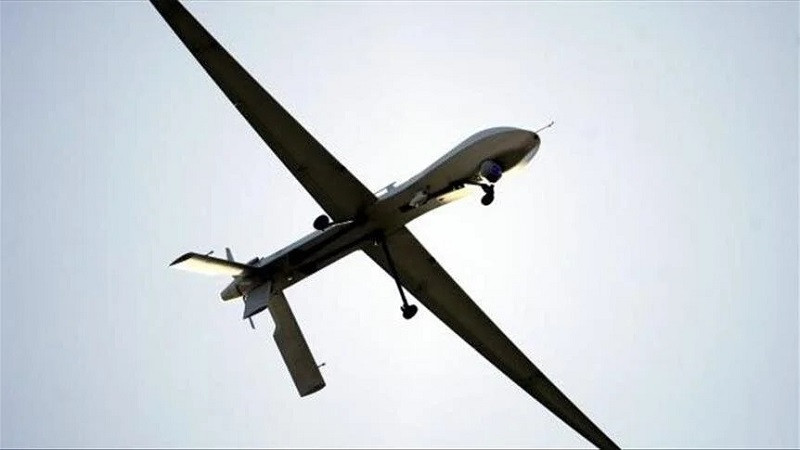
WZ-8's deployment is expected to bolster China's intelligence-gathering efforts. PHOTO: ANADOLU AGENCY
ISTANBUL: A new Chinese high-altitude, high-speed reconnaissance unmanned air vehicle (UAV) was spotted on Friday in the air making its debut flight.
The WZ-8 drone aircraft reportedly flew three times the speed of sound and can reach altitudes of approximately 30 kilometres (18.6 miles).
The blog of Defence Blog magazine sighted the WZ-8 positioned beneath a Xian H-6 bomber, signalling that it requires assistance from carrier aircraft to initiate flight.
The WZ-8's deployment is expected to bolster China's intelligence-gathering efforts, with a focus on South Asian regions, notably Taiwan, South Korea, and Japan.
The drone is also expected to enhance China's strategic capabilities in regions where conventional surveillance methods may falter.

FuturePAF
THINK TANK: CONSULTANT
What does China have to best shoot down the Brahmos? HQ-16FE; a smaller more more nimble missile, or something even better?
The Philippines just got their first Brahmos, so it’s a problem for both nations.
The Philippines just got their first Brahmos, so it’s a problem for both nations.

guangdongt
Registered Member

What does China have to best shoot down the Brahmos? HQ-16FE; a smaller more more nimble missile, or something even better?
The Philippines just got their first Brahmos, so it’s a problem for both nations.
You can refer to Russia, which is developing missiles together with India. The Brahmos missile was also developed on the basis of the Onyx, and its similar product, the Onyx missile, has not only been in service but has also been put into practical use (on the Ukrainian battlefield). On May 3, 2022, the Onyx missile hit a large ammunition depot in Odessa. On the evening of October 6th to early morning of October 7th, 2023, this missile hit a hotel converted into a military camp in Chernomorsk. Ukraine is unable to intercept this type of missile directly, and they use electronic warfare systems to interfere with the missile's guidance system. Make the missile lose its target. Therefore, Russia is currently transforming "onyx" and focusing on strengthening its ability to resist electronic interference. In addition, Ukraine has launched a large number of drones to cover up the storm shadow and strike the Russian military's ammunition depot in Crimea, including the "Onyx" missile. Therefore, the correct approach is not to destroy the missile itself, but to destroy the intelligence system that supports the missile, interfere with the missile guidance system, or preemptively find the target to strike,The Brahmos missile sold by India to the Philippines can only deal with small countries. Without intelligence support from the United States, it is a question whether it can hit Chinese warships. However, our coast guard ship may be attacked by surprise attacks。India's weapons have a strong Russian flavor, and the electronic system has a clear Israeli mark, like a hodgepodge. Just refer to the intelligence of Russia and Israel separately, it's not a big deal
Last edited:
FuturePAF
THINK TANK: CONSULTANT
That may work some of the time. If it had to be knocked out what would China use?You can refer to Russia, which is developing missiles together with India. The Brahmos missile was also developed on the basis of the Onyx, and its similar product, the Onyx missile, has not only been in service but has also been put into practical use (on the Ukrainian battlefield). On May 3, 2022, the Onyx missile hit a large ammunition depot in Odessa. On the evening of October 6th to early morning of October 7th, 2023, this missile hit a hotel converted into a military camp in Chernomorsk. Ukraine is unable to intercept this type of missile directly, and they use electronic warfare systems to interfere with the missile's guidance system. Make the missile lose its target. Therefore, Russia is currently transforming "onyx" and focusing on strengthening its ability to resist electronic interference. In addition, Ukraine has launched a large number of drones to cover up the storm shadow and strike the Russian military's ammunition depot in Crimea, including the "Onyx" missile. Therefore, the correct approach is not to destroy the missile itself, but to destroy the intelligence system that supports the missile, interfere with the missile guidance system, or preemptively find the target to strike,The Brahmos missile sold by India to the Philippines can only deal with small countries. Without intelligence support from the United States, it is a question whether it can hit Chinese warships. However, our coast guard ship may be attacked by surprise attacks。India's weapons have a strong Russian flavor, and the electronic system has a clear Israeli mark, like a hodgepodge. Just refer to the intelligence of Russia and Israel separately, it's not a big deal
guangdongt
Registered Member
If the Philippines attacks our coast guard ship first, there are no good protection measures because the coast guard ship does not have interception weapons. If it is an attack on a warship, they need to first locate the position of the warship, which requires the help of the intelligence network of the United States and Japan, and we will also implement electromagnetic interference. Therefore, assuming the Philippines helps find the position of our warship through the help of the United States and Japan, when the Philippines launches a missile attack first, we need to destroy its missile launch base and activate the defense system of the warship. This is the process of first discovering the enemy. The Brahmus missile is a supersonic missile, and there is no defense system that guarantees its inevitable destruction. You need to monitor the dynamics of the missile launch source through various intelligence networks。In other words, what is important is not the missile itself, but the ability to monitor missile launch dynamics and destroy missile launch systems。Destroy their attack from the root。That may work some of the time. If it had to be knocked out what would China use?
Last edited:
FuturePAF
THINK TANK: CONSULTANT
Come on. Sure it’s not guaranteed, but you’re dodging the question. EW will play a major role, but missiles will still get through. As far as a kinetic solution, just say you don’t know.If the Philippines attacks our coast guard ship first, there are no good protection measures because the coast guard ship does not have interception weapons. If it is an attack on a warship, they need to first locate the position of the warship, which requires the help of the intelligence network of the United States and Japan, and we will also implement electromagnetic interference. Therefore, assuming the Philippines helps find the position of our warship through the help of the United States and Japan, when the Philippines launches a missile attack first, we need to destroy its missile launch base and activate the defense system of the warship. This is the process of first discovering the enemy. The Brahmus missile is a supersonic missile, and there is no defense system that guarantees its inevitable destruction. You need to monitor the dynamics of the missile launch source through various intelligence networks。In other words, what is important is not the missile itself, but the ability to monitor missile launch dynamics and destroy missile launch systems。Destroy their attack from the root。
In the USN it’s the SM-2. From your post I should assume it’s not yet been established. It’s was the weakness of the PLAN destroyers that was starting to be addressed with the sea skimming missile detection radar upgrade; replacing the type 364 radar.
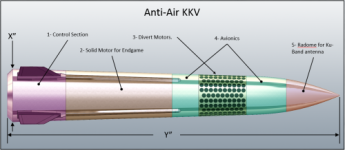
The HQ-16F should made faster, an IR Seeker added, and a more capable final stage made that can do a hit to kill of supersonic missiles.
guangdongt
Registered Member
Come on. Sure it’s not guaranteed, but you’re dodging the question. EW will play a major role, but missiles will still get through. As far as a kinetic solution, just say you don’t know.
In the USN it’s the SM-2. From your post I should assume it’s not yet been established. It’s was the weakness of the PLAN destroyers that was starting to be addressed with the sea skimming missile detection radar upgrade; replacing the type 364 radar.
The HQ-16F should made faster, an IR Seeker added, and a more capable final stage made that can do a hit to kill of supersonic missiles.
View attachment 35667
To be honest, I don't think the existing defense system can intercept 100% saturated Brahmos missiles. I think reducing their number of launches and striking the launch base is the key. When the remaining Brahmos are launched, the success rate of the interception system you mentioned will greatly increase. Any large number of supersonic terminal maneuvering anti-ship missiles launched intensively is a serious problem for any interception system on Earth, and as long as one crosses the defense line, it can cause losses. I don't think that the hQ16ef combined with the radar system can completely avoid Brahmos collective saturation attacks

Last edited:
FuturePAF
THINK TANK: CONSULTANT
That’s why I said it will be a combination. EW is definitely necessary, but IMHO, China needs a more capable missile in the size of the HQ-16FE or at least the HQ-9. Look at the failures of the Russian S-400. If China can make a more capable missile, it can defend itself as well as dominate the non-western market for air defense.To be honest, I don't think the existing defense system can intercept 100% saturated Brahmos missiles. I think reducing their number of launches and striking the launch base is the key. When the remaining Brahmos are launched, the success rate of the interception system you mentioned will greatly increase. Any large number of supersonic terminal maneuvering anti-ship missiles launched intensively is a serious problem for any interception system on Earth, and as long as one crosses the defense line, it can cause losses. I don't think that the hQ16ef combined with the radar system can completely avoid Brahmos collective saturation attacksView attachment 35675
Look at what the USN is doing for EW.
guangdongt
Registered Member
Regarding SEWIPBLOCK 3, it is still not the most advanced effective solution for anti-ship missiles at present. When studying the original SLQ-32 system, they encountered issues such as inadequate system isolation capability, limited pitch angle coverage, and limited number of threats from source electronic interference that can be engaged in combat. From the strategic objectives of SEWIPBLOCK3, it can be seen that although the effective radiation power (ERP) is claimed to have reached the megawatt level, electronic warfare systems still appear challenging when dealing with emerging anti-ship missile attacks. The supersonic sea skimming anti-ship missile reduces the effective anti missile space to within the line of sight range. For such a powerful threat, the defense capability of SEWIPBLOCK 3 is still insufficient and requires close coordination of soft and hard kill system resources to effectively defend. From the perspective of energy supply, the SEWIPBLOCK3 electronic attack system, like the high-energy laser weapons vigorously developed by the US Navy in recent years, are both directed energy weapon systems that have high requirements for ship power support capabilities.Adequate power supply is the main factor restricting the development of electronic warfare systems。 In summary, prior to revolutionary changes in defense systems,Offensive is more effective than pure defense. We can expand to ballistic missiles and see that the interception of Iran's large-scale ballistic missiles by the US SM3 is still unsatisfactory, The United States has rich experience and sufficient preparation time to face Iran's previous generation of ballistic missiles, and ultimately relies on news propaganda to cover up its overall defense failureThat’s why I said it will be a combination. EW is definitely necessary, but IMHO, China needs a more capable missile in the size of the HQ-16FE or at least the HQ-9. Look at the failures of the Russian S-400. If China can make a more capable missile, it can defend itself as well as dominate the non-western market for air defense.
Look at what the USN is doing for EW.

Last edited:

RescueRanger
Meme Lord
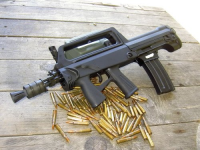
Those gas parts look potentially problematic in dusty environments.NORINCO QBZ-97B rifle
QBZ-97B is a short barrel version of QBZ-97 rifle which itself is an export oriented version of QBZ-95 chambered in 5.56×45mm.
View attachment 30829
ghazi52
THINK TANK: CONSULTANT
- Thread starter
- #103
CHL-906 Surface to Air Radar Jamming System
Global Defense Insight
August 25, 2023
CHL-906 Surface to Air Radar Jamming System is an electronic warfare system that integrates the functions of radar reconnaissance, radar jamming, command & control.
The system is mainly used to protect friendly key areas and provide protection for friendly critical targets and combat operations.
Components of CHL-906 Surface-to-Air Radar Jamming System:
CHL-906 Surface to Air Radar Jamming System comprises several sub-systems including:1. Long Range Radar Jamming Station (L/S/P Band)
It is used for reconnaissance and jamming of airborne early warning radars to reduce their detection performance.
- Jamming Distance: > 300 kilometers
It intercepts, tracks, and monitors radar radiation sources in real time, and provides intelligence support for combat operations.
- Operating Frequency Range: 0-1GHz – 40GHz
It is used for reconnaissance and jamming against airborne multi-function radar to reduce its detection performance.
- Jamming Range: > 250 kilometers
It intercepts, locates, and tracks multiple types of radiation sources, and provides intelligence support for combat operations.
- Detection Range: > 600 kilometers
It conducts reconnaissance and jamming of millimeter wave radars on helicopter and precision guided munitions to reduce their radar guiding performance.
- Jamming Distance: > 1.2 seeker working range
Users who are viewing this thread
Total: 2 (members: 0, guests: 2)
Pakistan Defence Latest
-
-
 Federal cabinet gives nod to imposition of emergency in KP; summary sent to president (50 Viewers)
- Latest: flyingorca
-
-

-


