Navigation
Install the app
How to install the app on iOS
Follow along with the video below to see how to install our site as a web app on your home screen.
Note: This feature may not be available in some browsers.
More options
Style variation
You are using an out of date browser. It may not display this or other websites correctly.
You should upgrade or use an alternative browser.
You should upgrade or use an alternative browser.
Indonesia Infrastructure Development
- Thread starter Indos
- Start date
More options
Who Replied?

Indos
INT'L MOD
- Thread starter
- #32
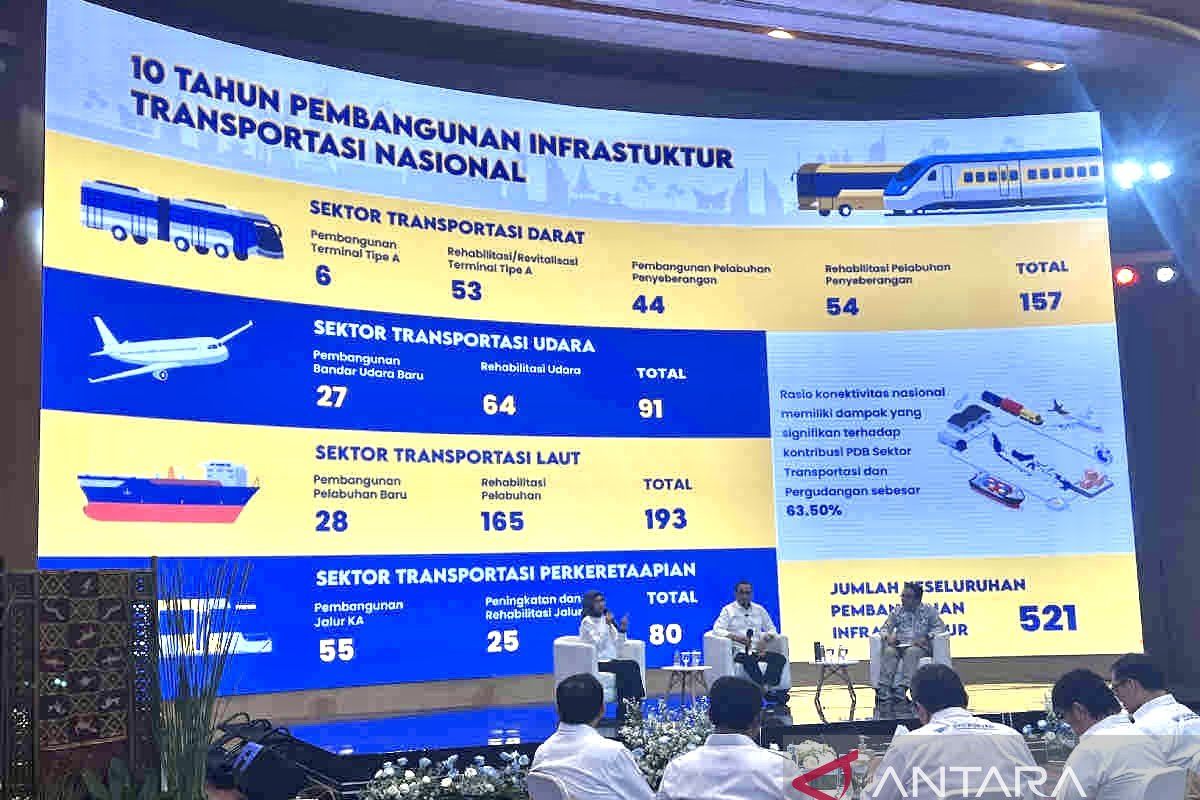
521 transport infra built by Widodo govt: minister
October 1, 2024 23:58 GMT+700
521 transport infra built by Widodo govt: minister
The Ministry of Transportation built 521 transportation infrastructures during President Joko Widodo's term to support connectivity and smooth logistics ...
 en.antaranews.com
Indos
INT'L MOD
- Thread starter
- #33
'No Water, No Life': Jokowi Builds 47 New Dams So Far
Jayanty Nada Shofa
October 17, 2024 | 11:24 am
Jatigede Dam, West Java
Jakarta. Within a decade of presidency, Indonesia’s outgoing leader Joko “Jokowi” Widodo has led massive infrastructure development as seen in the addition of over 40 dams spread across the archipelago.
Jokowi has admitted that the water crisis that had struck other countries was the reason behind his non-stop dam construction. Jokowi is banking on these dams to help provide water for farmers amidst the warming global temperatures as populous Indonesia tries to feed its population. The dams are also part of the government’s strategy to control flooding.
The government typically sets aside over Rp 1 trillion ($113.3 million) to create a dam and even grants the dams the so-called “national strategic project” status -- thus highlighting how much their development matters to Jokowi. Many of these dams lie in regions outside of Java, which aligns with Jokowi's determination to expand development programs more evenly across the nation.
Most recently, Jokowi inaugurated the Lausimeme dam in North Sumatra on Wednesday, which cost the government around Rp 1.76 trillion. This became the 47th dam that Jokowi had inaugurated over the past decade. The Lau Simeme dam -- which holds a 21 million cubic meters capacity -- is set to suppress flooding in Medan and Deli Serdang in addition to helping water the nearby paddy fields.
Earlier this month, Jokowi launched the Temef dam in East Nusa Tenggara. The government had spent Rp 2.7 trillion to build the dam that boasted a capacity of 45 million cubic meters of water. The most expensive dam that Jokowi had ever constructed so far was West Java’s Leuwikeris dam which cost approximately Rp 3.5 trillion.
But Jokowi didn't dare to hold back on the spending for the sake of dams because of how important water is to the people.
“Water is the source of life. Water is a symbol of balance and harmony. However, if not managed properly, water can be a disaster. Without water, there is no life. Without water, there is no food. Therefore, we must manage water properly because every drop is very valuable,” Jokowi said at the time when inaugurating the Leuwikeris dam.
More dams are set to come until the end of the year, although with only a few days away from retirement, it is likely that it will be Jokowi’s successor Prabowo Subianto that inaugurates the remaining projects that are still under construction. Jokowi said recently Indonesia would have a total of 61 dams by the end of the year.

'No Water, No Life': Jokowi Builds 47 New Dams So Far
Jokowi admits that the water crisis that has struck other countries is the reason behind his non-stop dam construction.
Indos
INT'L MOD
- Thread starter
- #34
Jokowi said recently Indonesia would have a total of 61 dams by the end of the year.
'No Water, No Life': Jokowi Builds 47 New Dams So Far
Jokowi admits that the water crisis that has struck other countries is the reason behind his non-stop dam construction.jakartaglobe.id
Correction. Indonesia currently has 300 dams where 61 dams are being built under Jokowi period ( 2014 - 2024 )
Indos
INT'L MOD
- Thread starter
- #35
366,000-Kilometer Road: A Present from Jokowi to Indonesia’s Villages
Village road, Majalenka, West Java
Jayanty Nada Shofa & Fuad Iqbal Abdullah
October 17, 2024 | 2:18 pm
Jakarta. It is now much easier to travel from one village to another in Indonesia compared to 10 years ago.
Since Indonesia’s outgoing leader Joko “Jokowi” Widodo took the reins in 2014, the government has built roads in villages that spanned a total of 366,000 kilometers. Roads are key to a country’s development especially if the government wants to achieve an “Indonesia-centric” growth that benefits people across the archipelago. It also paves the way for better mobility of goods and people in Indonesia’s rural areas.
“We have built village roads with the budget that we have. People always speak of tollways whenever they meet me. But did you know that we have actually built 366,000 kilometers of village roads over the past decade,” Jokowi told a high-profile business forum at Indonesia’s new capital Nusantara, not long ago.
But to Jokowi, this feat is still far from enough, alluding that he wants to see an even more massive development of village roads by the incoming government.
“Indonesia is home to 74,800 villages. If we built 366,000 kilometers, that would mean we have only built between 4 and 5 kilometers. So it doesn’t make sense. The construction should have been twofold of the existing figure. Roads are important for our farmers,” Jokowi said.
And Jokowi was right about the impact that improved road infrastructure could bring for farmers.
The government recently finished fixing a 9.6-kilometer road that connected three villages -- Wonosari, Argomulyo, and Mentawir -- in the Sepaku district near Nusantara. In the past, poor road conditions had hindered development. Local farmers struggled to sell their crops in the nearby villages. Not to mention how a badly paved road could cause transportation costs to soar. But as of March, the roads that link the said three villages have concrete paving. Gianto, a chili farmer from Wonosari, recently talked about the changes.
“Back then, we farmers struggled to sell our harvests because of the poor road conditions. Thanks to the concrete roads, it is much easier and faster to distribute crops to the neighboring villages. [Visiting the nearby villages] was an hour's drive in the past. It now only takes just 15 minutes by motorcycle,” Gianto told the Jakarta Globe.
Gianto revealed that the local farmers’ monthly income had even doubled following the improved road networks. Farmers used to earn around Rp 2 million (approximately $129) back then, but their income had now jumped to up to Rp 5 million.
Jokowi is set to retire this weekend. He will hand over the presidential baton to defense minister and former army general Prabowo Subianto. Jokowi is hoping that his successor will continue to pursue an “Indonesia-centric” approach.
“Indonesia is a large country, and that is why we need to push for equitable development. All parts of the country have to get the same 'slice of cake'. Not a Java-centric [development], but one that is Indonesia-centric. Development should start from the villages and suburbs,” Jokowi told reporters in August.

366,000-Kilometer Road: A Present from Jokowi to Indonesia’s Villages
It is now much easier to travel from one village to another in Indonesia compared to 10 years ago.
jakartaglobe.id
Indos
INT'L MOD
- Thread starter
- #36
After a series of disputes over the location of the second airport, its inclusion and exclusion from the list of national projects, the project is back in action.
According to CNN Indonesia, the second airport will be in the north, in the Buleleng province. Reviving this project was one of the campaign promises of the newly elected President Prabowo Subianto.
The authorities' goals for creating the second Bali airport are as follows:
1. Relieving the Main Airport in the South: The airport in the south of Bali is already operating at full capacity. Expansion is not possible due to the lack of available land, so budget airlines are planned to be redirected to the new airport.
2. Boosting Tourism in the North of the Island: This will provide an impetus for the development of tourism in the Buleleng province.
Indos
INT'L MOD
- Thread starter
- #38
Details of State Money on Infrastructure Project at Rp 282.9 Triliun
Ignacio Geordi Oswaldo - detikFinance
Nusantara City Development in East Kalimantan Province
Sunday, November 24, 2024 06:00 WIB
Jakarta -
Minister of Finance, Sri Mulyani Indrawati, reported the realization of the government's infrastructure budget from the beginning of the year until October 31, 2024 has reached 66.8% of the budget ceiling or equivalent to Rp 282.9 trillion.
"APBN #MoneyKita fully supports the improvement of competitiveness through infrastructure budgets that have been realized by Rp 282.9 T until the end of October 2024," Sri Mulyani wrote in her Instagram post (@smindrawati), Saturday (11/23/2024).
Of that amount, Sri Mulyani explained that Rp 160.6 trillion was realized through the expenditure of Ministries and Institutions (K/L). The funds are used for various developments ranging from roads, train tracks, to flats and internet access.
"Various construction and preservation of roads, bridges, and the construction of drinking water facilities, railroads, flats, so that internet access can be felt directly by the community.
Then the allocation of Rp 72.8 trillion was realized through the transfer of the central government to the region, which was partly to reconstruct the road along 16,526 km, built a road along 30,583 km, and rehabilitated 1,962 km of other roads.
"Not only that, low-income people can also get Housing Financing Liquidity Facilities (FLPP) for housing financing that has been realized as many as 165,880 housing units," she explained.
In detail, here is a list of realization of infrastructure budgets until October 31, 2024:
1. Realization through Shopping K/L (Rp 160.6 Trillion)
- Road construction and preservation of Rp 37.1 trillion (progress 74.82%)
- Construction and preservation of the Bridge Rp 5.4 trillion (progress 80.57%),
- Implementation of SPAM Rp 3.7 trillion (progress 73.78%)
- Construction of Flats Rp 5.2 trillion (progress 70.25%);
- Rail KA Rp 1.4 trillion (progress 41.90%)
- Airport Rp 2.3 trillion (progress 73.75%)
- Sea Port Rp 3.9 trillion (progress 73.97%)
- PDN construction in Cikarang Rp 1.8 trillion (progress 9%),
- Operational and maintenance of 4G BTS Rp 1.7 trillion at 2,806 locations
- Internet access Rp 0.5 trillion for 11,604 locations
- Satellite capacity of Rp 1.2 trillion amounted to 22 Gbps
- Palapa Ring Rp 2.0 trillion as much as 43 units
2 Realization of Transfer to Region (Rp 72.8 Triliun)
- Road Rp 5.16 trillion: for reconstruction of 16,526 km, construction of 30,583 km, and rehabilitation of 1.962 km
- SPAM as many as 54,798 home connections (SR), Irrigation Network targeted at 3,024.79 Ha (Rp 17.5 trillion)
3. Realization through Financing (Rp 49.1 Triliun)
- FLPP Rp 13.7 trillion for housing financing as many as 165,880 housing units
- PMN to PT Hutama Karya (Persero) Rp 18.6 trillion, for the completion of JTTS (Trans Sumatra Toll Road) phase I, and JTTS stage II segment Kayu Agung-Palembang-Betung
- LMAN funding Rp 7.5 trillion for 126 National Strategic Projects (PSN).
"This is all the role of the #MoneyKita State Budget to continue to encourage increased competitiveness through infrastructure development. Together build, towards Indonesia Advanced..!" concluded Sri Mulyani.
(hns/hns)

Rincian Proyek Infrastruktur Telan Duit Negara Rp 282,9 Triliun
Menteri Keuangan Sri Mulyani Indrawati melaporkan realisasi anggaran infrastruktur hingga 31 Oktober 2024 telah mencapai Rp 282,9 triliun.
 finance.detik.com
Indos
INT'L MOD
- Thread starter
- #40
New Pipe Water system to Replace Ground Water Ready to Serve 4 Million Jakartans in 2030
Shafira Cendra Arini - detikFinance
Thursday, 09 Jan 2025 09:00 WIB
Newly built Karian Dam, Banten Province
Jakarta -
The Ministry of Public Works (PU) is preparing a replacement for groundwater in Jakarta. The entire clean water supply system is targeted to operate in 2030 to serve 4 million citizens.
Plt Director General Cipta Karya Ministry of PU Endra S. Atmawidjaja said the use of groundwater is strictly regulated through the Ministry of Energy and Mineral Resources (ESDM). This is where the contribution of the Ministry of PU in providing facilities and infrastructure so that people are not using groundwater.
"If our target (Ministry of PU), 2030 system (ground water replacement) has been operating," said Endra found at the Office of the Ministry of Infrastructure and Regional Development (IPK), Central Jakarta, Wednesday (8/1/2025).
Endra said, the continuous use of groundwater will have an impact on land subsidence. Therefore, the Ministry of PU continues to boost the development of Water Resources (SDA) infrastructure ranging from dams to Drinking Water Supply System (SPAM) as a replacement.
Furthermore, Endra mentioned several SPAM projects that are currently completed, one of which is the construction of SPAM Regional Jatiluhur I which is able to serve the needs of 2 million Jakartans. Next will be coupled with SPAM Karian which is targeted to begin construction 2025.
Pengganti Air Tanah Siap Layani 4 Juta Warga Jakarta 2030
Kementerian Pekerjaan Umum (PU) tengah menyiapkan pengganti air tanah di Jakarta.
 finance.detik.com
Indos
INT'L MOD
- Thread starter
- #42
Indonesia Builds World’s Largest Refuse-Derived Fuel Facility
Teguh Adi Prasetyo, Heru Andriyanto
January 9, 2025 | 11:58 pm
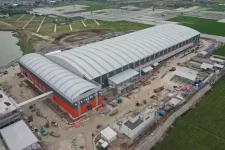
This undated photo shows the construction of a refuse-derived fuel plant in Rorotan, East Jakarta. (Handout)
Jakarta. The Indonesian government is nearing completion of a refuse-derived fuel (RDF) plant in the Rorotan area of North Jakarta, designed to address the city’s mounting waste problem.
With a processing capacity of 2,500 tons per day, the facility is set to become the largest of its kind in the world, surpassing a similar plant in Tel Aviv, Israel, which currently holds the record with a capacity of 1,500 tons per day.
The plant, built by state-owned construction company Wijaya Karya under the supervision of Jakarta’s Environmental Department, began construction in March last year.
“The facility is 94 percent completed and will commence operations in February,” Wijaya Karya CEO Agung Budi Waskito announced in Jakarta on Thursday.
Agung explained that the facility will manage domestic waste collected from 16 districts across Jakarta, significantly reducing the burden on the overfilled Bantargebang landfill in Bekasi.
“This facility is designed to produce alternative fuel equivalent to coal. It is expected to reduce the load at Bantargebang by 30 percent while generating 875 tons of RDF products daily,” Agung said.
The RDF output can be used as an energy source for industrial facilities and power plants, making it a key component of Jakarta’s waste-to-energy strategy.
Jakarta generates over 7,500 tons of household waste daily, creating an urgent need for sustainable waste management solutions. The facility employs advanced technology to efficiently separate recyclable materials and process waste into fuel with high precision, Agung added.
Major RDF Facilities Around the World
While Indonesia’s Rorotan plant will take the lead in capacity, several major RDF facilities globally highlight the growing role of waste-to-energy technologies:
- Tel Aviv, Israel: The current largest RDF facility processes 1,500 tons of waste daily, converting municipal waste into fuel for industrial use.
- Copenhagen, Denmark: The Amager Bakke waste-to-energy plant, though focused on incineration, integrates RDF production and is recognized for its state-of-the-art technology and ability to process 450,000 tons of waste annually.
- Singapore: The Tuas Nexus Integrated Waste Management Facility is under construction and will combine RDF production with incineration, with a processing capacity of over 3,600 tons of waste per day once completed in 2025.
- Birmingham, UK: The Tyseley Energy Park processes 400,000 tons of waste annually, producing RDF to fuel industrial operations while contributing to a circular economy approach.

Indonesia Builds World’s Largest Refuse-Derived Fuel Facility
The facility will reduce the load at Bantargebang by 30 percent while generating 875 tons of RDF products daily.
Indos
INT'L MOD
- Thread starter
- #43
Japan pours loan of Rp8.57 trillion for Patimban Port development
The grant was ratified after JICA signed a document of the Japan ODA Soft Loan deal for the Patimban Development Project (III)
Lorenzo Anugrah Mahardhika - Bisnis.com
Sunday, January 12, 2025 | 09:48
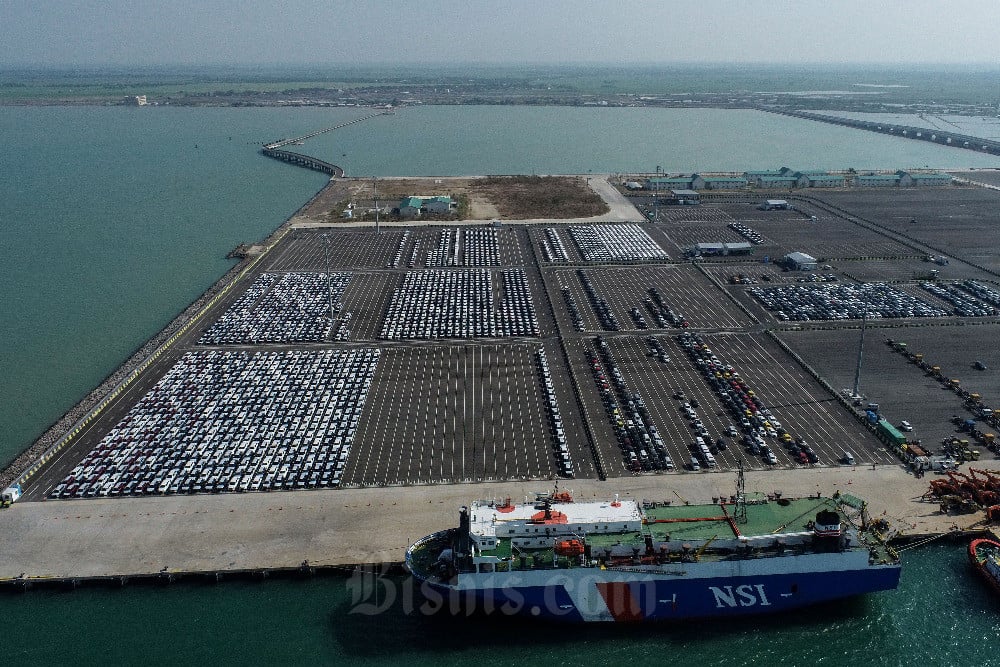
Patimban Port, Subang, West Java
JAKARTA - The Japanese government through Japan International Cooperation Agency JICA(JICA) officially provides loans to Indonesia for the Patimban Port Development Project stage III worth 83,408 billion yen or around Rp8.57 trillion.
Citing the official JICA on Sunday (12/1/2025), the granting of the funds was passed after JICA signed a document of the Japan ODA Soft Loan deal for the Patimban Development Project (III).
JICA said loans for the development of Patimban Port were given with interest of 0.3% per year for projects and 0.2% per year for consulting work. Meanwhile, the tenor given is for 40 years, with grace perioda grace period of 10 years.
"The continued development project of Patimban Port aims to strengthen the logistics function in the metropolitan area by building a new port, such as container terminals, vehicle terminals, and others, in Patimban, in the eastern part of the metropolitan area of Jakarta. The development can contribute to further economic growth through the improvement of the investment environment in Indonesia, "explained JICA in its statement.
The project implements a Special Terms for Economic Partnership or STEP, designed to increase Japan's aid visibility through the transfer of Japan's technology and expertise to partner countries.Specifically, JICA said the project site is on very soft clay and has low permeability.
Japan's construction technology, which can be applied to very soft soil, will be applied to the construction of dock walls, reclamation, soil repair, and others. This technology will be used for the expansion of planned container terminals and other projects.
This loan will be given for the work of the project divided into several parts, namely phase 1-1 for parts that operate early and phase 1-2, namely the part other than that of early operation.In detail, phase 1-1 is the construction of a 10-hectare container terminal and a 22.4-hectare vehicle terminal, breakwater, dock/watering, and the construction of access roads of about 8.1 km, as well as the construction of a 1 km-long bridge.
Then, phase 1-2 consists of the construction of a 64-aced Pet and a container terminal (13.7 hectares), as well as the port groove. The loans are also provided for consulting services such as detailed design, tender assistance, construction supervision, and more.
Meanwhile, JICA also said, the Directorate General of Marine Transportation of the Ministry of Transportation will manage the entire project, organize port construction work, land acquisition and resettlement, operation and maintenance (O&M), and others.
Then, the Directorate General of Bina Marga of the Ministry of Public Works will oversee construction work for access roads under the control of the Directorate General of Marine Transportation.Previously, in 2017, the Government of Indonesia and JICA had signed a first-stage loan, amounting to 118.9 billion yen, then followed by a second-stage loan of 70.2 billion yen in 2022. With this third-stage loan, the total amount is estimated at around 272.5 billion Japanese Yen.
Jepang Kucurkan Pinjaman Rp8,57 Triliun untuk Pengembangan Pelabuhan Patimban
Pemberian dana tersebut disahkan setelah JICA menandatangani dokumen kesepakatan Pinjaman Lunak ODA Jepang untuk Proyek Pengembangan Patimban (III).
 ekonomi.bisnis.com
Indos
INT'L MOD
- Thread starter
- #44
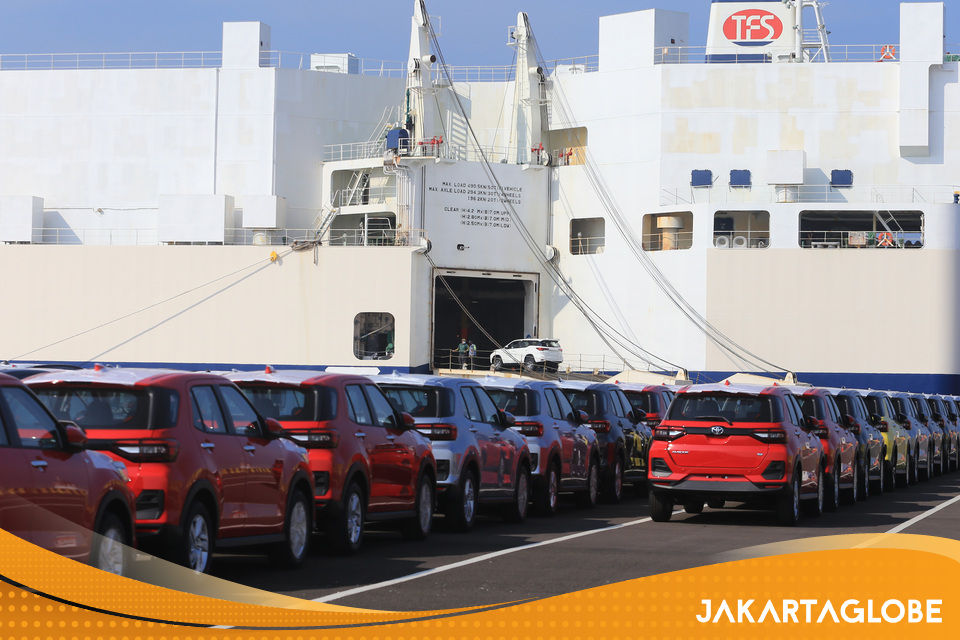
Patimban port development helps Indonesia to increase its car export import better. Previously Indonesia car export relies heavily on Tanjung Priok Port in Jakarta
-------
According to the Japanese Embassy in Indonesia, the port’s car export capacity is expected to increase to 600,000 units once the project is completed.
 jakartaglobe.id
Car terminal in Tanjung Priok Port Jakarta
-------
According to the Japanese Embassy in Indonesia, the port’s car export capacity is expected to increase to 600,000 units once the project is completed.
Indonesia Secures $528 Million Japanese Loan for Patimban Port
This marks the third loan that Japan has granted for Indonesia to develop the Patimban Port in West Java.
Car terminal in Tanjung Priok Port Jakarta
Users who are viewing this thread
Total: 1 (members: 0, guests: 1)
Pakistan Defence Latest

Country Watch Latest
-

-
 Bangladesh Keen To Join Saudi-Pak-Turkey Defence Alliance, Says PM's Top Aide (22 Viewers)
- Latest: LeonBlack08
-
 Iran - Israel/US War: Israel-US declare war on Iran, Iran responds (45 Viewers)
- Latest: Professor Jiang
-
Netanyahu calls Turkish president ‘antisemitic dictator’ after Turkiye issues arrest warrant (17 Viewers)
- Latest: HAIDER
-
 BRIN Pushes for Space Self-Reliance, Targets Faster Launch of National Rockets (3 Viewers)
- Latest: Indos
Latest Posts
-
 World Humanoid Robot Sports Games Opens in China with 2,000 Robots Competing (9 Viewers)
- Latest: Beijingwalker
-

-
-

-
Bangladesh Keen To Join Saudi-Pak-Turkey Defence Alliance, Says PM's Top Aide (22 Viewers)
- Latest: LeonBlack08