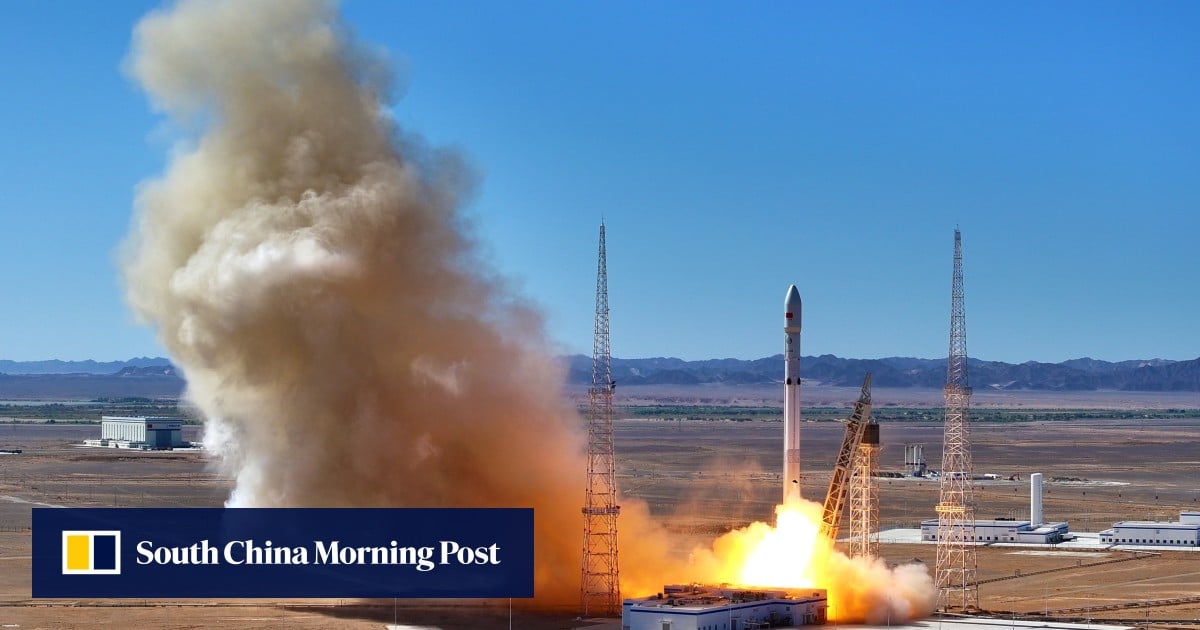
China vows to catch up with Elon Musk’s Starlink

Hamartia Antidote

Elite Member
Joined
Nov 17, 2013
Messages
47,008
Reaction score
26,875
Reputation
620.9
Country of Origin
Country of Residence


catch.jpg
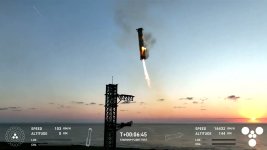
After tech mogul Elon Musk’s SpaceX successfully caught its returning Super Heavy booster with a giant pair of mechanical “chopsticks” on October 13, Chinese state media have launched a campaign to promote China’s achievements in building its own Starlink-like system.

In China, at least three companies are trying to catch up with SpaceX’s Starlink, which aims to send 42,000 satellites to low Earth orbit (LEO) in the coming decades. So far 6,426 Starlink satellites have been sent.

One of the trio is China Satellite Network Group Co, a Hebei-based state-owned-enterprise. It operates the GW plan, which refers to GuoWang or literally means “National Networks” in Chinese, and aims to build a Chinese version of Starlink with about 13,000 satellites.

Another one is Shanghai Weixiao Satellite Engineering Center, a subsidiary of the Chinese Academy of Science. Its G60 or Qianfan plan aims to send 12,000 satellites to LEO by 2027.

The third one is Shanghai Lanjian Hongqing Technology Co, in which the Beijing-based LandSpace has a 48% stake. LandSpace is a private company founded by Zhang Changwu, a former official of the Ministry of Land and Resources. Lanjian Hongqing’s Honghu-3 plan will send 10,000 satellites to LEO.

“After seeing SpaceX’s successful launch on October 13, many foreign media have mocked China,” Lei Xiangping, a commentator with the state-owned China Central TV (CCTV), says in an opinion piece published on Thursday. ”Fortunately, China has already fought back in the following three days.”

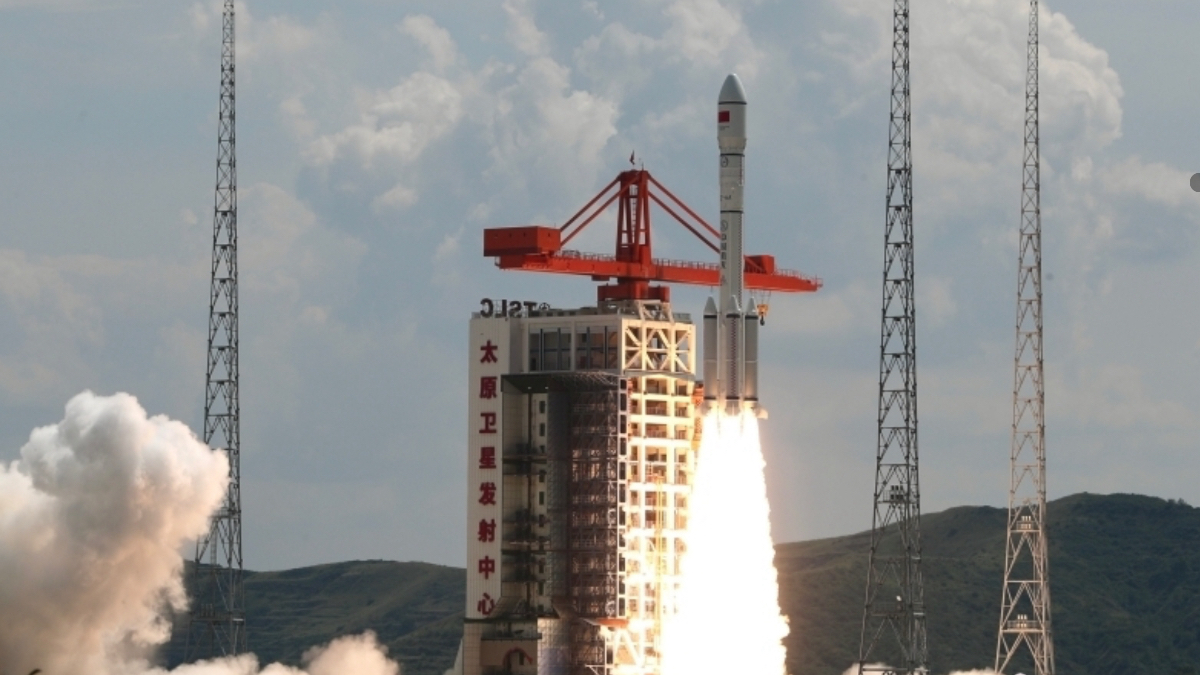
Lei says China has flexed its muscles by sending 18 communication satellites for the Qianfan network via a Long March-6A rocket in Shanxi on Tuesday and launching the Gaofen-12 05 remote sensing satellite via a Long March-4C carrier rocket in Gansu on Wednesday.

He says that Chinese firms will launch more than 15,000 satellites to LEO by 2030.

“Once Starlink completes its plan of sending 42,000 satellites to LEO, there will be no more space and bandwidth in the orbit for other countries to grab,” he says. “This is why China must speed up its satellite launch plans to fight for the resources in LEO.”

He also says it’s urgent for Beijing to push forward its Qianfan scheme, which will be used by the People’s Liberation Army to carry out high-resolution military surveillance missions around the globe.

“In this emerging battlefield, whoever has the most advanced technology and controls the resources will enjoy a strategic advantage,” he says.

The Global Times said Wednesday that China’s latest two successful satellite launches demonstrated the country’s growing expertise in space technology and increasingly strong capabilities of space applications.

“This achievement reflects the commitment of China’s aerospace workers in upholding the spirit of the ‘Two bombs, one satellite,’” the newspaper said.

China’s “Two bombs, one satellite” scheme refers to the detonations of the country’s first atomic bomb in 164 and first hydrogen bomb in 1967 and the launch of its first satellite in 1970.

Who mocked China?​

Gao Tianwei, a technology columnist with China’s Guancha.cn, on Monday commented on the SpaceX booster’s successful landing.

“SpaceX has made significant improvements in its latest flight launch. Should China follow suit and speed up its development?” Gao says.

He says there’s no need for China to rush for the launch of its Long March 9, a super heavy carrier rocket similar to SpaceX’s Super Heavy booster, which has a diameter of nine meters with all engines in parallel. He says it is because the country has already been the world’s No.2 in terms of aerospace technology.

He also says China would prefer to invest in projects that have been proven feasible, for example, reusable medium-lift launch vehicles like SpaceX’s Falcon 9.
newLongmarch9.jpg
In fact, there is nothing wrong with Gao’s comments as he only reiterates Beijing’s official line that Long March 9 will not be available for use until 2033.


But when the China Times, a Taiwanese newspaper, on Monday cited Gao’s comments, it used a negative headline and said that China will have to wait for a long time before it can achieve SpaceX’s breakthroughs.

Lianhe Zaobao, a Singaporean newspaper, on Tuesday published a commentary with the title “Did Musk’s Starship outshine China’s rockets?” It said some Chinese media are worried that China won’t be able to catch up with the US in space technology.

All these media reports prompted Chinese state media to fight back on Wednesday and Thursday.

Mo Jiangli, a Shandong-based writer, says it’s unfair that foreign media only praised Musk’s Starship but not LandSpace’s Zhuque-3 reusable test rocket, which successfully completed a 10 kilometer vertical takeoff on September 11.

Separately, Jiangsu Deep Blue Aerospace Technology, another private firm like LandSpace, is developing a reusable launch vehicle called Nebula-1. On September 22, the vehicle had a hard landing during its first test.
 
Last edited:


View attachment 77229
After tech mogul Elon Musk’s SpaceX successfully caught its returning Super Heavy booster with a giant pair of mechanical “chopsticks” on October 13, Chinese state media have launched a campaign to promote China’s achievements in building its own Starlink-like system.

In China, at least three companies are trying to catch up with SpaceX’s Starlink, which aims to send 42,000 satellites to low Earth orbit (LEO) in the coming decades. So far 6,426 Starlink satellites have been sent.

One of the trio is China Satellite Network Group Co, a Hebei-based state-owned-enterprise. It operates the GW plan, which refers to GuoWang or literally means “National Networks” in Chinese, and aims to build a Chinese version of Starlink with about 13,000 satellites.

Another one is Shanghai Weixiao Satellite Engineering Center, a subsidiary of the Chinese Academy of Science. Its G60 or Qianfan plan aims to send 12,000 satellites to LEO by 2027.

The third one is Shanghai Lanjian Hongqing Technology Co, in which the Beijing-based LandSpace has a 48% stake. LandSpace is a private company founded by Zhang Changwu, a former official of the Ministry of Land and Resources. Lanjian Hongqing’s Honghu-3 plan will send 10,000 satellites to LEO.

“After seeing SpaceX’s successful launch on October 13, many foreign media have mocked China,” Lei Xiangping, a commentator with the state-owned China Central TV (CCTV), says in an opinion piece published on Thursday. ”Fortunately, China has already fought back in the following three days.”

Lei says China has flexed its muscles by sending 18 communication satellites for the Qianfan network via a Long March-6A rocket in Shanxi on Tuesday and launching the Gaofen-12 05 remote sensing satellite via a Long March-4C carrier rocket in Gansu on Wednesday.

He says that Chinese firms will launch more than 15,000 satellites to LEO by 2030.

“Once Starlink completes its plan of sending 42,000 satellites to LEO, there will be no more space and bandwidth in the orbit for other countries to grab,” he says. “This is why China must speed up its satellite launch plans to fight for the resources in LEO.”

He also says it’s urgent for Beijing to push forward its Qianfan scheme, which will be used by the People’s Liberation Army to carry out high-resolution military surveillance missions around the globe.

“In this emerging battlefield, whoever has the most advanced technology and controls the resources will enjoy a strategic advantage,” he says.

The Global Times said Wednesday that China’s latest two successful satellite launches demonstrated the country’s growing expertise in space technology and increasingly strong capabilities of space applications.

“This achievement reflects the commitment of China’s aerospace workers in upholding the spirit of the ‘Two bombs, one satellite,’” the newspaper said.

China’s “Two bombs, one satellite” scheme refers to the detonations of the country’s first atomic bomb in 164 and first hydrogen bomb in 1967 and the launch of its first satellite in 1970.

Who mocked China?​

Gao Tianwei, a technology columnist with China’s Guancha.cn, on Monday commented on the SpaceX booster’s successful landing.

“SpaceX has made significant improvements in its latest flight launch. Should China follow suit and speed up its development?” Gao says.

He says there’s no need for China to rush for the launch of its Long March 9, a super heavy carrier rocket similar to SpaceX’s Super Heavy booster, which has a diameter of nine meters with all engines in parallel. He says it is because the country has already been the world’s No.2 in terms of aerospace technology.

He also says China would prefer to invest in projects that have been proven feasible, for example, reusable medium-lift launch vehicles like SpaceX’s Falcon 9.

View attachment 77231
In fact, there is nothing wrong with Gao’s comments as he only reiterates Beijing’s official line that Long March 9 will not be available for use until 2033.


But when the China Times, a Taiwanese newspaper, on Monday cited Gao’s comments, it used a negative headline and said that China will have to wait for a long time before it can achieve SpaceX’s breakthroughs.

Lianhe Zaobao, a Singaporean newspaper, on Tuesday published a commentary with the title “Did Musk’s Starship outshine China’s rockets?” It said some Chinese media are worried that China won’t be able to catch up with the US in space technology.

All these media reports prompted Chinese state media to fight back on Wednesday and Thursday.

Mo Jiangli, a Shandong-based writer, says it’s unfair that foreign media only praised Musk’s Starship but not LandSpace’s Zhuque-3 reusable test rocket, which successfully completed a 10 kilometer vertical takeoff on September 11.

Separately, Jiangsu Deep Blue Aerospace Technology, another private firm like LandSpace, is developing a reusable launch vehicle called Nebula-1. On September 22, the vehicle had a hard landing during its first test.
but....I didnt heard EM starlink chanting the "dark side of rhe moon" when...?
 
but....I didnt heard EM starlink chanting the "dark side of rhe moon" when...?

EM doesn't follow China...China follows EM.

newRocketDesign.png
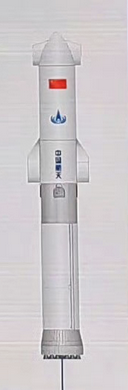
Did you notice the new Long March 9 design? Oddly familiar isn't it?

starship_b9-s25__2.jpg

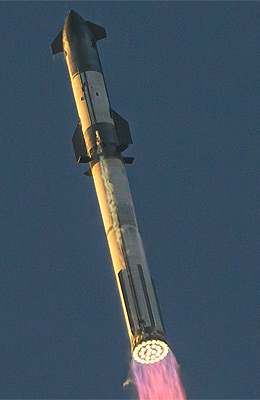
EM's Starship
 
Last edited:
If it works, why bother reinvent it?

China will let another country/foreign company waste precious resources figuring out what works and what doesn't.

The moment a foreign project proves itself viable, China just swoops in to make a similar BUT better product saving all the R&D costs and precious time wasted on trial and error...

It's what you call work smart NOT hard!
 
Starlink rival Qianfan hits satellite milestone, but is it too slow and costly?

10 Jun 2026
China’s Qianfan network has hit a national milestone by placing over 200 broadband satellites in orbit, but there are concerns its deployment could be too slow and costly.

The constellation now has 201 satellites after a successful launch on board a Zhuque-2E rocket from the Gobi Desert at 4.23pm Beijing time on Tuesday.

The mission delivered Qianfan DTC-01 – a direct-to-cell test satellite – alongside a satellite from China Mobile, state broadcaster CCTV reported.

The flight followed back-to-back launches last Thursday and Friday from Taiyuan in central China and the new spaceport in southernmost Hainan, each sending 18 Qianfan satellites into orbit.

Despite the quickening pace, the Starlink challenger’s roll-out still lags behind official targets.

A source working at the Jiuquan Satellite Launch Centre said Shanghai Spacecom Satellite Technology (SSST) – the company behind Qianfan – had sent a delegation to watch Tuesday’s launch.

“They seem to be under a lot of pressure,” said the source, who spoke on condition of anonymity because he was not authorised to speak to the media.

“If the company can’t ramp up its launch schedule, the project might just fall through.”

When the first of the Qianfan satellites lifted off in 2024, SSST said it aimed to deploy 648 of them by the end of 2025 to provide regional coverage.

The company also planned to have roughly 1,300 satellites operational by 2027, before building up to a final fleet of more than 15,000 by 2030.

Its launch schedule froze for seven months last year, partly due to competition for rockets with GuoWang, a state-sponsored broadband constellation with a similar scale.

More broadly, the slow deployment highlights China’s lack of an operational reusable rocket to match the high flight frequency of Falcon 9, Starlink’s workhorse launcher.

In a CCTV interview on Monday, Hu Haiying, chief commander of the Qianfan satellite system, said the goals of the project had been adjusted and it now aimed to have 324 satellites up and running by July.

Each satellite costs over 10 million yuan (US$1.5 million) to manufacture, according to Hu, who also heads the Chinese Academy of Sciences’ microsatellite academy in Shanghai.

That price tag makes Qianfan a luxury compared to its US rival. For roughly the same weight, SpaceX built its first-generation Starlink satellites for just US$250,000 each.

Even for its much larger, second-generation models, analysts estimated SpaceX’s production costs only top out at around US$1 million apiece.

According to public financial data, SSST’s annual losses quadrupled from 203 million yuan in 2022 to 811 million yuan in 2024, racking up a total loss of about 2 billion yuan over the past four years.

Meanwhile, the company rolled out plans in March to raise an additional 5 billion to 6 billion yuan following a record-breaking 6.7 billion yuan funding round in 2024, pushing its valuation well past the 400 billion yuan mark, financial data showed.
 

Users who are viewing this thread

Country Watch Latest

Back
Top