CHINA'S MILITARY TECHNOLOGY REVOLUTION: BREAKTHROUGHS AT ZHUHAI AIRSHOW
Posted: November 20, 2024
In this Article
J-35A Stealth Fighter: China’s F-35 ChallengerHQ-19 Anti-Ballistic Missile System: Advanced Missile DefenseJetank: The Revolutionary Drone MothershipOrca: A Stealth Drone Ship for Naval OperationsPL-15E Air-to-Air Missile: A Long-Range AdvantageSu-57 Stealth Fighter: Russia and China’s Strengthened Military TiesChina’s Military Evolution
s Military Technology Revolution: Breakthroughs at Zhuhai Airshow
At the Zhuhai Airshow, China demonstrated its growing military might, unveiling a slew of advanced technologies that underscore the nation’s quest to match and even surpass the West in military capability. The biennial event, held in the southern city of Zhuhai, has become a critical stage for showcasing China’s rapidly advancing defense technologies, signaling a shift in global power dynamics. With the event drawing nearly 600,000 visitors and raking in over 280 billion yuan ($39 billion) in global orders, the country’s growing technological dominance is impossible to ignore.
As tensions in the Indo-Pacific region, especially regarding Taiwan’s autonomy, continue to rise, China’s military modernization program is both a response to Western influence and a calculated move to assert dominance on the global stage. At the airshow, China revealed a wide array of weapon systems, including stealth fighters, missile defense platforms, cutting-edge drones, and hypersonic technologies. These are designed not just for regional dominance but also to project power globally, challenging the United States, Russia, and other military powers.
J-35A Stealth Fighter: China’s F-35 Challenger
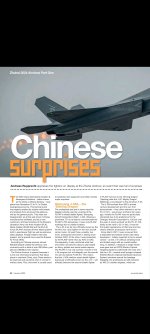
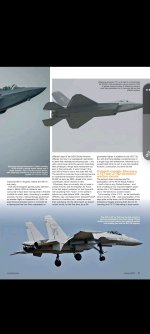
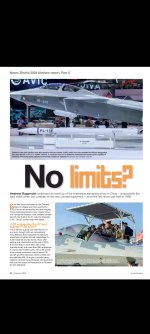
One of the most anticipated unveilings at the Zhuhai Airshow was the J-35A stealth fighter, a high-tech addition to China’s air force. After more than a decade of development, the J-35A now positions China as the second nation, after the United States, to field two different types of stealth fighter jets. Its design is notably similar to the American F-35 but with some key differences that make it uniquely Chinese.
The J-35A features a twin-engine configuration, offering greater thrust and stability compared to the F-35's single-engine design. With an expected takeoff weight nearing 30 tons, the J-35A is classified as a medium-weight fighter, boasting versatility in air combat as well as precision strike capabilities. It is engineered for both air-to-air combat and precision-guided strikes against both ground and naval targets. A key feature of the J-35A is its internal weapons bay, which can carry a variety of air-launched cruise missiles and other precision-guided munitions.
Its ability to conduct a wide range of missions makes it a multi-role asset for China’s air force, poised to challenge U.S. and allied air superiority in the region. With stealth features that reduce radar detection, the J-35A presents a formidable threat to adversaries looking to maintain air superiority.
HQ-19 Anti-Ballistic Missile System: Advanced Missile Defense
Another significant breakthrough unveiled at the airshow was the HQ-19, an advanced anti-ballistic missile defense system developed to rival the U.S. Terminal High Altitude Area Defense (THAAD) system. The HQ-19 is mounted on a high-mobility 8x8 vehicle, which allows it to quickly redeploy after launching its interceptors. Equipped with six interceptor missiles, the system is designed to engage and destroy incoming ballistic missiles before they reach their target.
What sets the HQ-19 apart is its potential to intercept not just traditional ballistic missiles but also emerging threats like hypersonic glide vehicles, which travel at speeds greater than five times the speed of sound. Senior Colonel Du Wenlong, a military expert from the PLA Academy of Military Sciences, highlighted the system’s capability to track and target these high-speed threats using advanced radar systems.
The HQ-19’s ability to intercept missiles outside the Earth’s atmosphere and engage targets with pinpoint accuracy makes it an essential asset in China’s missile defense strategy. As global missile threats evolve, systems like the HQ-19 are becoming key to national security, ensuring China can effectively counter potential adversaries’ long-range missile attacks.
Jetank: The Revolutionary Drone Mothership
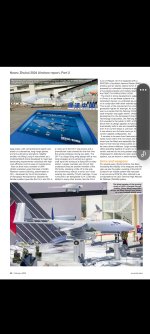
In one of the most innovative displays of the airshow, China introduced the Jetank, a massive unmanned aerial vehicle (UAV) designed to act as a drone mothership. With a wingspan of 25 meters (82 feet) and a maximum takeoff weight of 16 tons, the Jetank is one of the largest UAVs in China’s arsenal. What makes it unique is its capability to carry up to six tons of payload, including missiles, bombs, and smaller drones.
The Jetank can carry and deploy a variety of drones, making it an advanced aerial deployment platform. It has eight external hardpoints for mounting weapons and a quickly replaceable mission module that enables the launch of different types of drones. As drone warfare continues to evolve, the Jetank offers an innovative solution for large-scale drone deployment, making it a significant force multiplier in both offensive and reconnaissance missions.
The concept of a drone mothership takes the principle of an aircraft carrier and adapts it to the air, offering a platform that can launch multiple drones at once while keeping the carrier itself out of harm’s way. This game-changing capability positions China at the forefront of autonomous warfare and highlights the country’s investment in drone technologies, which are playing an increasingly important role in modern conflicts.
Orca: A Stealth Drone Ship for Naval Operations
In a groundbreaking move for naval warfare, China also revealed the Orca, a high-speed, stealth unmanned surface combat vessel. Designed to be highly radar-resistant, the Orca features a trimaran hull structure that gives it unparalleled stability in harsh seas. It has a length of 58 meters (190 feet) and a beam of 23 meters (75 feet), making it a formidable presence in any naval engagement.
The Orca is an autonomous vessel capable of operating independently for extended periods, with a top speed of 40 knots and a range of up to 4,000 nautical miles. It can carry a variety of weapons, including anti-ship missiles, rockets, and air defense systems, and is equipped with a vertical launch system and phased array radars. Additionally, it features a platform for launching unmanned helicopters and small underwater drones for reconnaissance and anti-submarine warfare.
This stealth vessel highlights China’s growing emphasis on autonomous maritime operations, paving the way for future naval strategies that minimize human involvement and maximize combat efficiency. The Orca could become a critical asset in protecting China’s vital maritime routes and asserting control over key waterways in the Indo-Pacific region.
PL-15E Air-to-Air Missile: A Long-Range Advantage
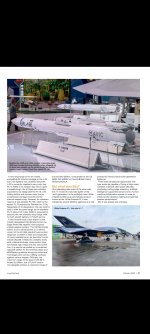
China’s air-to-air missile arsenal was also bolstered by the introduction of the PL-15E, a long-range missile designed to fit within the payload bay of China’s stealth fighters, including the J-35A. The PL-15E features folding tailfins, making it compact enough to fit into the sleek fuselage of stealth aircraft. With a range of up to 200 kilometers, the PL-15E has a speed that exceeds Mach 5, giving it the edge over many Western counterparts.
As one of China’s most potent air-to-air missiles, the PL-15E is capable of taking down enemy aircraft at extended ranges, further enhancing China’s air superiority in the region. Its speed and range put it on par with the U.S.’s AIM-120 Advanced Medium-Range Air-to-Air Missile (AMRAAM), ensuring China’s air force can defend against any adversary with advanced capabilities.
Su-57 Stealth Fighter: Russia and China’s Strengthened Military Ties
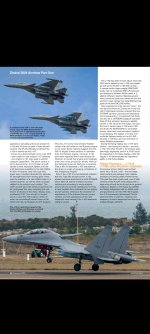
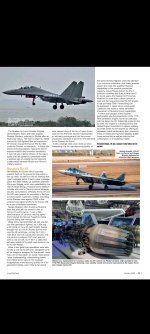
In a display of growing Sino-Russian military cooperation, Russia’s Su-57 stealth fighter made its debut at the Zhuhai Airshow. The Su-57, Russia’s most advanced fighter jet, signifies the deepening ties between China and Russia in defense and technology. The joint development and potential export of the Su-57 represent a new phase in military collaboration between the two nations, aimed at countering Western influence.
At the airshow, the first contracts were signed for the export of the Su-57, with several nations likely to become future customers. The Su-57’s introduction alongside China’s own stealth fighters underscores the growing synergy between Russia and China’s military industries and their shared goal of challenging the global dominance of the U.S. and NATO.
China’s Military Evolution
The unveiling of these groundbreaking weapons at the Zhuhai Airshow showcases the breadth of China’s ambitions to become a dominant military power. From advanced stealth fighters and missile defense systems to autonomous drone ships and hypersonic missiles, China is making significant strides in modernizing its military technology. As global power dynamics shift, particularly in the Indo-Pacific region, these innovations could prove pivotal in shaping future conflicts.
China’s rapidly advancing defense capabilities represent a challenge not only to regional competitors but to global military powers. As the country continues to invest heavily in new technologies, we are likely to see even more advanced systems in the coming years. The Zhuhai Airshow was just a glimpse into the future of warfare, where AI, drones, and stealth technologies will dominate battlefields across the globe.