JF-17 PFX program

I don't think PFX is or can be a clean sheet design. IF PAF has learned anything from Azm its that they cannot do a clean sheet design. JF-17P is PFX.

Brother that's the optimistic view lol.
Hopefully it doesn't get into quantum air warfare analysis territory.

I genuinely hope it's a play to bring all of the JF-17's airframe production into PAC, mastering how to integrate weapons and subsystems onto it, and then moving towards sensible and feasible updates (e.g., swapping out to more powerful powerplants, incorporating more composites, etc). Nothing crazy like redesigning or enlarging the airframe.
 
Last edited:
https://go.ezodn.com/ads/charity/pr...ervation.org/take-action/donate/&ffid=2&co=PK
Ezoic

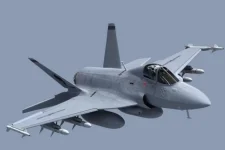
The PFX's twin-engine design promises improved maneuverability and greater payload capacity, while the use of composite materials is expected to reduce its radar signature. These advancements are intended to make the JF-17 PFX a serious competitor to other advanced fighter jets in the region, such as India’s Tejas MkII. The latter, under development by India, highlights the ongoing strategic rivalry between the two nations. As India works on an improved version of its domestic fighter jet, focusing on increased range and enhanced avionics, Pakistan seeks to counterbalance this with a more advanced and capable aircraft.

The PFX program is part of Pakistan's broader strategy to reduce reliance on foreign suppliers and strengthen domestic defense production capabilities. Currently, 58% of JF-17 components are manufactured locally by PAC, but Pakistan aims to increase this share to achieve full production autonomy for the PFX. This initiative is not only about modernizing the country's aerial capabilities but also about positioning Pakistan as an emerging player in the global military aviation industry.

https://go.ezodn.com/ads/charity/pr...tps://joinourvillage.org/donate/&ffid=2&co=PK
Ezoic

However, the project faces significant challenges. The development of the JF-17 PFX will require substantial investments, advanced technical expertise, and efficient resource management. Pakistan will also need to navigate a complex international environment, maintaining its strategic collaboration with China while diversifying its partnerships.

The JF-17 PFX represents a decisive step for Pakistan’s military aviation, with its significance extending beyond the country's borders to the historical strategic rivalry between Pakistan and India. Since their partition in 1947, the two nations have competed not only over contested territories such as Kashmir but also for military supremacy in a highly volatile region. In response to India’s military acquisitions, including French Rafale jets and indigenous developments like the Tejas MkII, Pakistan relies on the PFX to establish credible deterrence and maintain its strategic position.

https://go.ezodn.com/ads/charity/pr...tps://joinourvillage.org/donate/&ffid=2&co=PK
Ezoic

As Pakistan seeks to enhance its technological self-reliance and modernize its fleet with a 4.5-generation fighter jet, India is advancing the development of the Tejas MkII to maintain its strategic edge. These two aircraft, designed to compete in terms of range, avionics, and offensive capabilities, symbolize a technological race aimed at securing aerial supremacy. In this context, the success of the JF-17 PFX will not only be evaluated on its technical performance but also on its ability to influence the balance of power in South Asia, a region where any military advancement is closely monitored by neighbors and the international community.

Future_of_Pakistans_Air_Power_Takes_Shape_With_JF-17_PFX_Fighter_Jet-85aa44fd.webp

Ezoic

https://go.ezodn.com/ads/charity/pr...tps://joinourvillage.org/donate/&ffid=2&co=PK
 
Hopefully it doesn't get into quantum air warfare analysis territory.

I genuinely hope it's a play to bring all of the JF-17's airframe production into PAC, mastering how to integrate weapons and subsystems onto it, and then moving towards sensible and feasible updates (e.g., swapping out to more powerful powerplants, incorporating more composites, etc). Nothing crazy like redesigning or enlarging the airframe.
Hopefully no saga like this
To view this content we will need your consent to set third party cookies.
For more detailed information, see our cookies page.
 
Hopefully no saga like this
To view this content we will need your consent to set third party cookies.
For more detailed information, see our cookies page.

I wish we'd get there at least...right now...I'm worried PFX is Jabberwocky.

To view this content we will need your consent to set third party cookies.
For more detailed information, see our cookies page.
.
 
I wish we'd get there at least...right now...I'm worried PFX is Jabberwocky.

To view this content we will need your consent to set third party cookies.
For more detailed information, see our cookies page.
.

It need not be. If the key performance metrics were defined and a realistic design were extrapolated, with current available partner technology, with the help of partner consultants. Then it is just a matter of building each sub-system locally, seeking assistance where necessary. An evolutionary process.
 
Last edited:
1. Most recently Russians were in Pakistan for the second time to help on some ToT on the AL-31 core. Just as they did before on the TD-93. It’s more flexible but also opaque than you think.

2. Russia does not support or otherwise - it’s plain cash - and the same process as with RD-93 will follow. First 100 came from China - then the direct connection was with Klimov for overhaul ToT and even engine improvements.
“The JF-17 program" was initially a Chinese-Pakistani cooperative project. Later, due to engine problems, it was changed to a tripartite program between China, Pakistan and Russia. Later, Russia withdrew from the program due to strong opposition from India (a VIP customer of Russian military industry). The engine issue was changed to a “Russia-China, China-Pakistan” deal. Later, the Chinese copycat model WS13 did not get Pakistan's approval, and Pakistan still decided to continue to use Russian engines. ------ This is information from Chinese media.

As time continues to evolve, it is inevitable that Russia will engage in direct exchanges with Pakistan on the engine for the JF-17. However, the authorized production is another level. Unless the Indian government completely falls into the US camp (which is hardly likely), Russia's deep military cooperation with Pakistan is bound to be protested by India. Of course, Russia could also use this approach to threaten India to buy more Russian weapons.

Analyzing the international situation, the likelihood of India purchasing the Su-57 (possibly including a production line and modest technology transfer) is very high. Since Russia is currently heavily dependent on China for support, they must consider the implications for China of “selling Su-57s to India”.
So the likely scenario is:
Step 1: Russia sells a small number of Su-57s (not more than 12) to China. (It is also possible for Russia to reassure China in other ways to avoid protests from China.)
Step 2: Russia sells a large number of Su-57s to India, some of which will be produced locally in Russia and most of which will be produced under license in India. May come with some technology transfer. But this is surely a huge deal.
India has no other better option at the moment and Russia is in dire need of a lot of money. So, Russia's actions are predictable.

I am not sure what model CATIC or SAC follow - maybe @Michael can shed some light
I'm sorry, I don't know what you want to know.
If you want to understand the complete process of “Su27-J16”, there are many videos on Youtube.com. I can briefly explain its stages.
Step 1. China buys the complete original Su-27 directly from Russia.
Step 2. China buys all parts from Russia and assembles them at SAC, i.e. J-11, which can only use Russian missiles.
Step 3: China modified the J-11 and upgraded the fire control system, i.e. J-11A, which can use both Chinese and Russian missiles.
Step 4. China further improves and fully upgrades the J-11A and localizes all the parts, i.e. J-11B.
What happens after this is well known. If we use this process to describe the JF-17, it is probably at “Step 3”.

I don't know what Pakistan's goal is in its quest for “PFX”. If it is something like the “Su27-J16” process to create Pakistan's “SAC”, I think it may be more difficult than many people think.

The biggest difficulty is not “whether China is willing to help”. The real greatest difficulty comes from within Pakistan.
I come from a “system family” and have lived in the “system” since I was a child. After I graduated from school, I worked within "the System" for many years before leaving it. Therefore, I am deeply aware of the heavy price paid behind China's achievements today.
 
Last edited:
1. Most recently Russians were in Pakistan for the second time to help on some ToT on the AL-31 core. Just as they did before on the TD-93. It’s more flexible but also opaque than you think.

2. Russia does not support or otherwise - it’s plain cash - and the same process as with RD-93 will follow. First 100 came from China - then the direct connection was with Klimov for overhaul ToT and even engine improvements.
tot for al-31
why would we need that?
 
“The JF-17 program" was initially a Chinese-Pakistani cooperative project. Later, due to engine problems, it was changed to a tripartite program between China, Pakistan and Russia. Later, Russia withdrew from the program due to strong opposition from India (a VIP customer of Russian military industry). The engine issue was changed to a “Russia-China, China-Pakistan” deal. Later, the Chinese copycat model WS13 did not get Pakistan's approval, and Pakistan still decided to continue to use Russian engines. ------ This is information from Chinese media.

As time continues to evolve, it is inevitable that Russia will engage in direct exchanges with Pakistan on the engine for the JF-17. However, the authorized production is another level. Unless the Indian government completely falls into the US camp (which is hardly likely), Russia's deep military cooperation with Pakistan is bound to be protested by India. Of course, Russia could also use this approach to threaten India to buy more Russian weapons.

Analyzing the international situation, the likelihood of India purchasing the Su-57 (possibly including a production line and modest technology transfer) is very high. Since Russia is currently heavily dependent on China for support, they must consider the implications for China of “selling Su-57s to India”.
So the likely scenario is:
Step 1: Russia sells a small number of Su-57s (not more than 12) to China. (It is also possible for Russia to reassure China in other ways to avoid protests from China.)
Step 2: Russia sells a large number of Su-57s to India, some of which will be produced locally in Russia and most of which will be produced under license in India. May come with some technology transfer. But this is surely a huge deal.
India has no other better option at the moment and Russia is in dire need of a lot of money. So, Russia's actions are predictable.


I'm sorry, I don't know what you want to know.
If you want to understand the complete process of “Su27-J16”, there are many videos on Youtube.com. I can briefly explain its stages.
Step 1. China buys the complete original Su-27 directly from Russia.
Step 2. China buys all parts from Russia and assembles them at SAC, i.e. J-11, which can only use Russian missiles.
Step 3: China modified the J-11 and upgraded the fire control system, i.e. J-11A, which can use both Chinese and Russian missiles.
Step 4. China further improves and fully upgrades the J-11A and localizes all the parts, i.e. J-11B.
What happens after this is well known. If we use this process to describe the JF-17, it is probably at “Step 3”.

I don't know what Pakistan's goal is in its quest for “PFX”. If it is something like the “Su27-J16” process to create Pakistan's “SAC”, I think it may be more difficult than many people think.

The biggest difficulty is not “whether China is willing to help”. The real greatest difficulty comes from within Pakistan.
I come from a “system family” and have lived in the “system” since I was a child. After I graduated from school, I worked within "the System" for many years before leaving it. Therefore, I am deeply aware of the heavy price paid behind China's achievements today.
I meant the operating model for CAC and SAC - as in how are they run and if they are for profit in their research?

Compared to PAC model of funded by Pakistani taxes and wholly owned by state but also seeking export profit.

Thank for your other explanation
 
Russia is slowly becoming irrelevant in terms of cutting edge tech and even engines.

Almost all its offerings are still essentially based on 1980s systems. SU-57 is nowhere near J-20.

20 years from now they will still be dependant on selling developments of the SU-27, T-90, etc.
 
Russia is slowly becoming irrelevant in terms of cutting edge tech and even engines.

Almost all its offerings are still essentially based on 1980s systems. SU-57 is nowhere near J-20.

20 years from now they will still be dependant on selling developments of the SU-27, T-90, etc.
I'd say this would pretty much be the time to try securing an industrial-scale tech-transfer: start with license manufacturing the RD-93MA with a mix of local and key Russian parts, but slowly localize by investing in the domestic gas turbine base.
 
I meant the operating model for CAC and SAC - as in how are they run and if they are for profit in their research?

Compared to PAC model of funded by Pakistani taxes and wholly owned by state but also seeking export profit.

Thank for your other explanation
1982-2008. China has an organization called “Commission for Science, Technology and Industry for National Defense (COSTIND)”. It was responsible for all military industries in China.
2008. The organization was abolished as part of the Chinese government's institutional reforms. All of China's state-owned military industrial enterprises were completely reformed. Currently, they are organized by the “Ministry of Industry and Information Technology (MIIT)” and the “State-owned Assets Supervision and Administration Commission of the State Council (SASAC)”. (SASAC). They are self-financing, independent State-owned enterprises. They operate in both civil and military industries. Within MIIT, there is a subordinate organization called “State Administration of Science, Technology and Industry for National Defense (SASTIND)”, which is in charge of military industry related affairs. It is responsible for the management and coordination of military industry-related matters. However, it does not manage related military industry enterprises.

In terms of actual project implementation, there are three main scenarios:

1. National priority projects. Here the project is the highest priority level, which is set up by the military at the highest level, and is jointly participated by the relevant “enterprises + universities + research institutions”. Funding is granted at the time the project is established.

2. Conventional military industrial projects. It is a project initiated by the army, with the participation of all relevant “enterprises + universities + research institutions” in the form of competitive bidding. The organization that obtains the bid will immediately receive funding.

3. Self-established projects by enterprises. It is independently researched and developed by the relevant “enterprises + universities + research institutions”. The related costs are also borne by these organizations themselves. If the project is ultimately favored by the army, the army will reimburse the R&D funds. If the project is not favored by the army, these institutions need to find a way out for the project.

China has complete and publicized regulations related to military industrial production and research and development, and you can consult these documents.
Initially, China's military industries were of the first model. They gradually shifted to the second model. Now, the third model is more prevalent. Many of the things we saw during the Zhuhai Airshow were the third model.
 
https://go.ezodn.com/ads/charity/proxy?p_id=9be20929-6b8e-490f-6943-f7cab6f980b4&d_id=350959&imp_id=8789040447508491&c_id=1084&l_id=10016&url=https://www.amazonconservation.org/take-action/donate/&ffid=2&co=PK
Ezoic

The PFX's twin-engine design promises improved maneuverability and greater payload capacity, while the use of composite materials is expected to reduce its radar signature. These advancements are intended to make the JF-17 PFX a serious competitor to other advanced fighter jets in the region, such as India’s Tejas MkII. The latter, under development by India, highlights the ongoing strategic rivalry between the two nations. As India works on an improved version of its domestic fighter jet, focusing on increased range and enhanced avionics, Pakistan seeks to counterbalance this with a more advanced and capable aircraft.

The PFX program is part of Pakistan's broader strategy to reduce reliance on foreign suppliers and strengthen domestic defense production capabilities. Currently, 58% of JF-17 components are manufactured locally by PAC, but Pakistan aims to increase this share to achieve full production autonomy for the PFX. This initiative is not only about modernizing the country's aerial capabilities but also about positioning Pakistan as an emerging player in the global military aviation industry.

https://go.ezodn.com/ads/charity/proxy?p_id=9be20929-6b8e-490f-6943-f7cab6f980b4&d_id=350959&imp_id=8415862707525441&c_id=1134&l_id=10016&url=https://joinourvillage.org/donate/&ffid=2&co=PK
Ezoic

However, the project faces significant challenges. The development of the JF-17 PFX will require substantial investments, advanced technical expertise, and efficient resource management. Pakistan will also need to navigate a complex international environment, maintaining its strategic collaboration with China while diversifying its partnerships.

The JF-17 PFX represents a decisive step for Pakistan’s military aviation, with its significance extending beyond the country's borders to the historical strategic rivalry between Pakistan and India. Since their partition in 1947, the two nations have competed not only over contested territories such as Kashmir but also for military supremacy in a highly volatile region. In response to India’s military acquisitions, including French Rafale jets and indigenous developments like the Tejas MkII, Pakistan relies on the PFX to establish credible deterrence and maintain its strategic position.

https://go.ezodn.com/ads/charity/proxy?p_id=9be20929-6b8e-490f-6943-f7cab6f980b4&d_id=350959&imp_id=2819923205524280&c_id=1134&l_id=10016&url=https://joinourvillage.org/donate/&ffid=2&co=PK
Ezoic

As Pakistan seeks to enhance its technological self-reliance and modernize its fleet with a 4.5-generation fighter jet, India is advancing the development of the Tejas MkII to maintain its strategic edge. These two aircraft, designed to compete in terms of range, avionics, and offensive capabilities, symbolize a technological race aimed at securing aerial supremacy. In this context, the success of the JF-17 PFX will not only be evaluated on its technical performance but also on its ability to influence the balance of power in South Asia, a region where any military advancement is closely monitored by neighbors and the international community.

View attachment 84804

Ezoic

https://go.ezodn.com/ads/charity/proxy?p_id=9be20929-6b8e-490f-6943-f7cab6f980b4&d_id=350959&imp_id=7291487067571340&c_id=1134&l_id=10016&url=https://joinourvillage.org/donate/&ffid=2&co=PK


Why are you posting links to donate money to an Amazon charity project? ...and again! A twin-engined JF-17 is so much way out of reality, that I really ask, when then posting such stuff!
 
Why are you posting links to donate money to an Amazon charity project? ...and again! A twin-engined JF-17 is so much way out of reality, that I really ask, when then posting such stuff!
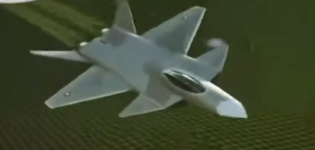
Additionally, the only twin engined model seen was this which in no way looks like a JF17 (a smaller J20 or possibly a double engine larger manned Bayraktar Kizelilma seems more apt)
1732808638565.png
 
why is PAF so obsessed with putting canards on every design? I know this thing is just a cgi but during AZM, there was a full discussion on old PDF about PAF wanting canards on AZM before it got cancelled
 
why is PAF so obsessed with putting canards on every design? I know this thing is just a cgi but during AZM, there was a full discussion on old PDF about PAF wanting canards on AZM before it got cancelled
It was actually the guy who now runs NaqCode lol.

This is a result of PAF babus only ever specializing in structures or aerodynamics. So babus with aerodynamics degrees think of canards as God's gift on Earth.


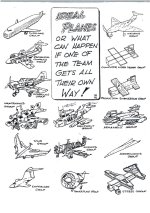
Even though this is a joke in the aerospace community, this happens in PAF because the babus are so limited in their scope but their confidence is other worldly:
1732810557597.jpeg
 

Users who are viewing this thread

Back
Top