Iranian Space program | News and Discussions

To view this content we will need your consent to set third party cookies.
For more detailed information, see our cookies page.


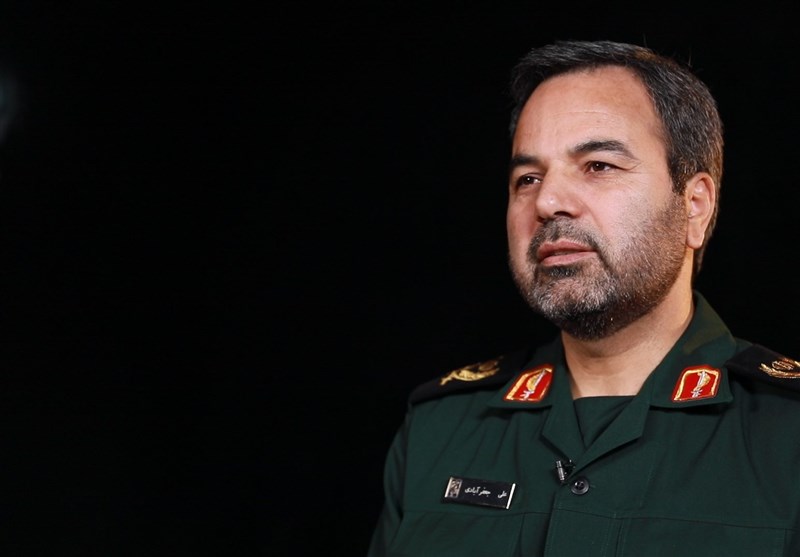
first orbital launch of Qaem-105 scheduled for next Iranian year and reaching 36,000km orbit within 4-5 years
 
To view this content we will need your consent to set third party cookies.
For more detailed information, see our cookies page.


first orbital launch of Qaem-105 scheduled for next Iranian year and reaching 36,000km orbit within 4-5 years

Yup.
 
To view this content we will need your consent to set third party cookies.
For more detailed information, see our cookies page.


first orbital launch of Qaem-105 scheduled for next Iranian year and reaching 36,000km orbit within 4-5 years


This guy lacks credibility. He cannot even remember his previous promise from less than a year ago:

At the start of 2024 he’s said GEO WITHIN 3 years and now it’s 4-5 years. He’s just throwing out random timelines at this point.


This is already way behind the Raisi admin timeline of GEO launch by 2025 set in 2021
with the Supreme Council of Space.

IRGC-SF might be ahead of ISA (not saying much). But clearly both programs are suffering from organizational issues. Supreme leader needs to step in at this point and restructure both organizations and install key individuals with vision and drive and organizational accountability.

IRGC-SF talks as if space is some hobby project rather than a serious strategic national security risk if not achieved by 2050.
 
Last edited:

Iran launches first space tug, sets new record for liftoff playloads​

Friday, 06 December 2024 8:18 AM [ Last Update: Friday, 06 December 2024 8:24 AM ]


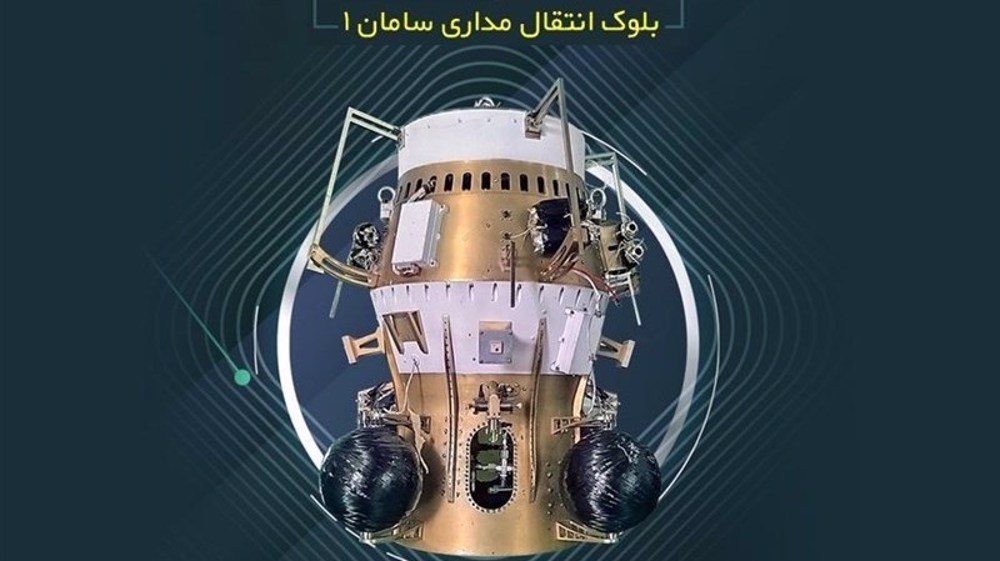
Iran’s indigenous Saman-1 orbital transfer block (Photo by Tasnim news agency)
In a milestone for Iran’s space sector, a space tug domestically designed and manufactured by Iranian experts and technicians has been launched into space aboard a homegrown satellite launch vehicle (SLV).

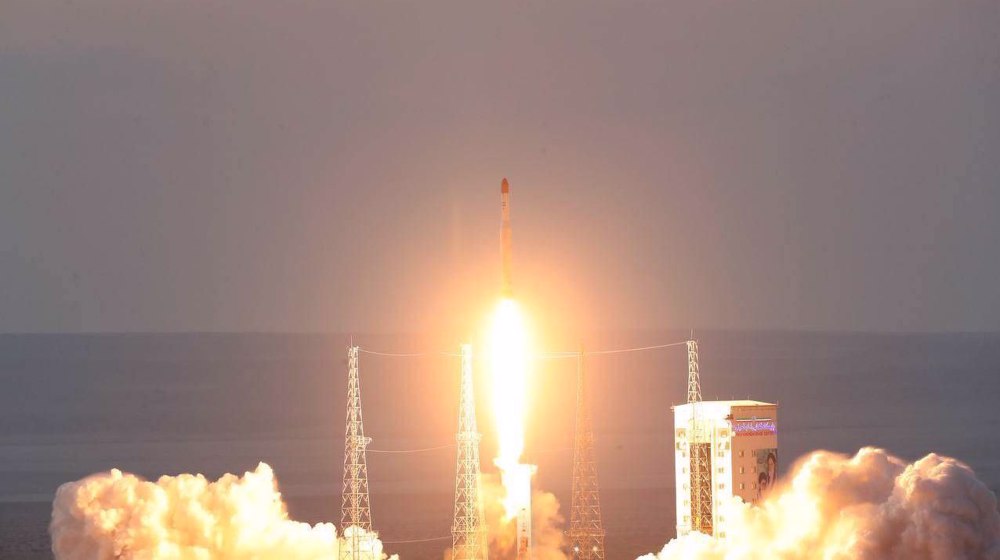
The Saman-1, along with a CubeSat and a research payload, was successfully sent into space from the Imam Khomeini Space Launch Terminal, southeast of Semnan, on Friday morning using a Simorgh launcher.

The payloads were placed in an orbit around the Earth, with an apogee of 410 kilometers and a perigee of 300 kilometers.

Simorgh is a two-stage SLV with liquid fuel developed by the Iranian Ministry of Defense.

In its eighth launch, the Simorgh set a new record for the liftoff of payloads. During this multi-phase mission, it successfully placed the Saman-1 orbital transfer block and two other research payloads, weighing nearly 300 kilograms, into orbit.

Iran achieves ‘super resolution’ satellite imaging technology
The head of Iran’s Space Agency has announced the successful production of “super resolution” satellite images.
Designed and developed by technicians from the Iranian Space Research Center (ISRC), the Saman-1 system is designed to place satellites in higher orbits, reducing costs and eliminating the need for large launch vehicles with high fuel consumption.

The space tug was test-launched in October 2022. Reflecting on the system, Hassan Salaryieh, chief of Iran’s space agency said that the system "means a quicker and smoother process of obtaining the orbital point synchronized with the Earth once a satellite elevates its orbital height from the geostationary orbit to the operational one.”

One of the payloads of today's launcher was, according to Iranian media, the Fakhr-1 communication satellite. This satellite, developed by experts from the Ministry of Defense's Iran Electronics Industries, was placed into a 410-kilometer orbit.

Moments ago, the satellite sent its first signal to ground stations.

Despite sanctions imposed by Western countries in recent years, Iran has taken giant strides in the civilian space program.

The country is among the world’s top 10 nations capable of developing and launching satellites.

On September 14, Iran successfully sent into orbit the domestically-developed Chamran 1 research satellite, registering another impressive stride in the country’s space program.

Press TV’s website can also be accessed at the following alternate addresses:

www.presstv.co.uk
 
To view this content we will need your consent to set third party cookies.
For more detailed information, see our cookies page.


second successful orbital launch of Simorgh SLV places 3 satellites into elliptical orbit

Saman-1, Fakhr-1 and one other satellite was launched into orbit

Total weight of the three satellites was allegedly 300kg - a new record payload launched into LEO by Iran (albeit into a lower altitude than the last launch)

--

Simorgh's record in 2024:

2/2 successful orbital launches

6 satellites inserted into LEO (3 with each launch)

quite impressive considering the 4-5 failed launches in a row from 2017-2021.

ISA has fixed all the problems and improved reliability and seem to have improved its payload too (originally stated at 250kg)
 
To view this content we will need your consent to set third party cookies.
For more detailed information, see our cookies page.


second successful orbital launch of Simorgh SLV places 3 satellites into elliptical orbit

Saman-1, Fakhr-1 and one other satellite was launched into orbit

Total weight of the three satellites was allegedly 300kg - a new record payload launched into LEO by Iran (albeit into a lower altitude than the last launch)

--

Simorgh's record in 2024:

2/2 successful orbital launches

6 satellites inserted into LEO (3 with each launch)

quite impressive considering the 4-5 failed launches in a row from 2017-2021.

ISA has fixed all the problems and improved reliability and seem to have improved its payload too (originally stated at 250kg)


Is it Simorgh or Sarir? Or did they drop all these names.
Sarir was just Simorgh with a redesigned 2nd stage. So if they “fixed” Simorgh then it’s really just Sarir or Simorgh-2

Great to see ISA having success finally.

Not sure what it means for Zoljanah at this point or what the point between the two SLVs are (Simorgh-2 vs Zoljanah) as they are both Small lift LEO SLVs
 
To view this content we will need your consent to set third party cookies.
For more detailed information, see our cookies page.
 
To view this content we will need your consent to set third party cookies.
For more detailed information, see our cookies page.
 

Iran launches first space tug, sets new record for liftoff playloads​

Friday, 06 December 2024 8:18 AM [ Last Update: Friday, 06 December 2024 8:24 AM ]


Iran’s indigenous Saman-1 orbital transfer block (Photo by Tasnim news agency)
In a milestone for Iran’s space sector, a space tug domestically designed and manufactured by Iranian experts and technicians has been launched into space aboard a homegrown satellite launch vehicle (SLV).

The Saman-1, along with a CubeSat and a research payload, was successfully sent into space from the Imam Khomeini Space Launch Terminal, southeast of Semnan, on Friday morning using a Simorgh launcher.

The payloads were placed in an orbit around the Earth, with an apogee of 410 kilometers and a perigee of 300 kilometers.

Simorgh is a two-stage SLV with liquid fuel developed by the Iranian Ministry of Defense.

In its eighth launch, the Simorgh set a new record for the liftoff of payloads. During this multi-phase mission, it successfully placed the Saman-1 orbital transfer block and two other research payloads, weighing nearly 300 kilograms, into orbit.

Iran achieves ‘super resolution’ satellite imaging technology
The head of Iran’s Space Agency has announced the successful production of “super resolution” satellite images.
Designed and developed by technicians from the Iranian Space Research Center (ISRC), the Saman-1 system is designed to place satellites in higher orbits, reducing costs and eliminating the need for large launch vehicles with high fuel consumption.

The space tug was test-launched in October 2022. Reflecting on the system, Hassan Salaryieh, chief of Iran’s space agency said that the system "means a quicker and smoother process of obtaining the orbital point synchronized with the Earth once a satellite elevates its orbital height from the geostationary orbit to the operational one.”

One of the payloads of today's launcher was, according to Iranian media, the Fakhr-1 communication satellite. This satellite, developed by experts from the Ministry of Defense's Iran Electronics Industries, was placed into a 410-kilometer orbit.

Moments ago, the satellite sent its first signal to ground stations.

Despite sanctions imposed by Western countries in recent years, Iran has taken giant strides in the civilian space program.

The country is among the world’s top 10 nations capable of developing and launching satellites.

On September 14, Iran successfully sent into orbit the domestically-developed Chamran 1 research satellite, registering another impressive stride in the country’s space program.

Press TV’s website can also be accessed at the following alternate addresses:

www.presstv.co.uk
Iran's space industry reminds me of a horse that has been chomping at the bit for too long.

Released from erstwhile artificial (internal!) political hobbles, it is now taking flight accordingly.

What really caught my eye in this post were the two links to the ‘super resolution’ satellite imaging technology achieved by Iran.

Extracting sub-meter images from Khayyam's standard 1m capability cannot be a small thing.

I must then ask the Q whether this technology can be so applied to existing or upcoming Iranian Earth Observation satellites.

Thanks.

Piet.
 
Is it Simorgh or Sarir? Or did they drop all these names.
Sarir was just Simorgh with a redesigned 2nd stage. So if they “fixed” Simorgh then it’s really just Sarir or Simorgh-2

Great to see ISA having success finally.

Not sure what it means for Zoljanah at this point or what the point between the two SLVs are (Simorgh-2 vs Zoljanah) as they are both Small lift LEO SLVs
it was Simorgh not Sarir

first Sarir test launch is scheduled for 2026-27
 
Iran's space industry reminds me of a horse that has been chomping at the bit for too long.

Released from erstwhile artificial (internal!) political hobbles, it is now taking flight accordingly.
indeed.

I remember commenting a year or so ago that the space programme was close to critical mass and achieving a lot of success. slowly slowly then all at once.

Simorgh was only ever one launch away from success

Zoljanah is close to first orbital launch

and Qaem series follows a modular and reliable approach

Extracting sub-meter images from Khayyam's standard 1m capability cannot be a small thing.

I must then ask the Q whether this technology can be so applied to existing or upcoming Iranian Earth Observation satellites.
that is Russian imaging technology and Khayyam is 300kg satellite, so not any time soon

but Iran has projects for 2m resolution and 1m resolution, should be reached later this decade
 
Iran's space program in 2024:

4 orbital launches (4/4 successful = 100% success rate)
2 orbital launches of Simorgh and 2 orbital launches of Qaem-100
8 satellites placed into orbit (6 by Simorgh and 2 by Qaem-100)
Highest ever orbit reached (750km by Qaem then 1100km elliptical by Simorgh)

3 more Iranian satellites were launched into orbit by Russia

total of 11 Iranian satellites placed into orbit in 2024 (highest ever)

2025?

At least 1 suborbital test launch of Qaem-105
Possibly 1 more orbital launch of Qaem-100
1 successful orbital launch of Zoljanah
At least 1 more successful orbital launch of Simorgh

100kg+ satellite placed into orbit
First launch from Shabahar space centre

2026?

Orbital launches of Qaem-105
Orbital launches of Zoljanah
First suborbital test launch of Sarir

200kg+ satellite placed into orbit
2m imaging resolution satellite placed into orbit
Launch of 5-10x microsats in one payload (likely Zoljanah)
 
Two things at least need to happen for an effective space program:

- reusable, reusable, reusable….
- at least one launch a month to carry at least one ton of payload and various orbits

Goal: indigenous GPS, networking, military
Time: by 2035.
 
Last edited:
Iran's space program in 2024:

4 orbital launches (4/4 successful = 100% success rate)
2 orbital launches of Simorgh and 2 orbital launches of Qaem-100
8 satellites placed into orbit (6 by Simorgh and 2 by Qaem-100)
Highest ever orbit reached (750km by Qaem then 1100km elliptical by Simorgh)

3 more Iranian satellites were launched into orbit by Russia

total of 11 Iranian satellites placed into orbit in 2024 (highest ever)

2025?

At least 1 suborbital test launch of Qaem-105
Possibly 1 more orbital launch of Qaem-100
1 successful orbital launch of Zoljanah
At least 1 more successful orbital launch of Simorgh

100kg+ satellite placed into orbit
First launch from Shabahar space centre

2026?

Orbital launches of Qaem-105
Orbital launches of Zoljanah
First suborbital test launch of Sarir

200kg+ satellite placed into orbit
2m imaging resolution satellite placed into orbit
Launch of 5-10x microsats in one payload (likely Zoljanah)
i wonder if Zoljanah is a genuine SLV or its test bed for Soroush boosters
its first or second stage can do the job nicely
 

Users who are viewing this thread

Pakistan Defence Latest

Back
Top