Navigation
Install the app
How to install the app on iOS
Follow along with the video below to see how to install our site as a web app on your home screen.
Note: This feature may not be available in some browsers.
More options
Style variation
You are using an out of date browser. It may not display this or other websites correctly.
You should upgrade or use an alternative browser.
You should upgrade or use an alternative browser.
Syrian Civil War and The future of Syria after liberation
- Thread starter The SC
- Start date
More options
Who Replied?


ghazi52
THINK TANK: CONSULTANT


24 min ago
From CNN’s Eyad Kourdi
The Free Syrian Army (FSA), a US-backed coalition of rebel groups, said it has wrested “significant areas and positions” from government control in the east of the country and seized stockpiles of weapons.
In a statement to CNN, the group said it captured the Jabal al-Ghuram mountain in eastern Syria, as well as “several checkpoints” along the M2 highway, which runs between the Syrian capital Damascus and the Iraqi capital Baghdad.
Currently, the FSA is not part of the rebel groups encircling Damascus.
The FSA said it had also “seized a variety of heavy and light weaponry,” including rocket launchers, tanks, field artillery, howitzers and large quantities of ammunition.
It alleged that the Assad regime was “considering handing over these weapons to ISIS, which, along with the regime, works to destabilize the region, kill civilians and destroy the future of Syria.”
The FSA did not provide evidence for its claim that the Assad regime might give its weapons to ISIS, the Islamist group that sprung up from the chaos during the civil war in Syria.
Some observers have feared that the fluid situation in Syria, following the swift rebel offensive and looming collapse of the Assad regime, could lead to a resurgence of groups like ISIS.
The FSA said it was “working to improve Syria’s future.
Syrian rebel group says it captured parts of eastern Syria and regime weapons
From CNN’s Eyad Kourdi
The Free Syrian Army (FSA), a US-backed coalition of rebel groups, said it has wrested “significant areas and positions” from government control in the east of the country and seized stockpiles of weapons.
In a statement to CNN, the group said it captured the Jabal al-Ghuram mountain in eastern Syria, as well as “several checkpoints” along the M2 highway, which runs between the Syrian capital Damascus and the Iraqi capital Baghdad.
Currently, the FSA is not part of the rebel groups encircling Damascus.
The FSA said it had also “seized a variety of heavy and light weaponry,” including rocket launchers, tanks, field artillery, howitzers and large quantities of ammunition.
It alleged that the Assad regime was “considering handing over these weapons to ISIS, which, along with the regime, works to destabilize the region, kill civilians and destroy the future of Syria.”
The FSA did not provide evidence for its claim that the Assad regime might give its weapons to ISIS, the Islamist group that sprung up from the chaos during the civil war in Syria.
Some observers have feared that the fluid situation in Syria, following the swift rebel offensive and looming collapse of the Assad regime, could lead to a resurgence of groups like ISIS.
The FSA said it was “working to improve Syria’s future.
ghazi52
THINK TANK: CONSULTANT
Assad regime's military sends texts to Syrians, vowing to defend the country
CNN’ Eyad KourdiSyrian President Bashar al-Assad regime’s military has sent a message to residents assuring them that it will continue to defend the country, as rebels say they are circling in on the capital Damascus.
“The Syrian Arab Army, as always, continues its national and constitutional duties to defend Syria and its people, and it will restore security and stability to all parts of our homeland,” the military said in a text sent via its cell providers across the country on Saturday evening.
But some of the Syrian regime’s recent statements have appeared at odds with events on the ground.
The Syrian regime has denied it is in retreat, but videos geolocated by CNN appeared to show Assad regime forces leaving neighborhoods in Damascus just a few miles from the presidential palace.
ghazi52
THINK TANK: CONSULTANT
Israel is watching Syria "very closely," with focus on Iran
From Tamar Michaelis and CNN's Mohammed Tawfeeq
The Israeli military says it is monitoring the situation in Syria “very closely,” with a focus on “Iran’s movements and interests.”
During a visit to the Syrian border Saturday, the Israel Defense Forces chief of staff Herzi Halevi said Israeli forces were not intervening in events in Syria, but were “working to thwart and prevent threats in the area, and preparing plans for various options,” according to a statement from the IDF.
“The primary focus is on observing Iran’s movements and interests, which is our top priority,” Halevi said. “The secondary focus is on local (rebel) factions who are taking control of the area … and ensuring they do not mistakenly direct their actions toward us.”
Some background:
For the past decade or so, Iran has maintained a military presence in Syria as part of an effort to keep President Bashar al-Assad in power. It also uses the country as a supply route for channeling weapons to its regional proxies, including Hezbollah in Lebanon.
Halevi also said Israel was reinforcing its troops along the Syria border, and its forces were “determined to prevent any violation of the sovereignty of the state of Israel.”
Halevi’s remarks came after Israel said it had assisted United Nations forces in Syria in repelling an attack in an area close to the Israeli-occupied Golan Heights. Reacting to the incident, Israeli Foreign Minister Gideon Sa’ar reiterated that Israel “does not intervene in the internal conflict in Syria.”

That_Guy
THINK TANK: CONSULTANT

Just a reminder, pretty much every single major factions fighting in Syria is anti-zionist. From the kurds, to Assad, to HTS and SNA.
Not one of these factions are pro-Israel, or being backed by Israel.
Of course Israel has its preferences, but for them it's a matter of who's the least bad choice for them (in my view it was Assad as he kept the border quiet between Syria and Israeli occupied Golan).
Anyway, now that Assad is pretty much finished, the future of Syria is far more uncertain. What is certain is that the civil war will continue, but with 1 less major faction.
Not one of these factions are pro-Israel, or being backed by Israel.
Of course Israel has its preferences, but for them it's a matter of who's the least bad choice for them (in my view it was Assad as he kept the border quiet between Syria and Israeli occupied Golan).
Anyway, now that Assad is pretty much finished, the future of Syria is far more uncertain. What is certain is that the civil war will continue, but with 1 less major faction.
ghazi52
THINK TANK: CONSULTANT
Here's what you should know about Bashar al-Assad
From CNN staff
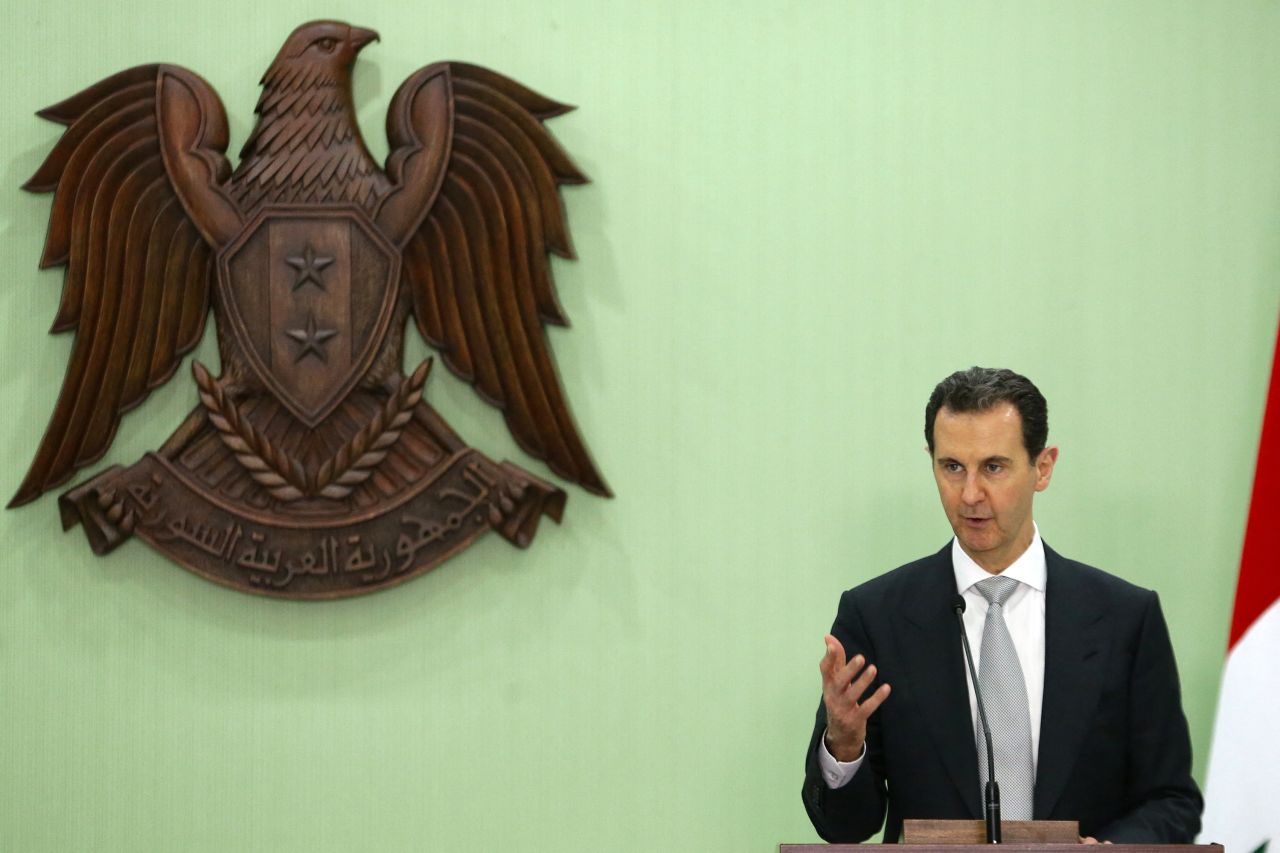
Syrian President Bashar al-Assad speaks during a press conference in Damascus, Syria, on July 16, 2023.
Louai Beshara/AFP/Getty Images/File
Syria’s civil war is back in the spotlight after a new rebel coalition launched a surprise attack, capturing two major cities and eyeing the capital of Damascus, shattering the stalemate of a war that never formally ended.
The renewed conflict, which since 2011 has killed more than 300,000 and sent nearly six million refugees out of the country, has wide ramifications across the region and beyond.
The 10-day lightning offensive caught many off guard in their attempt to topple Syrian President Bashar al-Assad’s regime.
But who is the Syrian dictator that the armed opposition groups are seeking to oust?
ghazi52
THINK TANK: CONSULTANT
Assad’s beginnings:
Bashar al-Assad’s rule:
- The Assad dynasty has been in power for 53 years, since Hafez al-Assad became president in 1971. He served for 29 years until his death in 2000. His regime lived on under the leadership of his son and current Syrian President Bashar al-Assad.
- In 1994, Hafez al-Assad’s oldest son and heir apparent, Basel, died in a car accident. Bashar was called back from medical training in Britain and groomed to take over his father’s role.
- To maintain its decades-long rule, the regime has killed hundreds of thousands of people, jailed dissidents and brutally displaced millions internally and abroad.
Bashar al-Assad’s rule:
- Assad was elected unopposed as president of Syria on July 10, 2000. On May 29, 2007, he ran again unopposed for president and was elected to a second seven-year term.
- At the height of the Arab Spring in 2011, pro-democracy demonstrators took to the streets in Syria calling for the ouster of Assad. The protesters were met with deadly force. As Assad’s forces crushed the pro-democracy movement, an armed opposition began to form made up of small organic militias and some defectors from the Syrian military. That same year, the United States, Jordan, Turkey and the European Union called for Assad to step down.
- In 2014, Assad was reelected with 88.7% of the vote, according to reports on state run television. It was Syria’s first election since the start of civil war in 2011.
- And in 2021, Assad was reelected with 95.1% of the vote, although the US, UK, France, Germany and Italy issue a joint statement calling it a “fraudulent election.”
- Assad’s chokehold on the country has been reinforced by his allies. As anti-government forces grew in the aftermath of the 2011 Arab Spring, Iran’s Revolutionary Guard as well as its Lebanese proxy Hezbollah helped fight the armed rebel groups on the ground. In the skies, the Syrian Air Force was bolstered by Russian warplanes.
- Assad has been accused of human rights violations throughout the war. On 2013, UN weapons inspectors returned “overwhelming and indisputable” evidence of the use of nerve gas in Syria. The Organization for the Prohibition of Chemical Weapons’ Investigation and Identification Team concluded Assad’s forces were responsible for a series of chemical attacks on a Syrian town in late March 2017. Syrian officials have repeatedly denied allegations of war crimes and crimes against humanity, insisting that they target terrorists and not peaceful protesters.

Foinikas
Elite Member

If Americans start equipping the Kurds with Javelin,Stinger,artillery,MRAPs and loitering munitions...say goodbye to TFSA and say hello to Kurdistan.shut up first worlder. SDF is next on the list they will get hammered. Americans will be sent packing just like the Russians

hussain0216
Elite Member

Are the kurds anti Zionist?Just a reminder, pretty much every single major factions fighting in Syria is anti-zionist. From the kurds, to Assad, to HTS and SNA.
Not one of these factions are pro-Israel, or being backed by Israel.
Of course Israel has its preferences, but for them it's a matter of who's the least bad choice for them (in my view it was Assad as he kept the border quiet between Syria and Israeli occupied Golan).
Anyway, now that Assad is pretty much finished, the future of Syria is far more uncertain. What is certain is that the civil war will continue, but with 1 less major faction.
I know some Kurds and they hate Zionists as much as anyone but the Kurd groups in Iraq being friendless in the region were always happy to receive support anywhere they could get it and they have become a problem/patsy in the region that will either need to be dealt with or made to see sense
hussain0216
Elite Member
If Americans start equipping the Kurds with Javelin,Stinger,artillery,MRAPs and loitering munitions...say goodbye to TFSA and say hello to Kurdistan.
Wont happen
ghazi52
THINK TANK: CONSULTANT
Rebels in southern Syria ask for international help to dispose of Assad regime’s chemical weapons
From CNN’s Eyad Kourdi and Christian Edwards
Rebels in southern Syria have asked the Organization for the Prohibition on Chemical Weapons (OPCW) for help in disposing safely of a stockpile of chemical weapons built up by President Bashar al-Assad’s regime.
“The Syrian people have endured immense suffering and wounds due to the criminal use of internationally prohibited weapons by Bashar al-Assad’s regime against innocent civilians, in blatant violation of all international conventions and humanitarian values,” the southern Syrian rebels said in a statement Saturday.
They called on the international community “to support the complete removal of all weapons of mass destruction from Syria.”
The rebels said they wanted to cooperate with the OPCW and the International Atomic Energy Agency (IAEA), the United Nations’ nuclear watchdog, “to investigate the programs and stockpiles of weapons of mass destruction owned by Bashar al-Assad’s criminal regime.”
However, it was not clear whether the southern rebels had taken control of weapons stockpiles at the time the statement was issued.
Some background: Multiple investigations by fact-finding teams from the OPCW have previously concluded the Syrian government forces were responsible for a series of chemical attacks during the Syrian civil war.
Foinikas
Elite Member
I thought you were smarter than falling for western propaganda.Assad’s beginnings:
- The Assad dynasty has been in power for 53 years, since Hafez al-Assad became president in 1971. He served for 29 years until his death in 2000. His regime lived on under the leadership of his son and current Syrian President Bashar al-Assad.
- In 1994, Hafez al-Assad’s oldest son and heir apparent, Basel, died in a car accident. Bashar was called back from medical training in Britain and groomed to take over his father’s role.
- To maintain its decades-long rule, the regime has killed hundreds of thousands of people, jailed dissidents and brutally displaced millions internally and abroad.
Bashar al-Assad’s rule:
- Assad was elected unopposed as president of Syria on July 10, 2000. On May 29, 2007, he ran again unopposed for president and was elected to a second seven-year term.
- At the height of the Arab Spring in 2011, pro-democracy demonstrators took to the streets in Syria calling for the ouster of Assad. The protesters were met with deadly force. As Assad’s forces crushed the pro-democracy movement, an armed opposition began to form made up of small organic militias and some defectors from the Syrian military. That same year, the United States, Jordan, Turkey and the European Union called for Assad to step down.
- In 2014, Assad was reelected with 88.7% of the vote, according to reports on state run television. It was Syria’s first election since the start of civil war in 2011.
- And in 2021, Assad was reelected with 95.1% of the vote, although the US, UK, France, Germany and Italy issue a joint statement calling it a “fraudulent election.”
- Assad’s chokehold on the country has been reinforced by his allies. As anti-government forces grew in the aftermath of the 2011 Arab Spring, Iran’s Revolutionary Guard as well as its Lebanese proxy Hezbollah helped fight the armed rebel groups on the ground. In the skies, the Syrian Air Force was bolstered by Russian warplanes.
- Assad has been accused of human rights violations throughout the war. On 2013, UN weapons inspectors returned “overwhelming and indisputable” evidence of the use of nerve gas in Syria. The Organization for the Prohibition of Chemical Weapons’ Investigation and Identification Team concluded Assad’s forces were responsible for a series of chemical attacks on a Syrian town in late March 2017. Syrian officials have repeatedly denied allegations of war crimes and crimes against humanity, insisting that they target terrorists and not peaceful protesters.
hodor
Registered Member
If Americans start equipping the Kurds with Javelin,Stinger,artillery,MRAPs and loitering munitions...say goodbye to TFSA and say hello to Kurdistan.

Ali_Baba
VIP Member
Assad regime's military sends texts to Syrians, vowing to defend the country
CNN’ Eyad Kourdi
Syrian President Bashar al-Assad regime’s military has sent a message to residents assuring them that it will continue to defend the country, as rebels say they are circling in on the capital Damascus.
“The Syrian Arab Army, as always, continues its national and constitutional duties to defend Syria and its people, and it will restore security and stability to all parts of our homeland,” the military said in a text sent via its cell providers across the country on Saturday evening.
But some of the Syrian regime’s recent statements have appeared at odds with events on the ground.
The Syrian regime has denied it is in retreat, but videos geolocated by CNN appeared to show Assad regime forces leaving neighborhoods in Damascus just a few miles from the presidential palace.
All they have done so far is run… and run. Save the texts..
Users who are viewing this thread
Total: 2 (members: 0, guests: 2)
Pakistan Defence Latest


Country Watch Latest
-
 France offers flexibility for India to integrate indigenous weapons with Rafale (6 Viewers)
- Latest: Beijingwalker
-

-
-
-
Latest Posts
-
As Pakistan's army chief turns on hardline Islamist groups, blasphemy cases plummet (4 Viewers)
- Latest: HAIDER
-
Govt 'seriously' considering imposing emergency in Khyber-Pakhtunkhwa: Tariq Fazal (9 Viewers)
- Latest: RealNapster
-
 Makkah Defence Alliance: Turkey, Saudi Arabia, and Pakistan, news & updates (20 Viewers)
- Latest: Oldenwisdom...قول بزرگ
-
FlyDubai Incident: Pilot was stabbed on flight to Israel - diverted to Saudi Arabia (37 Viewers)
- Latest: nahtanbob
-