Israel’s Genocide in Gaza | 2023- till present

Status
Not open for further replies.
I was talking about the small states, not KSA.

The British had colonized or had a significant hand in the creation of Kuwait, UAE, Qatar and Bahrain. That's just facts.
But you are totally wrong as I already demonstrated. Did you read what I wrote or the links that I posted?

Oman was a regional empire spanning 2 continents (Asia and Africa) when the UK was still a small island.

Kuwait predates British presence by 200 years.

The 7 emirates of the UAE all predate British Empire presence as well.

I forgot Bahrain. For 99.99% of recorded time it was part of ancient native Eastern Arabia civilizations (Dilmun, Magan, Sumer) like all of Eastern Arabia and the same Islamic Arab caliphates, empires, kingdoms, sultanates, emirates, sheikdoms etc. by large.


The only outliner is Qatar as I wrote but the Al-Thanis (who migrated from Najd) and their rule predated British presence.


The best and only example of an outright creation in the Arab world that I can think of is Jordan but the territory that makes up Jordan (part Arabia part Sham - a beautiful mix) is one of the richest in the world like most of the Arab world.


I mean by that logic, the Brits created Pakistan, Bangladesh, India etc. but obviously their history did not start back then as political entities.

Just like the communist party did not create China but they are just a successor state of previous Chinese political entities.

I was talking about the small states, not KSA.

The British had colonized or had a significant hand in the creation of Kuwait, UAE, Qatar and Bahrain. That's just facts.
I can agree to them helping strengthen those countries and prevent KSA swallowing them up as they already did in Jordan, Iraq, Kuwait and elsewhere. That I agree with. But all of them and their ruling families predate UK presence (which is very recent in the region and was short-lived).

Jordan and partially Qatar being the only outliners.
 
Last edited:
I still don't know how/why the unraveling of the Resistance happened so quickly. I don't think Hezbollah was defeated and if anything they were exacting some cost to Israel in Lebanon and keeping Israelis in disarray where even Tel Aviv was being targeted a little bit. The Gazans were still blowing up Israeli vehicles. Iran was supposed to launch its 'retaliatory strike'. I didn't even believe that Hezbollah would agree with the ceasefire, especially the terms like withdrawal to the Litani River. And then the biggest surprise was the rapid dismantling of the Assad regime--and that has basically stopped the conflict. Even seasoned analysts like Colonial Outcasts proved wrong when he downplayed the fall of Aleppo.
There is some kind of behind the scene deals: Assad's ouster, Iran pulling back, Syrian rebels giving almost a general amnesty, Trump's involvement via Jared Kushner. I will look up Chas Freeman who, to me, is the most reliable analyst to explain the recent major changes.
 
@tower9

Another thing that annoys me personally. There is no such thing as a "Arab Gulf" or "Gulf" country. Those are Arab states of the Arabian Peninsula or Arabian states.


Or Eastern Arabian


states (in terms of UAE, Qatar, Bahrain, Kuwait) who speak Khaliji Arabic dialects that are spoken from Southern Iraq to Northern Oman.

KSA is certainly not a "Gulf" country. Less than 10% of the people speak a Khaliji dialect and 90% of the people live outside of Eastern Arabia.


That would be like calling China Turkic because of the Uyghur's in Xinjiang or Mongol due to the Mongols in Inner Mongolia.

I am from Hejaz. An ancient rich historical region and from where Islam emerged.


A region that has much more in common with neighboring Egypt, Syria/Jordan/Palestine and Yemen (in terms of Arabic dialects, ancient pre-Islamic history and Islamic history, tribes/clans, culture, cuisine etc.) than we have with Eastern Arabia. Also closer geographically even. Even though we are part of the same country.
 
Most of the gulf states were created primarily for British imperial interests. It is no wonder that each tiny gulf state possesses massive amounts of oil. They were created as tiny dependent states for a reason.

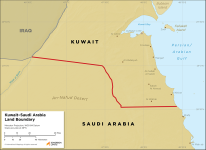
There is a notable anecdote suggesting that Sir Percy Cox's hand created a wiggle when drawing part of the Kuwait border during the Uqair Conference of 1922.

The story is that while marking the boundary between Kuwait and Saudi Arabia on the map, Cox’s hand supposedly wavered or shook, creating an irregular "wiggle" in the border line. This seemingly casual gesture resulted in a geographic quirk in the border, particularly in areas of the Neutral Zone, which Kuwait and Saudi Arabia would later share for resource exploitation.

While this story is often recounted in historical narratives, it symbolizes the arbitrary and ad-hoc nature of colonial boundary-making, which often lacked local input and was shaped more by imperial convenience than careful consideration of regional realities. Whether the "wiggle" was intentional or an actual slip remains debated, but it underscores the broader impact of colonial decisions on modern geopolitics.

KWT_SAU_Horz_02.png
 
There is a notable anecdote suggesting that Sir Percy Cox's hand created a wiggle when drawing part of the Kuwait border during the Uqair Conference of 1922.

The story is that while marking the boundary between Kuwait and Saudi Arabia on the map, Cox’s hand supposedly wavered or shook, creating an irregular "wiggle" in the border line. This seemingly casual gesture resulted in a geographic quirk in the border, particularly in areas of the Neutral Zone, which Kuwait and Saudi Arabia would later share for resource exploitation.

While this story is often recounted in historical narratives, it symbolizes the arbitrary and ad-hoc nature of colonial boundary-making, which often lacked local input and was shaped more by imperial convenience than careful consideration of regional realities. Whether the "wiggle" was intentional or an actual slip remains debated, but it underscores the broader impact of colonial decisions on modern geopolitics.

View attachment 88466
All borders were drawn everywhere.

Kuwait became a British protectorate (not colony) in 1899 by signing this agreement which stipulated that the British Empire would protect Kuwait from outside attacks.


Since prior and after the creation of the Sheikdom of Kuwait, it was ruled by the First Saudi State and since the Saudi Arabian Ikhwan tried to attack/conquer it, those porous borders were loosely based (this was at a time where the modern concept of nation states was first emerging even within Europe) so the borders were more estimates than anything else prior to the "official borders". In the sense that were no geographical barriers.

But this is the story of all the borders of Muslim nations, even the borders of China were all shaped by the West due to colonialism.

Also have in mind that you must draw a border somewhere. It will always be arbitrary in this case as there is no natural geographical border (say Himalayas).

But this does not change the fact that Kuwait existed (as a concept and entity) long prior to the appearance of the Brits.

What the appearance of the British Empire did, was to prevent local unification attempts (as already explained), something that luckily KSA defied otherwise we would have been divided into at least 4-5 modern-day countries given the existing historical regions and huge size.

Anyway we are off-topic even though the debate is interesting and in a sense relate to Palestine.
 
Last edited:
@tower9

Another thing that annoys me personally. There is no such thing as a "Arab Gulf" or "Gulf" country. Those are Arab states of the Arabian Peninsula or Arabian states.


Or Eastern Arabian


states (in terms of UAE, Qatar, Bahrain, Kuwait) who speak Khaliji Arabic dialects that are spoken from Southern Iraq to Northern Oman.

KSA is certainly not a "Gulf" country. Less than 10% of the people speak a Khaliji dialect and 90% of the people live outside of Eastern Arabia.


That would be like calling China Turkic because of the Uyghur's in Xinjiang or Mongol due to the Mongols in Inner Mongolia.

I am from Hejaz. An ancient rich historical region and from where Islam emerged.


A region that has much more in common with neighboring Egypt, Syria/Jordan/Palestine and Yemen (in terms of Arabic dialects, ancient pre-Islamic history and Islamic history, tribes/clans, culture, cuisine etc.) than we have with Eastern Arabia. Also closer geographically even. Even though we are part of the same country.
Maybe, but they are now just grouped as "Gulf Countries" just because they do share similar characteristics, ethnically Arab, religiously conservative, monarchist and oil rich. So its an easy moniker.
 
But you are totally wrong as I already demonstrated. Did you read what I wrote or the links that I posted?

Oman was a regional empire spanning 2 continents (Asia and Africa) when the UK was still a small island.

Kuwait predates British presence by 200 years.

The 7 emirates of the UAE all predate British Empire presence as well.

I forgot Bahrain. For 99.99% of recorded time it was part of ancient native Eastern Arabia civilizations (Dilmun, Magan, Sumer) like all of Eastern Arabia and the same Islamic Arab caliphates, empires, kingdoms, sultanates, emirates, sheikdoms etc. by large.


The only outliner is Qatar as I wrote but the Al-Thanis (who migrated from Najd) and their rule predated British presence.


The best and only example of an outright creation in the Arab world that I can think of is Jordan but the territory that makes up Jordan (part Arabia part Sham - a beautiful mix) is one of the richest in the world like most of the Arab world.


I mean by that logic, the Brits created Pakistan, Bangladesh, India etc. but obviously their history did not start back then as political entities.

Just like the communist party did not create China but they are just a successor state of previous Chinese political entities.


I can agree to them helping strengthen those countries and prevent KSA swallowing them up as they already did in Jordan, Iraq, Kuwait and elsewhere. That I agree with. But all of them and their ruling families predate UK presence (which is very recent in the region and was short-lived).

Jordan and partially Qatar being the only outliners.
Sure, they existed as cultural spheres and maybe kingdoms before but the British definitely played a hand in making sure they stayed separate politically. They would've been easily swallowed up by a larger state.
 
All borders were drawn everywhere.

Kuwait became a British protectorate (not colony) in 1899 by signing this agreement which stipulated that the British Empire would protect Kuwait from outside attacks.


Since prior and after the creation of the Sheikdom of Kuwait, it was ruled by the First Saudi State and since the Saudi Arabian Ikhwan tried to attack/conquer it, those porous borders were loosely based (this was at a time where the modern concept of nation states was first emerging even within Europe) so the borders were more estimates than anything else prior to the "official borders". In the sense that were no geographical barriers.

But this is the story of all the borders of Muslim nations, even the borders of China were all shaped by the West due to colonialism.

Also have in mind that you must draw a border somewhere. It will always be arbitrary in this case as there is no natural geographical border (say Himalayas).

But this does not change the fact that Kuwait existed (as a concept and entity) long prior to the appearance of the Brits.

What the appearance of the British Empire did, was to prevent local unification attempts (as already explained), something that luckily KSA defied otherwise we would have been divided into at least 4-5 modern-day countries given the existing historical regions and huge size.

Anyway we are off-topic even though the debate is interesting and in a sense relate to Palestine.
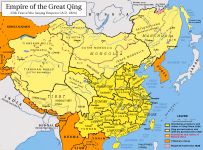
China's borders weren't shaped by the West. China did lose territory, especially due to land grabs from Russia and the loss of Mongolia, but China as a modern nation largely inherited its borders from the Qing Empire.

1734122244096.png
 
Maybe, but they are now just grouped as "Gulf Countries" just because they do share similar characteristics, ethnically Arab, religiously conservative, monarchist and oil rich. So its an easy moniker.

Does not make it any less inaccurate in every sense. That is like calling Pakistanis for Indians for instance. Or Chinese for Japanese.

Iraq is also a "Gulf country". So is Iran, lol.

You know what, Southern Iraq (where almost all of Iraq's Shia Arabs live, where most of the peopel live and where most of Iraq ancient civilizations were located) have much more in common with neighboring Eastern Arabia historically (since the time of Sumer and Dilmun - both brother civilizations) in every way (pre-Islamic history, Arabic dialects, culture, climate, geography, clan/tribe/appearance wise) than those Iraqis have with Syria that they are often grouped with.

Just like most of Levant (Jordan, Palestine, Southern Syria where most people live) has much more in common with Hejaz and Northern Arabia than they have with Southern Iraq or Central Iraq.

So there are so many inaccuracies, misunderstandings, wrong labeling. out there by mainly Western academics that you don't know where to begin.

But even that is wrong. Bahrain is not oil rich. Qatar is not oil rich (gas instead) neither is most of UAE and Oman, lol. That leaves Kuwait and KSA. Not to forget Iraq which is sometimes grouped as well.
 
China's borders weren't shaped by the West. China did lose territory, especially due to land grabs from Russia and the loss of Mongolia, but China as a modern nation largely inherited its borders from the Qing Empire.

View attachment 88467

How was it not shaped by the West when everyone next to China was a colony whose borders were drawn or influenced by the same West as well? Only Thailand in that region did not become a colony/protectorate.

Or what about Macao, Hong-Kong or Taiwan and the entire main Chinese problem of today? That is the direct result of colonialism.

The entire border with Russia as well which is a recent newcomer in that area as you already know and which conquered Chinese territories.

That border is also arbitrary completely and has no natural geographic barrier.

Same story with Mongolia which is a recent creation in its current form. I recall reading (sometime ago) that it is mostly a USSR creation in its current form. Hence Mongolia (heartland) being divided between Mongolia proper and Inner Mongolia located in China.

Korea is also divided due to this reason.
Sure, they existed as cultural spheres and maybe kingdoms before but the British definitely played a hand in making sure they stayed separate politically. They would've been easily swallowed up by a larger state.

That I agree with 100% and is undeniable. Which is also something that I already wrote.
 
Last edited:
I still don't know how/why the unraveling of the Resistance happened so quickly. I don't think Hezbollah was defeated and if anything they were exacting some cost to Israel in Lebanon and keeping Israelis in disarray where even Tel Aviv was being targeted a little bit. The Gazans were still blowing up Israeli vehicles. Iran was supposed to launch its 'retaliatory strike'. I didn't even believe that Hezbollah would agree with the ceasefire, especially the terms like withdrawal to the Litani River. And then the biggest surprise was the rapid dismantling of the Assad regime--and that has basically stopped the conflict. Even seasoned analysts like Colonial Outcasts proved wrong when he downplayed the fall of Aleppo.
There is some kind of behind the scene deals: Assad's ouster, Iran pulling back, Syrian rebels giving almost a general amnesty, Trump's involvement via Jared Kushner. I will look up Chas Freeman who, to me, is the most reliable analyst to explain the recent major changes.

Starting to watch this but not sure this can answer the questions.

To view this content we will need your consent to set third party cookies.
For more detailed information, see our cookies page.
 
How was it not shaped by the West when everyone next to China was a colony whose borders were drawn or influenced by the same West as well? Only Thailand in that region did not become a colony/protectorate.

Or what about Macao, Hong-Kong or Taiwan and the entire main Chinese problem of today? That is the direct result of colonialism.

The entire border with Russia as well which is a recent newcomer in that area as you already know and which conquered Chinese territories.

That border is also arbitrary completely and has no natural geographic barrier.

Same story with Mongolia which is a recent creation in its current form. I recall reading (sometime ago) that it is mostly a USSR creation in its current form. Hence Mongolia (heartland) being divided between Mongolia proper and Inner Mongolia located in China.

Korea is also divided due to this reason.


That I agree with 100% and is undeniable. Which is also something that I already wrote.
Totally unrelated. You can argue that Chinas borders weee shaped by the west if China was a colony like India which only came into existence because of British colonialism. But Chinas borders are largely inherited from the Qing. Yes territories were lost, most notably outer Manchuria and Mongolia, but by and large modern China is the heir of the Qing empire.
 
I still don't know how/why the unraveling of the Resistance happened so quickly. I don't think Hezbollah was defeated and if anything they were exacting some cost to Israel in Lebanon and keeping Israelis in disarray where even Tel Aviv was being targeted a little bit. The Gazans were still blowing up Israeli vehicles. Iran was supposed to launch its 'retaliatory strike'. I didn't even believe that Hezbollah would agree with the ceasefire, especially the terms like withdrawal to the Litani River. And then the biggest surprise was the rapid dismantling of the Assad regime--and that has basically stopped the conflict. Even seasoned analysts like Colonial Outcasts proved wrong when he downplayed the fall of Aleppo.
There is some kind of behind the scene deals: Assad's ouster, Iran pulling back, Syrian rebels giving almost a general amnesty, Trump's involvement via Jared Kushner. I will look up Chas Freeman who, to me, is the most reliable analyst to explain the recent major changes.

It is because you had discounted Assad and games he played, was playing. Assad has been completely taken out of the picture and everyone is better for it. Never think that zion is FOR any kind of unity amongst Muslims. They'll actively sabotage and/or undermine it.... anyone who thinks that zion is for the incoming government in Syria does not understand the equation. Russians and Iranians have their primary and more imminent concerns.
I'd have been more concerned had this turned into a full on bloodbath. Everyone now will jostle for their position and outside influences will seek to push their guy/agendas.

None sit well for zion. They cannot make it sit their way. It is why they immediately entered Syria to gobble up whatever they can, Golan from Golani!

Zion has no way out BUT to defeat and subdue all ... that effort fundamentally resides on US and its ability to arm twist, buy or coerce any and all opposition to the illegitimate entity.
 
Totally unrelated. You can argue that Chinas borders weee shaped by the west if China was a colony like India which only came into existence because of British colonialism. But Chinas borders are largely inherited from the Qing. Yes territories were lost, most notably outer Manchuria and Mongolia, but by and large modern China is the heir of the Qing empire.
I don't disagree but the situation is similar to that of Arabia. All those entities we already discussed existed long prior to the Western meddling in both areas. The prior overall borders were/are mostly the same with few exceptions although borders tended to change all the time in both areas of the world and anywhere else for that matter.

However the West helped shape both areas more than they should have. Hence the appearance of Hong-Kong, Macao, Taiwan (entirely new creations), Mongolia (in its current form is a USSR invention), Korea being artificially divided etc.

In the ME we can mention the appearance of Jordan, Qatar to a degree and the cementation of Kuwait, UAE and Bahrain as sovereign states when they most likely (without Western presence in the region) would not have remained separate entities to this day.

When you think about it, the West did far more harm in East Asia than they did in Arabia proper.

Add the Russian presence there (an earlier European colonial power) that conquered all the native Mongoloid people of Siberia that were earlier part of the Chinese sphere of influence, at least the immediate Russian areas that border China directly today. Not to mention the islands that Russia took from Japan.

Other than that we seem to largely agree from what I can tell.

I don't think that anyone can disagree that current China is the successor state of prior Chinese entities/states. Just like nobody can deny that modern-day Kuwait is a successor state of the earlier Sheikdom of Kuwait, that modern-day Oman is the successor state of the Omani empire, that UAE's 7 emirates existed prior to British presence and that they willingly unified shortly after they gained independence etc.

But what can easily be discussed and agree to is that the West (British Empire) consolidated those entries and in many ways prevented locals to unify or expand as in the case of KSA.

Both can be true at the same time after all.

Anyway even though we are off-topic, we don't always agree with everything, our exchanges are interesting and cordial. So thanks for that but I am ending it here as we are off-topic now.
 
Last edited:
I don't disagree but the situation is similar to that of Arabia. All those entities we already discussed existed long prior to the Western meddling in both areas. The prior overall borders were/are mostly the same with few exceptions although borders tended to change all the time in both areas of the world and anywhere else for that matter.

However the West helped shape both areas more than they should have. Hence the appearance of Hong-Kong, Macao, Taiwan (entirely new creations), Mongolia (in its current form is a USSR invention), Korea being artificially divided etc.

In the ME we can mention the appearance of Jordan, Qatar to a degree and the cementation of Kuwait, UAE and Bahrain as sovereign states when they most likely (without Western presence in the region) would not have remained separate entities to this day.

Other than that we seem to largely agree from what I can tell.

I don't think that anyone can disagree that current China is the successor state of prior Chinese entities/states. Just like nobody can deny that modern-day Kuwait is a successor state of the earlier Sheikdom of Kuwait, that modern-day Oman is the successor state of the Omani empire, that UAE's 7 emirates existed prior to British presence and that they willingly unified shortly after they gained independence etc.
Not really. What would be similar is if Taiwan was able to achieve permanent independence through US interference. That would make the situation analogous.

The regions lost to Russia were not Han Chinese and were peripheral border regions mostly occupied by nomads. It would be like if a pan Arab state lost a territory in the Sahara occupied by Tuaregs for example.

If China was divided into small states and each province became a country sponsored by different European powers then that would be analogous.
 
Status
Not open for further replies.

Users who are viewing this thread

Pakistan Defence Latest

Country Watch Latest

Back
Top