Made in KSA

The transformation of KSA in the past 8-10 years is one of the greatest stories of late in the world in terms of rapid industrialization and almost complete societal change on many fronts, some unimaginable, not too long ago.

The amount of promising military projects run by state companies and most importantly private companies is astonishing. We are seeing just the tip of the iceberg (fruits) of that lately with much, much more to come.

Long overdue but with the rapid rise of STEM (KSA is one of the best performing non-Western countries of late in this regard) students within KSA and the demographic rise.

MbS rise, looking at it in hindsight, was the best thing that would happen for the country considering the initial alternative (Muqrin).

Not even going to talk about the tourism sector that has been booming insanely (greatest rise in the world) and all the sporting and cultural events that KSA has been hosting and is going to host (FIFA World Cup 2034, Asian Games 2034 and so much more) and with that some of the largest infrastructural projects on the planet.

Saudi Arabia’s Vision 2030 Projects Reach $1.3 Trillion in Value​


I think the next step should be to continue:


+ renewable energy (solar, wind, thermal)

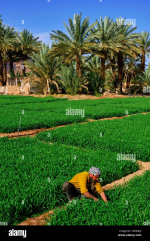
and continue to turning large areas of KSA into fertile agricultural land and reforestation project.

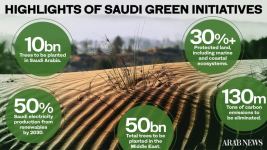
I particularly like the goal of planting 10 billion trees by 2030 (green initiative).

1733770717911.png

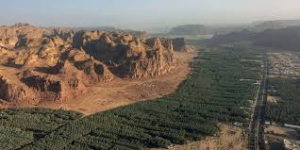
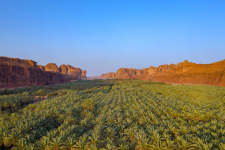
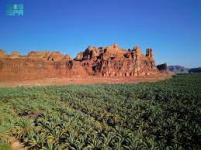
Great to see the large greening process in Al-Ula (one of the largest archaeological areas of the world) and subsequent national parks.

1733770814693.png

1733770909389.png


1733770975991.png

1733771015324.png


To view this content we will need your consent to set third party cookies.
For more detailed information, see our cookies page.


9.7 million views. Not bad.
Another 4-5 year old video (I believe those people are Russians or Ukrainians)

To view this content we will need your consent to set third party cookies.
For more detailed information, see our cookies page.
 
Last edited:
The most prominent Saudi military industries and their products: strengthening national capabilities to achieve Vision 2030
1733998899621.jpeg

The Kingdom of Saudi Arabia is working seriously to develop its defense sector within the framework of Vision 2030, which aims to enhance local content and achieve self-sufficiency in the field of military industries. This sector is considered an essential part of its strategy to build a defense force capable of confronting regional and international challenges.

Saudi Arabia has made significant progress in many areas of military industries, whether through the development of air, sea, and land systems, or through its progress in electronic technologies and cyber defense. It is expected that 50% of defense spending will be allocated domestically by 2030.

For decades, Saudi Arabia has discouraged the creation of a robust defense industry of its own. Although some companies were founded in the 1970s, their capabilities were primarily focused on assembly and maintenance rather than production, let alone design. The main reason for this is that the government has always had enough money to buy the latest solutions in the global market.

Meanwhile, Saudi Arabia maintained a significant partnership with the West, which had no objection to supplying Riyadh with large quantities of weapons and equipment. According to PwC, Saudi Arabia imported mainly from the US (73%) and the UK (13%) between 2015 and 2019.

Saudi military spending has witnessed a notable increase, with the Kingdom ranking fifth globally in this field in 2022, according to the latest reports of the Stockholm International Peace Research Institute (SIPRI). Given the geopolitical changes and increasing economic challenges, the Kingdom has moved towards a strategic transformation in its defense sector, with a focus on building a solid local industrial base.

Several factors led to this strategic shift. First, the Kingdom’s flexibility to obtain conventional weapons from global markets has declined, especially with increasing restrictions on arms exports, as is the case with the United States and Germany. Second, the Kingdom sought to reduce its dependence on oil as a main source of income, and achieve greater economic diversification. Thirdly, there was a desire to keep pace with rapid technological developments in the field of defense, and to benefit from the experiences of other countries such as the United Arab Emirates, which have achieved remarkable successes in building a local defense industry.

Pillars of the military industries strategy

The strategy is based on 3 main pillars:

  1. Military Procurement: It aims to guide local agencies working in the military and security sector, organize procurement processes to achieve cost efficiency and prioritize the localization of the industry. It also aims to support local manufacturers and standardize practices across military agencies, while leveraging the sector's collective purchasing power to obtain the best contractual terms with suppliers.
  2. Localization of military spending: The strategy seeks to achieve more than 50% of the Kingdom’s spending on military equipment and services by 2030. The Authority has identified 11 target areas within the industry, and is working to develop global regulatory frameworks to enhance transparency and encourage investment, provide incentives to local manufacturers and issue licenses. Manufacturing and export.
  3. Military Technologies: The Authority focuses on building national capabilities and strengthening the local research and development infrastructure. This includes identifying priority technologies, developing human capital, and establishing national research centers and laboratories specialized in military industries. The Authority has identified 7 research areas that include 21 targeted technologies that will be developed and localized over the coming years.

The most prominent Saudi military industries

Regarding aerial systems, Saudi Arabia has recorded significant progress in the drone industry, as it was able to develop the Saqr 1, a locally manufactured aircraft used for reconnaissance and tactical attacks. This aircraft is distinguished by its ability to fly for long periods of up to 24 hours. The Kingdom also produced the Skyguard 1 aircraft, which was designed specifically for reconnaissance and surveillance purposes. In addition, the Kingdom maintains and develops advanced military aircraft such as the F-15, Tornado, and Typhoon through local companies such as Al Salam Aircraft, and the process of manufacturing local parts for aircraft is carried out in cooperation with international companies such as Boeing.

To view this content we will need your consent to set third party cookies.
For more detailed information, see our cookies page.


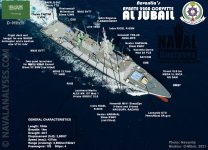
At the level of maritime industries, Saudi Arabia has achieved remarkable progress in the production of ships and military boats. One of the most prominent products in this field is the Corvette Avanti 2200, which was manufactured in cooperation with the Spanish company Navantia, and is a multi-mission combat ship. The Kingdom has also developed gunboats such as the HSI32, which are mainly used for maritime patrol missions. To enhance maritime security, Saudi Arabia has invested in developing coastal radar systems and modern sensors to detect maritime threats.

In the land sector, Saudi Arabia has developed a group of military armored vehicles that meet the needs of ground forces. Among these vehicles are the Tuwaiq, which is resistant to mines and ambushes, and the Al-Shabl armored vehicle, which is characterized by being a light and versatile vehicle, as it is used in reconnaissance and combat missions. The Kingdom also manufactured the Al-Dahna armored vehicle, which is a mine-resistant vehicle with the ability to confront challenges in complex operational environments.

To view this content we will need your consent to set third party cookies.
For more detailed information, see our cookies page.


The Saudi defense industry sector is expected to witness a significant technological transfer, especially through strategic partnerships with Hanwha and EDGE. Under the cooperation agreement signed in 2019, the Kingdom will cooperate in manufacturing 149 “Nimr Jayce” armored vehicles, with a focus on integrating local systems. This joint project represents an important step towards building local manufacturing capabilities and increasing reliance on national technology. Experts point out that if the scope of this cooperation expands, there is a high possibility that the production lines of these vehicles will be partially transferred to the Kingdom, which will contribute to strengthening the local industry and providing new job opportunities.

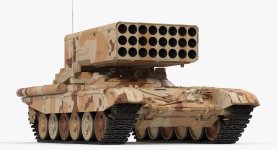
In addition, the Kingdom has developed local missile and artillery systems, most notably MLRS multiple rocket launchers such as the TOS-1, which are considered advanced tactical systems in the field of missile launching.
1733999967574.jpeg

The industrial partnership between the Kingdom of Saudi Arabia and Brazil is gaining increasing momentum, as it is expected that broad sectors in the field of defense industries will witness close cooperation between the two countries. This partnership may represent a qualitative leap in developing Saudi industrial capabilities and strengthening its position as a major player in the regional and global defense industries market.

This partnership was established following the signing of a memorandum of understanding. The initial agreements included a number of leading Brazilian companies in the field of defense industries, such as “Embraer” and “Taurus.” Reports indicate that Taurus is seriously considering the possibility of establishing a factory in the Kingdom.

In this context, the Brazilian company Avibras, one of the most prominent companies operating in the field of defense industries in Latin America, signed a cooperation agreement with the Saudi company Scuba, a company with extensive experience in the field of defense and aviation industries. It is expected that cooperation between the two companies will focus on developing joint projects in multiple fields.

The Kingdom relies heavily on electronic technologies to develop radar and surveillance systems. Its most prominent systems are a silent radar, and the Homeland Shield system, which is used to detect drones. Advanced Electronics Company (AEC) also contributes to the development of advanced command and control systems (C4I) that effectively manage military operations. Moreover, Saudi Arabia seeks to enhance cybersecurity through programs and systems aimed at protecting military infrastructure against cyberattacks.

In the field of ammunition and light weapons production, the Kingdom has achieved great success in manufacturing various ammunition, including artillery shells and tactical missiles that meet international standards and are used in military missions. The Kingdom also produces light weapons such as the G-36 and AK-103 rifles and pistols for military and security use.

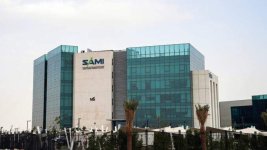
SAMI has unveiled products such as the “Vision” remote-controlled weapon station for light vehicles, which can be equipped with either a 7.62mm or 12.7mm machine gun, or a 40mm grenade launcher.

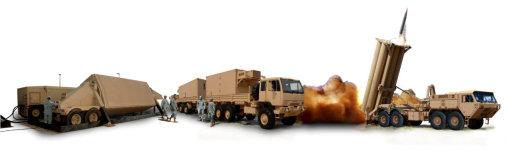
The Kingdom also seeks to localize military production through partnerships with major international companies. For example, the localization of production of parts of air defense systems such as Patriot and THAAD has been expanded through cooperation with international companies such as Lockheed Martin, Raytheon, and Boeing. These partnerships contribute to transferring technology and enhancing local capabilities, which enhances the Kingdom’s ability to rely on its own capabilities in military industrialization.
1733999594121.png

In the field of space systems and air defense, the Kingdom has developed Saudi Sat, a series of satellites that are used for civilian and military purposes. The Kingdom was also able to produce local components for advanced air defense systems such as THAAD, which enhances its defense capabilities and places it in an advanced position at the regional and international levels.

Saudi companies such as the Saudi Military Industries Company (SAMI), the Advanced Electronics Company (AEC), and the Saudi Technical Development and Investment Company (Taqnia) are among the leading companies that contribute to the development of these industries. These companies are distinguished by their ability to design and manufacture advanced defense systems, such as radars, armor, and command and control devices.

These industries and their products demonstrate a tangible development in the Kingdom’s ability to build an integrated military industrial base. With the great progress in localization and the strengthening of international partnerships, Saudi Arabia is preparing to strengthen its position as a regional defense force with an independent ability to manufacture and develop in various defense fields.
 
To view this content we will need your consent to set third party cookies.
For more detailed information, see our cookies page.


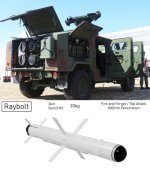
The AT-1K Raybolt missile is a third-generation hand-held anti-tank guided missile produced by LIG Nex1. The missile supports “fire and forget” technology using an infrared imaging seeker and has a dual warhead to defeat explosive reactive armour. The Raybolt missile has overhead attack and direct attack modes. It is the first anti-tank guided missile built by South Korea and entered mass production in June 2017.

The Raybolt missile is classified by its manufacturer as a competitor and counterpart to the American FGM-148 Javelin anti-tank missile and the Israeli Spike-MR anti-tank missile.

1734000776808.jpeg
 
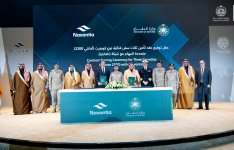
The Ministry of Defense signs a contract with the Spanish company Navantia to acquire and supply 3 combat ships for the Navy


1734004549333.jpeg

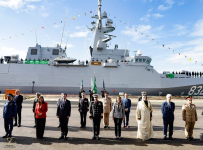
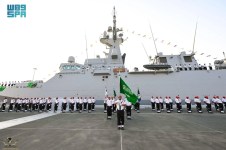
Today, the Ministry of Defense in Riyadh signed a contract with the Spanish company Navantia to acquire and supply three multi-mission combat ships of the “Corvette Avante 2200” type, for the benefit of the Royal Saudi Navy, in the presence of His Excellency the Chief of the General Staff, Lieutenant General Fayyad bin Hamid Al-Ruwaili.

The contract was signed by the Ministry of Defense, His Excellency the Assistant Minister of Defense for Executive Affairs, Dr. Khalid bin Hussein Al-Biyari, and by the Spanish Navantia Company, Chairman of the Board of Directors and CEO of the company, Ricardo Garcia Baguiro.

Under the new acquisition contract, construction of the first ship will begin during the current year, and the third and final combat ship is scheduled to be delivered to the Royal Saudi Navy by 2028 AD.

The acquisition contract focuses on the delivery of the first combat ship in Spain, with the completion of the construction of the second and third ship’s systems in the Kingdom, and the implementation of acceptance tests for them on Saudi lands and waters, including the installation and integration of the naval battle management system “Hazm”, developed by national hands, and the systems. Other combat activities within the stages of localization, and technology transfer to achieve the goals of Saudi Vision 2030 regarding the localization of military industries; Which contributes to the sustainability of marine systems.

The Spanish company Navantia will provide an integrated logistical support package, including training ship crews, implementing a comprehensive training plan for more than 100 Saudi engineers, and localizing up to 100% of the construction of new naval ships, integration of combat systems, and ship maintenance, in line with the Kingdom’s goals and vision 2030.


...

https://www.mod.gov.sa/MediaCenter/MinistryNews/Pages/2188.aspx

1734004857607.jpeg


Avante 2200 model

This second batch series of corvettes for Saudi Arabia will be similar to the first batch, with a design based on Navantia’s Avante 2200 model, which is a multipurpose vessel specially designed for patrolling and monitoring of the Exclusive Economic Zone, maritime traffic surveillance and control missions, search and rescue missions and assistance to other vessels, among others. In addition, the vessels will have an important capacity for the defense of strategic assets, intelligence, and anti-submarine, anti-aircraft, anti-surface and electronic warfare capabilities.

1734005041038.png

1734005093570.png
 
To view this content we will need your consent to set third party cookies.
For more detailed information, see our cookies page.


lol

I have read a lot of KSA trying to be a part of the program, they thought with the money they could buy in :ROFLMAO:.Like the countries do not have the money, neverless go begin working . The same will happen with France, FCAS maybe they will milk KSA out with 5 procent share. The technology is to sensitive, you can ask EF:ROFLMAO:.
 
To view this content we will need your consent to set third party cookies.
For more detailed information, see our cookies page.


lol

I have read a lot of KSA trying to be a part of the program, they thought with the money they could buy in :ROFLMAO:.Like the countries do not have the money, neverless go begin working . The same will happen with France, FCAS maybe they will milk KSA out with 5 procent share. The technology is to sensitive, you can ask EF:ROFLMAO:.

Just 2 weeks ago:

Italian Foreign Minister Antonio Tajani:
The agreement we concluded with Britain and Japan for a project to build a sixth-generation fighter, I believe, will now include the Kingdom of #Saudi Arabia

To view this content we will need your consent to set third party cookies.
For more detailed information, see our cookies page.


How? Don't ask me!
 
1734157744537.png

To view this content we will need your consent to set third party cookies.
For more detailed information, see our cookies page.
 
According to Nikkei Japan, a Leonardo executive is expected to head the joint venture while the headquarters will be in Reading, a suburb of London.
Saudi Arabia, which is seen as a candidate to enter the program, according to what was reported by the Japanese newspaper Nikkei, will not invest in the joint project, nor will it enter into the joint project, but will participate in developing the program as a “partner.”
 
View attachment 88511

To view this content we will need your consent to set third party cookies.
For more detailed information, see our cookies page.


I don't think they will sell unless the Abraham Accords will be signed which I don't hope will happen. This accord should only be signed if Israel agrees to a two-state solution and leaves the illegally annexed territories and disbands the illegal settlements in the West Bank. Which is unlikely to happen.
Also given the many problems with the F-35 I am not sure if it is worth it. Acquiring a lot of F-35 would prevent other future options (that might be superior) for a long time to come.

However it would definitely be a better option than going for the Rafale.
 
I don't think they will sell unless the Abraham Accords will be signed which I don't hope will happen. This accord should only be signed if Israel agrees to a two-state solution and leaves the illegally annexed territories and disbands the illegal settlements in the West Bank. Which is unlikely to happen.
Also given the many problems with the F-35 I am not sure if it is worth it. Acquiring a lot of F-35 would prevent other future options (that might be superior) for a long time to come.

However it would definitely be a better option than going for the Rafale.
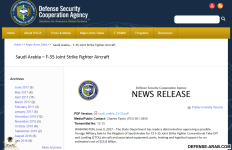
There is an official report in this thread..approving the sale of F-35 to KSA..Bidden stopped it..but it might be revived with Trump now..

The Saudi position is well known about the two state solution condition before any relations with Israel..
 
There is an official report in this thread..approving the sale of F-35 to KSA..Bidden stopped it..but it might be revived with Trump now..

The Saudi position is well known about the two state solution condition before any relations with Israel..
There have been persistent and high-level rumors of the US wanting to sell the F-35 to KSA. The problem is that the pro-Zionist hawks will probably tie such a deal to geopolitics. Normalization with Israel and decreasing the strategic ties with China for instance.

Anyway we will see what Trump and MbS will figure out.

As much as it pains me to say it, maybe KSA should just look for solely its own interests, continue the promising and rapid developments on all fronts and just do what almost everyone else around us has done already.

Fact of the matter is we host Makkah and Madinah (we cannot afford instability) , have by far the most resources in the Muslim world (3rd most in the world only Russia and USA have more) that others would love to grab or exploit, a very strategic location, the biggest landmass in the region to protect and we are already bordering numerous unstable hotspots.

For the next 10 years I would prefer to look inwards and continue to focus mostly on domestic development and bolster strategic ties with trusted allies and partners.

BTW where can I find that official F-35 report?
 
There have been persistent and high-level rumors of the US wanting to sell the F-35 to KSA. The problem is that the pro-Zionist hawks will probably tie such a deal to geopolitics. Normalization with Israel and decreasing the strategic ties with China for instance.

Anyway we will see what Trump and MbS will figure out.

As much as it pains me to say it, maybe KSA should just look for solely its own interests, continue the promising and rapid developments on all fronts and just do what almost everyone else around us has done already.

Fact of the matter is we host Makkah and Madinah (we cannot afford instability) , have by far the most resources in the Muslim world (3rd most in the world only Russia and USA have more) that others would love to grab or exploit, a very strategic location, the biggest landmass in the region to protect and we are already bordering numerous unstable hotspots.

For the next 10 years I would prefer to look inwards and continue to focus mostly on domestic development and bolster strategic ties with trusted allies and partners.

BTW where can I find that official F-35 report?
1734217641889.png

It is on page 37..this thread..
 
View attachment 88684

It is on page 37..this thread..
UAE wanted to order 50 before their withdrawal. Given the huge size of KSA in general (12th largest country in the world) and in comparison to UAE, I think the order number should be increased if it becomes a realistic option to purchase the F-35.

The white elephant in the room has ordered a total of 75 for instance.

In other news:

To view this content we will need your consent to set third party cookies.
For more detailed information, see our cookies page.


To view this content we will need your consent to set third party cookies.
For more detailed information, see our cookies page.


To view this content we will need your consent to set third party cookies.
For more detailed information, see our cookies page.
 
Last edited:
UAE wanted to order 50 before their withdrawal. Given the huge size of KSA in general (12th largest country in the world) and in comparison to UAE, I think the order number should be increased if it becomes a realistic option to purchase the F-35.

The white elephant in the room has ordered a total of 75 for instance.

In other news:

To view this content we will need your consent to set third party cookies.
For more detailed information, see our cookies page.


To view this content we will need your consent to set third party cookies.
For more detailed information, see our cookies page.


To view this content we will need your consent to set third party cookies.
For more detailed information, see our cookies page.

The best solution for Saudi Arabia and the Emirates is to acquire the KF-21 aircraft first, because even the RaFaLE aircraft, any contracts for it require years, and the same thing for the aircraft after Qatar’s contract, any new contracts also require years for delivery. The Anglo-Italian-Japanese project is not expected to reach the production stage at all due to international tensions and the atmosphere of a third world war.
 
The best solution for Saudi Arabia and the Emirates is to acquire the KF-21 aircraft first, because even the RaFaLE aircraft, any contracts for it require years, and the same thing for the aircraft after Qatar’s contract, any new contracts also require years for delivery. The Anglo-Italian-Japanese project is not expected to reach the production stage at all due to international tensions and the atmosphere of a third world war.
KF-21 is still a 4++ generation , the same as the Rafale.. they are planning a 5th generation..but still far away..a better option will be the Chinese J-20 which is a full 5th generation fighter..that is..if China agrees to sell it with ToT..
 

Users who are viewing this thread

Latest Posts

Back
Top