The most prominent Saudi military industries and their products: strengthening national capabilities to achieve Vision 2030
The Kingdom of Saudi Arabia is working seriously to develop its defense sector within the framework of Vision 2030, which aims to enhance local content and achieve self-sufficiency in the field of military industries. This sector is considered an essential part of its strategy to build a defense force capable of confronting regional and international challenges.
Saudi Arabia has made significant progress in many areas of military industries, whether through the development of air, sea, and land systems, or through its progress in electronic technologies and cyber defense. It is expected that 50% of defense spending will be allocated domestically by 2030.
For decades, Saudi Arabia has discouraged the creation of a robust defense industry of its own. Although some companies were founded in the 1970s, their capabilities were primarily focused on assembly and maintenance rather than production, let alone design. The main reason for this is that the government has always had enough money to buy the latest solutions in the global market.
Meanwhile, Saudi Arabia maintained a significant partnership with the West, which had no objection to supplying Riyadh with large quantities of weapons and equipment. According to PwC, Saudi Arabia imported mainly from the US (73%) and the UK (13%) between 2015 and 2019.
Saudi military spending has witnessed a notable increase, with the Kingdom ranking fifth globally in this field in 2022, according to the latest reports of the Stockholm International Peace Research Institute (SIPRI). Given the geopolitical changes and increasing economic challenges, the Kingdom has moved towards a strategic transformation in its defense sector, with a focus on building a solid local industrial base.
Several factors led to this strategic shift. First, the Kingdom’s flexibility to obtain conventional weapons from global markets has declined, especially with increasing restrictions on arms exports, as is the case with the United States and Germany. Second, the Kingdom sought to reduce its dependence on oil as a main source of income, and achieve greater economic diversification. Thirdly, there was a desire to keep pace with rapid technological developments in the field of defense, and to benefit from the experiences of other countries such as the United Arab Emirates, which have achieved remarkable successes in building a local defense industry.
Pillars of the military industries strategy
The strategy is based on 3 main pillars:
- Military Procurement: It aims to guide local agencies working in the military and security sector, organize procurement processes to achieve cost efficiency and prioritize the localization of the industry. It also aims to support local manufacturers and standardize practices across military agencies, while leveraging the sector's collective purchasing power to obtain the best contractual terms with suppliers.
- Localization of military spending: The strategy seeks to achieve more than 50% of the Kingdom’s spending on military equipment and services by 2030. The Authority has identified 11 target areas within the industry, and is working to develop global regulatory frameworks to enhance transparency and encourage investment, provide incentives to local manufacturers and issue licenses. Manufacturing and export.
- Military Technologies: The Authority focuses on building national capabilities and strengthening the local research and development infrastructure. This includes identifying priority technologies, developing human capital, and establishing national research centers and laboratories specialized in military industries. The Authority has identified 7 research areas that include 21 targeted technologies that will be developed and localized over the coming years.
The most prominent Saudi military industries
Regarding aerial systems, Saudi Arabia has recorded significant progress in the drone industry, as it was able to develop the Saqr 1, a locally manufactured aircraft used for reconnaissance and tactical attacks. This aircraft is distinguished by its ability to fly for long periods of up to 24 hours. The Kingdom also produced the Skyguard 1 aircraft, which was designed specifically for reconnaissance and surveillance purposes. In addition, the Kingdom maintains and develops advanced military aircraft such as the F-15, Tornado, and Typhoon through local companies such as Al Salam Aircraft, and the process of manufacturing local parts for aircraft is carried out in cooperation with international companies such as Boeing.
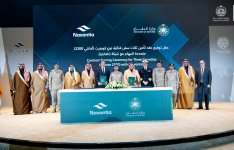
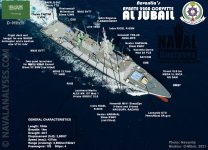
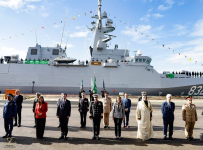
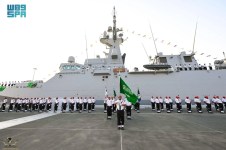
At the level of maritime industries, Saudi Arabia has achieved remarkable progress in the production of ships and military boats. One of the most prominent products in this field is the Corvette Avanti 2200, which was manufactured in cooperation with the Spanish company Navantia, and is a multi-mission combat ship. The Kingdom has also developed gunboats such as the HSI32, which are mainly used for maritime patrol missions. To enhance maritime security, Saudi Arabia has invested in developing coastal radar systems and modern sensors to detect maritime threats.
In the land sector, Saudi Arabia has developed a group of military armored vehicles that meet the needs of ground forces. Among these vehicles are the Tuwaiq, which is resistant to mines and ambushes, and the Al-Shabl armored vehicle, which is characterized by being a light and versatile vehicle, as it is used in reconnaissance and combat missions. The Kingdom also manufactured the Al-Dahna armored vehicle, which is a mine-resistant vehicle with the ability to confront challenges in complex operational environments.
The Saudi defense industry sector is expected to witness a significant technological transfer, especially through strategic partnerships with Hanwha and EDGE. Under the cooperation agreement signed in 2019, the Kingdom will cooperate in manufacturing 149 “Nimr Jayce” armored vehicles, with a focus on integrating local systems. This joint project represents an important step towards building local manufacturing capabilities and increasing reliance on national technology. Experts point out that if the scope of this cooperation expands, there is a high possibility that the production lines of these vehicles will be partially transferred to the Kingdom, which will contribute to strengthening the local industry and providing new job opportunities.
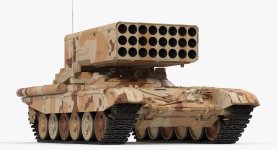
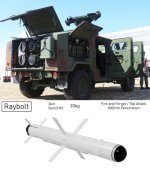
In addition, the Kingdom has developed local missile and artillery systems, most notably MLRS multiple rocket launchers such as the TOS-1, which are considered advanced tactical systems in the field of missile launching.
The industrial partnership between the Kingdom of Saudi Arabia and Brazil is gaining increasing momentum, as it is expected that broad sectors in the field of defense industries will witness close cooperation between the two countries. This partnership may represent a qualitative leap in developing Saudi industrial capabilities and strengthening its position as a major player in the regional and global defense industries market.
This partnership was established following the signing of a memorandum of understanding. The initial agreements included a number of leading Brazilian companies in the field of defense industries, such as “Embraer” and “Taurus.” Reports indicate that Taurus is seriously considering the possibility of establishing a factory in the Kingdom.
In this context, the Brazilian company Avibras, one of the most prominent companies operating in the field of defense industries in Latin America, signed a cooperation agreement with the Saudi company Scuba, a company with extensive experience in the field of defense and aviation industries. It is expected that cooperation between the two companies will focus on developing joint projects in multiple fields.
The Kingdom relies heavily on electronic technologies to develop radar and surveillance systems. Its most prominent systems are a silent radar, and the Homeland Shield system, which is used to detect drones. Advanced Electronics Company (AEC) also contributes to the development of advanced command and control systems (C4I) that effectively manage military operations. Moreover, Saudi Arabia seeks to enhance cybersecurity through programs and systems aimed at protecting military infrastructure against cyberattacks.
In the field of ammunition and light weapons production, the Kingdom has achieved great success in manufacturing various ammunition, including artillery shells and tactical missiles that meet international standards and are used in military missions. The Kingdom also produces light weapons such as the G-36 and AK-103 rifles and pistols for military and security use.
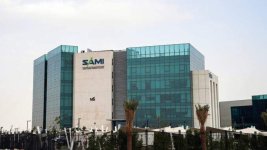
SAMI has unveiled products such as the “Vision” remote-controlled weapon station for light vehicles, which can be equipped with either a 7.62mm or 12.7mm machine gun, or a 40mm grenade launcher.
The Kingdom also seeks to localize military production through partnerships with major international companies. For example, the localization of production of parts of air defense systems such as Patriot and THAAD has been expanded through cooperation with international companies such as Lockheed Martin, Raytheon, and Boeing. These partnerships contribute to transferring technology and enhancing local capabilities, which enhances the Kingdom’s ability to rely on its own capabilities in military industrialization.
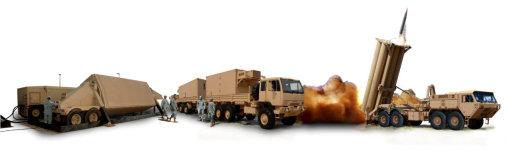
In the field of space systems and air defense, the Kingdom has developed Saudi Sat, a series of satellites that are used for civilian and military purposes. The Kingdom was also able to produce local components for advanced air defense systems such as THAAD, which enhances its defense capabilities and places it in an advanced position at the regional and international levels.
Saudi companies such as the Saudi Military Industries Company (SAMI), the Advanced Electronics Company (AEC), and the Saudi Technical Development and Investment Company (Taqnia) are among the leading companies that contribute to the development of these industries. These companies are distinguished by their ability to design and manufacture advanced defense systems, such as radars, armor, and command and control devices.
These industries and their products demonstrate a tangible development in the Kingdom’s ability to build an integrated military industrial base. With the great progress in localization and the strengthening of international partnerships, Saudi Arabia is preparing to strengthen its position as a regional defense force with an independent ability to manufacture and develop in various defense fields.


 en.wikipedia.org





 .Like the countries do not have the money, neverless go begin working . The same will happen with France, FCAS maybe they will milk KSA out with 5 procent share. The technology is to sensitive, you can ask EF