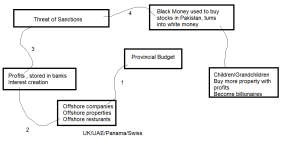
Yes, it's true for the rest of the world, including the United States, where I'm from. But I think you missed the point when I said the stock market is
forward-looking in the sense that the market player is projecting the company's revenues and growth, not that it would reach that point.
The 3% I stated was a very generous estimate. The actual is a lot lower. Between .1 and .14% of the population holds capital market accounts. (1, 2) That is no more than 300,000 actively traded accounts, with Pakistan's market cap being $51 billion on average, $170,000 per account. The rest of Pakistan lives hand-to-mouth or has chosen not to participate due to financial literacy.
Hence, 15% of the population doesn't support the theory it's providing employment.
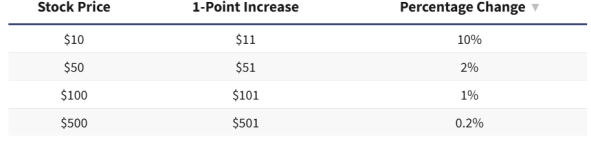
Yes, a small amount of funds could move the market, as Pakistan's market is much smaller, and a dollar shift would have a more significant impact. However, if the market had more depth, then it would be a different story. Example below:
View attachment 89574
The most important part of Pakistan markets,
"only 30-40 percent of companies are providing 80-90 percent liquidity to the market. More than 60 percent of market capitalization in the PSX comes from only five sectors (out of 34)." (3) With 31 financial institutions only three are actively involved in trading and wealth management. (3)
In Pakistan, banks and insurance companies are actively taking deposits and investing in the market to lower risk and generate capital that they can lend out. This goes back to my first point: Individuals are storing excess funds in interest-bearing accounts with property investments down. The banks take those funds and invest in the markets to generate capital. They can't just continue paying interest without earning on the other end. The only avenue besides T-Bills, etc., for banks and insurance companies in Pakistan is to use the stock market.
The PIA example shows how the stock market can
mask the weakness of the actual economy. Thus, the stock market should not be used as a barometer; that's why the Federal Reserve in the United States has metrics to see the economy's health. The United States is divided into 12 regions, and each Federal Reserve Bank looks after its geographic location, studying the local economy, and regulates its area. My MBA professor worked actively in the Chicago Federal Reserve Bank while teaching.
I wouldn't pay much attention to the current accounts, primarily due to reduced imports with government intervention, stagnant exports coupled with substantial remittance due to inflation and overseas Pakistanis sending more back home to support their maskeen countrymen and women.
My university professor always said you do not become wealthy by reducing your Starbucks intake but by increasing your income and deploying excess capital in markets.
It is mismanaged, and the issue has been much more profound since the beginning; the government has always lived on handouts, its aid, and grants and squandered them on lavish luxuries with little to show for it. After the 1960's, it went downhill, but very few could see the rot.
You can wait and see, like the worker on my family's farm who thinks Bhutto will come and save them. The smart ones have jumped ship and gone overseas. So, I do not share much optimism in Pakistan's economic structure. For me, the current government is just applying bandages at this point. To me, Pakistan is a ship in the ocean, and the crew is working overtime to plug the holes, which only works temporarily without a permanent fix.
1:
https://www.dawn.com/news/1805743
2:
https://aurora.dawn.com/news/114441...-million-people-to-invest-in-pakistani-stocks
3:
https://pide.org.pk/research/the-poor-state-of-financial-markets-in-pakistan/