Strider
Elite Member


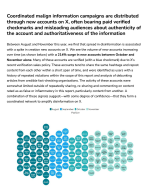
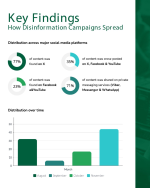
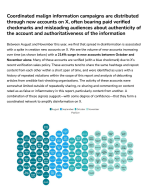
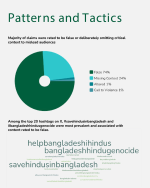
India's Disinformation Campaign against Bangladesh - Report available. https://techglobalinstitute.com/wp-content/uploads/2024/12/Disinformation-Dec-2024-2.pdf:
Follow along with the video below to see how to install our site as a web app on your home screen.
Note: This feature may not be available in some browsers.

India's Disinformation Campaign against Bangladesh - Report available. https://techglobalinstitute.com/wp-content/uploads/2024/12/Disinformation-Dec-2024-2.pdf:
View attachment 89860
View attachment 89862
View attachment 89863
View attachment 89864
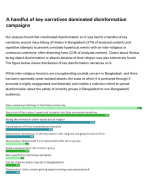
The below report has been compiled by Toronto-based non-profit lab, Teach Global Institute. The findings are alarming. This would lead to an age old trend where Westerners, and anyone randomly searching the Internet would view Bangladesh, or any South Asian country for that matter through the lens of India. This needs to change.
Whose Stories Count? How Google Search Erases Local Media in Bangladesh
On November 25, 2024, Bangladeshi authorities arrested Chinmoy Krishna Das, a Hindu monk and community leader, on sedition charges—a move that sparked violent clashes between his supporters and the police, and escalated tensions between Bangladesh and India. The incident drew considerable media attention across South Asia and beyond, particularly after a lawyer was killed in Chattogram, thousands of Hindu monks in West Bengal attempted a march to the Bangladesh border, and activists in India attacked a Bangladeshi diplomatic outpost in retaliation.
This event unfolded amid heightened diplomatic tensions between India and Bangladesh—a historically close ally and strategic partner critical to India’s border security—following the ouster of former Prime Minister Sheikh Hasina. Ultranationalist Indian voices intensified the rhetoric by accusing Bangladesh’s interim government of enabling a “Hindu genocide” despite local and Western media reporting otherwise, including a report from Tech Global Institute that found evidence of coordinated disinformation exploiting existing inter-religious tensions.
Google Search results for this incident and the broader narrative regarding the treatment of Hindu minorities in Bangladesh failed to highlight original, on-the-ground reporting from Bangladeshi sources. Instead, the search landscape was overwhelmingly dominated by Indian media outlets, including those known for heavily opinionated and subjective coverage, amplifying mis- and disinformation about the situation in Bangladesh among international quarters. This imbalanced prioritization by such a critical information gatekeeper, neglecting to account for the ground realities, accurate representation, and objective, verifiable facts, ultimately distorted the narrative surrounding this sensitive and high-stakes situation, and led to disproportionate diplomatic outrage and international responses regarding inter-religious tensions in Bangladesh and the country’s stability following the fall of the prior regime.
An insular, one-dimensional portrayal of Bangladesh, filtered through India’s politicized and nationalist-driven media and information ecosystem not only reinforces harmful stereotypes but also risks undermining Bangladesh’s diplomatic autonomy, distorting foreign policy, deterring foreign investment, and threatening its democratic transition. Yet, while widespread social media misinformation about the lead-up to and aftermath of the arrest received some scrutiny, Google Search’s performance went largely unchecked.
This report examines the platform’s search bias, the lack of algorithmic accountability, and the broader implications of these issues, particularly in the context of minority rights, disinformation, and regional and geopolitical relations.
ANALYSIS
We implemented a structured approach to analyze the purported bias in Google’s search ranking, examining geographic variations, linguistic and keyword differences, and a comparison between incognito and standard browser search results. Chrome, which defaults to Google Search, and Microsoft Bing, was used to conduct this assessment. We focused on organic search results, and produced a dataset consisting of search results based on aforementioned variables for approximately 4 weeks (November 25 and December 20). A detailed methodology can be found in the appendix section.
Collected data reveals a consistent pattern of bias in search results across multiple geographic locations, with Indian news outlets—some of which presented one-sided, subjective, and often right-wing ideology driven reporting—disproportionately dominating the results for queries related to the Chinmoy Krishna Das case. This trend was observed despite available and pertinent coverage from reputable Bangladeshi, non-Indian and Western news sources.
On December 6, 2024, searches of terms “Chinmoy Krishna Das” and its Bangla equivalent “চিন্ময় কৃষ্ণ দাস” were conducted from Bangladesh. When the search term was entered in English, results demonstrated a clear bias, with Indian news outlets such as Times of India, The Hindu, Hindustan Times, and The Indian Express dominating both the top story carousel and the first page of search results—overshadowing factual reporting from credible Bangladeshi media outlets like The Daily Star, The Business Standard, and Prothom Alo, despite the search originating from within Bangladesh, the country where the incident originally occurred.
Source: https://techglobalinstitute.com/mission/


Some interesting point into Indian X users who are coordinating for spreading disinformation on Bangladesh. This includes NRIs like Utsav as well.
These bastards are crucifying us. Inside and outside the country.

So after I input let's say 'Starlink Bangladesh', it comes up with a flurry of Bangladeshi sources. So it is not like Bangladeshi sources on X are non-existent. They exist.
But when it comes to political news, the results regarding the sources are the complete opposite (i.e., not a single Bangladeshi source reporting from the Bangladeshi ground).
@Afif @Al-Zakir @LeonBlack08 @Oscar @Musings @Joe Shearer et al.
Starlink, operated by SpaceX, has been actively pursuing opportunities to launch its satellite internet service in Bangladesh. Here's an overview based on recent developments:
- Regulatory Approval: The Bangladesh Telecommunication Regulatory Commission (BTRC) has been working on guidelines for satellite internet services, which includes provisions for wholly owned foreign entities like Starlink to obtain licenses. This could potentially pave the way for Starlink's operations in Bangladesh.
https://www.thedailystar.net/business/news/door-may-open-starlink-others-soon-3740041- Trials and Demonstrations: Starlink has conducted trials in Bangladesh, including setting up devices on buses and remote islands to test service compatibility. The tests showed promising results with download speeds up to 150 Mbps.
https://www.thedailystar.net/business/news/musks-starlink-make-entry-bangladesh-3487811
https://www.dhakatribune.com/bangladesh/319615/elon-musk-s-starlink-to-launch-satellite-internet- Market Entry: There have been discussions between Starlink officials and various Bangladesh government entities, including the ICT Division, to potentially launch services. As of the latest updates, Starlink is targeting coverage in Bangladesh starting in 2025, although availability is subject to regulatory approval.
https://medium.com/@mdparvejali/starlink-in-bangladesh-a-closer-look-at-availability-49efb7e287b2
https://medium.com/@mdparvejali/starlink-bangladesh-pre-order-now-for-high-speed-internet-starting-2025-1a3f5d574893- Pricing and Competition: One of the concerns regarding Starlink's entry into Bangladesh is the cost. The hardware for Starlink service is priced at around $599, with a monthly subscription of $120, which might be considered expensive by local standards where broadband and mobile internet are significantly cheaper. This has led to debates about Starlink's commercial viability in the Bangladeshi market against local providers.
https://www.tbsnews.net/features/panorama/time-reality-check-how-viable-starlink-bangladesh-428370
https://thefinancialexpress.com.bd/trade/starlink-set-to-launch-in-bd-but-some-hurdles-remain- Potential Impact: The service could revolutionize internet access in remote and underserved areas of Bangladesh, potentially bridging the digital divide by offering high-speed internet where traditional infrastructure is lacking. However, there's a balance to be struck between this potential and the high costs, regulatory challenges, and the existing coverage by local ISPs.
https://www.thedailystar.net/tech-startup/news/how-starlink-internet-can-benefit-bangladesh-3489366
https://pressxpress.org/2023/07/27/is-starlink-really-coming-to-bangladesh/- Current Sentiment: Recent posts on X suggest excitement about the possibility of Starlink partnering with local telecom companies like Banglalink to introduce high-speed internet, which could significantly improve connectivity in Bangladesh.
As of now, while there's significant interest and ongoing regulatory processes, Starlink's service in Bangladesh is still in the preparatory stages, with a clear timeline subject to further regulatory clearances.
You do get that this is a motivated and horrible campaign, for very murky reasons.
PS: we are doing what we can to keep this forum clean of such low-down attacks. One of the worst offenders has been banned for his incessant war-mongering.
Stay strong, and please use the reporting mechanism.

So after I input let's say 'Starlink Bangladesh', it comes up with a flurry of Bangladeshi sources. So it is not like Bangladeshi sources on X are non-existent. They exist.
But when it comes to political news, the results regarding the sources are the complete opposite (i.e., not a single Bangladeshi source reporting from the Bangladeshi ground).
@Afif @Al-Zakir @LeonBlack08 @Oscar @Musings @Joe Shearer et al.
Starlink, operated by SpaceX, has been actively pursuing opportunities to launch its satellite internet service in Bangladesh. Here's an overview based on recent developments:
- Regulatory Approval: The Bangladesh Telecommunication Regulatory Commission (BTRC) has been working on guidelines for satellite internet services, which includes provisions for wholly owned foreign entities like Starlink to obtain licenses. This could potentially pave the way for Starlink's operations in Bangladesh.
https://www.thedailystar.net/business/news/door-may-open-starlink-others-soon-3740041- Trials and Demonstrations: Starlink has conducted trials in Bangladesh, including setting up devices on buses and remote islands to test service compatibility. The tests showed promising results with download speeds up to 150 Mbps.
https://www.thedailystar.net/business/news/musks-starlink-make-entry-bangladesh-3487811
https://www.dhakatribune.com/bangladesh/319615/elon-musk-s-starlink-to-launch-satellite-internet- Market Entry: There have been discussions between Starlink officials and various Bangladesh government entities, including the ICT Division, to potentially launch services. As of the latest updates, Starlink is targeting coverage in Bangladesh starting in 2025, although availability is subject to regulatory approval.
https://medium.com/@mdparvejali/starlink-in-bangladesh-a-closer-look-at-availability-49efb7e287b2
https://medium.com/@mdparvejali/starlink-bangladesh-pre-order-now-for-high-speed-internet-starting-2025-1a3f5d574893- Pricing and Competition: One of the concerns regarding Starlink's entry into Bangladesh is the cost. The hardware for Starlink service is priced at around $599, with a monthly subscription of $120, which might be considered expensive by local standards where broadband and mobile internet are significantly cheaper. This has led to debates about Starlink's commercial viability in the Bangladeshi market against local providers.
https://www.tbsnews.net/features/panorama/time-reality-check-how-viable-starlink-bangladesh-428370
https://thefinancialexpress.com.bd/trade/starlink-set-to-launch-in-bd-but-some-hurdles-remain- Potential Impact: The service could revolutionize internet access in remote and underserved areas of Bangladesh, potentially bridging the digital divide by offering high-speed internet where traditional infrastructure is lacking. However, there's a balance to be struck between this potential and the high costs, regulatory challenges, and the existing coverage by local ISPs.
https://www.thedailystar.net/tech-startup/news/how-starlink-internet-can-benefit-bangladesh-3489366
https://pressxpress.org/2023/07/27/is-starlink-really-coming-to-bangladesh/- Current Sentiment: Recent posts on X suggest excitement about the possibility of Starlink partnering with local telecom companies like Banglalink to introduce high-speed internet, which could significantly improve connectivity in Bangladesh.
As of now, while there's significant interest and ongoing regulatory processes, Starlink's service in Bangladesh is still in the preparatory stages, with a clear timeline subject to further regulatory clearances.