Chinese 6th Generation Aircraft News & Discussions

It's a translation problem.
Air combat is categorized into close quarters dogfighting and BVR. my Chinese translation to English in the software is wrong.

5th Gen fighters have completely weakened dogfighting. the J-20/J-35/F-35 are no longer fitted with machine guns, and the F-22 retains them due to their earlier appearance. Also, their built-in bomb bay carries only 2 short-range air-to-air missiles for emergencies, carrying more BVR medium-range air-to-air missiles.

The 6th Gen fighters will probably disregard dogfights altogether. At least the J-36s found so far do not have any dogfighting design elements.SAC's 6th Gen fighters are uncertain about the situation.

All of China's previously revealed unmanned wingmen feature dogfight design features. Dark Sword UAV, FH-97A ......

No one can precisely define the 6th Gen fighter at this point. All the information we have seen is vague or speculative information.
The BVR combat concept has always assumed that combat would be dominated by internal sensors, external sensors, weapons and electronic warfare, while close combat was dominated by the power-to-weight ratio and wing loading that determine the maneuverability of a fighter.

Air superiority is the primary mission of a modern Air Force. That is why AAM missiles are a critical factor that can determine the outcome of an air battle. Even the most agile fighter equipped with excellent systems is of little use if it is not equipped with the appropriate weapons.

The air superiority paradigm is driven by advances in technology. A change in one technology leads to adaptations in others. Back when fighters were equipped with only one cannon, it was better to have a better cannon, and a better aircraft with a more powerful engine to hit the target. This was the pattern until the end of World War II and the Korean War. With the advent of AAM missiles, everything began to change.

The advent of missiles prophesied the end of fighters in the 1960s, but this concept was hasty. As early as World War II and the Korean War, it was anticipated that aerial combat would be based on pressing buttons and firing missiles. The Vietnam War showed that maneuverability was still important to evade missiles. This resulted in the evolution of the airframe, propulsion, sensors and tactics to keep up with the evolution of missiles.

Long-range air-to-air missiles are now the centerpiece of air superiority operations. They entered operations on large fighters with large radars such as the F-15 and MiG-25 and, together with SAMs, led to the development of stealth.

BVR combat is divided into five sequential phases: detection, approach, maneuver, attack and disengagement. All are important and depend on appropriate tactics. The most important, by a wide margin, is detection. Everything depends on the success or failure of detection. The range of the radar itself and of support assets becomes important. In each phase, specific tactics are used and depend on several factors.

What was the best way to try to reduce detection by enemy aircraft and cancel the kill chain?

The stealth concept.

The tests of the YF-22 prototype against an F-15 piloted by a veteran have already shown the clear superiority of the F-22A.

The operational evaluation (OPEVAL) of the F-22A Raptor began in April 2004. The requirement was to be twice as effective as the F-15C it would replace. The F-22A Raptor was tested in five scenarios with variations in each:
- First: one vs one against the F-16.
- Second: two F-22As had to destroy an E-3 Sentry defended by four F-15s or F-16s.
- Third: two F-22As had to protect a B-2 against four F-15s or F-16s.
- Four: four F-22As defending an E-3 being attacked by 8 F-15s or F-16s. - Fifth: four F-22As protecting four F-117s against eight F-15s or F-16s.

The scenarios were tested several times and could include support from EA-6Bs or SAM missiles. The F-22A prevailed in all engagements against superior numbers of adversaries. The F-22 consistently outnumbered the enemy, detecting and firing without being seen, and flew more in a day. Sometimes it flew with an 8 to 1 disadvantage. Against 2 to 1, victory is assured. Usually four F-16s can defeat six enemies while the F-22A reduced the ratio to two to six. In one scenario, there were five F-15s against one Raptor. The battle lasted 3 minutes with all F-15s being shot down and no F-15 saw the Raptor. In a mission with two F-22As against six F-16s, the adversaries were shot down in 3.5 minutes.

A total of 188 sorties were flown with six F-22As during the evaluation. There were typically four aircraft plus one spare on each mission. Reliability, sortie rate, availability, and weapons required to shoot down enemy fighters were tested. The results were used to simulate the performance of an F-22A squadron and then compare against requirements. The F-22A was not tested against ground targets. Lockheed calculated that a combination of F-22As and F-35s is five times more effective than previous-generation fighters in most scenarios and can destroy the same number of targets with 50 to 70 percent fewer aircraft. Air superiority can be achieved more quickly by rapidly destroying air superiority-related targets. A longer war means more casualties.

Note that all scenarios are always a 5th generation fighter against previous generation fighters, which largely explains this superiority of the 5th generation fighter, but hardly any report will emphasize the aerial combat of a 5th generation against another 5th generation fighter, because both benefit from stealth, an important technology that allows to reduce detection, increasing the degree of difficulty in engaging in a BVR aerial combat, because there will be a gap in the reduction of detection that will only be feasible to allow all phases of the kill chain when both fighters are close to each other. The same thing can happen with the 6th generation against another 6th generation fighter, so I still think it is premature to say that there will be no close-range combat between 6th generation fighters, this remains to be seen, considering what we will be seeing in terms of counter-stealth being implemented to increase the detection range of stealthy targets within an aerial combat.
 
6th gen fighter should be able to first see and first shoot 5th gen fighter.

6th gen fighter will have all spectrum of stealth that make more difficult to detect while it's sensor such as quantum radar or quantum IRST could detect 5th gen stealth.

Quantum IRST and quantum radar are emerging technologies that could be incorporated into future 6th generation fighter.

While 5th-generation fighters can be upgraded with more advanced avionics and sensors, their architecture has inherent limitations in terms of energy generation, computational capacity, and physical integration of emerging technologies like quantum radar and quantum IRST. These limitations make it impractical to retrofit quantum technologies into existing 5th gen fighter like F-22/F-35/J-20/J-35 without extensive redesigns.

These cutting-edge systems are better suited to 6th-generation fighters, which are being developed with the flexibility, power, and computational infrastructure to fully exploit the potential of such advanced sensors.

These technology is under development, there is possibility to be integrated in the future 6th gen fighter.

Quantum Radar
To view this content we will need your consent to set third party cookies.
For more detailed information, see our cookies page.


Quantum IRST?
To view this content we will need your consent to set third party cookies.
For more detailed information, see our cookies page.


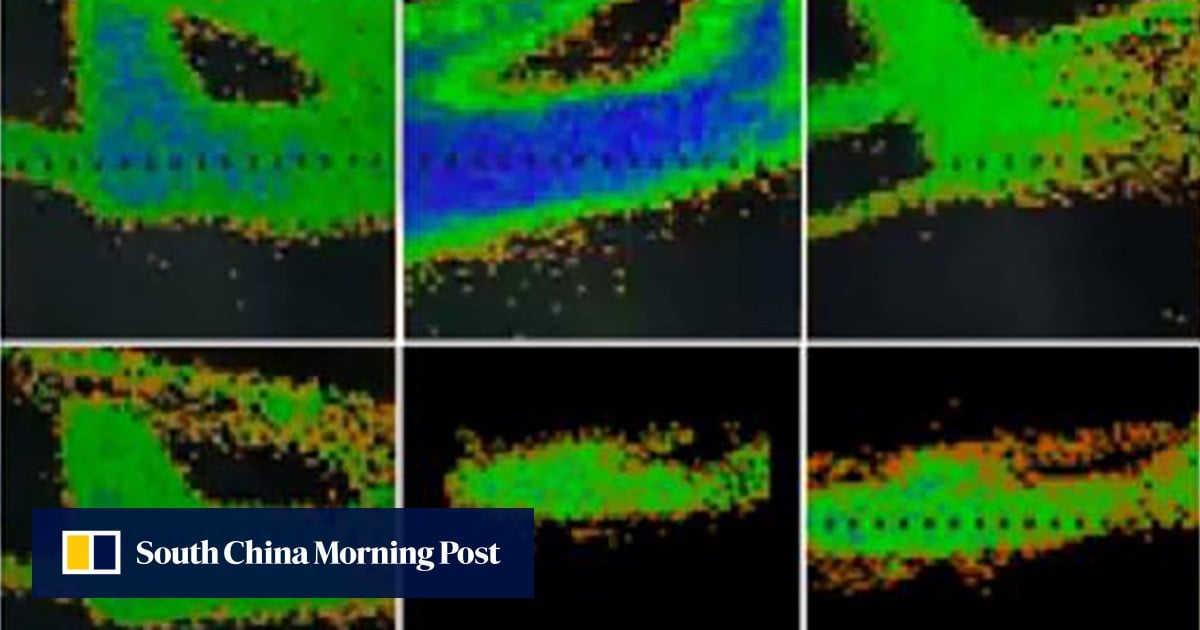
China’s heat-seeking radar with 300km range boosts anti-stealth tech, say defence scientists
Engineers say their small infrared search-and-track system can pick up the heat signature of a fast-moving aircraft from an unusually long distance
In distant target-searching mode, the radar can scan the entire sky in just a few seconds, faster than most existing heat seekers, the team says​

1735564406330.png


@Nuffle
 
Last edited:
What about when it's a 6th generation fighter versus another 6th generation fighter?

IMHO, the probability of a dogfight scenario between two stealth fighters is very slim. Stealth aircraft designed for 6th generation will likely never get close enough to engage in traditional dogfighting, especially when BVR engagements are so effective, and when AI, long-range missiles, and electronic warfare are factored in.

Air superiority will be decided at long ranges, with pilots relying heavily on their sensors, countermeasures, and AI systems to track and destroy their adversaries before a visual encounter occurs.
 
Which fighter do you think can catch up with the J36 with a cruising speed of Mach 2 and a maximum speed of Mach 3.5?
and how do you know that j36 can able to cruise at mach 2 and will have top speed of mach 3.5?, it too early to predict what a cruising mach 2 and top speed of mach 3.5, you're just speculating nonsense and crap, everyone is guessing right now, nothing is confirmed
 
J-36 is about 24 meters long judging from size comparison with J-20 which is 21 meters long.
No, J20 is not 21 meters long, ( Flanker size) but significantly shorter than Flanker (66 feet for J20, Flanker is 72 feet or 21 meters)
 
No, J20 is not 21 meters long, ( Flanker size) but significantly shorter than Flanker (66 feet for J20, Flanker is 72 feet or 21 meters)

J-20 is 21 meters compared to 20 meters with Su-57 and 18.9 meters with F-22.
 
J-20 is 21 meters compared to 20 meters with Su-57 and 18.9 meters with F-22.

No it is not, most sources are quoting about 20.40 and if you would check it on your own, you would know!

Again I don‘t know what‘s your intention to spread faked, false claims and data but since you have been warned already so often, each of your posts will be rated as repeated trolling with deliberately spreading faked stuff.
 
Last edited:
and how do you know that j36 can able to cruise at mach 2 and will have top speed of mach 3.5?, it too early to predict what a cruising mach 2 and top speed of mach 3.5, you're just speculating nonsense and crap, everyone is guessing right now, nothing is confirmed
the VCE Engine was designed to work at 3-4 Mach 30km.

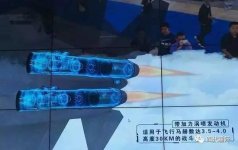
From 2017 Article

w700d1q75cms.jpg

At the aviation technology exhibition held not long ago, relevant Chinese units showed a concept map of a new generation of engines. Judging from the relevant indicators, it should be China's sixth-generation fighter power system. Its disclosure shows that China's sixth-generation fighter and power system have entered the right track. The author believes that this engine is an important basis for the 6th generation fighter engine. The working range of this engine (flight envelope) is “suitable for fighters with a flight speed of Mach 3-4 and a flight altitude of 30,000 meters.” This working range has far exceeded the working range of existing fighters. From the current point of view, the maximum speed of the fifth-generation (Western standard fourth-generation) fighter in various countries is basically below Mach 2, and the maximum flight altitude will not exceed 20,000 meters.
 
What about when it's a 6th generation fighter versus another 6th generation fighter?
We have 2. SAC emphasizes agility. CAC emphasizes range, power, and ceiling by having 3 engines.
 
the VCE Engine was designed to work at 3-4 Mach 30km.

From 2017 Article

View attachment 92095

At the aviation technology exhibition held not long ago, relevant Chinese units showed a concept map of a new generation of engines. Judging from the relevant indicators, it should be China's sixth-generation fighter power system. Its disclosure shows that China's sixth-generation fighter and power system have entered the right track. The author believes that this engine is an important basis for the 6th generation fighter engine. The working range of this engine (flight envelope) is “suitable for fighters with a flight speed of Mach 3-4 and a flight altitude of 30,000 meters.” This working range has far exceeded the working range of existing fighters. From the current point of view, the maximum speed of the fifth-generation (Western standard fourth-generation) fighter in various countries is basically below Mach 2, and the maximum flight altitude will not exceed 20,000 meters.
Did this engine start testing on the ground (bench testing)? nobody knows the current status of this project, USA First develop variable cycle engine (F-120) for YF-23 in late 80s and start a project to further refine and improve its performance, this project name is ADAPTIVE CYCLE ENGIINE TRANSTION PROGRAM GE and P&W prototypes just start testing on the ground (Bench testing), did Chinese variable cycle engine start testing on the ground (Bench testing)?
 
Last edited:
According to Yankeesama, a well respected defence vlogger with a lots of first hand information stated our loyal wing man is not expendable/cost saving concept like the US counterpart but more of a real sixth gen fighter without a pilot, thus providing more possibility, reduce human error during engagement in the air and the parts are interchangeable with manned version in order to cut down maintenance cost/hours.

https://www.guancha.cn/yangji/2024_12_29_760435_2.shtml
 
Last edited:

Users who are viewing this thread

Pakistan Defence Latest

Latest Posts

Back
Top