Türkiye, Pakistan deepen defense ties with KAAN jet export, joint helicopter project

K2RULEZ

Elite Member
Joined
Mar 16, 2012
Messages
39,986
Reaction score
68,342
Reputation
13,751.3
Country of Origin
Country of Residence
1736597478526.jpeg
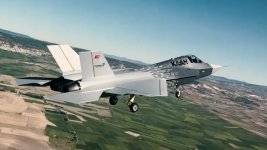
Türkiye's KAAN fighter jet. (TAI Photo)

Türkiye and Pakistan are advancing discussions on key bilateral defense and industrial collaborations, with a focus on the potential export of Türkiye’s fifth-generation fighter jet, KAAN. The talks took place during the eighth Pak-Turk Industrial Expo Joint Working Group meeting in Pakistan.

Representatives from 32 institutions, including major companies from both nations, participated in the discussions.

Why it matters

The meeting highlights the strengthening defense collaboration between Türkiye and Pakistan. Talks on KAAN’s export and plans for a jointly designed helicopter reflect their shared focus on advancing military technology and industrial cooperation.

Details

The meeting was organized by the National Aerospace Science and Technology Park and Defence Industries Secretariat.
Türkiye’s delegation was led by Turkish Aerospace Industries (TAI) General Manager Mehmet Demiroglu and included companies like Milsoft, Crypttech, SDT, Aselsan and Havelsan.
Pakistan’s delegation comprised representatives from 23 companies.

Zoom in

The discussions centered on two key areas:

The export of Türkiye’s fifth-generation fighter jet, KAAN, to Pakistan.

Plans for the design and co-production of a new helicopter, though the purpose of the helicopter has not been disclosed.

Zoom out

The Pak-Turk Industrial Expo Joint Working Group meetings have been held twice yearly since 2019, alternating between Türkiye and Pakistan. These sessions are pivotal in strengthening bilateral relations and advancing strategic defense and technology partnerships.
 
Indian source.

A new challenge for Indian Air Force? Pakistan eyes Turkey's TAI Kaan fifth-generation stealth fighter jets

Pakistan is in advanced talks with Turkey to produce TAI Kaan fifth-generation stealth jets, aiming to diversify from Chinese equipment, posing new challenges to India’s air power and defense strategy

Pakistan's aerial power is likely to have a major boost as the country is in the advanced stage of discussions with Turkey on setting up a production facility for a fifth-generation stealth aircraft, TAI Kaan, in the country.

The facility is expected to focus on producing the local variant of the cutting-edge, next-generation stealth jet.

The report comes even as there have been talks of Pakistan procuring 40 fifth-generation stealth Shenyang J-35 fighter jets from China. These fighter jets are expected to replace the ageing fourth-generation F-16s and French Mirage fighters of Pakistan.

Developed by Turkish Aerospace Industries (TAI), and featuring automatic target recognition, multi-target tracking, ground mapping, AI-assisted target limiting, electronic warfare capacities, and enhanced missile guidance, Kaan—officially known as the TAI Kaan or TF-X—boasts of superior situational awareness and formidable deterrent capabilities.

"Discussions on the export of the Kaan fighter jet and plans for joint development of helicopters highlight shared ambitions to advance defense technology collaboration and industrial partnerships,” according to a Turkish media report.

According to media reports, the discussions may be focused on the technical and logistical aspects of setting up the unit in Pakistan.

“Pakistan might have officially joined the Kaan stealth aircraft project. Multiple subsystems would be manufactured in Pakistan. A joint production line is likely being established. This will reduce the financial burden considerably and provide jobs for Pakistanis,” EurAsian Times quoted a source as saying.

Nonetheless, according to Indian Air Force veteran Air Marshal Anil Chopra (retd), Kaan is not going to be ready for induction before 2030.

He noted that a cash-strapped Pakistan may not be able to purchase two different stealth fighters, and the talks with Turkey are on because Pakistan realizes its military cannot depend on Chinese equipment alone and needs to diversify. "Through Kaan, they strengthen their defense cooperation with a trusted and reliable partner, Turkey,” EurAsian Times quoted him as saying.

The reports of Pakistan's fifth-generation fighter jets ambitions come even as Indian Air Force Chief Air Chief Marshal A. P. Singh recently expressed concerns over the northern as well as the western adversaries increasing their air forces at a "very rapid pace" while IAF is awaiting the delivery of Tejas aircraft.

Meanwhile, India's fifth-generation fighter program, primarily focused on the Advanced Medium Combat Aircraft (AMCA), is expected to be ready only by 2028.
The Indians are hoping that Pakistan is unable to acquire the KAAN platform due to monetary constraints.
 
KAAN stealth jet factory coming to Pakistan with Turkish help

Turkey and Pakistan are in advanced discussions about the establishment of a production facility for the KAAN stealth aircraft in Pakistan, sources reported.
1736598957232.jpeg


This strategic collaboration is poised to bolster defense capabilities and foster closer military ties between the two nations. The new facility will focus on producing the Pakistani variant of the KAAN aircraft, a cutting-edge, next-generation stealth jet designed to enhance Air Force capabilities.

The KAAN aircraft, originally developed by Turkey, has gained significant attention in global defense circles due to its advanced stealth features and state-of-the-art technology.


The aircraft is designed to challenge traditional fighter jets, with features aimed at minimizing radar detection, improving maneuverability, and increasing payload capacity.

The discussions between Turkey and Pakistan primarily revolve around the technical and logistical aspects of setting up the production facility in Pakistan.

Once operational, the plant will not only manufacture KAAN aircraft for Pakistan’s Air Force but could potentially serve as a base for broader regional cooperation in defense manufacturing.


A significant aspect of the Pakistani variant of the KAAN is the use of Chinese WS-10G engines. These engines are known for their high performance and reliability, and their integration into the KAAN jet will enhance its operational capabilities.

The choice of the WS-10G engine is a clear indication of the deepening defense ties between Pakistan and China, with both countries increasingly collaborating on advanced military technologies.

This deal is expected to have significant strategic implications for both countries. For Pakistan, the production of the KAAN aircraft on home soil will help modernize its air force and provide a boost to its defense industry. The collaboration with Turkey also signals the strengthening of bilateral relations in defense and technology.


For Turkey, the agreement offers an opportunity to expand its defense exports, with Pakistan emerging as a key partner in this venture. The shared expertise and technology between the two countries could pave the way for future collaborations on military aircraft and other defense technologies.

Moreover, the inclusion of Chinese engines in the KAAN variant for Pakistan adds another layer of complexity to the deal. It underscores the growing military cooperation between China and Pakistan, which may influence regional dynamics in South Asia and beyond.

As the discussions between Turkey and Pakistan progress, the focus will likely shift to the specifics of the production process, with an eye on efficiency and technological excellence.


If successful, the establishment of this production facility could serve as a model for future collaborations between countries in the region, particularly in the areas of defense manufacturing and technology transfer.

A critical aspect of the discussions surrounding the production of the KAAN stealth aircraft in Pakistan is the inclusion of Chinese WS-10G engines.

While these engines are regarded as a high-performance asset, their integration into the Pakistani variant of the KAAN aircraft raises a significant geopolitical question: will China allow a NATO member like Turkey to gain access to this advanced technology?

China has long been cautious about sharing sensitive military technologies, especially with countries that are part of military alliances such as NATO.

The concern is that advanced technology could be used to benefit rival powers or compromise national security interests. Given that Turkey is a member of NATO, a military alliance that often has differing interests from China, this situation presents a delicate balancing act.

China’s approval of the WS-10G engine for the KAAN aircraft could be influenced by several factors, including its broader strategic goals in South Asia and its relationship with both Pakistan and Turkey.

China has a longstanding defense relationship with Pakistan, with the two countries cooperating on numerous military projects. In this context, supplying the WS-10G engine to Pakistan seems to align with China’s interests in maintaining strong ties with its strategic partner.

However, China’s relationship with Turkey is more nuanced. While Turkey has maintained a cooperative relationship with China in various areas, including trade and infrastructure development [such as the Belt and Road Initiative], it has also participated in NATO’s defense structures and has aligned itself with Western powers on certain global security issues.

This dual alignment may make China cautious about fully embracing Turkey’s access to sensitive military technology, as it could risk undermining its relationships with countries like the United States, which has a contentious history with both Turkey’s NATO membership and China’s rise as a global power.

Turkey, positioned at the crossroads of Europe and Asia, plays a vital role in the delicate balance of global geopolitics. Its participation in NATO means that it often finds itself at odds with Russia and China on various issues, yet Turkey has historically pursued an independent foreign policy.

This balancing act has allowed Turkey to maintain diplomatic relations with China while simultaneously engaging with Western allies.

The possibility of gaining access to the WS-10G engine would undoubtedly bolster Turkey’s defense capabilities and provide a significant technological boost to the KAAN aircraft.

However, Turkey’s NATO membership presents a unique challenge for China, which may have concerns about the long-term implications of such a deal.

Specifically, China may worry that providing advanced military technology to Turkey could potentially benefit NATO or be leveraged by the alliance in the future.

Given Turkey’s strategic importance and its ability to maintain relations with both NATO and China, it could use this position to its advantage in negotiations.

China may ultimately decide to permit Turkey’s access to the WS-10G engine, albeit with certain conditions or limitations. These conditions might include ensuring that the technology is not transferred to other NATO members or that it is used exclusively for Pakistan’s defense needs.

Additionally, China may see this as an opportunity to strengthen its relationship with Pakistan without compromising its interests in the broader global context.

By allowing Turkey access to the WS-10G engine, China could solidify its partnership with Pakistan while fostering a sense of trust and collaboration with Turkey.

However, this could also be a calculated risk, as China would need to monitor Turkey’s military alliances and actions closely to ensure the technology does not end up benefiting NATO or disrupting its own defense strategies.

The question of whether China will allow Turkey, as a NATO member, to access the WS-10G engine remains complex and intertwined with broader geopolitical considerations.

While Turkey’s relationship with both China and NATO presents a unique situation, it also offers an opportunity for China to strengthen its ties with Pakistan and potentially bring Turkey into a more cooperative defense relationship.

Ultimately, China’s decision will likely depend on a range of factors, including the political and military landscape in South Asia, Turkey’s willingness to respect Chinese interests, and the overall balance of power between NATO and China.

As both countries continue to negotiate, the outcome of this deal will not only have implications for Turkey and Pakistan but could also shape the future of international defense collaboration in the region.

In conclusion, the potential production of the KAAN stealth aircraft in Pakistan represents a significant development in the defense sector for both Turkey and Pakistan.

This partnership not only strengthens bilateral relations but also enhances the military capabilities of both nations, positioning them as key players in the evolving landscape of global defense technology.

 
The Helicopter is well needed to replace our older models and to gain expertise in field although I kinda wish we had done something like this earlier

The future roadmap for PAF seems all over the place, I hope PAF doesn't do things the way they used by having a half a dozen type fighters doing essentially the same job but seems like they doing it again with the KAAN and the J-35
 
Now imagine if the PAF pulls the JFX off. Formidable lineup. Completely sidelined the US after the F-16 fiasco and forged its own path. This is the power of joint ventures and striving for self-reliance. The PAF is the best professional institution in Pakistan.
 
The Helicopter is well needed to replace our older models and to gain expertise in field although I kinda wish we had done something like this earlier

The future roadmap for PAF seems all over the place, I hope PAF doesn't do things the way they used by having a half a dozen type fighters doing essentially the same job but seems like they doing it again with the KAAN and the J-35

Diversification is highly beneficial. It's particularly beneficial when your adversary is uncertain. I'm particularly interested in the JFX. Even if it doesn't materialise like the Azm, it won't significantly impact the overall situation. Pakistan is making progress with the J-35 and KAAN.
 
Last edited:
KAAN and J-35 in PAF is absolutely amazing. The money for this will be significant. I suspect the Saudis must be involved, coincedence they announced intention to buy 100 KAAN around the same time as this announcement?
 
KAAN and J-35 in PAF is absolutely amazing. The money for this will be significant. I suspect the Saudis must be involved, coincedence they announced intention to buy 100 KAAN around the same time as this announcement?

The Indians are scratching their heads. Also with naval acquisitions. Frigates and subs. Where is Pakistan getting all this money from?
 
To be honest they have a point, what is being procured far exceeds our official defence budget....

It definitely is, but Pakistan is likely receiving preferential treatment. The repayment deal is most likely favorable. Pakistan cannot wait for too long when India is also going crazy with their acquisitions. Pakistan will have to keep some level of parity.

I would be very pleased when Pakistan is able to deploy advanced SLCMs/SLBMs from its submarines. The icing on the cake would be progress on the Ababeel MIRV and a longer-range missile. All in all, if these projects materialise Pakistan would have modernised at a rapid pace.
 
Last edited:
It definitely is, but Pakistan is likely receiving preferential treatment. The repayment deal is most likely favorable. Pakistan cannot wait for too long when India is also going crazy with their acquisitions. Pakistan will have to keep some level of parity.
China is probably giving us generous deals, I think this is the reason why we have become so hooked on Chinese maal recently.
 
China is probably giving us generous deals, I think this is the reason why we have become so hooked on Chinese maal recently.

Not only that. China is advancing rapidly with tech and capabilities. Additionally, favorable deals for Pakistan. Besides, Pakistan won't get any offensive weapons from Western countries. Western countries won't sell to Pakistan due to India. I can notice a lot of chagrin in Western countries and especially the US. They are not happy with Pakistan finding alternative means to acquire advanced capabilities. The Western countries have always wanted to squeeze so that India gets an edge over Pakistan. The US refusal to sell more F-16s to Pakistan exactly stems from appeasing India. It hasn't worked.
 
Last edited:
Not only that. China is advancing rapidly with tech and capabilities. Additionally, favorable deals. Besides, Pakistan won't get any offensive weapons from Western countries. Western countries won't sell to Pakistan due to India. I can notice a lot of chagrin in Western countries and especially the US. They are not happy with Pakistan finding alternative means to acquire advanced capabilities. The Western countries have always wanted to squeeze so that India gets an edge over Pakistan. It hasn't worked.
I think it has less to do with wanting to give India the edge and more to do with simply India having more money and western manufacturers don't want to lose out on the pie by selling to Pakistan, it's simple business at the end of the day.
 
I think it has less to do with wanting to give India the edge and more to do with simply India having more money and western manufacturers don't want to lose out on the pie by selling to Pakistan, it's simple business at the end of the day.

Money is a factor, but I think there is a bias towards an Islamic nuclear Pakistan. Pakistan has always wanted more F-16 fighters, and the US refused. There is a great deal of opposition in Western countries to selling offensive weapons to Pakistan. The Germans also, at some point, refused to sell their Type 214 submarines to Pakistan due to technology transfer (ToT) and the use of German engines. The Swedish Gripen fighter sale was also refused. Western countries often cite human rights concerns, but this is obviously not the real reason.

Western countries sell to many countries that have a dubious record in human rights. This is clearly not the real reason for the restrictions on arms sales to Pakistan.

There is no doubt that India also lobbies in Western countries to prevent the sale of offensive weapons to Pakistan.
 
Last edited:
Money is a factor, but I think there is a bias towards an Islamic nuclear Pakistan. Pakistan has always wanted more F-16 fighters and the US refused. There is a great deal of opposition in Western countries to sell offensive weapons to Pakistan. The Germans also at some point refused to sell their type 214 submarines to Pakistan due to ToT and the use of German engines.

There is no doubt that India lobbies in Western countries to not sell offensive weapons to Pakistan.
It also has to do with the fact the enemy has changed for the West, Pakistan was very important for the US because we were against communism and the USSR also we were in the right geographic position to do so they were willing to give us essentially anything we wanted

but now the enemy has shifted and India is far more important as a front against China so they are willing sell them anything they want
 

Users who are viewing this thread

Pakistan Defence Latest

Latest Posts

Back
Top