Indian Politics and Internal News

Mera desh badal raha hai, aagey badh raha hai as ModiGee says


Love at the workplace is the new social glue for migrant workers from eastern India moving to Kerala in droves for higher wages and a welfare net that includes insurance and accommodation. The trend is reflected in many Malayali women marrying "guest workers" in India's homegrown Gulf, which is projected to have a migrant population of around 50 lakh by 2030.

An exodus of young, educated Malayali men seeking professional opportunities abroad seems to have created not just a productivity gap in the state but also played a role in local women choosing their life partners from among eligible bachelors from the east looking to settle in Kerala.

Rajendra Naik, a native of Odisha employed as a machine operator in a plywood factory in Perumbavoor, married Rajani from Kollam some years ago after a distant relative of the bride's family suggested the match.

"It was an arranged marriage, and we met at her house," says Rajendra. "I am more of a Malayali now, although my surname is a giveaway. I love the local festivals, and my wife makes excellent fish curry. Life couldn't be better."

Rajendra and Rajani's children speak Malayalam and can understand Odiya, bridging whatever remains of the regional and cultural divide.
The influx of migrants from Bengal, Bihar, Assam and Odisha has been critical to sustaining productivity in Kerala for over a decade. Even an unskilled labourer can earn up to Rs 25,000 in monthly wages, far above the national average.

Rajendra, who is also the vice president of the AITUC-affiliated National Migrant Workers' Union (NMWU), says eligible young men from the eastern region are preferred as grooms because they work hard, are willing to stay back in Kerala, adapt culturally, and don't expect dowry.

Learning Malayalam poses a problem, but many workers pick up the language after spending years in the state. LDF govt's encouragement of migrants, officially referred to as guest workers, through various schemes makes settling in Kerala an easy choice to make for most.

Most cross-cultural weddings occur in the hinterland and the hilly parts of Kerala, where migrant workers are employed as carpenters, masons, rubber tappers and farmhands. "The urge to have a life partner increases when you work in remote areas. Cultural identities don't matter," says Aman Naik, a foreman in a timber mill. Aman fell in love with Raji, a resident of Wayanad, and approached her family with a marriage proposal. They accepted him without hesitation.

Sabeenath, from Kattapanna in Idukki, was a single mother when she met Aliyar, a Bihar native. "My first husband deserted me, but Aliyar was ready to accept me with my children," she says.

The family bought a small house in Perumbavoor and settled there.

Sandhya R S, professor and head of the sociology department at Kerala University, believes that learning Malayalam is the key to assimilation for migrant workers.

"What makes this trend interesting is that many of these migrants don't stay in their old jobs long. Some start businesses or secure better jobs over time, which helps them gain stability and respect," she says.

A demographic study on migrant workers released by Central University of Punjab in 2021 pegged the number of migrant workers in Kerala till 2017-18 at 31 lakh.

Currently, one out of every four workers in Kerala are from other states. The ratio is even more skewed in urban areas like Ernakulam, where one out of every two workers are migrants.

Binu Bos, general secretary of NMWU, says social acceptance of migrant workers in Kerala results from consistent efforts by various organisations, including his union.

"There was a time when these workers were subjected to exploitation. Their daily wage in 2002 was Rs 250, while native workers used to get Rs 700. The union created awareness about wages. We encouraged them to invest their money in Kerala and educate their children in the schools here," he says.

Benoy Peter, executive director of Centre for Migration and Inclusive Development, points out that Kerala now offers the best working conditions for migrant workers.

Regards
 
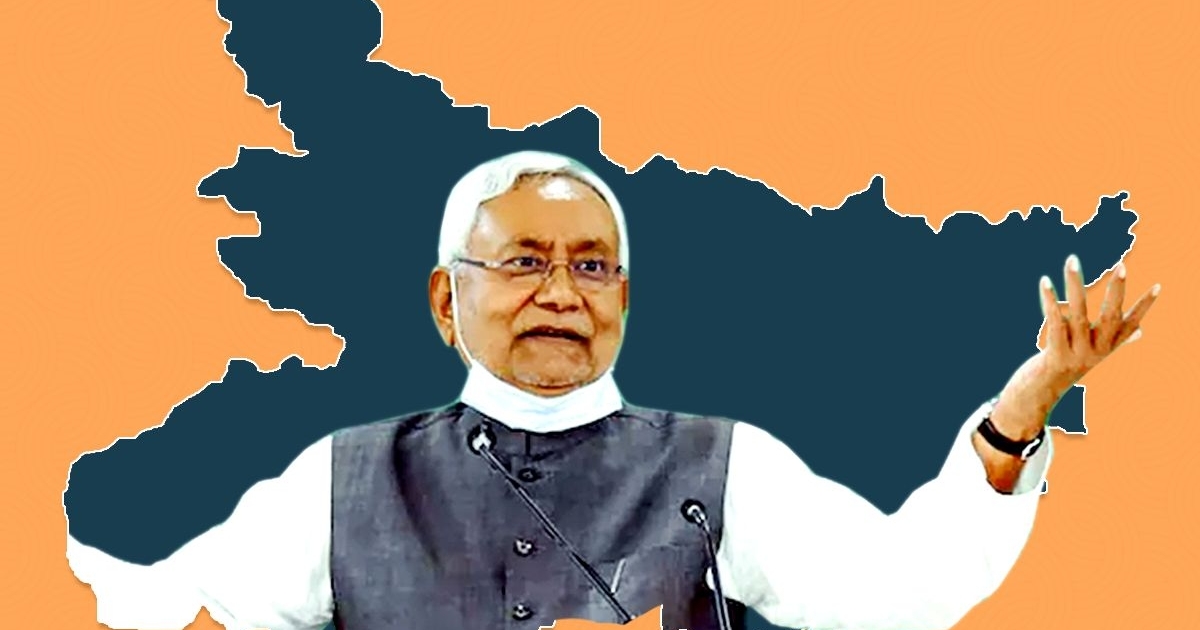
Economic growth rate of Bihar is highest in India
Groth rate is calculated and reported by the Bihari govt, which makes it a totally unreliable and worthless figure. The figures they claim are just as hollow as the bridges they build which collapse after a single rainfall. In reality, Bihar’s growth rate is lower than Somalia’s.
 
Groth rate is calculated and reported by the Bihari govt, which makes it a totally unreliable and worthless figure. The figures they claim are just as hollow as the bridges they build which collapse after a single rainfall. In reality, Bihar’s growth rate is lower than Somalia’s.
Do you really think it’s that easy to misreport the GDP growth rate? And what would Bihar state government gain from falsifying it?
 
Do you really think it’s that easy to misreport the GDP growth rate? And what would Bihar state government gain from falsifying it?
Yea its pretty easy in a lawless place like Bihar, its not exactly Singapore with checks and balances, and really, what would they gain from falsifying it? were you like born yesterday? 🤣 Obviously they would gain votes sparky since sheep like you are willing to trust their figures. Rampant unemployment in Bihar is more than enough for any rational person to doubt growth figures, if they were growing at 15%, migrants would be moving into Bihar not out of it.


And this one is the best of them all

 
Last edited:
Yea its pretty easy in a lawless place like Bihar, its not exactly Singapore with checks and balances, and really, what would they gain from falsifying it? were you like born yesterday? 🤣 Obviously they would gain votes sparky since sheep like you are willing to trust their figures. Rampant unemployment in Bihar is more than enough for any rational person to doubt growth figures, if they were growing at 15%, migrants would be moving into Bihar not out of it.


And this one is the best of them all

All the data you presented above also comes from the Bihar government. So if you consider the GDP growth data useless, then every other piece of data you cited is equally useless.
Why are you even quoting the data when you just said that every statistic from Bihar state government is useless?

no one votes in elections based on GDP growth rates. Neither state nor central governments seek votes by highlighting their GDP growth during their tenure. Instead, they appeal to voters based on infrastructure development, religion, caste, ethnicity, language, and sometimes even foreign policy. From an election perspective, GDP growth is largely irrelevant.
 
All the data you presented above also comes from the Bihar government. So if you consider the GDP growth data useless, then every other piece of data you cited is equally useless.
Why are you even quoting the data when you just said that every statistic from Bihar state government is useless?

no one votes in elections based on GDP growth rates. Neither state nor central governments seek votes by highlighting their GDP growth during their tenure. Instead, they appeal to voters based on infrastructure development, religion, caste, ethnicity, language, and sometimes even foreign policy. From an election perspective, GDP growth is largely irrelevant.

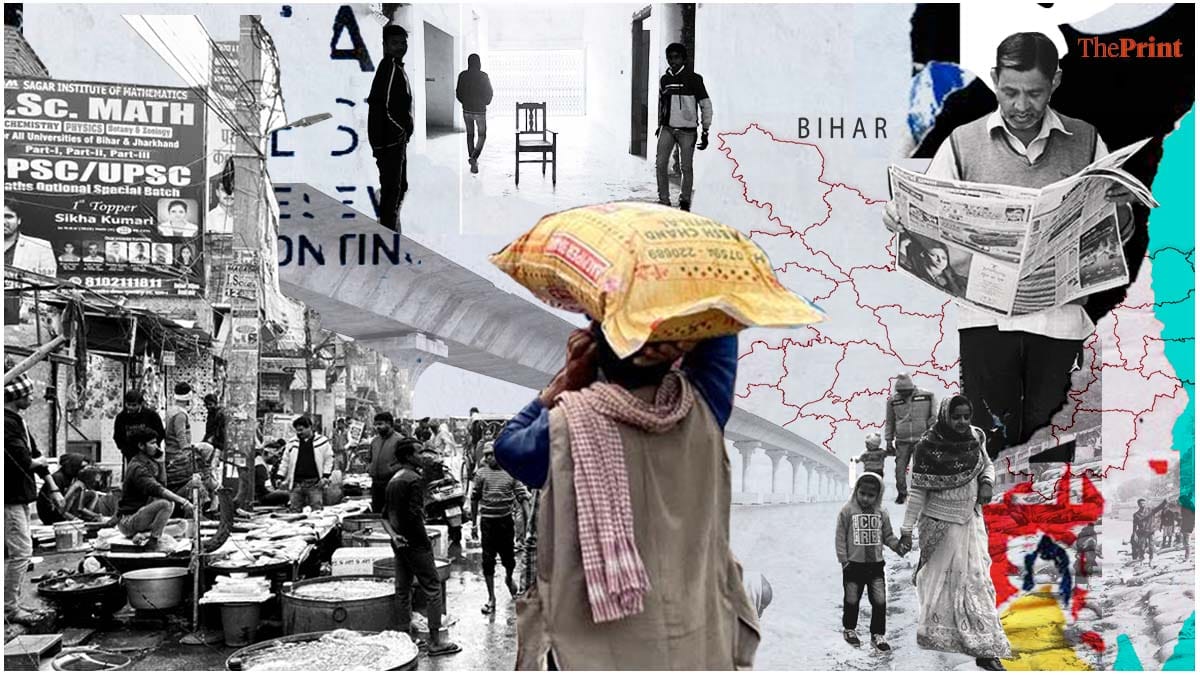
Wrong, the data i presented comes from journalists who have done their own investigation. If 5 lakh people with Engineering degrees apply for a peon position, it is kind of hard to hide that data - it is simple visible data that doesn't require much research or investigation for a journalist to uncover the truth. Similarly, if a whole damn village is unemployed, all a journalist needs to do is visit the village the talk to the people there, which is exactly what they have done in this article- https://theprint.in/india/unemploye...hars-youth-is-of-struggle-despair/826066/?amp
So i don't know where you get that this is coming from the Bihar govt.
GDP data is a million times harder to verify, it depends on govt appointed people/statisticians making tens of thousands of calculations, assumptions and estimations (this is where there is scope for lies) for several districts and finally come up with a figure for the state. There are not too many journalists who have endless time to interview these bureaucrats, statisticians and ask them how they came up with the figures, they know they will face massive red tape and ultimately find it not worth the effort. If someone did bother to do an investigation, we will probably find that the growth rate is closer to 5% than it is to 15.
 
Last edited:
To view this content we will need your consent to set third party cookies.
For more detailed information, see our cookies page.


To view this content we will need your consent to set third party cookies.
For more detailed information, see our cookies page.
 
Wrong, the data i presented comes from journalists who have done their own investigation. If 5 lakh people with Engineering degrees apply for a peon position, it is kind of hard to hide that data - it is simple visible data that doesn't require much research or investigation for a journalist to uncover the truth. Similarly, if a whole damn village is unemployed, all a journalist needs to do is visit the village the talk to the people there, which is exactly what they have done in this article- https://theprint.in/india/unemploye...hars-youth-is-of-struggle-despair/826066/?amp
So i don't know where you get that this is coming from the Bihar govt.
GDP data is a million times harder to verify, it depends on govt appointed people/statisticians making tens of thousands of calculations, assumptions and estimations (this is where there is scope for lies) for several districts and finally come up with a figure for the state. There are not too many journalists who have endless time to interview these bureaucrats, statisticians and ask them how they came up with the figures, they know they will face massive red tape and ultimately find it not worth the effort. If someone did bother to do an investigation, we will probably find that the growth rate is closer to 5% than it is to 15.
The Ministry of Statistics and Programme Implementation (MoSPI), through the National Statistical Office (NSO), is responsible for collecting and reporting GDP data for Indian states. the actual estimation of Gross State Domestic Product (GSDP) is carried out by the respective Directorates of Economics and Statistics (DES) in each state, following guidelines set by MoSPI and the Reserve Bank of India (RBI).

Other agencies involved in analyzing and publishing GDP growth data include:

Reserve Bank of India (RBI) Publishes state-wise economic reports.

NITI Aayog Uses GDP data for policy recommendations.

Finance Commission of India Considers GSDP data for fund allocation.

Thus, while states generate their own GSDP estimates, they follow a standardized methodology overseen by central agencies like MoSPI and RBI.
 
yippeee! Biggest state in the fastest growing economy will soon achieve a THIRD of Apple's revenue. wonderful.

Modi govt is getting too lethargic
 
The Act defined Konkani as ‘Konkani in Devanagari script’ and granted Marathi near-equal status. The exclusion of Konkani in Roman script will go down as the greatest betrayal of the 20th century.

heraldgoa-main%2F2025-02-04%2F4zto2uyn%2FScreenshot-2025-02-04-091333.png


Tomazinho Cardozo

PANJIM: It is a fact that we need an official language for our State, as it helps citizens improve their quality of life in all aspects. But has Goa’s Official Language helped improve the living conditions of Goan citizens? No! The Goa Official Language Act (OLA) has done — and continues to do — great injustice to the minority community of Goa.

Consider the language scenario in Goa in 1987 when the OLA was passed. Goans were divided over both the issue of language and the script. Soon after Liberation, a conflict arose between two languages —Marathi and Konkani. Over 95% of Goa’s population spoke Konkani at the time, but not all considered it their mother tongue. As a result, the majority of Hindus in Goa wanted Marathi to be the official language, while practically the entire Christian community, along with a small percentage of Hindus, supported Konkani as the official language. A fierce language battle ensued, and many lives — especially those of Konkani-in-Roman-script supporters — were lost.

Throughout the agitation, we fought for the Konkani language. At no point was the issue of script raised. It was a fight for Konkani alone, not for any particular script.

However, when the Goa Official Language Act of 1987 was passed, making Konkani the official language, 95% of Konkani supporters had little reason to celebrate. Instead, they mourned for two key reasons: The Act defined Konkani as ‘Konkani in Devanagari script’. Marathi was granted near-equal status, as the Act stated that "Marathi shall also be used for all official purposes."

By doing this, the so-called leaders of the Konkani movement betrayed a significant section of Konkani supporters by imposing the Devanagari script.

This act of exclusion will go down in Goan history as one of the greatest betrayals of the 20th century. And as expected, this led to a reaction. Naturally, supporters of Konkani in Roman script had to fight for their rights, a battle that continues to this day.

Following the enactment of the Official Language Act in 1987, Konkani-in-Roman-script followers faced blatant discrimination. Their written works were ignored, their contributions dismissed, and their representation systematically suppressed. The architects of the OLA, who controlled government and semi-government bodies, attempted to eliminate Roman-script Konkani altogether. Some examples of this injustice include:

• The Goa Konkani Akademy, constituted by the government, neglected Roman-script Konkani supporters. Only one or two members sympathetic to Devanagari script were included in the 12–15-member committee, and they were never considered for the positions of President or Vice-President.

• The same bias was evident in the constitution of statutory bodies at both State and National levels, including the Advisory Board of Sahitya Akademi, New Delhi, where only one out of ten members represented Roman-script Konkani.

• The Kala Academy, which initially gave annual literary awards for books in Roman-script Konkani, eventually succumbed to pressure from Devanagari Konkani leaders and discontinued these awards.

• No supporters or writers of Roman-script Konkani were appointed to positions in institutions such as the Goa Konkani Akademy, the Art & Culture Department, the Official Language Cell, All India Radio, or Doordarshan.

• Literary works written in Roman script were excluded from Sahitya Akademi awards. The message was clear: if an author wanted recognition, they had to write in Devanagari script.

• And now, another conspiracy is in motion—one that will prevent minority youth from securing government jobs. Previously, knowledge of Konkani was sufficient for government job interviews. However, a new requirement mandating written examinations in Konkani in Devanagari script will be a devastating blow to the very community that shed blood to make Konkani Goa’s official language.


@Mrloveday @Paitoo @Joe Shearer @Cryptonian @Lulldapull

@Muji.Iqbal .. this isn't about China, so you needn't bother commenting.
 
This was due to high anti-Muslim and anti-Urdu sentiment after the independence. India preferred Devanagari script over Middle Eastern and Western scripts. Konkani was spoken by mostly Christians who wrote it in Latin scrip.
 
This was due to high anti-Muslim and anti-Urdu sentiment after the independence. India preferred Devanagari script over Middle Eastern and Western scripts. Konkani was spoken by mostly Christians who wrote it in Latin scrip.
So where was the anti-Muslim and anti-Urdu sentiment here?
 
The Act defined Konkani as ‘Konkani in Devanagari script’ and granted Marathi near-equal status. The exclusion of Konkani in Roman script will go down as the greatest betrayal of the 20th century.

heraldgoa-main%2F2025-02-04%2F4zto2uyn%2FScreenshot-2025-02-04-091333.png


Tomazinho Cardozo

PANJIM: It is a fact that we need an official language for our State, as it helps citizens improve their quality of life in all aspects. But has Goa’s Official Language helped improve the living conditions of Goan citizens? No! The Goa Official Language Act (OLA) has done — and continues to do — great injustice to the minority community of Goa.

Consider the language scenario in Goa in 1987 when the OLA was passed. Goans were divided over both the issue of language and the script. Soon after Liberation, a conflict arose between two languages —Marathi and Konkani. Over 95% of Goa’s population spoke Konkani at the time, but not all considered it their mother tongue. As a result, the majority of Hindus in Goa wanted Marathi to be the official language, while practically the entire Christian community, along with a small percentage of Hindus, supported Konkani as the official language. A fierce language battle ensued, and many lives — especially those of Konkani-in-Roman-script supporters — were lost.

Throughout the agitation, we fought for the Konkani language. At no point was the issue of script raised. It was a fight for Konkani alone, not for any particular script.

However, when the Goa Official Language Act of 1987 was passed, making Konkani the official language, 95% of Konkani supporters had little reason to celebrate. Instead, they mourned for two key reasons: The Act defined Konkani as ‘Konkani in Devanagari script’. Marathi was granted near-equal status, as the Act stated that "Marathi shall also be used for all official purposes."

By doing this, the so-called leaders of the Konkani movement betrayed a significant section of Konkani supporters by imposing the Devanagari script.

This act of exclusion will go down in Goan history as one of the greatest betrayals of the 20th century. And as expected, this led to a reaction. Naturally, supporters of Konkani in Roman script had to fight for their rights, a battle that continues to this day.

Following the enactment of the Official Language Act in 1987, Konkani-in-Roman-script followers faced blatant discrimination. Their written works were ignored, their contributions dismissed, and their representation systematically suppressed. The architects of the OLA, who controlled government and semi-government bodies, attempted to eliminate Roman-script Konkani altogether. Some examples of this injustice include:

• The Goa Konkani Akademy, constituted by the government, neglected Roman-script Konkani supporters. Only one or two members sympathetic to Devanagari script were included in the 12–15-member committee, and they were never considered for the positions of President or Vice-President.

• The same bias was evident in the constitution of statutory bodies at both State and National levels, including the Advisory Board of Sahitya Akademi, New Delhi, where only one out of ten members represented Roman-script Konkani.

• The Kala Academy, which initially gave annual literary awards for books in Roman-script Konkani, eventually succumbed to pressure from Devanagari Konkani leaders and discontinued these awards.

• No supporters or writers of Roman-script Konkani were appointed to positions in institutions such as the Goa Konkani Akademy, the Art & Culture Department, the Official Language Cell, All India Radio, or Doordarshan.

• Literary works written in Roman script were excluded from Sahitya Akademi awards. The message was clear: if an author wanted recognition, they had to write in Devanagari script.

• And now, another conspiracy is in motion—one that will prevent minority youth from securing government jobs. Previously, knowledge of Konkani was sufficient for government job interviews. However, a new requirement mandating written examinations in Konkani in Devanagari script will be a devastating blow to the very community that shed blood to make Konkani Goa’s official language.


@Mrloveday @Paitoo @Joe Shearer @Cryptonian @Lulldapull

@Muji.Iqbal .. this isn't about China, so you needn't bother commenting.
Devnagri is the perfect for Konkani. When these pro Roman script clowns type "Ni", what would it mean नी or णी.
 
lol

To view this content we will need your consent to set third party cookies.
For more detailed information, see our cookies page.
 

Users who are viewing this thread

Pakistan Defence Latest

Back
Top