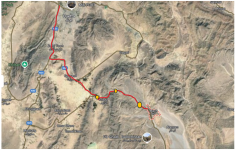
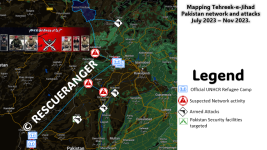
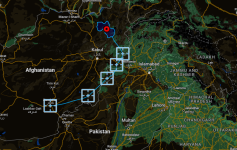
The trains usual route originates from Karachi and after crossing Sibi it winds inwards towards Bolan in the direction of March hugging the N65 Highway, from Mach to Quetta it passes three large tunnels namely Windy Pass Tunnel, Mary Jane Tunnel and Kolpur (Old Mc'Caffery Tunnel).
View attachment 107080
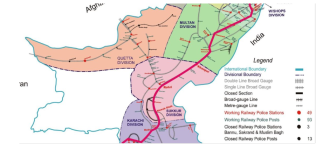
Network map (C) Gov Of Pakistan:
View attachment 107082
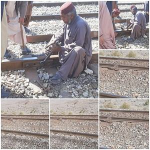
This stretch of train track has been frequently attacks by terrorists with records dating back all the way to 2004.
View attachment 107081
Hirak and Mach seem to be the most frequently targeted routes mainly because of the nearby coal mine and the chance the train carries security personnel returning from annual leave from Sindh to Balochistan.
As I stated earlier 2024 saw an increase of terrorism incidents by over 94% when compared to previous years.
View attachment 107083
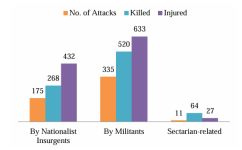
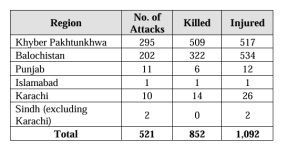
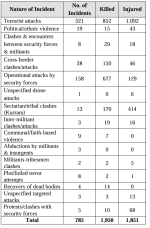
Balochistan witnessed a significant surge in terrorist attacks and casualties in 2024. The province experienced an 84% rise in attacks compared to the previous year, with 202 terrorist incidents that claimed 322 lives and injured 534 others. In contrast, 229 people were killed in such attacks in the province in 2023. Attacks by various Baloch insurgent groups, primarily the Baloch Liberation Army (BLA) and the Balochistan Liberation Front (BLF), saw a staggering 119% increase, accounting for 171 incidents in the province.
These attacks resulted in 261 fatalities and 412 injuries. Insurgent groups carried out numerous high-impact, coordinated operations targeting security forces, civilians, and non-Baloch workers, miners and travelers.
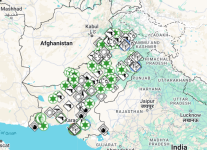
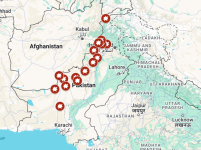
The violence by these groups spread across 21 districts, predominantly in the central, southern, and southwestern parts of the province, focusing largely on security forces.
Religiously motivated militant groups, including the Tehreek-e-Taliban Pakistan (TTP) and the Islamic State (IS-K), were responsible for 30 attacks in the province, up from 29 in the previous year.
These attacks caused 60 deaths and injured 122 people. While the TTP and its affiliates concentrated their operations in the northern, predominantly Pashtun-populated districts bordering Afghanistan and Khyber Pakhtunkhwa, IS-K activities were more prevalent in Kalat, Pishin, Qillah Abdullah, Qilla Saifullah, Quetta, and Sibi districts.
View attachment 107084
View attachment 107085