
hydrabadi_arab
Trusted Member

Sound like horseshit. But the way copper/gold price is increasing, Reko Diq will be worth $1 trillion by 2030.
Follow along with the video below to see how to install our site as a web app on your home screen.
Note: This feature may not be available in some browsers.

even if pakistan is the wealthiest country in terms of minerals, nothing will change, the system is massively corrupt and rigged, things will get worse if people did not do anything about itHandled well, this can eliminate PAK's persistent CAD deficit and the Balochistan crisis. Handled poorly, this will increase foreign intervention in Balochistan.
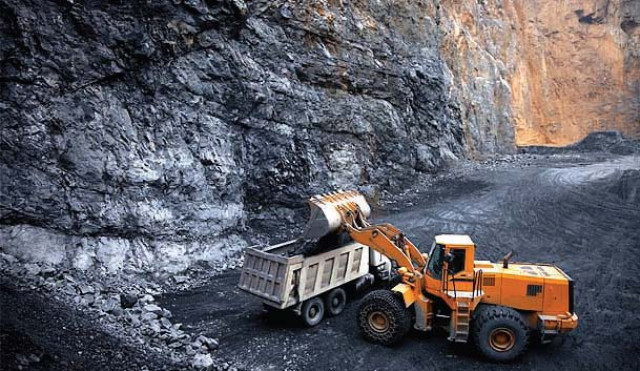
Mineral wealth stands at $8tr | The Express Tribune
Govt engages investors to extract reserves, plans conference for next monthtribune.com.pk
The government is stepping up efforts to exploit Pakistan's huge mineral wealth potential, estimated at $8 trillion, by engaging both local and foreign investors in different projects.
It has planned to hold a mineral conference next month to showcase the country's mineral wealth in front of investors.
At a recent briefing to the federal cabinet, it was informed that Pakistan had a mineral wealth of around $8 trillion. Earlier, the potential had been estimated at $6 trillion. The mineral sector employs a workforce of 300,000 and contributes 1% to the gross domestic product (GDP).
The cabinet was briefed about the presence of major minerals and the areas where those reserves were in abundance. To extract the resources, numerous projects are underway, primarily in Balochistan. Community development schemes and skill development initiatives are also being undertaken for the benefit of the people of Balochistan.
Among the mineral sector projects, Reko Diq copper and gold mining is a key project, which is expected to become operational by 2028. Estimates suggest that it will generate a cash flow of $74 billion.
The Reko Diq project, revived by Canada's Barrick Gold, is forecast to start producing copper and gold by 2028, with an initial investment of $5.5 billion. Barrick Gold holds a 50% stake and the reserves are expected to generate $74 billion in free cash flow over 37 years, based on long-term prices.
Saudi Arabian mining company Manara Minerals will acquire a 15% stake in the project, with potential investment of $1 billion. Pakistan's mining sector is increasingly attracting foreign investment as global firms eye the country's untapped mineral deposits. The Reko Diq project, located in Balochistan's Chagai district, has the world's largest untapped copper reserves. The mine is anticipated to generate $2.8 billion in annual exports while creating thousands of jobs and transforming the local economy.
Its planned expansion will increase production to 400,000 tonnes of copper and 500,000 ounces of gold per year through an additional investment of $3.5 billion.
Apart from that, Pakistan has identified five potential mineral projects for offering them to the United Arab Emirates (UAE) for investment and development. The project sites are situated in Chagai, Waziristan and Gwadar.
These include Balochistan Mineral Resources Limited's copper blocks EL-302 and EL-303 in Chagai. In the same area, the Reko Diq copper and gold project is also being implemented. Pakistani and foreign companies have inked a deal for drilling the Reko Diq mine where gold and copper deposits worth billions of dollars are believed to be present.
Other mining blocks include the Frontier Works Organisation's (FWO) copper blocks EL-207 and EL-320 in Chagai, its copper blocks ML-30 and EL-101 in Waziristan and a copper smelter in Gwadar having processing capacity of 50,000-80,000 tonnes per year.
The government has planned to build a rail network to connect Gwadar and Chagai. These projects may be brought in a marketable template for conducting pre-feasibility studies, in collaboration with the consultants.
Consultations on a term sheet shared by International Resources Holding Company will be finalised by Mari Petroleum and the government of Balochistan in working group meetings. The government has also approved the execution of the Siah Dik copper mining project in Balochistan as a private sector Export Processing Zone (EPZ). It has awarded the initiative to China Metallurgical Group Corporation (CMGC), which is already managing the Saindak gold and copper project.
The Export Processing Zone Authority (Epza), established under the Epza Ordinance 1980, is tasked with managing the EPZs to foster industrialisation and export growth.
Located in the Chagai district, the Siah Dik EPZ will focus on mining and processing the copper concentrate. The zone will be operated by Kohesultan Mining Company, a joint venture comprising Tongsin Resources Limited – a subsidiary of CMGC, and local partner Siakoh Mineral Development. The project is spread over 296 acres, with mineral leases covering an additional 4,295 acres.
Regards
Military inc. will take it all and get richer..even if pakistan is the wealthiest country in terms of minerals, nothing will change, the system is massively corrupt and rigged, things will get worse if people did not do anything about it

Even 80 trillion would not make any difference here.
10-15 years of competent governance would change the economic landscape of Pakistan forever.

But it hasn’t been secured. If anything that security is getting worse.Pakistan will get there.
Main priority was securing territory with weapons and nukes. India is a psychotic adversary.
We see examples of Ukraine and Lebanon, no amount of goodwill and relationships translates to enduring security.
But it hasn’t been secured. If anything that security is getting worse.
Relax these are just small time skirmishes. They can't hold a cordon for more than 3 hours.
When you have an army performing like this and without any decent hardware, then its time to worry.

Pakistan's extremely susceptible to Dutch Disease, any large natural resource deposit will exacerbate underlying problems, not solve them (as we might be seeing now in Balochistan).Even 80 trillion would not make any difference here.
10-15 years of competent governance would change the economic landscape of Pakistan forever.
Exactly thisPakistan's extremely susceptible to Dutch Disease, any large natural resource deposit will exacerbate underlying problems, not solve them (as we might be seeing now in Balochistan).
The best option, IMO, is to leave all those minerals in the ground until such time we have indigenous tech to discover, extract, and refine it. For me, the ability to develop that capacity domestically will be a key sign of developmental maturity, which will allow us to use these minerals to maximum effect, be it to advance our industries, generate hard currency gains, create leverage overseas.

But you have small time skirmishes and laborers pulled off getting shot on ethnic backgrounds - meaning it is NOT secure for investment. As a business person I am not interested in putting any money in a place where the situation is this.
Corporations too will be wary unless you can secure the area - so either they’ll ask to have their own PmCs who are more efficient in tackling these elements or they’ll go to Africa or Afghanistan who have better control or allow PmCs.
Marching is a poor metric and talking to weapons is a poor tangent to outline the serious lack of leadership and strategic acumen - combined with frankly a pathetic record in COIN overall.
Not to mention the horrendous exchange rate with militants and casualties but then life is cheap at the rate of one ISPR song to 200 men.


