What book are you reading?

Certainly sounds interesting, I looked it up on amazon and wiki etc...I'll probably read first one over a long flight/trip....as I love sci-fi as you know.

Can this author match or exceed my musketeers?

Verne, Clarke, Heinlein (...with Asimov as D'artagnan).

(Putting aside Herbert which I consider a more fantasy genre, and lovecraft similarly)

(Also putting aside the screenwriting of Lucas and Roddenberry ofc too, since these are visually paced)

But why would it be banned in China in this post 80s era?

Netflix attracted controversy and a ban inside China it seems by starting its take during the cultural revolution. Maybe I'll watch that too later, it was suggested by cpl buddies I know, I just never got around to it.

But that was their decision (i.e they are outside China), generally Chinese authors inside China know the inner realpolitik to work with.
He most definitely exceeds those 3 imo. I am surprised to not see Philip K. Dick in your list.
 
Because it portrayed the Cultural Revolution in the most horrific manner, Netflix's adapatation of this trilogy isn't anywhere near as good as the books. I have heard that the Chinese adaptation is way better than the Netflix one.

There's no easy way to portray the Cultural Revolution as anything but horrific (IMO ofc).

But that's its own long story to get into why.


He most definitely exceeds those 3 imo. I am surprised to not see Philip K. Dick in your list.
It all boils down to preferences in end. Those are the circumstances that dropped my way to impact as they did formatively.

So there is less with time that really strikes me as much later than with the titans generally on any matter. More deja vu to contend with etc....what is truly novel in a novel etc (for my sensibility and now tempered chord-striking).

Verne's own sculpting of the dichotomy of Nemo for example, like he had become a creature of the deep himself in lone righteous (but with unrighteous elements baked in too) vigil....asked profound philosophical questions to me for longer time periods past it. i.e in the end literature has to strike a chord with me that deeply to be lasting in impact, as simply philosophy is one of those things I deeply care about and am fascinated by.

That's what made it unique past the sci-fi wrapped around it....and so it is with parts of the others I mention.

Of course the cut-off to "muskeeterize" it to just 4 is arbitrary. Philip K Dick is very worthy among others that come to mind in the top 10 or top 20 etc. I have no objection if one puts him in their top 4 somewhere at all. Happens in Chess ranking debates I've had over the years too with worthy enthusiasts, literature and even the odd professional there that came my way. Again its just circumstances and preferences....among a real crowd that forms at top with time and unlocking into any human endeavour.
 
You seem to be "just reading" the forum for a while @markhor , hope you get time to contribute again at some point.

You may find this interesting regd the earlier delve I got into regarding Galois et al.

in that my own route to Noether quite some while ago was:

vibration analysis-->symmetry group + Galois---> Noether (Galois inverse etc)

but her contribution to Theoretical Physics of the time is much better known (inevitably and deservingly) from same root concept of symmetry :

To view this content we will need your consent to set third party cookies.
For more detailed information, see our cookies page.
 
Deutsch C1 grammer

It is fate of history that plattdeutsch "simpler" German (that through saxon/frisian etc would influence a lot of what English would derive from)....did not prevail as the standard.

I thought French had difficult grammar (when I was learning it till I got used to it), I was mistaken.... as there is a whole different level of nastiness possible that can be baked in and immovable now:

 
What is the value of a single human life? How does one measure the value of a life? Can such a value even be measured? If it can, by what criteria do we measure it?
@RescueRanger @Joe Shearer @Nilgiri @VCheng @Oscar @Developereo @r3alist
I wasn't tagged here so forgive me for chiming in..

zero value for the most part

gooble says a child dies every 6 minutes in Somalia

show us 1 person who gives a damn, do you know any ?

the truth is brutal, right ? .. but it will set you free

donate to animal shelters if you must, our voiceless furries deserve better, as do our reptiles and others..

humans ? I'll skip, I can give 1 thumbs up on random social media posts but that's about the extent I'm willing to go.
 
What is the value of a single human life? How does one measure the value of a life? Can such a value even be measured? If it can, by what criteria do we measure it?
@RescueRanger @Joe Shearer @Nilgiri @VCheng @Oscar @Developereo @r3alist

It is unfortunately (or maybe fortunately) impossible to measure.

We can try measure the physical capital that was changed by one life as this has objective evidence (and the old adage to leave things in better shape than you found them....the integral of this)....but then the debate starts on immediate and long term capital return (for other humans) and what is more/less impactful in the end.

But there is also immeasurable social capital that are changed by human lives. Like can you measure what your family did for you to then compare to another family or other social unit....before this can be extrapolated further? People change other people's lives in such deep profound ways but also small ways that add up too. So how much has one life done of that (given more than taken on social capital)? It is hard to do with even the social capital "giants" (who go well past the family unit to community and nation and even entire species etc), we only know they have impacted a lot....but a value cannot be determined relatively or absolutely....and in many cases there is still long time ahead for their effects to play out too.

Then there are those that destroy physical and/or social capital and even take (innocent) life directly....and these are clear negative valuations but again we only have a broad sense of just how bad these people are, but we again find it impossible to assign a value for very much the same reason.
 
Last edited:
What is the value of a single human life? How does one measure the value of a life? Can such a value even be measured? If it can, by what criteria do we measure it?
@RescueRanger @Joe Shearer @Nilgiri @VCheng @Oscar @Developereo @r3alist

Firstly, value is a matrix not a single number, since anything, even a pebble, has value along several axes.

A person has emotional value to their loved ones, productivity value to their employer, and commodity value for various parts of their physical body. There are plenty more axes.

For a human, things get more complicated because time comes into play. What is the value of baby Einstein v/s baby <insert villain>? Do you value someone based on their present condition, their past, or their future? Since we don't know the future, how can we assign a value to their potential?

Probably the only constant along all these axes is the market principle of supply and demand: how easy is it to replace that person with someone else in the given context without appreciable difference?
 

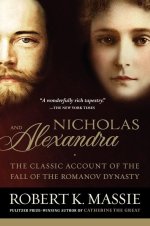
Nicholas and Alexandra: The Classic Account of the Fall of the Romanov Dynasty. by robert k. massie​

61m04hzoO7L._AC_UF1000,1000_QL80_.jpg
 
Verne, Clarke, Heinlein (...with Asimov as D'artagnan).

(Putting aside Herbert which I consider a more fantasy genre, and lovecraft similarly)

(Also putting aside the screenwriting of Lucas and Roddenberry ofc too, since these are visually paced)
LOL.

That really doesn't leave out much, but, well.....
How come you left out Ursula Le Guin? There are a few others I could mention.
 
LOL.

That really doesn't leave out much, but, well.....
How come you left out Ursula Le Guin? There are a few others I could mention.

There are many more to mention, including Le Guin.

I just came across them later in life (say Le Guin sci-fi work, as I really remember her more regd EarthSea which I read lot earlier) so they aren't as formative for me....but still very great work I have no objection if folk rank them highly among their all-time list.

It's just circumstance is what it is, as I have friends that come across same set of stuff in different order and they rank differently as result....I could easily have been the same. Le Guin's world/setting building in number of her sci-fi for example, very well done.

Take Hamlet for example, a friend of mine sticks by Branagh's 1996 version as the all time best ever and he makes a dozen very cogent arguments (that I heavily sympathise with) as to why....but way I see it he is also biased by it being the first portrayal he saw and latched onto. Other's take to the Mel Gibson (1991) version for very much the same reason as he brought a certain "1st/fresh" authenticity that caught them compared to say a later downstream viewing....whereas I hold that as the 4th best (after Branagh's) ...so out of the medals but a honourable mention.

I saw Laurence Olivier's version first (movie wise) on the other hand, so I held that as my favourite for the longest time and it also set the basis as to why Hamlet lends itself to a movie compared to a stage IMO, given (among other reasons) the angular/zooming in to the persona and psyche.... that puts you as close as possible into Hamlet's thoughts and brooding.... that is impossible to do (along with proper outdoor/wider settings/perspectives) with a stage portrayal since you have fixed non intimate perspective only.

It was only some 10 years ago did the Soviet (1964) version displace it with much effort and careful contemplation and consideration....as I simply think the "peopling" of various scenes and their real-world foibles in various off-script (but highly personable and relatable) moments along with all kind of attention to detail and some very memorable "outdoors + worldly" cinematography to complement Smoktunovsky's magnetic presence and acting...along with heavy addition of the political setting put it a tier above the Olivier one....

(....these were maybe definitive Soviet and Russian convetions, aesthetics and approaches compared to the Western one at the time too....that the later western ones in the 90s I mention try to address somewhat).

Bedney Yorick... (the movie spurred me to learn a lot of Russian too, till I saw its horror show of grammar, which arguably is nastier than German one I mentioned just earlier)

Kosintsev's last 3 in many ways are his best 3, he really hit his apex stride:
Don Quixote, Hamlet, King Lear .... and this also is part of why his Hamlet took 1st spot as it introduced me to these other 2 he did around the same time.

But yeah, this is part of chronological bias in what is formative....very few exceptions exist for me like with Soviet Hamlet displacing Olivier heh.
 
How come you left out Ursula Le Guin?

Thank you.

I just came across them later in life (say Le Guin sci-fi work, as I really remember her more regd EarthSea which I read lot earlier) so they aren't as formative for me....but still very great work I have no objection if folk rank them highly among their all-time list.

For me, LeGuin's Earthsea is tops, far above other authors' more famous fantasy works. Her command of the English language is beyond words. I compare her command of English to Karen Carpenter's command of the voice: for the greats, mere technical perfection is just the beginning.

I find her other work decent, with some standout gems like Semley's Necklace and The Ones Who Walk Away from Omelas, but no one can dethrone Asimov in my sci-fi list.
 
Thank you.


For me, LeGuin's Earthsea is tops, far above other authors' more famous fantasy works. Her command of the English language is beyond words. I compare her command of English to Karen Carpenter's command of the voice: for the greats, mere technical perfection is just the beginning.

I find her other work decent, with some standout gems like Semley's Necklace and The Ones Who Walk Away from Omelas, but no one can dethrone Asimov in my sci-fi list.
The trouble with Asimov is that with I, Robot and the Foundation series, he covers so much territory that there is little left over for others.

I would still vote for The Worm Ouroboros, an outstanding early swords and sorcery effort that is written with such effortless ease that it is difficult to remember when it was written.
 

Users who are viewing this thread

Pakistan Defence Latest

Country Watch Latest

Back
Top