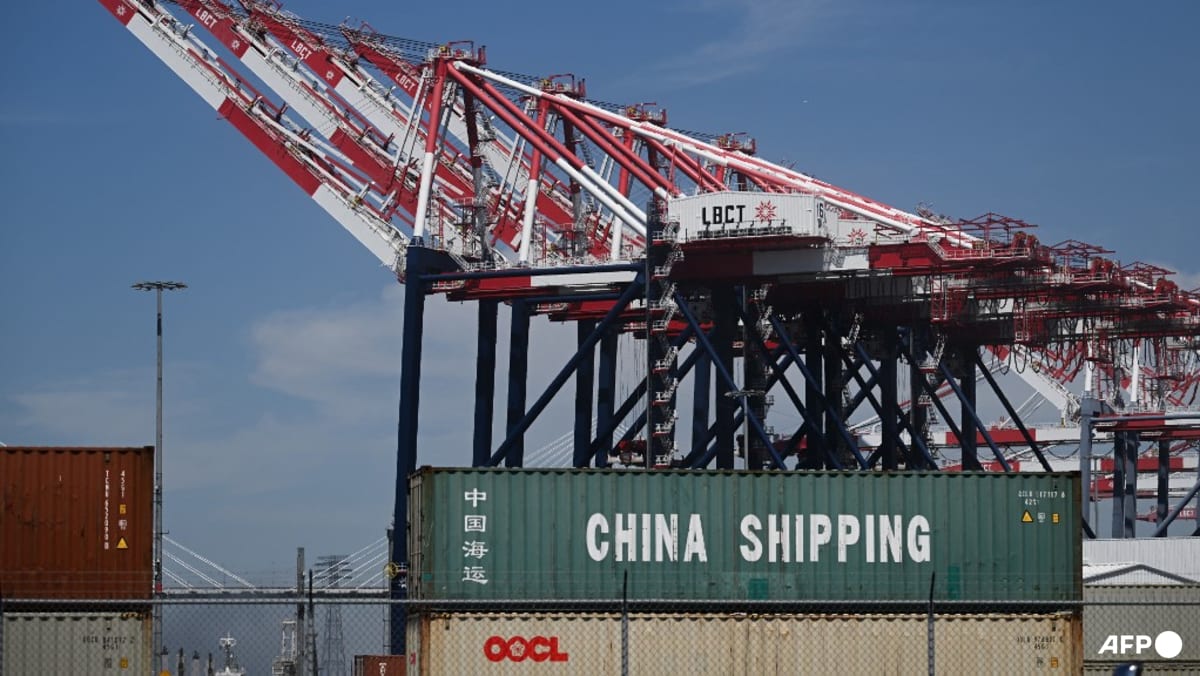
China hits back at Canada with fresh agriculture tariffs

Where is Huawei now? They were on course to become the dominant mobile manufacturer before the sky fell on them. Now, as JD Vance puts it, they're just selling to Chinese peasants
Lol, China is over one fifth of the global phone market and Huawei is everywhere, you think Huawei is just a phone? it's 6G, it's chips, it's telecommunication,it's EVs...

Chinese peasants, lol, you think we Chinese are all peasants, good, how about you Indians? aristocrats?
 
If rerouting Chinese products through third countries were really that easy, it would’ve been done already. Why would any country risk getting caught in the current geopolitical climate? Just look at the recent attempt to dump Chinese solar panels via Malaysia and Thailand — we both know how that ended.
It has already been DONE. How the heck you think we have 1 trillion$ in surplus? Dude, were you sleeping all this while? Lolol. My friends company even bribe Ethiopian port officials and export through Ethiopia, the ship goes direct to Malaysia then exported from there with documents showing Ethiopia. LOLOL.


Now, about those Treasury bills… who exactly is going to buy them? Even if China wants to offload them, who has the kind of liquidity to absorb that volume? Sure, they could sell at a steep discount and attract a few bargain hunters, but let’s be honest — those bills are like a bone stuck in China’s throat. They can’t swallow them, and they can’t spit them out.
70% of treasuries are actually owned by Americans. China only owns 800bil$ we actually old 500bil$ worth for the past 8 years. Slowly so as to not tank it. If they want to decouple, we will sell the remaining 800bil$, not much but enough to cause a sell panic. The recent rate hike was due to Japanese institutional investors panicking. Imagine if we offload 100bil$ suddenly. Lol

And let’s not forget — the U.S. prints the dollar and controls the mint. As long as it remains the dominant consumer, accounting for 34% of global consumption, and the dollar retains its status as the world’s reserve currency, the calls will always be made in Washington, not Beijing.
You can print all you want, but it will just cause more and more deficit spending, look you are paying 1 trillion $ in interest, more than military expenditure. The world saw what Trump did and they are pretending to kowtow. But deep inside they know the system is unstable. If China launches a digital gold backed Yuan. The dollar won't collapse, let's say 30% of their trade starts to migrate to this due to the fact that they buy from China. What will happen? CDBC cuts exchange costs by 98%, think about it. We are most worried about resources, US gave us Russia. That's why Trump is crazy about cozying up with Russia. What are the odds of Russia abandoning China and joining US. If that happens, i will say China will have reduced power but collapse? India was a shit hole for decades, did it collapse? LoL.


All this Chinese bluster is just posturing for domestic consumption — a bit of chest-thumping before Xi eventually raises the white flag.
Chest thumping? We didn't even talk alot, no rhetoric, just do what we need to do. Coordinated and calculated and maturely. The sudden suspension to 90 days? You seriously think it was some grand strategy? Even his Treasury Secretary didn't know. He was just acting egoistically as usual. In anger.. Lol. In Chinese when you know you have this kind of opponent, you can easily manipulate him. It is part of our strategic culture not to reveal our cards.
 

China hits back at Trump tariff hike, raises duties on US goods to 125%

By Reuters
April 11, 20254:19 PM GMT+8

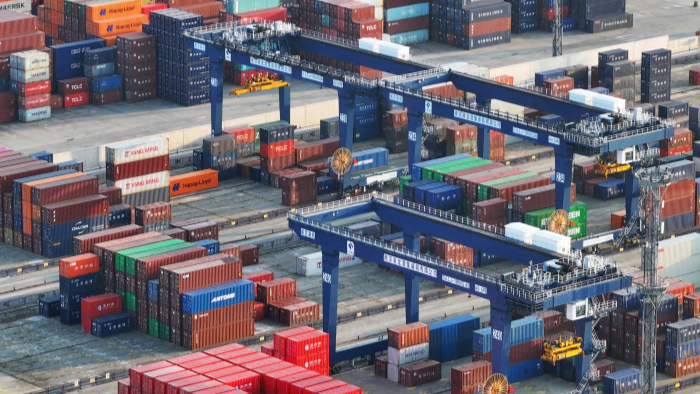
Containers at a port in Tianjin

Shipping containers sit at a port in Tianjin, China February 8, 2025. REUTERS/Florence Lo/File photo Purchase Licensing Rights, opens new tab

BEIJING, April 11 (Reuters) - Beijing on Friday increased its tariffs on U.S. imports to 125%, hitting back against U.S. President Donald Trump's decision to hike duties on Chinese goods to 145%, raising the stakes in a trade war that threatens to up-end global supply chains.

The hike comes after the White House kept the pressure on the world's No.2 economy and second-biggest provider of U.S. imports by singling it out for an additional tariff increase, having paused most of the "reciprocal" duties imposed on dozens of other countries.

"The U.S. imposition of abnormally high tariffs on China seriously violates international and economic trade rules, basic economic laws and common sense and is completely unilateral bullying and coercion," China's Finance Ministry said in a statement.

 
China, Japan, South Korea cenbank deputies discussed US tariffs at Asean+3 meeting in Malaysia, says PBOC

BEIJING (April 11): China, Japan and South Korea finance and central bank officials met and discussed the impact of US tariffs on the global and regional macroeconomic situation, China's central bank said on Friday.
The People's Bank of China (PBOC) deputy governor Xuan Changneng was at the regular Asean and China, Japan and South Korea (Asean+3) finance and central bank deputies meeting on April 8-9 in Malaysia, according to a statement.
At the meeting, China, Japan and South Korea also exchanged views on the economic situation and regional financial cooperation.
China's central bank will implement a moderately loose monetary policy, support the smooth operation of financial markets, and consolidate the continued recovery of the economy, the statement said.
 
China is the only country in the world which has guts to take on US head-on.
 
You idiot, where did I say that Xi is on his way out? Don’t make things up from your backend. Xi is the emperor of 1.4 billion minions, and he’ll go straight from the presidential palace to his grave—I’m certain of it
Such a pathetic cheerleader, doesn't Trump include you India in his tariff list as well? such a spineless people.
 

China raises tariffs on US from 84% to 125%


2025-04-11 16:02:48 from Beijing

2703 people participated


On April 10, 2025, the US government announced that the "reciprocal tariff" rate on Chinese goods exported to the United States would be further increased to 125%. The US's imposition of abnormally high tariffs on China seriously violates international trade rules and goes against basic economic laws and common sense. It is entirely a unilateral practice of bullying and coercion. In accordance with the Tariff Law of the People's Republic of China, the Customs Law of the People's Republic of China, the Foreign Trade Law of the People's Republic of China and other laws and regulations and basic principles of international law, and with the approval of the State Council, the additional tariff measures on imported goods originating in the United States will be adjusted from April 12, 2025. The relevant matters are as follows:

1. Adjust the additional tariff rate stipulated in the "Announcement of the Tariff Commission of the State Council on Adjusting Tariff Measures on Imports Originating in the United States" (Tax Commission Announcement No. 5 of 2025) from 84% to 125%. Given that at the current tariff level, there is no possibility of market acceptance for U.S. goods exported to China, China will ignore it if the U.S. continues to impose tariffs on Chinese goods exported to the U.S.

2. Other matters shall be implemented in accordance with the "Announcement of the Tariff Commission of the State Council on the Imposition of Additional Tariffs on Imported Goods Originating in the United States" (Tax Commission Announcement No. 4 of 2025).


Xi says China ‘not afraid’ as Beijing raises tariffs on US goods to 125% in latest escalation of trade war​

By Nectar Gan, CNN
Updated 4:31 AM EDT, Fri April 11, 2025

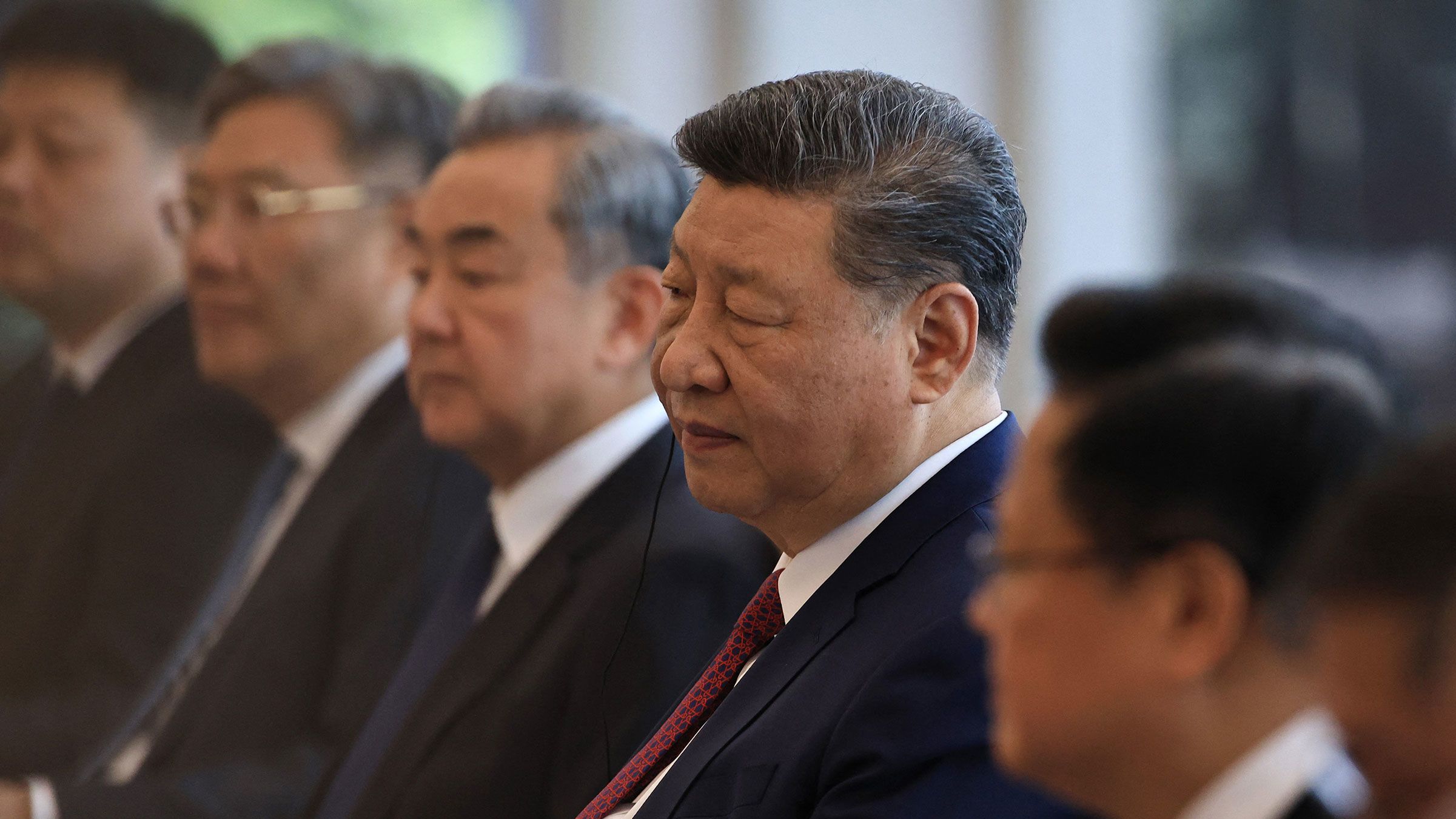
Chinese leader Xi Jinping attends a bilateral meeting with Spanish Prime Minister Pedro Sanchez at Diaoyutai Guest House in Beijing on Friday.

Chinese leader Xi Jinping attends a bilateral meeting with Spanish Prime Minister Pedro Sanchez at Diaoyutai Guest House in Beijing on Friday.
Andres Martinez Casares/Pool/AFP/Getty Images

Hong KongCNN —

Chinese leader Xi Jinping has said his nation is “not afraid,” in his first public comment on the escalating trade war with the United States, as Beijing raised tariffs on US goods to 125%.

The tariff hike is the latest in a tit-for-tat battle between the world’s two largest economies, after Trump raised tariffs on China to 145%. However, China has indicated it does not intend to go higher than 125%, saying it would be meaningless to engage in further escalation.

“The successive imposition of excessively high tariffs on China by the US has become nothing more than a numbers game, with no real economic significance,” a spokesperson for China’s Commerce Ministry said in a statement Friday.

“It merely further exposes the US practice of weaponizing tariffs as a tool of bullying and coercion, turning itself into a joke,” the spokesperson added.

The trade war between the world’s two economic superpowers has tanked international markets and fueled fears of a global recession.

“There are no winners in a trade war, and going against the world will only lead to self-isolation,” Xi told Spanish Prime Minister Pedro Sanchez in Beijing on Friday, according to state broadcaster CCTV.

“For over 70 years, China’s development has relied on self-reliance and hard work — never on handouts from others, and it is not afraid of any unjust suppression,” Xi added.

The Chinese leader had remained publicly silent on the tariff war until now, but struck a defiant note in his first remarks – doubling down on messages of strength and resilience already broadcast by Chinese officials and state media.

“Regardless of how the external environment changes, China will remain confident, stay focused, and concentrate on managing its own affairs well,” Xi was quoted as saying by CCTV.

As the rest of the world received a 90-day reprieve from Trump’s “reciprocal” tariffs this week, the president moved to focus his trade war on China. Prior to announcing its latest tariff hike on Friday, Beijing said it would curb the import of Hollywood movies, after having hiked its own tariffs on the US to 84% and restricted some American firms from doing business in China or importing Chinese dual-use goods.

The unprecedented tariffs threaten to decimate trade between the world’s two largest economies and further damage relations in other areas, with no obvious offramp in sight.

Diplomatic offensive​

CNN reported on Thursday that Trump is waiting for Xi to reach out – and has told his team that the US will not make the first move; but Beijing has repeatedly refused to arrange a leader-level phone call.

Rather than calling Trump to negotiate tariffs, Xi has instead launched a week of high-stakes diplomacy with other trade partners to push back against the escalating trade war.

His Friday meeting with Spain’s Sanchez comes ahead of a multi-nation tour next week of Southeast Asia – a region heavily targeted by Trump’s “reciprocal” tariffs before they were put on pause. Xi will visit Vietnam, Malaysia and Cambodia in his first foreign trip this year, according to China’s Foreign Ministry.

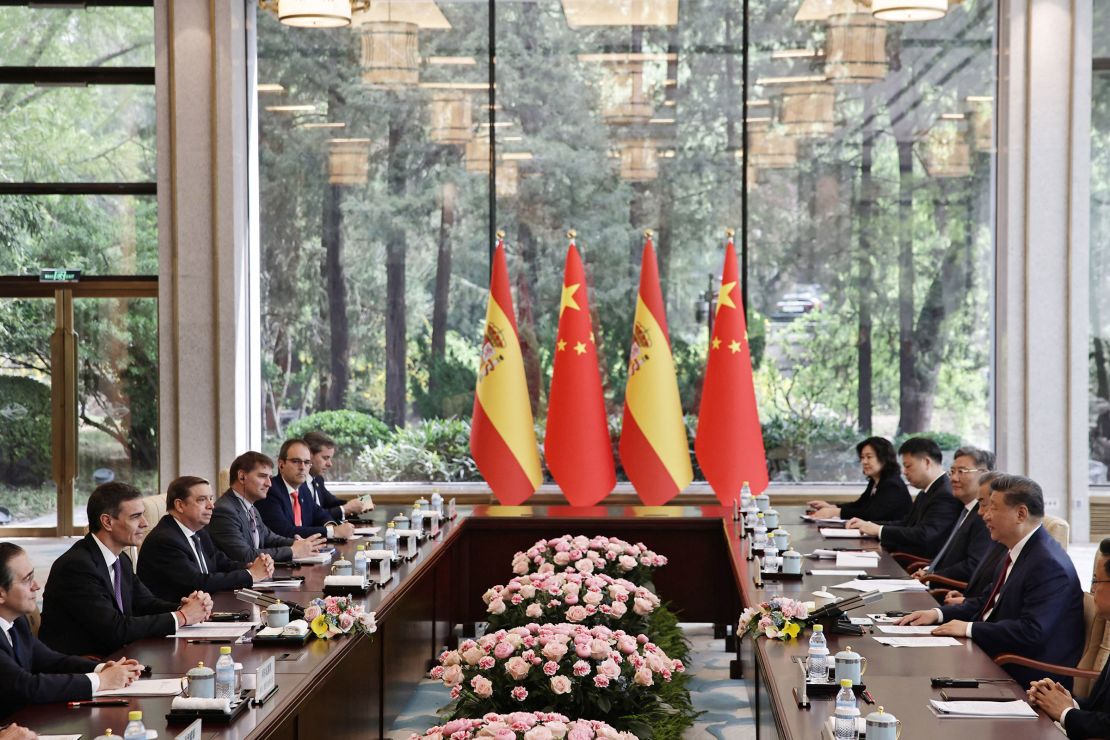
Chinese leader Xi Jinping speaks during a meeting with Spanish Prime Minister Pedro Sanchez at Diaoyutai Guest House in Beijing on April 11, 2025.

Chinese leader Xi Jinping speaks during a meeting with Spanish Prime Minister Pedro Sanchez at Diaoyutai Guest House in Beijing on April 11, 2025.
Andres Martinez Casares/Pool/AFP/Getty Images

Though such high-level meetings typically take weeks or even months to plan, the timing of the announcements – just days after the two economic superpowers imposed record-high tariffs on each other – underscores Xi’s message that China is not backing down.

The Chinese leader is seeking to capitalize on the turmoil sparked by Trump’s tariff whiplash to deepen ties with nations from Asia to Europe, casting China as a reliable partner and defender of global trade.

Sanchez, who is on his third visit to China in two years, is likely the first in a flurry of European leaders heading to Beijing amid the global economic uncertainty unleashed by Trump.

During their meeting, Xi told Sanchez that the world is undergoing accelerated changes unseen in a century.

“The more complex and volatile the international landscape becomes, the more important it is to maintain sound and stable relations between China and Spain,” Xi said, vowing to work together in areas such as new energy, high-tech manufacturing and smart cities.

The Chinese leader also extended an olive branch to the European Union, calling it “an important pole in a multipolar world” and stressed that China has always “clearly supported” the group.

In a thinly-veiled jab at the US, Xi also called for China and the EU – which together account for more than one third of the world economy – to work together to defend international rules and order.

“China and the EU should fulfill their international responsibilities, jointly uphold the trend of economic globalization and the global trade environment, and work together to oppose unilateral bullying,” Xi said, using a phrase that Beijing often used to criticize US tariffs.

‘Shared future’ with neighbors​

Strengthening strategic ties with its neighbors is high on China’s diplomatic agenda.

Vietnam and Cambodia were among the countries hardest hit by Trump’s “reciprocal” tariffs – set at 46% and 49% respectively before the pause. Both countries have seen a surge in investment from Chinese and international businesses in recent years as they move supply chains out of China to take advantage of lower labor costs and hedge against US levies.

This week, Xi called for China to build a “shared future with neighboring countries,” while speaking at a high-profile Communist Party work conference on peripheral diplomacy.

An official statement from the two-day meeting called for China to “strengthen cooperation on industrial and supply chains” with nearby Asian nations.

China’s relations with its neighbors were “at their best since modern times, while also entering a critical phase in which regional dynamics and global changes are becoming deeply interconnected,” said the statement.

Beijing’s relationships with countries in Europe and Asia have been increasingly tested in recent years, with Western-aligned nations following the US as it looked to limit China’s access to semiconductor technology, for example. Beijing’s close relations with Moscow have strained those ties further.

But since Trump’s re-election, China has been eager to mend ties. In recent weeks, Chinese officials have talked to counterparts from South Korea, Japan and European countries in a bid to expand trade cooperation – and one up the US by winning over American allies and partners exasperated by the on-again-off-again trade war.

China’s trade partners are likely to regard Beijing’s overtures with skepticism.

Many of those nations are wary of being flooded with cheap Chinese goods. Beijing is also well known to have wielded access to its massive market as a weapon to coerce countries, often over political stances that sparked Beijing’s ire.

 
67f855f0a3104d9fd1559abe.png

Kimihiro Fukuyama
The author is an associate professor at the Graduate School of Business, Ritsumeikan Asia Pacific University, Japan

Asia-Pacific must chart its own course


By Kimihiro Fukuyama | China Daily | Updated: 2025-04-11 07:36


67f855f0a3104d9fd1559abc.png
JIN DING/CHINA DAILY

The specter of geopolitical instability, once part of a distant academic discourse, has become a tangible reality for businesses worldwide. Eight years ago, a seismic shift occurred when the United States, under then president Donald Trump, signaled a retreat from its traditional role as a global economic and security guarantor.

The echoes of that promise, "America First", resonate even more powerfully now as US voters have again chosen Trump as their president and supported the Republican Party in the elections. As a result, the Republicans dominate both the Senate and the House of Representatives, reinforcing the perception that reliance on US engagement is a precarious strategy for the global economy.

This resurgence of economic nationalism in the US necessitates a fundamental reassessment of regional economic strategies. The message "don't count on US" is a clear signal which both Trump and Vice-President JD Vance sent during the election campaign. In fact, they have been repeating the message even after assuming power.

As such, "don't count on US" is no longer a mere cautionary note; it is a stark imperative. Businesses and policymakers alike must acknowledge the shifting sands of global power dynamics and adapt to them accordingly.

In anticipation of this potential vacuum, regional actors have been trying to create alternative paths. Some of the Asia-Pacific countries have prepared for such a US policy pivot. The Regional Comprehensive Economic Partnership agreement, which includes China, the Republic of Korea and Japan and is a sprawling trade agreement encompassing 15 Asia-Pacific countries, stands as a testament to this strategic foresight.

"We have prepared RCEP" signifies the collective recognition that regional prosperity hinges on intra-regional cooperation, not external dependence. The RCEP represents a paradigm shift, prioritizing the deepening of economic ties among member states.

The concept of "regional partnership" is central to this new paradigm. It underscores the importance of fostering collaborative frameworks that transcend traditional bilateral relationships. This entails building resilient supply chains, harmonizing regulatory standards, and promoting investment flows within the region. It is aimed at creating a self-sustaining economic ecosystem, less vulnerable to the vagaries of external political currents, especially caused by the US.

The potential to "boost regional economic ties" is immense. The RCEP, with its vast market access and streamlined trade rules, can unlock opportunities for businesses across diverse sectors. Small and medium-sized enterprises, often the backbone of regional economies, stand to significantly benefit from reduced trade barriers and enhanced market access.

Furthermore, the RCEP can stimulate investment in infrastructure development, technological innovation and human capital, laying the foundation for long-term economic growth.

China is also well prepared to deal with the situation created by the US' tariffs by strengthening its "dual circulation development paradigm" (which allows the domestic and overseas markets to reinforce each other, with the domestic market as the mainstay) and exploring new markets by extending the Belt and Road Initiative. Moreover, China has been successfully shifting from being the "world's factory" to becoming an intellectual property rights economy.

But the path forward is not without challenges. Effectively implementing the RCEP requires sustained political will and a commitment to ending the lingering trade frictions. RCEP member states should deepen collaboration to overcome the regulatory hurdles, streamline customs procedures, and ensure fair competition. Also, the region must remain vigilant against protectionist tendencies and strive to maintain an open and inclusive trading environment.

Beyond the RCEP, other regional initiatives, such as the Comprehensive and Progressive Agreement for Trans-Pacific Partnership, also play a crucial role in shaping the future of Asia-Pacific trade. These agreements, while different in scope and membership, share a common objective: to foster deeper economic integration and promote sustainable development.

Moreover, the strategic implications of a less-engaged US go beyond economics. Security concerns, particularly in the South China Sea and on the Korean Peninsula, demand more robust regional security architecture. The Asia-Pacific region must cultivate its own mechanisms for conflict resolution and security cooperation, reducing its reliance on US help and mediation.

The US firmly told the European Union that Washington will no longer bear the lion's share for NATO's security, asked the EU to manage NATO and European security issues on their own, and not count on the US anymore. The US' message is crystal clear: The EU has achieved economic integration, so the EU alone has to maintain the bloc's security mechanism, because the US wants to focus on addressing its own matters.

Such behavior was pretty common in the US before World War II. They have decided they resort to their original way of thinking.

In conclusion, the Asia-Pacific region must chart its own course. The resurgence of the US' tariff policy, coupled with the potential for diminished American engagement, underscores the urgency of strengthening regional partnerships and deepening economic ties. The RCEP, as a cornerstone of this strategy, offers a promising path toward a more resilient and prosperous future.

While challenges remain, the collective determination to "boost regional economic ties" provides a powerful antidote to the uncertainties of a changing global landscape. The era of the US' unquestioned economic leadership is waning as the era of regional self-reliance is dawning.
 
China is the only country in the world which has the guts to take on US head-on.
 
I thought the CCP was not afraid for Trump and that China was strong enough without exports to US.


“At request of the US; Vietnam and Thailand will increase their check-ups and controling mechanisms to check if the ‘Made in Vietnam’ and ‘Made in Thailand’ products are really Vietnamese and Thai products and not Chinese products with another label. Vietnam and Thailand are gonna effectively stop Chinese export to USA via their own territory.”
 
I thought the CCP was not afraid for Trump and that China was strong enough without exports to US.


“At request of the US; Vietnam and Thailand will increase their check-ups and controling mechanisms to check if the ‘Made in Vietnam’ and ‘Made in Thailand’ products are really Vietnamese and Thai products and not Chinese products with another label. Vietnam and Thailand are gonna effectively stop Chinese export to USA via their own territory.”
So China won't make another record trade surplu in the world history this year?

sou-gou-jie-tu20250409173535-png.111644
 

Trump's tariffs with China will force many small towns in MN to cancel their 4th of July Fireworks displays because the cost is going to more than double​

 
To view this content we will need your consent to set third party cookies.
For more detailed information, see our cookies page.
 

Users who are viewing this thread

Pakistan Defence Latest

Country Watch Latest

Back
Top