Iranian Air Force (IRIAF/IRGC-ASF) | News and Discussions

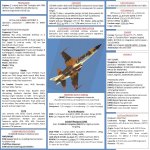
Light CAS with even PGM would be done perfectly by Kowsar.
IRIAF needs to develop a thermal imaging targeting pod, the ATLIS copy we saw on F-4s is only good in daytime. Otherwise you have to fly low and expose yourself to AAA and MANPADS.
 
IRIAF needs to develop a thermal imaging targeting pod, the ATLIS copy we saw on F-4s is only good in daytime. Otherwise you have to fly low and expose yourself to AAA and MANPADS.
Agreed. Something like Rafael Litening pod. And knowing the continous improvements on IR/EO turrets from Mohajer class UAVs to newest Shahed 149 Gaza., it shouldn't be so much difficult to design a system like this and integrate in the Kowsars EFIS.
 
Exactly. Light CAS with even PGM would be done perfectly by Kowsar. Deployed in meaningful numbers, with all logistics indegenously produced would be a 100% sovereignty, high readiness light fighter.
When you see the devious way of Su35 contract, you must avoid to put all the eggs in the same basket. Kowsar it is perfect for such role.

They can still pretty much create a ~70 airframe strong fleet and put them in east and north for CAP+CAS+AT while being datalinked with UCAVS, IADS etc. Them in conjunction with UCAVs and IRGC's SRBM-MaRVs/CMs can make sure there are no more chimpouts by Talibans. Wasting this SU-35S/30SM in east will be stupidity. Shahi IIAF selected lighter F-16 for Birjand for the very same reason instead of F-14, F-4.

Solid platform for AT, CAS, CAP etc. Cheap to operate.

1744646675454.jpeg
 
They can still pretty much create a ~70 airframe strong fleet and put them in east and north for CAP+CAS+AT while being datalinked with UCAVS, IADS etc. Them in conjunction with UCAVs and IRGC's SRBM-MaRVs/CMs can make sure there are no more chimpouts by Talibans. Wasting this SU-35S/30SM in east will be stupidity. Shahi IIAF selected lighter F-16 for Birjand for the very same reason instead of F-14, F-4.

Solid platform for AT, CAS, CAP etc. Cheap to operate.

View attachment 112315

Still impresses, even today still.

Piet
 
For a CAP, CAS, AT or IADS-controlled LCA its quite an impressive platform esp for east, North eastern Iran.
Where the ejection seat problems effectively resolved?
 
Where the ejection seat problems effectively resolved?

I see no indication of that. MODAFL safety branch banned Sarir Ejection seats until redesigned, Kowsar program is halted because of that. Probably done and dusted (like Yasin) if Yak-130 numbers go ~40 (hypothetically).
 

GUARDIANS OF PASABANDAR​

  1. Aviation Features
  2. Guardians of Pasabandar


16th April 2025
FEATURE


Babak Taghvaee details the operations of the Iranian Armed Forces on the coast of Pasabandar as they took part in the largescale joint exercise Zulfiqar-1403
img_84-1.jpg

An R-73E (AA-11 Archer) is launched by crew of a Yak-130 at a target drone flying at low altitude near Pasabandar while a MiG-29B and a MiG-29UB flew next to it on February 23, 2025
Iranian Air Force
The Iranian Air Force, Air Defence Force, Army Ground Force, and navy took part in the largest version of their Zulfiqar joint exercise in the southeast of Iran and the Oman Sea between February 22 and 25, 2025. The exercise involved 28 fixed-wing aircraft, 16 helicopters, and a large number of drones belonging to the Islamic Republic of Iran Air Force (IRIAF), Islamic Republic of Iran Army Aviation (IRIAA), and Islamic Republic of Iran Navy Aviation (IRINA). The exercise missions were designed with the key objective of protecting Iranian territorial

waters and coastline from coastal invasion by a foreign enemy in the southeast of Iran, with a secondary objective of maintaining the highest level of interoperability of the Iranian armed forces to protect the islands of Abu Musa, Greater Tunb, and Lesser Tunb in the Hormuz Strait.

Role of the Iranian Air Force

Compared with previous versions of the Zulfiqar exercises held since 2019, the ‘1403’ version had the highest number of IRIAF aircraft involved. This increase can be attributed to the recent heightened alertness of the Iranian armed forces due to concerns about a joint Israeli-American airstrike on Iranian nuclear facilities. Out of a total of 23 aircraft from the IRIAF involved in this exercise, 18 were directly involved, while the rest served as support aircraft or reserves. The support aircraft included two C-130E Hercules tactical airlifters and a C-130H aircraft from the 11th and 72nd Tactical Transport Squadrons (TTSs), as well as a Boeing 747-270C used for transporting troops,equipment, and airlifting ground equipment of deployed fighter jets from their bases to the 9th and 10th Tactical Fighter Bases (TFBs). Additionally, two Boeing 707-3J9C tanker aircraft were used to refuel fighter jets taking part in the exercise.

img_86-2.jpg

Iranian Marines jumping out of a Navy Fokker 27-400M (5-2603) over Pasabandar on February 23, 2025
Iranian Navy
img_86-3.jpg

The first Yak-130 advanced jet trainer of the IRIAF, 7-9700/’101’, was one of two examples from the Yak-130 CCTS which took part in the exercise and launched the R-73E missile on February 23
Iranian Air Force
img_86-1.jpg

Two F-4Es of the 91st TFS (3-6536 and 3-6556) doing low pass over the exercise area on February 24. After the second low pass, they left and headed toward Bandar Abbas. Prior to reaching their base, a KC-707 refueled them
M. Pourarab
img_87-1.jpg

An IRIADF Karrar-2air-defence drone prior to launch on February 23. It was armed with an air-to-air variant of the missile used on QW-2M MANPADS
(Iranian Air Defence Force photo)
Fourteen ships and vessels, along with four submarines of the Iranian Navy, participated in Zulfiqar-1403. Among these, one Ghadirclass submarine, two Sina-Class Fast Attack Crafts (including IRIS Zereh/P235), IRIS Bayandor corvette (IRIS 81), IRIS Jamaran frigate (IRIS 76), and IRIS Alvand frigate (IRIS 71) performed live cannon firing. A patrol boat also fired 107mm unguided rockets at the coastline of Pasabandar, in the southeast of Iran, during the second day of the exercise.

Role of the Iranian Army Aviation

The IRIAA participated in the exercise with only eight helicopters, all belonging to its 3rd Combat Group in Kerman and 4th General Support Group (GSG) in Isfahan. These helicopters included two Bell 214A utility helicopters from the 3rd Assault Battalion and four Bell AH-1J International (Sea) Cobra attack helicopters (all Non-TOW variant) from the 3rd Attack Battalion. Additionally, two AH-1Js, both modernised to Toufan-II standard by the Iranian Aircraft Manufacturing Industries (IAMI) company, belonging to the 4th Attack Battalion in Isfahan were deployed to Konarak with refuelling stops in Yazd and Kerman.

All helicopters were deployed to the 10th TFB ‘Delhamed Brothers’ in Chabahar on February 19 and 20. After a day’s rest, their crews participated in the first day of the exercise on February 22. The initial mission performed by the IRIAA was conducted by pilots and gunners of the AH-1J non-TOW attack helicopters of the 3rd Combat Group in the morning, during which they practised carrier operations by performing landings and take-offs from the helipad of IRIS 513 Tonb, a Hengam-class landing ship of the Iranian Navy in the Oman Sea.

Once cleared for maritime operations, the AH-1Js were used for escort protection of the Iranian Navy helicopters during a simulation of a coastal attack by the Iranian Marines involving six helicopters of the IRINA and one of its BH.7 Wellington class medium-size hovercraft. On the same day, the AH-1J Toufan IIs from the 4th GSG took part in a simulation of anti-tank operations, launching Qaem-114 anti-tank missiles at several containers placed in the exercise area. Local journalists and media were prohibited from photographing these helicopters and their missiles. On the final day of the exercise, all of the AH-1Js were used to carry out live rocket and gun firing using their M197 20mm cannons and 2.75in unguided rockets during a simulation of CAS for the IRIGF armoured and infantry units involved in the exercise, which were using BMP-2infantry fighting vehicles (IFVs) and recently modernised T-72 Karrar main battle tanks.
img_87-2.jpg

Three of the four ASH-3Ds of the IRINA which were used for simulation of coastal attack on the second day of the exercise can be seen here
 
Keyvan Tavakkoli
img_88-1.jpg

Launch of a short-range surface-to-air missile (QW-2Vanguard 2) by Majid short-range air-defence system at a First Person View drone flying near the position of the IRIGF forces in Pasabandar on February 25
Ramin Ghobadi
img_88-2.jpg

Missiles of QW-2Vanguard 2 MANPADS are used on IRIGF Majid short-range SAM systems
Ramin Ghobadi
img_88-3.jpg

Four ASH-3Ds and an AB212ASV (6-2402) approaching the coast of Pasabandar to insert Iranian Marines simulating recapture of an Iranian island from enemy forces
Keyvan Tavakkoli
To ensure the safety of civil and military vessels, including those from the US Navy monitoring the exercise area, the IRIAF used three aircraft for maritime patrol missions. One P-3F Orion and a Fokker 27-600 Friendship, all based at the 9th TFB ‘Abdolkarimi’ in Bandar Abbas, conducted daily patrols at the boundaries of the exercise territory and warned foreign observers to keep their distance.

On the first day of the exercise, the IRIAF focused on the forward deployment of its aircraft to the 9th and 10th TFBs. The 9th TFB, home to F-4E Phantom IIs of the 91st Tactical Fighter Squadron (TFS) ‘Sharks’, received an RF-4E Phantom II from the 31st Tactical Reconnaissance Squadron and two F-14A Tomcats of the 81st TFS. The 10th TFB, home to F-4Ds and Mirage F1EQ/BQs of the 101st and 102nd TFSs, received a MiG-29B and a MiG-29UB from the 11th TFS and a pair of Yak-130s from the newly established Yak-130 CCTS. Two C-130Es airlifted ground equipment and personnel of the MiG-29s and Yak-130s from their bases at the 1st and 8th TFBs respectively to the 10th TFB, while the C-130H was used to airlift ground crew and personnel of the 81st TFS from the 8th TFB to the 9th TFB to support the deployment of its two F-14A Tomcats.

img_89-1.jpg

A Sayyad-3SAM with maximum range of 120km was launched by the sole IRIADF 15th Khordad SAM battery involved in the exercise on February 25
Ramin Ghobadi
img_89-2.jpg

During the first day of exercise, four AH-1Js of the IRIAA’s 3rd Combat Group performed deck landing on the navy’s IRIS Tunb landing-craft and their pilots renewed their capabilities for naval or maritime operations. This is 3-4433
Keyvan Tavakkoli
img_89-3.jpg

Another one of the AH-1Js of the IRIAA’s 3rd Combat Group, ‘3-4507’ deck landing on the Iranian Navy’s IRIS Tunb landing craft in the Oman Sea on February 22
Keyvan Tavakkoli
 
On the second day, two MiG-29s and one of the Yak-130s, each armed with a pair of R-73E infrared guided short-range missile, left the 10th TFB and shot down three Karrar jet-engine target drones at extremely low altitudes (100 to 300ft). The MiG-29s also intercepted a pair of F-14As flown from the 9th TFB and engaged in a dogfight over the exercise area. A Boeing 707-3J9C (KC-707,) flown from the 1st TFB in Tehran, refuelled the Tomcats after their mission.

During the third day, an RF-4E of the 31st TRS deployed at the 9th TFB flew a mission over the exercise area. After returning to Bandar Abbas, its images were used for target selection by the 91st TFS. Subsequently, four F-4E Phantom IIs of the 91st TFS ‘Sharks’, acting as bombers of the ‘Orange Force’ supported by a KC-707 tanker, simulated bombing Blue Forces. Instead of live bombs, the F-4Es dropped water-filled and training (inert) Mark 82 iron bombs in two bombing passes. That day, Blue Forces also benefited from two F-4Ds of the 101st TFS (CCTS) for close air support (CAS). A Falcon 50EX Sayeh electronic warfare attack of the IRIAF’s 11th Falcon-Star Squadron was used to simulate a jamming environment for exercise participants that day.

img_90-1.jpg

Arrival of MiG-29UB 3-6306 of the IRIAF’s 11th TFS from Tehran at 10th TFB on February 22
Amir Mahboub
Air defence training

The fourth and final day of the exercise focused on anti-aircraft activities performed by multiple units of the Islamic Republic of Iran Air Defence Force (IRIADF) and the Islamic Republic of Iran Ground Force (IRIGF) using a series of short and medium-range air defence systems, as well as the interceptor variant of Karrar drones. Two F-14As flown from the 9th TFB as ‘Orange’ interceptors engaged in dissimilar air combat against a Mirage F1BQ of the 102nd TFS and a MiG-

29B of the 11th TFS flown from the 10th TFB acting as ‘Blue’ interceptors.

During the exercise, the IRIADF used a pair of Karrar-2drones to shoot down two target drones using infrared-guided short-range air-to-air missiles (IRSRAAMs), which were missiles of the Missagh-2(a licensed version of the Chinese QW-2Vanguard 2) Man Portable Air Defence System (MANPADS). The same missiles were launched by the Majid short-range air defence systems of the IRIGF at the exercise area to shoot down multiple target drones.

On the final day, an IRIADF 15th Khordad medium-range air defence battery shot down two Karrar target drones using Sayyad-3medium-range surface-to-air missiles. One drone was flying at an altitude of 28,000ft and was shot down within a distance of 120km from the SAM battery, while another was shot down at an altitude of 1,200ft and within a distance of 15km. Prior to this, a Notice to Airmen (NOTAM) had been issued by the Iranian Civil Aviation Organisation declaring the airspace near

img_90-2.jpg

One of two IRIAF KC-707s which took part in the exercise landing at Mehrabad airport, Tehran, after refuelling several fighter jets in south of Iran on February 24
Ali Naderi
the exercise area a danger area to prevent harm to Iranian and non-Iranian civil and military aircraft.

The exercise concluded in the afternoon of February 25, and immediately, the redeployment of aircraft, air defence systems, and other equipment and weapons used by the exercise participants began.

The Iranian Navy also held a naval parade using all the vessels and submarines involved in the exercise. Despite the severe weather, the US Navy used a P-8A Poseidon maritime patrol aircraft flown from Sheikh Isa Air Base in Bahrain to monitor the Iranian Navy ships participating in the parade at the end of the exercise. afm

img_91-2.jpg

Only six aircraft are airworthy with the 102nd TFS in 10th TFB, four Mirage F1EQs and two Mirage F1BQs, including this one, 3-6405, which flew as an interceptor of ‘Blue Forces’ during the exercise and engaged in dogfight against F-14A Tomcats of ‘Orange Forces’
Ali Naderi
Iranian Navy Aviation assets

The Islamic Republic of Iran Navy Aviation (IRINA) participated in the exercise with eight helicopters, one fixed-wing aircraft, and several Ababil V armed drones. All helicopters were deployed to the IRINA’s Konarak Naval heliport, located in the southern part of the IRIAF’s 10th TFB. The helicopter contingent consisted of three Agusta Bell AB212ASVs from the 11th Anti-Surface Vessel (ASV) Squadron, four ASH-3D Sea King helicopters from the 12th Anti-Submarine Warfare Squadron, and one RH-53D Sea Stallion from the 13th Minesweeping Squadron. Additionally, a Fokker 27400M Troopship light transport aircraft, assigned to the IRINA’s 15th Transport Squadron, was deployed to the 10th TFB to take part in the exercise.

On the first day, the IRINA helicopters executed various missions, including the deployment of two Mark 46 torpedoes by two ASH-3D Sea Kings (8-2302 and 8-2303) against surface targets. The following day saw participants simulate a coastal assault/ offensive to liberate territory occupied by enemy forces. Four ASH-3D Sea Kings and two AB212ASVs took part in this operation. Notably, one of the AB212ASVs, serial number 6-2402, had recently been modernised by the Iranian Helicopter Support and Renewal Center (IHSRC) in Tehran. This upgrade included the installation of an Electro-Optical/Infrared (EO/IR) turret and two multifunction digital displays, significantly enhancing the aircraft’s capability for night operations. The coastal assault scenario featured the deployment of Tunb (IRIS 513) landing craft, which saw two modernised T-72 Karrar MBTs and two BMP-2IFVs were offloaded. Simultaneously, Iranian Marines were transported to the coastline aboard four ASH-3Ds and two AB212ASVs. Some marines performed fast-rope insertions at the coast, while one of the only two airworthy BH.7

Wellington-class medium-size hovercraft (104) was used for troop deployment. Marines disembarked from the hovercraft aboard all-terrain vehicles and motorcycles. In another phase of the operation, a group of marines conducted parachute jumps from an RH-53D (9-2704) and a Fokker 27-400M (52603) over the coastline, joining the ground forces. Following their insertion, these marines integrated with several rapid-response teams from the IRIGF, advancing towards the occupied territory in a simulated recapture operation conducted at night. During this phase, the IRIAA AH-1J Cobra helicopters performed CAS, engaging with their guns and rockets to assist in the ground operation. Prior to the marines’ insertion and the arrival of the T-72 MBTs and BMP-2IFVs from the IRIGF, Iranian Navy fast boats launched 107mm unguided rockets at the coast, neutralising enemy forces. Following the deployment of friendly forces, the RH-53D (9-2704) again flew over the coastline, conducting an airdrop of supplies for the troops already on the ground. The IRINA also deployed Ababil V armed drones, launched from its drone base at Konarak Naval Heliport, to perform ISR missions over the exercise area.
img_91-3.jpg

IRINA Fokker F27-400M (5-2603) was overhauled by the IRIAF for the Iranian Navy last year and because of that it was painted in white/blue colours instead of two-tone blue camouflage which was applied on the navy’s Fokker 27s since early-1990s. It is pictured during parachute jumping of the Marines over the exercise area on February 23, 2025
Anbar Moradi

 
+Missiles of QW-2Vanguard 2 MANPADS are used on IRIGF Majid short-range SAM systems
Ramin Ghobadi"
That air defense system is an American or Chinese copy of the Rim 116 missiles. I dare to say it with almost 100% certainty. I don't care why they don't use it in a container, like the Americans and the Chinese do to protect their ships against missiles. I would like to say that many people don't even realize what significance that missile could have!
 
Because the rim116 and the Majid short-range SAM missile are most likely the same. Which is a great thing.
Moreover I think Majid missile is not the same of Misagh2. The body rocket is thicker and IR seeker seems to be bigger also.
 

Users who are viewing this thread

Country Watch Latest

Back
Top