Why Ne Zha 2 wasn’t a global smash

Hamartia Antidote

Elite Member
Joined
Nov 17, 2013
Messages
47,926
Reaction score
27,287
Reputation
519.8
Country of Origin
Country of Residence

While Ne Zha 2 has earned a place in the history book, Chinese films still face persistent difficulty in winning over global audiences.​


While the record-setting box office run of Ne Zha 2 has earned the film its place in the history books, its overseas earnings are tiny compared with its domestic takings, highlighting the persistent difficulty Chinese films face winning over global audiences.
As of Thursday (10 April) morning, the animated blockbuster had grossed US$2.15 billion, but only US$60 million — or less than 3% — came from outside the Chinese mainland, according to box office tracker Maoyan. It currently sits in fifth place on the all-time global box office chart, behind the two Avatar movies, Avengers: Endgame, and Titanic.

Since its January release on the Chinese mainland, Ne Zha 2 has become the highest-grossing animated film ever and the first non-Hollywood title to earn over US$2 billion.

Based on Chinese mythology, the film follows Ne Zha — a boy born as a demon incarnate who rebels against his fate — and has become a symbol of national pride within China.
“Ne Zha 2 is popular domestically because Chinese audiences understand the social strata and environments each character represents. But Western audiences may not connect with it,” a film industry insider told Caixin. “Hollywood already dominates large-scale visual effects films, leaving little room for Chinese productions to offer something new.”

For instance, Captain America: Brave New World — which was released in North America on the same day as Ne Zha 2 — had raked in US$412 million as of Thursday (10 April) morning, with more than half coming from markets outside North America, data from Maoyan showed.
Ne Zha 2 was released in Chinese with English subtitles, which along with its heavy use of Taoist cultural references, has made it less accessible to foreign audiences. Its English-dubbed version, still in progress, is being handled by the same team that dubbed smash hit video game Black Myth: Wukong in collaboration with a Hollywood translation studio.

The situation facing Chinese films abroad has not fundamentally changed over the years, the industry insider said. Films with strong local characteristics often struggle internationally due to differences in aesthetic preferences. A film’s success also depends on production quality and whether the cast includes stars recognisable to international audiences, the insider added.
Among Chinese films released overseas, Ne Zha 2 currently ranks 10th in terms of box office revenue, Maoyan data showed. The top nine are mostly martial arts films, a genre that has historically proven popular among international audiences.
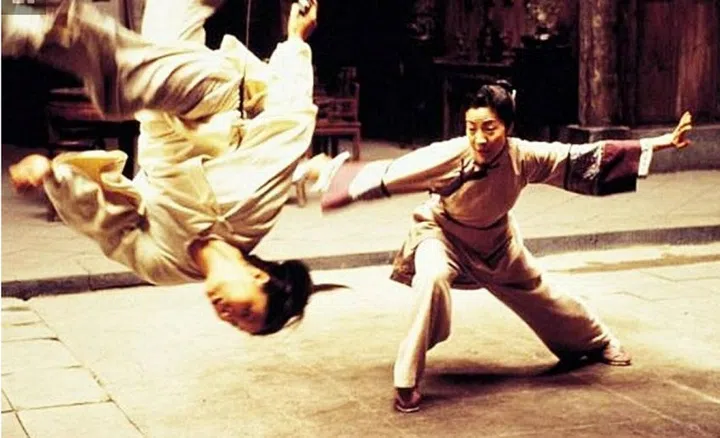
Cinema still from action film Crouching Tiger, Hidden Dragon, starring Michelle Yeoh (right) and Zhang Ziyi. (Internet)

Cinema still from action film Crouching Tiger, Hidden Dragon, starring Michelle Yeoh (right) and Zhang Ziyi. (Internet)

Oscar-winning action film Crouching Tiger, Hidden Dragon sits at the top spot with US$213 million in overseas takings. Before the film was released in 2000, at least a few of its stars — like Michelle Yeoh and Chow Yun-fat — had gained some degree of international recognition. The film was produced by Columbia Pictures, a subsidiary of Hollywood major Sony Pictures Entertainment Inc.
Some fans of Ne Zha 2 have also accused the animated film’s overseas distributors of inadequate promotional efforts. CMC Corp. — which handled the film’s release in North America, Australia and New Zealand — blamed insufficient preparation time and weak media engagement, according to a statement published on 11 March that was later deleted.

For many Chinese-language movie distributors like CMC, securing screenings is a major challenge overseas. When Ne Zha 2 and Captain America: Brave New World were released in North America on 14 February, the Marvel film secured significantly more theatre screenings, according to the state-run Xinhua News Agency, citing industry data.

Unlike Chinese theatres that follow official directives and typically release films simultaneously nationwide, theatres in countries like the US prioritise profitability when scheduling films, sometimes allocating screens based on pre-existing agreements with major studios. Distributors must negotiate individually with each theatre chain or independent cinema for screening slots.

Additionally, most Chinese producers prioritise domestic markets, only considering overseas releases after evaluating a film’s local performance, Caixin has learned. By contrast, producers of globally targeted films plan for international distribution from the outset, tailoring both content and casting accordingly. But “many (Chinese) companies now recognise the need to engage overseas distributors sooner”, the film industry insider said.

“Chinese cinema has enjoyed the growth dividend of a single large market over the past decade,” said Ma Ruiqing, an associate professor at the Sidney Poitier New American Film School of Arizona State University, explaining that the domestic market alone is sufficient to generate significant revenue, meeting filmmakers’ expectations for commercial success. As a result, overseas distribution is not an urgent priority for them. Most commercial films also do not consider popularity in the overseas market as a core factor in content design, Ma added.
Despite these difficulties, animation is seen as having potential to do well overseas as it’s more accessible and appeals to broader audiences. Animated releases have gained increasing market share in China and the US, accounting for 16% and 24% of respective box office revenues last year, according to CMC Vice President Ying Xujun.
 
Chinese movies can have an interesting plot but action sequences are usually too fast for my taste. They need to adopt Hollywood style direction.
 
Chinese movies can have an interesting plot but action sequences are usually too fast for my taste. They need to adopt Hollywood style direction.
So you want them to be generally bad? Ok. :)
 
I knew what you were referring to. I've watched a couple of Chinese-produced films while on business travel. Hard to watch. Still, compared to Russian-produced films; Russian movies are the worst IMO.
 
So you want them to be generally bad? Ok. :)

Hollywood has always produced bad films. But films like Oppenheimer, Top Gun Maverick, and Dune Part 2 are what makes Hollywood great.

I’m seeing Sinners tomorrow. Ryan Cooglers Southern Gothic vamp film. 97% on RT
 

While Ne Zha 2 has earned a place in the history book, Chinese films still face persistent difficulty in winning over global audiences.​


While the record-setting box office run of Ne Zha 2 has earned the film its place in the history books, its overseas earnings are tiny compared with its domestic takings, highlighting the persistent difficulty Chinese films face winning over global audiences.
As of Thursday (10 April) morning, the animated blockbuster had grossed US$2.15 billion, but only US$60 million — or less than 3% — came from outside the Chinese mainland, according to box office tracker Maoyan. It currently sits in fifth place on the all-time global box office chart, behind the two Avatar movies, Avengers: Endgame, and Titanic.

Since its January release on the Chinese mainland, Ne Zha 2 has become the highest-grossing animated film ever and the first non-Hollywood title to earn over US$2 billion.

Based on Chinese mythology, the film follows Ne Zha — a boy born as a demon incarnate who rebels against his fate — and has become a symbol of national pride within China.
“Ne Zha 2 is popular domestically because Chinese audiences understand the social strata and environments each character represents. But Western audiences may not connect with it,” a film industry insider told Caixin. “Hollywood already dominates large-scale visual effects films, leaving little room for Chinese productions to offer something new.”

For instance, Captain America: Brave New World — which was released in North America on the same day as Ne Zha 2 — had raked in US$412 million as of Thursday (10 April) morning, with more than half coming from markets outside North America, data from Maoyan showed.
Ne Zha 2 was released in Chinese with English subtitles, which along with its heavy use of Taoist cultural references, has made it less accessible to foreign audiences. Its English-dubbed version, still in progress, is being handled by the same team that dubbed smash hit video game Black Myth: Wukong in collaboration with a Hollywood translation studio.

The situation facing Chinese films abroad has not fundamentally changed over the years, the industry insider said. Films with strong local characteristics often struggle internationally due to differences in aesthetic preferences. A film’s success also depends on production quality and whether the cast includes stars recognisable to international audiences, the insider added.
Among Chinese films released overseas, Ne Zha 2 currently ranks 10th in terms of box office revenue, Maoyan data showed. The top nine are mostly martial arts films, a genre that has historically proven popular among international audiences.

Cinema still from action film Crouching Tiger, Hidden Dragon, starring Michelle Yeoh (right) and Zhang Ziyi. (Internet)

Cinema still from action film Crouching Tiger, Hidden Dragon, starring Michelle Yeoh (right) and Zhang Ziyi. (Internet)

Oscar-winning action film Crouching Tiger, Hidden Dragon sits at the top spot with US$213 million in overseas takings. Before the film was released in 2000, at least a few of its stars — like Michelle Yeoh and Chow Yun-fat — had gained some degree of international recognition. The film was produced by Columbia Pictures, a subsidiary of Hollywood major Sony Pictures Entertainment Inc.
Some fans of Ne Zha 2 have also accused the animated film’s overseas distributors of inadequate promotional efforts. CMC Corp. — which handled the film’s release in North America, Australia and New Zealand — blamed insufficient preparation time and weak media engagement, according to a statement published on 11 March that was later deleted.

For many Chinese-language movie distributors like CMC, securing screenings is a major challenge overseas. When Ne Zha 2 and Captain America: Brave New World were released in North America on 14 February, the Marvel film secured significantly more theatre screenings, according to the state-run Xinhua News Agency, citing industry data.

Unlike Chinese theatres that follow official directives and typically release films simultaneously nationwide, theatres in countries like the US prioritise profitability when scheduling films, sometimes allocating screens based on pre-existing agreements with major studios. Distributors must negotiate individually with each theatre chain or independent cinema for screening slots.

Additionally, most Chinese producers prioritise domestic markets, only considering overseas releases after evaluating a film’s local performance, Caixin has learned. By contrast, producers of globally targeted films plan for international distribution from the outset, tailoring both content and casting accordingly. But “many (Chinese) companies now recognise the need to engage overseas distributors sooner”, the film industry insider said.

“Chinese cinema has enjoyed the growth dividend of a single large market over the past decade,” said Ma Ruiqing, an associate professor at the Sidney Poitier New American Film School of Arizona State University, explaining that the domestic market alone is sufficient to generate significant revenue, meeting filmmakers’ expectations for commercial success. As a result, overseas distribution is not an urgent priority for them. Most commercial films also do not consider popularity in the overseas market as a core factor in content design, Ma added.
Despite these difficulties, animation is seen as having potential to do well overseas as it’s more accessible and appeals to broader audiences. Animated releases have gained increasing market share in China and the US, accounting for 16% and 24% of respective box office revenues last year, according to CMC Vice President Ying Xujun.
International screening was an afterthought for NeZha 2 as it doesn't even have an English dub. And the very fact that it climbed to top 5 spot on essentially the Chinese market alone says something, as Hollywood will be increasingly shut out of that market.
 
Last edited:
International screening was an afterthought for NeZha 2 as it doesn't even have an English dub. And the very fact that it climbed to top 5 spot on essentially the Chinese market alone says something, as Hollywood will be increasingly shut out of that market.

Neither did Crouching Tiger, Hidden Dragon and it still did well.
Any dubbing you see was done after the release.


Here's Ebert & Roeper reviewing it in 2000 and you can see the subtitles.
 
Last edited:
Neither did Crouching Tiger, Hidden Dragon and it still did well.
Any dubbing you see was done after the release.


Crouching Tiger and Hidden Dragon was not made for the Chinese market, with its Chinese box office actually underperformed. I'm talking about the movie's targeting audience, where the lack of dub is just one element.
 
Crouching Tiger and Hidden Dragon was not made for the Chinese market,
Only because in 2000 the entire Chinese Box Office market was like $100M/yr.
 
Last edited:
Only because in 2000 the entire Chinese market was like $100M/yr.

AI Overview
  • Mixed Performance in China:
    The film did not perform as well in China as it did internationally, with The Association for Asian Studies noting that it fell below expectations in both Hong Kong and mainland China.
 

While Ne Zha 2 has earned a place in the history book, Chinese films still face persistent difficulty in winning over global audiences.​


While the record-setting box office run of Ne Zha 2 has earned the film its place in the history books, its overseas earnings are tiny compared with its domestic takings, highlighting the persistent difficulty Chinese films face winning over global audiences.
As of Thursday (10 April) morning, the animated blockbuster had grossed US$2.15 billion, but only US$60 million — or less than 3% — came from outside the Chinese mainland, according to box office tracker Maoyan. It currently sits in fifth place on the all-time global box office chart, behind the two Avatar movies, Avengers: Endgame, and Titanic.

Since its January release on the Chinese mainland, Ne Zha 2 has become the highest-grossing animated film ever and the first non-Hollywood title to earn over US$2 billion.

Based on Chinese mythology, the film follows Ne Zha — a boy born as a demon incarnate who rebels against his fate — and has become a symbol of national pride within China.
“Ne Zha 2 is popular domestically because Chinese audiences understand the social strata and environments each character represents. But Western audiences may not connect with it,” a film industry insider told Caixin. “Hollywood already dominates large-scale visual effects films, leaving little room for Chinese productions to offer something new.”

For instance, Captain America: Brave New World — which was released in North America on the same day as Ne Zha 2 — had raked in US$412 million as of Thursday (10 April) morning, with more than half coming from markets outside North America, data from Maoyan showed.
Ne Zha 2 was released in Chinese with English subtitles, which along with its heavy use of Taoist cultural references, has made it less accessible to foreign audiences. Its English-dubbed version, still in progress, is being handled by the same team that dubbed smash hit video game Black Myth: Wukong in collaboration with a Hollywood translation studio.

The situation facing Chinese films abroad has not fundamentally changed over the years, the industry insider said. Films with strong local characteristics often struggle internationally due to differences in aesthetic preferences. A film’s success also depends on production quality and whether the cast includes stars recognisable to international audiences, the insider added.
Among Chinese films released overseas, Ne Zha 2 currently ranks 10th in terms of box office revenue, Maoyan data showed. The top nine are mostly martial arts films, a genre that has historically proven popular among international audiences.

Cinema still from action film Crouching Tiger, Hidden Dragon, starring Michelle Yeoh (right) and Zhang Ziyi. (Internet)

Cinema still from action film Crouching Tiger, Hidden Dragon, starring Michelle Yeoh (right) and Zhang Ziyi. (Internet)

Oscar-winning action film Crouching Tiger, Hidden Dragon sits at the top spot with US$213 million in overseas takings. Before the film was released in 2000, at least a few of its stars — like Michelle Yeoh and Chow Yun-fat — had gained some degree of international recognition. The film was produced by Columbia Pictures, a subsidiary of Hollywood major Sony Pictures Entertainment Inc.
Some fans of Ne Zha 2 have also accused the animated film’s overseas distributors of inadequate promotional efforts. CMC Corp. — which handled the film’s release in North America, Australia and New Zealand — blamed insufficient preparation time and weak media engagement, according to a statement published on 11 March that was later deleted.

For many Chinese-language movie distributors like CMC, securing screenings is a major challenge overseas. When Ne Zha 2 and Captain America: Brave New World were released in North America on 14 February, the Marvel film secured significantly more theatre screenings, according to the state-run Xinhua News Agency, citing industry data.

Unlike Chinese theatres that follow official directives and typically release films simultaneously nationwide, theatres in countries like the US prioritise profitability when scheduling films, sometimes allocating screens based on pre-existing agreements with major studios. Distributors must negotiate individually with each theatre chain or independent cinema for screening slots.

Additionally, most Chinese producers prioritise domestic markets, only considering overseas releases after evaluating a film’s local performance, Caixin has learned. By contrast, producers of globally targeted films plan for international distribution from the outset, tailoring both content and casting accordingly. But “many (Chinese) companies now recognise the need to engage overseas distributors sooner”, the film industry insider said.

“Chinese cinema has enjoyed the growth dividend of a single large market over the past decade,” said Ma Ruiqing, an associate professor at the Sidney Poitier New American Film School of Arizona State University, explaining that the domestic market alone is sufficient to generate significant revenue, meeting filmmakers’ expectations for commercial success. As a result, overseas distribution is not an urgent priority for them. Most commercial films also do not consider popularity in the overseas market as a core factor in content design, Ma added.
Despite these difficulties, animation is seen as having potential to do well overseas as it’s more accessible and appeals to broader audiences. Animated releases have gained increasing market share in China and the US, accounting for 16% and 24% of respective box office revenues last year, according to CMC Vice President Ying Xujun.

Ne Zha 2 will only be a statistic in 10 years with no cinematic cultural weight.
 
Spoke too soon. It's not over yet.

1745292636771.png

The Highest-Grossing Movie in the World Right Now Is About to Get Even Bigger With an All-Star English Dub Release


One of the most surprising blockbusters of the year is getting an all-star English dub in an attempt to take over the world all over again. Ne Zha 2 smashed records when it became the biggest animated movie of all-time thanks to its $2.11 billion global box office, and found itself among James Cameron’s Avatar movies and MCU Avengers films as the fifth-highest grossing movie ever.

Ne Zha 2 obviously made most of its money at the China box office, but you can’t make a movie that big without the rest of the world wanting to see what the fuss is about. For that reason, the movie, with its original language and subtitles, managed to pull in reasonable box office receipts. Now the new English dub has already started securing screens in the U.S. and Australia, and is prepared to put in the marketing to make the film a success all over again.

Cedric Behrel, managing director of distributor Trinity CineAsia, said of the movie’s previous performance in non-Chinese markets:

1745292728948.png

There is no word yet on who will be enlisted to provide the English dub voices for the movie, but with “enormous returns” on the cards, it is likely that the producers will be looking at some big names to capture the attention of those who may have let the movie pass them by.

'Ne Zha 2’s Incredible Box Office Success​

Ne Zha 2 poster
CMC Pictures

While box office charts have been dominated by superhero movies and big American blockbusters, Ne Zha 2 came from nowhere to kick 2024’s Inside Out 2 into touch by replacing it as the highest-grossing animated movie ever, and then it just kept going.

Ne Zha 2 was written and directed by Yu Yang, and is a follow-up to the 2019 film Ne Zha, which was loosely based on Xu Zhonglin's novel Investiture of the Gods. From its reasonable 600 million yuan ($80 million) budget, the film blew away the $742 million box office of the first movie, which was released in 2019, and hit that sweet spot where nothing can stop the runaway train.

There is no single reason as to why the film became the global phenomenon it has. While animated fantasy movies have always been popular, the 144-minute runtime could have been seen as too long for some youngsters to sit through, but, on this occasion, that has made no difference at all. Now, with the language barrier about to be broken – and while many believe that English dubs are the devil, in an animated movie that changes things a little – there is no way of telling just how high Ne Zha 2 can soar as it attempts to challenge the Western world’s biggest blockbusters.

Source: Variety

 
As a kid I loved old 80s era Chinese kung fu movies, lotta Jackie Chan ones.

An evil emperor or a rival kung fu school were often the villains, and a young prodigy would avenge the dead of the master after enduring great hardship.. good stuff.

Not so sure about these new ones with stupid stunts and people defying gravity and floating to the other side of the room to deliver a haii-yaah kick lol
 
Sounds as if China is not part of the world. Movie makers' goal is make more money so they can reinvest the money to make better movies in the future, it doesn't matter from which market the money is from. Money is money. A failed movie which makes more money in foreign market than domestic is still a failed movie.
 

Users who are viewing this thread

Latest Posts

Back
Top