Chinese Universities Dominate Asia’s Best and IISc Still Leads India

Beijingwalker

VIP Member
Joined
Nov 4, 2011
Messages
92,770
Reaction score
113,342
Reputation
2,144.3
Country of Origin
Country of Residence

Chinese Universities Dominate Asia’s Best, IISc Still Leads India

by Itishree Sethy
April 24, 2025

The Times Higher Education (THE) Asia Rankings 2025 have been announced, revealing significant shifts in higher education rankings across Asia.

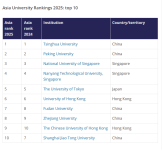
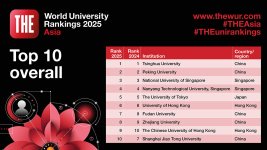
As expected, China leads with Tsinghua University and Peking University securing the top two positions. Five Chinese universities dominate the top 10 list.

Singapore’s National University of Singapore claims third place, followed by Nanyang Technological University (Singapore), the University of Tokyo (Japan), and the University of Hong Kong. This year marks an impressive feat for Hong Kong, with all six of its ranked institutions appearing in the top 50.

India sees the Indian Institute of Science (IISc) ranked as the top institution in the country at 38th in Asia. However, the limited representation of Indian Institutes of Technology (IITs) in the top 10 nationally raises eyebrows, with only IIT Indore (ranked 131) and IIT Guwahati (ranked 184) making the cut.

Private universities have made strides, with Shoolini University of Biotechnology and Management Sciences ranking 146th in Asia, maintaining its position as India’s leading private university. Meanwhile, countries like Uzbekistan, Bahrain, Mongolia, and Syria have debuted in the rankings, further expanding Asia’s educational landscape.

The rankings signify evolving trends and global competitiveness in higher education.
 

Asia University Rankings 2025​

Explore the best universities in Asia with the Times Higher Education Asia University Rankings 2025, providing the most comprehensive assessment of Asia’s research universities. This year, we’ve ranked 853 universities from 35 countries/territories, assessing their research, teaching, knowledge transfer and international outlook.

Asian universities: highlights

  • China leads the rankings, retaining first and second place and holding five of the top 10 spots
  • Singapore, Japan and Hong Kong also feature in the top 10
  • Four countries rank for the first time: Uzbekistan, Bahrain, Mongolia and Syria
  • All six of Hong Kong’s ranked universities make the top 50 for the first time since 2017
Explore the table below to discover the full ranking and how universities across Asia are performing this year.

微信图片_20250425123330.png


22 from Muslim World, 01 from India among Top 100 Universities in Asia​

A total of 22 universities from the Muslim world figured in the list of Top 100 Universities in Asia whereas the dismal performance of the Indian universities continues if the Times Higher Education (THE) Asia University Rankings 2025 are any indication​

Thursday April 24, 2025 4:52 PM, Falak Athar Faizee
22 from Muslim World, 01 from India among Top 100 Universities in Asia


[Indian Institute of Science (IISc) Bengaluru is the only Indian institution in the 2025 list of top 100 universities in Asia. (Image Source: medicine.iisc.ac.in)]

THE Asia Ranking 2025: A total of 22 universities from the Muslim world figured in the list of Top 100 Universities in Asia whereas the dismal performance of the Indian universities continues if the Times Higher Education (THE) Asia University Rankings 2025 are any indication.

The Times Higher Education (THE) Asia University Rankings 2025 assessed 853 universities from 35 countries and territories, based on performance across teaching, research, knowledge transfer, and international outlook.

The list of top 100 universities of the Asia in the Times Higher Education (THE) Asia University Rankings 2025 is dominated by the Muslim countries - group wise, and China in terms of individual performance.

According to the Times Higher Education (THE) Asia University Rankings 2025 released on April 23, 2025, a total of 22 universities from the Muslim world who are OIC members have figured in the list of top 100 universities in Asia.

On the other hand, the Indian Institute of Science (IISc) Bengaluru is the only Indian institution in the 2025 list of top 100 universities of Asia.

Top Universities in Muslim Countries

Of the total 22 universities in the Muslim countries that figured in the Times Higher Education (THE) Asia University Rankings 2025, a maximum 05 are from Saudi Arabia, 04 each are from Turkey, Iran and the United Arab Emirates (UAE), and 01 each from Lebanon and Qatar.

Following is the list of 22 best universities and their rank in the Muslim countries in Asia.

31. King Fahd University of Petroleum and Minerals Saudi Arabia
37. Khalifa University UAE
43. Universiti Teknologi Petronas Malaysia
54. Qatar University Qatar
55. United Arab Emirates University UAE
60. King Saud University Saudi Arabia
64. University of Malaya Malaysia
69. Sharif University of Technology Iran
70. Abu Dhabi University UAE
70. Amirkabir University of Technology Iran
72. Middle East Technical University Turkey
74. Sabancı University Turkey
77. Iran University of Science and Technology Iran
79. Koç University Turkey
86. Universiti Teknologi Malaysia Malaysia
88. University of Sharjah UAE
89. Prince Mohammad Bin Fahd University Saudi Arabia
92. Lebanese American University Lebanon
96. King Khalid University Saudi Arabia
97. Istanbul Technical University Turkey
97. University of Tehran Iran
99. King Abdulaziz University Saudi Arabia

Best University in Asia

As per Times Higher Education (THE) Asia University Rankings 2025, Tsinghua University of China is the best university in Asia followed by Peking University of China and National University of Singapore at the 2nd and 3rd ranks in Asia.

As many 32 universities of China are in the list of top 100 universities in Asia. Thus, China leads the way, with two Chinese universities taking the top two positions. China is the best-represented region in the top 10, with five universities present.

In terms of numbers, Japan is the highest represented country with 119 universities in the ranking, while India comes second with 107 ranked institutions. China is the third most-represented country, with 94 universities.

The Asia University Rankings are based on the same 18 performance indicators as the Times Higher Education World University Rankings, but these have been recalibrated to reflect the attributes of Asia’s universities.

 
微信图片_20250425123330.png

Hong kong is also part of China, should be noted in the chart.
7 out of the top 10 universities in Asia are from China, and Tsinghua and Peking universities hold a landslide lead over the rest.
 
Last edited:
Zhejiang is doing exceptionally well these days, and surprised to see Saudi Arabia unis doing so well and only one India university made it in the Aisa top 100.
 
University of Tokyo is the only university from non Chinese majority countries and regions making the top 10 list.

491438065_18507806692058840_5361893492482247752_n.jpg
 
Last edited:
Why the hell Singapore and Hong Kong universities rank so high? Is it because they use English in class? Chinese universities made big contribution to China's science and technology rise. The world visually saw China's success in all fields. I don't see Singapore and HK did same.
 
The top universities Peking, Tsinghua and Fudan, their graduates are most pro-US and pro-West bunch in China, quite a number of them are in full support of US dominated international system. Something is wrong in Chinese educational system.
 
The top universities Peking, Tsinghua and Fudan, their graduates are most pro-US and pro-West bunch in China, quite a number of them are in full support of US dominated international system. Something is wrong in Chinese educational system.
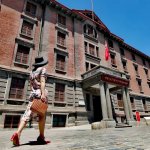
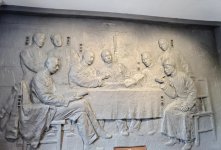
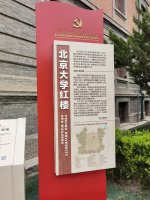
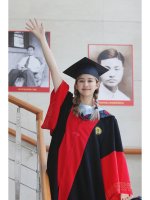
Used to be, but now is changing. Peking University now tries to convince people that it is the craddle of the Chinese Communist Party, Mao himself also worked at PKU in his early twenties.

北京大学红楼五四青年节活动攻略🎉_5_去哪游_来自小红书网页版.jpg北大红楼—爱国主义教育之行_1_momo_来自小红书网页版.jpg北大红楼—爱国主义教育之行_3_momo_来自小红书网页版.jpg北大红楼—爱国主义教育之行_8_momo_来自小红书网页版.jpg答辩尴尬一小时 博士学位一辈子!🎓_4_何揪揪揪揪不完_来自小红书网页版.jpg
 
The top universities Peking, Tsinghua and Fudan, their graduates are most pro-US and pro-West bunch in China, quite a number of them are in full support of US dominated international system. Something is wrong in Chinese educational system.
You are generalizing a whole bunch, no, they are making huge contribution to the country's scientific field.
 
Students from various countris sing “Dislocation of Time and Space” at 2024 Graduation ceremony in Peking University to remember how PKU's past graduates help China stand up again from the 100 year humiliation inflicted by foreign powers in past 100 years and its revolutionary past, especially the time when PKU had to merge with Tsinghua university and left Beijing during WW2, (China anti Japanese War), thousands of students carrying their own food and belongings traveled thousands of miles on foot, climbing mountains and crossing rivers, from Beijing to far south Yunnan province.

To view this content we will need your consent to set third party cookies.
For more detailed information, see our cookies page.

To view this content we will need your consent to set third party cookies.
For more detailed information, see our cookies page.
 
Last edited:
You are generalizing a whole bunch, no, they are making huge contribution to the country's scientific field.
That's what I read in the news, some of them supporting American views quite often come up. That's also some Chinese experts' opinion too. Of course, Tsinghua is the best science and technology university in China contributing greatly to China too.
 
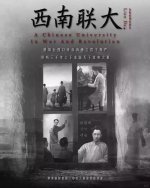
During WW2 ( Chinese anti Japanese War) Peking University, Tsinghua University and Nankai University moved to Yunnan and merged to form National Southwestern Associated University, the most famous exile university in the Chinese history.


China's first atomic bomb, hydrogen bomb, first rocket and satelite all the creations of graduates from this exile school

高分纪录片-西南联大_1_Hi-Jenny_来自小红书网页版.jpg

All the founding fathers of China's modern science and technolog were the graduates of this war time exile school, in its existence of 8 years, it produced 172 Chinese academicians and two Nobel Prize winners

When the Sino-Japanese War broke out between China and Japan in 1937, Peking University, Tsinghua University and Nankai University merged to form Changsha Temporary University in Changsha and later National Southwestern Associated University (Lianda) in Kunming and Mengzi, in Southwest China's Yunnan Province.

By summer 1937, the Imperial Japanese Army had bombed Nankai University to the ground in Tianjin and occupied areas including the campuses of two of the country's leading universities in Beijing: Peking University and Tsinghua University.

These three universities, which were some of the country's most prestigious, modern institutions of higher learning and research, with the agreement of those who led the institutions — men of high standing who had been educated abroad — retreated to Changsha, the capital city of Hunan province (about 900 miles away from Beijing) to unite.

By the middle of December 1937, many students had to leave to fight the Japanese when the city of Nanjing fell to enemy forces. As the Japanese forces were gaining more territory, they bombed Changsha in February 1938. The 800 staff faculty and students who were left had to flee and made the 1,000 mile journey to Kunming, capital of Yunnan province in China's remote and mountainous southwest. It was here that the National Southwest Associated University (commonly known as 'Lianda') was formed.

In these extraordinary wartime circumstances for eight years, staff, professors and students had to survive and operate in makeshift quarters that were subjected to sporadic bombing campaigns by the Imperial Japanese forces. There were dire shortages of food, equipment, books, clothing and other essential needs, but they managed to conduct the running of a modern university.

Over those years of war (1937-1945), Lianda became famous nationwide for having and producing many of China's most prominent scientists and intellectuals, including 172 Chinese academicians and the Nobel Prize laureates Yang Chen-Ning and Tsung-Dao Lee.
 

Users who are viewing this thread

Pakistan Defence Latest

Back
Top