Indian false flag and current Indo-Pak stand-off updates

Status
Not open for further replies.
They are planning for missile strikes from within their own territory. Brahmos From Land/Air/Sea.
To view this content we will need your consent to set third party cookies.
For more detailed information, see our cookies page.


What can they hit that is meaningful without risking all out war and asking for a response in kind?

Only empty buildings/ fields and claiming they hit a major training camp. Anything meaningful, like an actual military base will have dire consequences.
 
What can they hit that is meaningful without risking all out war and asking for a response in kind?

Only empty buildings/ fields and claiming they hit a major training camp. Anything meaningful, like an actual military base will have dire consequences.
Without risking? That is miscalculastion....even hiting an empty building would be responded ....
 
To view this content we will need your consent to set third party cookies.
For more detailed information, see our cookies page.
 
India - Pakistan war has erupted:-
To view this content we will need your consent to set third party cookies.
For more detailed information, see our cookies page.
 
To view this content we will need your consent to set third party cookies.
For more detailed information, see our cookies page.

To view this content we will need your consent to set third party cookies.
For more detailed information, see our cookies page.
 
Dear Pakistani members,


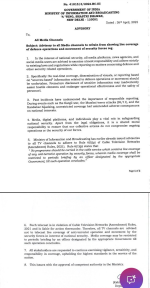
Untitled (10).png

During this time please help play your part by helping safeguard the nation. Please avoid sharing misinformation or fake news, please help prevent the sharing of sensitive real-time troop movements, defensive placements, equipment, locations, dates-times, unit names, personnel names etc.

People may innocently or due to passionate feelings share information online that can be used by the enemy, seemingly innocent photographs and videos can provide crucial information for geolocation and a vital source of opensource intelligence to any hostile force that can incorporate such information into their full spectrum intelligence operations and remote hostile surveillance.

If you see a social media handle on any social media platform sharing sensitive information, photography, video, troop movement, movement of equipment, defensive placements, times, dates and locations of Pakistan security forces, in the first instance kindly advise the user to refrain from doing so - you may also report the handle to Cyber Crimes Wing by dialling the 24 hour helpline 1991 from any cell phone or landline in Pakistan.

Any information to be shared will be shared through official channels such as ISPR, Government of Pakistan, MOFA.

Thank you,
 
I consider China to be far smarter than most countries. They manage to maintain disputes with their neighboring countries while still continuing all kinds of trade and economic relations with them.

It’s a complete win-win situation for China.
They also have remarkable patience — they know how to wait for the right time and the right opportunity to act.

On the other hand, I also believe that Pakistan’s policies are among the worst — and I m not saying because owe have poor relationship , but when I objectively weigh the advantages and disadvantages.

Pakistan has been stuck with the Kashmir issue for decades. While this position may look good for internal politics — to justify historical claims and keep the narrative alive among their own people — in reality, it serves little practical purpose. It’s sold as if Pakistan cannot survive without Kashmir.

However, practically speaking, this stand has been a complete lose-lose situation for Pakistan. I don't see any real advantages in it if exclude internal politics

Even India doesn’t have such poor policies.
For example, we believe that China has occupied parts of our land, but we don’t make it the only issue in our dealings with them. We don’t say that unless the border issue is resolved, there will be no business or dialogue. Similarly, with Pakistan, while we have territorial claims, we don't completely block all other matters because of that.

Thankfully, in India, such sensitive issues are mostly used by politicians for internal vote-bank politics — they make statements to appeal to public emotions abd play for vote politics , But importantly, these statements rarely affect our actual foreign policy decisions.
Pakistan was dealt many tough cards early on, and only now does it seem its has achieved the kind of awareness requisite to consider how to deal with these challenges smartly. It’s not that different from the social dynamics in Russia before the Bolshevik revolution.
 
Could it be that US is setting up THAAD or PAC3 batteries against any possible Pak nuc retaliation. Zionists are also present in the IoK perhaps for EW support.
Pakistan should seek Chinese satellite imagery of what arrived and seek the kind of warheads/missiles to deal with such a threat, such as the YJ-21E.
 
Pakistan better take war seriously, best to the production of nukes, that is where it is leading to. The Hindju Nazi axis is causing wars all around the world:-


25 Apr, 2025 19:35
HomeIndia

India is done playing nice. It’s time to punish Pakistan​

New Delhi firmly believes the Pahalgam terrorist attack was backed by Pakistan. It can crush Islamabad in retaliation
Anil Chopra
By Air Marshal Anil Chopra (Retired), an Indian Air Force veteran fighter test pilot and is the former Director-General of the Center for Air Power Studies in New Delhi.
@Chopsyturvey
India is done playing nice. It’s time to punish Pakistan

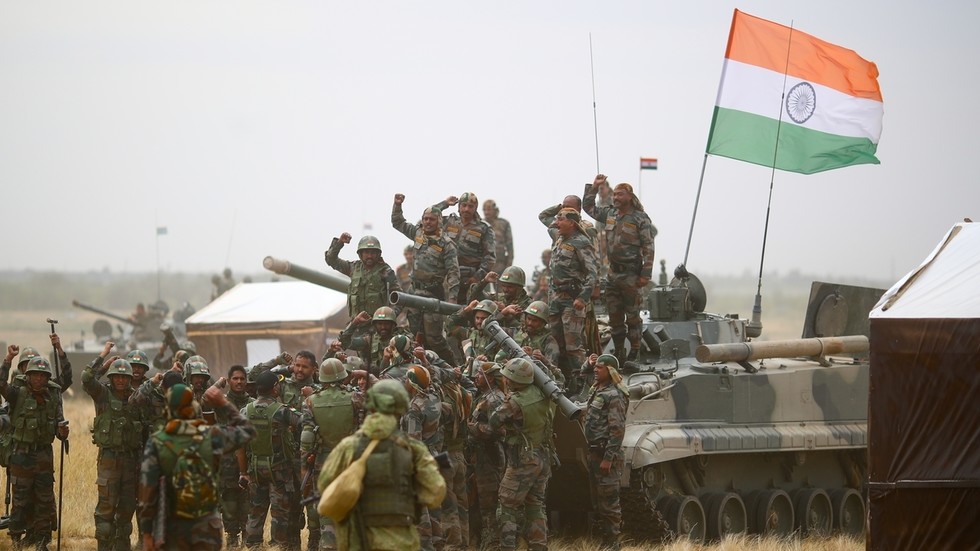
FILE PHOTO: Indian servicemen take part in the joint Russian-Indian exercise. © Sputnik / Kirill Braga
The gruesome massacre of innocent holidaymakers near Pahalgam in India’s Jammu and Kashmir Union Territory has been condemned by all major world leaders including US President Donald Trump and Russian President Vladimir Putin.

At least 28 people were killed and several others injured in the attack. That it happened when US Vice President J.D. Vance was in India indicates the audacity of the attackers and their backers. Indian Prime Minister Narendra Modi who was on a visit to Saudi Arabia had to cut his trip short and rush back. The Indian security establishment immediately went into a huddle. Home Minister Amit Shah and the Army Chief rushed to Pahalgam to take stock of the situation on the ground.

The terrorists have already been identified and their Pakistan links established. The three military chiefs are now discussing a response and are considering all options. This will not be allowed to go by. There is nationwide anger. There will be repercussions. A team of National Investigation Agency (NIA) officials are investigating on the spot. Recent events in Bangladesh, the infiltration and riots in West Bengal, and Pakistan army chief’s venomous position on Hindus are indicative of a major game play.

The Pakistani army chief talks supremacism​

Addressing the Overseas Pakistanis Convention in Islamabad, General Asim Munir echoed the words of Muhammad Ali Jinnah, the founding father of Pakistan, who famously believed that Hindus and Muslims followed different philosophies, customs, and laws – making national unity impossible. Munir returned to the very roots of Pakistan’s ideological foundation. “Our religion is different, our customs are different, our traditions are different, our thoughts are different, our ambitions are different – that’s where the foundation of the two-nation theory was laid. We are two nations, we are not one nation,” he said.

India-Pakistan standoff following Kashmir attack: What we know so far
Read more
India-Pakistan standoff following Kashmir attack: What we know so far

He urged overseas Pakistanis to never forget that they belong to a “superior ideology and culture,” and to pass down this ideology to future generations. “You have to narrate Pakistan’s story to your children so that they don’t forget it,” he added.

Pakistani footprint all over the Pahalgam attack​

Hindu hatred is clearly visible from the modus operandi of the attack. Tell-tale signs of the Pakistani army’s backing are emerging. Pakistan cannot stand the peace and prosperity emerging in Kashmir. The state has been incident-free since its special autonomy status was revoked in 2019. Tourist numbers have been going up. Public participation in elections have been very significant. Chief Minister Omar Abdulla has been working closely with the New Delhi government for betterment of the masses.

But Kashmir’s integration with India was not palatable to the Pakistani ruling establishment. Pakistan is an ideological state, and its army has taken up the mantle of the guardian of that ideology. India’s 1.3-million-strong army cannot intimidate Pakistan, Munir said. He obviously forgets about the meek surrender of 93,000 Pakistani soldiers in that ended the two-week-long 1971 Indo-Pakistani war.

“China condemned the Pahalgam terror attack and said they oppose terrorism in all its forms. Hope China will then find courage to ask tough questions to their “iron brother” Pakistan on why it continues to sponsor terrorism on directions of Asim Munir. Let this be clear. Mastermind of Pahalgam terror attack is not Hafiz Saeed or Lashkar e Tayyiba. Mastermind of Pahalgam Massacre is Asim Munir of Pakistan Army sitting in Rawalpindi. Pakistan Army and ISI need to pay for the bloody carnage in Kashmir. Modi Govt should act boldly,” tweeted senior journalist Aditya Raj Kaul, a Hindu Kashmiri.

Political and diplomatic response​

The Indian public is angered and demanding that the mantra “never forget, never forgive” be put into action.

For a long time, India has taken the soft line. Perhaps that is the reason some have taken India for granted. It cannot allow itself to be seen as a weak state. There are lessons to be learned from Israel.

Pakistan shuts airspace to Indian airlines and suspends trade
Read more
Pakistan shuts airspace to Indian airlines and suspends trade

There are diplomatic, political and military options. All need to be exercised in tandem. Strong expressions of support and solidarity have been received from many governments around the world, which have unequivocally condemned the Pahalgam terrorist attack. The world is with India. Multiple nations have suffered from terrorism. Notably, major Islamic countries like Saudi Arabia and the UAE have spoken in favor of India.

India’s immediate response to the attack was broad-reaching. It has suspended the 1960 Indus Water Treaty, which allowed for water sharing providing irrigation to vast swathes of Pakistani land. All trade between the two nations, including through third countries has been suspended. The Integrated Check Post Attari, a strategic cross-border trade checkpoint and the only legal land route for trade, was closed with immediate effect. Pakistani YouTube and other social media channels have been barred in India. Cricket and other sporting events have been suspended. Pakistani nationals will not be permitted to travel to India under the SAARC Visa Exemption Scheme (SVES) visas. SVES visas already issued to Pakistani nationals are deemed cancelled, with any Pakistanis currently in India under an SVES given 48 hours to leave.

Military, naval and air advisors in the Pakistani High Commission in New Delhi (the Pakistani diplomatic mission in India) have been declared personae non grata and given a week to leave India. India will be withdrawing its own defense/navy/air advisors from the Indian High Commission in Islamabad as well. Their posts in the respective High Commissions are deemed annulled. The overall strength of the High Commissions will be brought down to 30 from the present 55 through further reductions by May 1. India will use its financial and diplomatic muscle to teach Pakistan a lesson.

There are other things that can be done. Indirect options India could use include supporting secessionist forces in Pakistan and giving more backing to the insurgencies in Balochistan, Sindh, Gilgit-Baltistan, and Pakistan-occupied Kashmir.

Military options​

The Indian government’s Cabinet Committee on Security (CCS) reviewed the overall security situation in its meeting at Prime Minister Narendra Modi’s residence and directed all forces to maintain high vigil. The armed forces have already launched Operation Tikka, a high-level anti-terrorism campaign. A few terrorists have already been eliminated. The Indian Army is giving a massive response to unprovoked firing at the Line of Control (LoC) between the India- and Pakistan-controlled parts of Kashmir. The ceasefire there is de facto annulled. Indian armed forces are already carrying out preparatory joint military exercises. Selective mobilization of the armed forces is possible and would send a strong signal. If it comes to that, India could exercise a massive punishing multi-domain strike.

Modi vows to ‘track and punish every terrorist’ after deadly attack
Read more
Modi vows to ‘track and punish every terrorist’ after deadly attack

India has many unspoken options. It could activate operatives to strike military establishments within Pakistan. An artillery barrage against terrorist training camps across the border could be launched. In case of open warfare, Pakistan would run out of ammunition much faster. Much wider air strikes against a host of terrorist camps can be carried out. BrahMos and other cruise missiles can be used.

The Indian Navy’s aircraft carrier has already sailed into the Arabian Sea. A few submarines could follow or may already be in the region. The Indian air force is formidable, with the French Rafale fighter jets armed with Scalp-EG and Meteor missiles. The Su-30 MKI, upgraded MiG 29 and Mirage-2000 are also potent assets.

New Delhi could coordinate with the Baloch Liberation Army and Pashtun insurgents in Pakistan to open multiple fronts. The escalation would have to be graded and carefully managed. A disproportionate Pakistan military response should be expected and prepared for.

India could also work towards selective US- and Israel-style assassinations of terrorist leaders in Pakistan plotting against.

Pakistan has few backers. Iran and the Saudis are not its friends anymore. China will at best act as a mediator. The US, Russia, Israel and Europe will back India for a controlled aggression. The bigger aim here is to show the Pakistani army in poor light. Call the nuclear bluff.

India cuts Pakistan off after massacre
Read more
India cuts Pakistan off after massacre

Punishment should not be a one-off event. It has to be a continuous program from now on. Make it painful for Pakistan to support terrorism. Peace overtures like the Aman ki Asha (‘Hope for Peace’) joint media campaign must end. Meanwhile, greater attention must be devoted to building military capability. Increase air force fighter squadron numbers. Stop downsizing the army. Get more nuclear submarines. Increase nuclear warheads.

Pakistan’s response​

Pakistan has also put its military on alert. Border areas are being sensitized by them for possible Indian attack. Pakistan has suspended the 1972 Shimla Agreement that had marked the LoC as the temporary border. Islamabad has closed its airspace for Indian airlines. Anti-India rhetoric has been boosted to raise the morale of the public. Pakistan has also announced that diversion of water due to it under the Indus Water Treaty will be treated as an act of war. It is a wait-and-watch situation.

Time to stop terrorist infiltration​

There are many Indian politicians, especially in West Bengal and Uttar Pradesh, who consider illegal Bangladeshi and Rohingya migrants as their political support base and are turning a blind eye to their arrival and settlement. It is time to take appropriate actions to curb this trend. There is a tendency for security forces and intelligence agencies to be less vigilant when there is an extended period of peace. It happened in Kargil.

Kashmir is a different story. Vigil will be required for decades ahead. If these terrorists were within the region for nearly a month as reports indicate, then we need to look in the mirror. The Indian judiciary is often seen as soft against terrorists. This needs serious review. The public has to be sensitized much more against terrorists. The time to act is now. A soft reaction will invite further dastardly attacks.
 
Dear Pakistani members,


View attachment 114807

During this time please help play your part by helping safeguard the nation. Please avoid sharing misinformation or fake news, please help prevent the sharing of sensitive real-time troop movements, defensive placements, equipment, locations, dates-times, unit names, personnel names etc.

People may innocently or due to passionate feelings share information online that can be used by the enemy, seemingly innocent photographs and videos can provide crucial information for geolocation and a vital source of opensource intelligence to any hostile force that can incorporate such information into their full spectrum intelligence operations and remote hostile surveillance.

If you see a social media handle on any social media platform sharing sensitive information, photography, video, troop movement, movement of equipment, defensive placements, times, dates and locations of Pakistan security forces, in the first instance kindly advise the user to refrain from doing so - you may also report the handle to Cyber Crimes Wing by dialling the 24 hour helpline 1991 from any cell phone or landline in Pakistan.

Any information to be shared will be shared through official channels such as ISPR, Government of Pakistan, MOFA.

Thank you,
Too much fear !
 
Pakistan better take war seriously, best to the production of nukes, that is where it is leading to. The Hindju Nazi axis is causing wars all around the world:-


25 Apr, 2025 19:35
HomeIndia

India is done playing nice. It’s time to punish Pakistan​

New Delhi firmly believes the Pahalgam terrorist attack was backed by Pakistan. It can crush Islamabad in retaliation
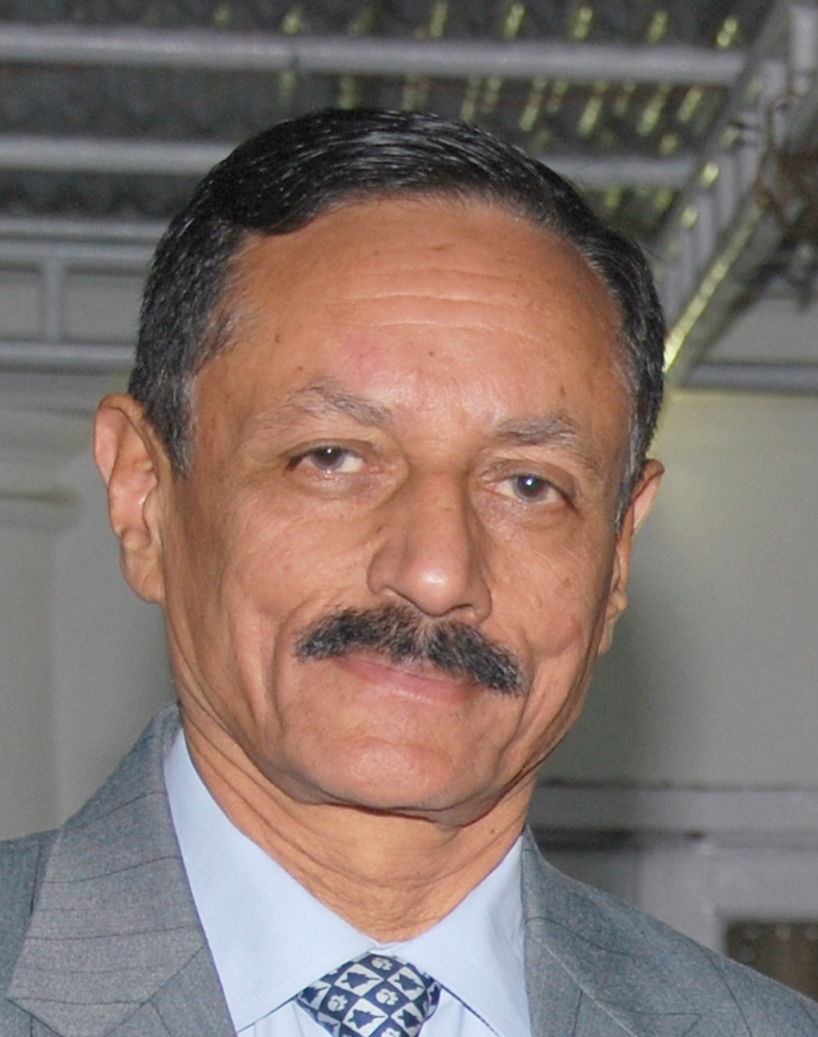
Anil Chopra
By Air Marshal Anil Chopra (Retired), an Indian Air Force veteran fighter test pilot and is the former Director-General of the Center for Air Power Studies in New Delhi.
@Chopsyturvey
India is done playing nice. It’s time to punish Pakistan

FILE PHOTO: Indian servicemen take part in the joint Russian-Indian exercise. © Sputnik / Kirill Braga
The gruesome massacre of innocent holidaymakers near Pahalgam in India’s Jammu and Kashmir Union Territory has been condemned by all major world leaders including US President Donald Trump and Russian President Vladimir Putin.

At least 28 people were killed and several others injured in the attack. That it happened when US Vice President J.D. Vance was in India indicates the audacity of the attackers and their backers. Indian Prime Minister Narendra Modi who was on a visit to Saudi Arabia had to cut his trip short and rush back. The Indian security establishment immediately went into a huddle. Home Minister Amit Shah and the Army Chief rushed to Pahalgam to take stock of the situation on the ground.

The terrorists have already been identified and their Pakistan links established. The three military chiefs are now discussing a response and are considering all options. This will not be allowed to go by. There is nationwide anger. There will be repercussions. A team of National Investigation Agency (NIA) officials are investigating on the spot. Recent events in Bangladesh, the infiltration and riots in West Bengal, and Pakistan army chief’s venomous position on Hindus are indicative of a major game play.

The Pakistani army chief talks supremacism​

Addressing the Overseas Pakistanis Convention in Islamabad, General Asim Munir echoed the words of Muhammad Ali Jinnah, the founding father of Pakistan, who famously believed that Hindus and Muslims followed different philosophies, customs, and laws – making national unity impossible. Munir returned to the very roots of Pakistan’s ideological foundation. “Our religion is different, our customs are different, our traditions are different, our thoughts are different, our ambitions are different – that’s where the foundation of the two-nation theory was laid. We are two nations, we are not one nation,” he said.
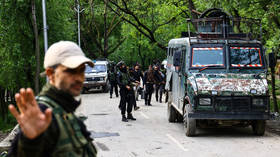
India-Pakistan standoff following Kashmir attack: What we know so far
Read more
India-Pakistan standoff following Kashmir attack: What we know so far
He urged overseas Pakistanis to never forget that they belong to a “superior ideology and culture,” and to pass down this ideology to future generations. “You have to narrate Pakistan’s story to your children so that they don’t forget it,” he added.

Pakistani footprint all over the Pahalgam attack​

Hindu hatred is clearly visible from the modus operandi of the attack. Tell-tale signs of the Pakistani army’s backing are emerging. Pakistan cannot stand the peace and prosperity emerging in Kashmir. The state has been incident-free since its special autonomy status was revoked in 2019. Tourist numbers have been going up. Public participation in elections have been very significant. Chief Minister Omar Abdulla has been working closely with the New Delhi government for betterment of the masses.

But Kashmir’s integration with India was not palatable to the Pakistani ruling establishment. Pakistan is an ideological state, and its army has taken up the mantle of the guardian of that ideology. India’s 1.3-million-strong army cannot intimidate Pakistan, Munir said. He obviously forgets about the meek surrender of 93,000 Pakistani soldiers in that ended the two-week-long 1971 Indo-Pakistani war.

“China condemned the Pahalgam terror attack and said they oppose terrorism in all its forms. Hope China will then find courage to ask tough questions to their “iron brother” Pakistan on why it continues to sponsor terrorism on directions of Asim Munir. Let this be clear. Mastermind of Pahalgam terror attack is not Hafiz Saeed or Lashkar e Tayyiba. Mastermind of Pahalgam Massacre is Asim Munir of Pakistan Army sitting in Rawalpindi. Pakistan Army and ISI need to pay for the bloody carnage in Kashmir. Modi Govt should act boldly,” tweeted senior journalist Aditya Raj Kaul, a Hindu Kashmiri.

Political and diplomatic response​

The Indian public is angered and demanding that the mantra “never forget, never forgive” be put into action.

For a long time, India has taken the soft line. Perhaps that is the reason some have taken India for granted. It cannot allow itself to be seen as a weak state. There are lessons to be learned from Israel.
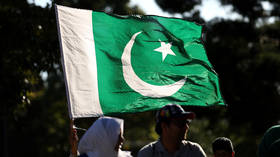
Pakistan shuts airspace to Indian airlines and suspends trade
Read more
Pakistan shuts airspace to Indian airlines and suspends trade
There are diplomatic, political and military options. All need to be exercised in tandem. Strong expressions of support and solidarity have been received from many governments around the world, which have unequivocally condemned the Pahalgam terrorist attack. The world is with India. Multiple nations have suffered from terrorism. Notably, major Islamic countries like Saudi Arabia and the UAE have spoken in favor of India.

India’s immediate response to the attack was broad-reaching. It has suspended the 1960 Indus Water Treaty, which allowed for water sharing providing irrigation to vast swathes of Pakistani land. All trade between the two nations, including through third countries has been suspended. The Integrated Check Post Attari, a strategic cross-border trade checkpoint and the only legal land route for trade, was closed with immediate effect. Pakistani YouTube and other social media channels have been barred in India. Cricket and other sporting events have been suspended. Pakistani nationals will not be permitted to travel to India under the SAARC Visa Exemption Scheme (SVES) visas. SVES visas already issued to Pakistani nationals are deemed cancelled, with any Pakistanis currently in India under an SVES given 48 hours to leave.

Military, naval and air advisors in the Pakistani High Commission in New Delhi (the Pakistani diplomatic mission in India) have been declared personae non grata and given a week to leave India. India will be withdrawing its own defense/navy/air advisors from the Indian High Commission in Islamabad as well. Their posts in the respective High Commissions are deemed annulled. The overall strength of the High Commissions will be brought down to 30 from the present 55 through further reductions by May 1. India will use its financial and diplomatic muscle to teach Pakistan a lesson.

There are other things that can be done. Indirect options India could use include supporting secessionist forces in Pakistan and giving more backing to the insurgencies in Balochistan, Sindh, Gilgit-Baltistan, and Pakistan-occupied Kashmir.

Military options​

The Indian government’s Cabinet Committee on Security (CCS) reviewed the overall security situation in its meeting at Prime Minister Narendra Modi’s residence and directed all forces to maintain high vigil. The armed forces have already launched Operation Tikka, a high-level anti-terrorism campaign. A few terrorists have already been eliminated. The Indian Army is giving a massive response to unprovoked firing at the Line of Control (LoC) between the India- and Pakistan-controlled parts of Kashmir. The ceasefire there is de facto annulled. Indian armed forces are already carrying out preparatory joint military exercises. Selective mobilization of the armed forces is possible and would send a strong signal. If it comes to that, India could exercise a massive punishing multi-domain strike.
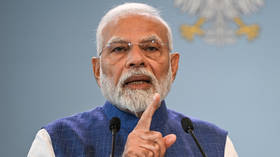
Modi vows to ‘track and punish every terrorist’ after deadly attack
Read more
Modi vows to ‘track and punish every terrorist’ after deadly attack
India has many unspoken options. It could activate operatives to strike military establishments within Pakistan. An artillery barrage against terrorist training camps across the border could be launched. In case of open warfare, Pakistan would run out of ammunition much faster. Much wider air strikes against a host of terrorist camps can be carried out. BrahMos and other cruise missiles can be used.

The Indian Navy’s aircraft carrier has already sailed into the Arabian Sea. A few submarines could follow or may already be in the region. The Indian air force is formidable, with the French Rafale fighter jets armed with Scalp-EG and Meteor missiles. The Su-30 MKI, upgraded MiG 29 and Mirage-2000 are also potent assets.

New Delhi could coordinate with the Baloch Liberation Army and Pashtun insurgents in Pakistan to open multiple fronts. The escalation would have to be graded and carefully managed. A disproportionate Pakistan military response should be expected and prepared for.

India could also work towards selective US- and Israel-style assassinations of terrorist leaders in Pakistan plotting against.

Pakistan has few backers. Iran and the Saudis are not its friends anymore. China will at best act as a mediator. The US, Russia, Israel and Europe will back India for a controlled aggression. The bigger aim here is to show the Pakistani army in poor light. Call the nuclear bluff.
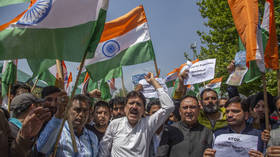
India cuts Pakistan off after massacre
Read more
India cuts Pakistan off after massacre
Punishment should not be a one-off event. It has to be a continuous program from now on. Make it painful for Pakistan to support terrorism. Peace overtures like the Aman ki Asha (‘Hope for Peace’) joint media campaign must end. Meanwhile, greater attention must be devoted to building military capability. Increase air force fighter squadron numbers. Stop downsizing the army. Get more nuclear submarines. Increase nuclear warheads.

Pakistan’s response​

Pakistan has also put its military on alert. Border areas are being sensitized by them for possible Indian attack. Pakistan has suspended the 1972 Shimla Agreement that had marked the LoC as the temporary border. Islamabad has closed its airspace for Indian airlines. Anti-India rhetoric has been boosted to raise the morale of the public. Pakistan has also announced that diversion of water due to it under the Indus Water Treaty will be treated as an act of war. It is a wait-and-watch situation.

Time to stop terrorist infiltration​

There are many Indian politicians, especially in West Bengal and Uttar Pradesh, who consider illegal Bangladeshi and Rohingya migrants as their political support base and are turning a blind eye to their arrival and settlement. It is time to take appropriate actions to curb this trend. There is a tendency for security forces and intelligence agencies to be less vigilant when there is an extended period of peace. It happened in Kargil.

Kashmir is a different story. Vigil will be required for decades ahead. If these terrorists were within the region for nearly a month as reports indicate, then we need to look in the mirror. The Indian judiciary is often seen as soft against terrorists. This needs serious review. The public has to be sensitized much more against terrorists. The time to act is now. A soft reaction will invite further dastardly attacks.

Pakistan's readiness is at an all time high.
 
Status
Not open for further replies.

Users who are viewing this thread

Pakistan Defence Latest

Country Watch Latest

Back
Top