Navigation
Install the app
How to install the app on iOS
Follow along with the video below to see how to install our site as a web app on your home screen.
Note: This feature may not be available in some browsers.
More options
Style variation
You are using an out of date browser. It may not display this or other websites correctly.
You should upgrade or use an alternative browser.
You should upgrade or use an alternative browser.
Israel’s Genocide in Gaza | 2023- till present
- Thread starter Ali_Baba
- Start date
- Status
- Not open for further replies.
More options
Who Replied?


Oldenwisdom...قول بزرگ
Trusted Member

When did I ever said 1967 preemptive strike was interconnected or not? please do not distort nor twist my statements. It is inappropriate.
Btw I am afraid it is you who isn't aware the basics of 1967 war and Suez crisis.
The Suez Crisis of 1956 and the Six-Day War of 1967 between Israel and Egypt (along with other Arab states) are related in a historical sense but are separate conflicts with different immediate causes. The Suez Crisis was not a direct pretext for the 1967 war, although the outcomes and unresolved issues from 1956 certainly influenced the political and military landscape leading up to 1967.
While the Suez Crisis did not directly lead to the Six-Day War, it set several precedents and left unresolved issues that contributed to the heightened tensions in the region:
- Suez Crisis (1956): The Suez Crisis was triggered by Egyptian President Gamal Abdel Nasser's decision to nationalize the Suez Canal, previously controlled by British and French interests. Israel, along with the UK and France, launched a military campaign against Egypt. The motivations for Israel included removing the threat of an Egyptian blockade of Israeli shipping through the Red Sea and responding to guerrilla attacks from Egyptian territory. The crisis ended with the intervention of the United States and the Soviet Union, leading to a ceasefire and the eventual withdrawal of foreign troops from Egyptian territory.
- Six-Day War (1967): Eleven years later, the Six-Day War broke out. The immediate causes of this war were different, although the underlying tensions in the region remained. In 1967, the war was primarily triggered by escalating border tensions, Egyptian military mobilization, the expulsion of UN peacekeeping forces from Sinai, and the blockade of the Straits of Tiran by Egypt, which Israel had previously declared would be a casus belli. Israel launched a preemptive strike against Egypt, which quickly escalated into a wider regional conflict involving Jordan and Syria.
In conclusion, while the Suez Crisis was an important chapter in the history of the Middle East and influenced the regional context, it was not a direct pretext for the Six-Day War. Each conflict had its own distinct causes and dynamics, though they were part of the broader Arab-Israeli conflict narrative.
- The Suez Crisis demonstrated Israel's willingness and capability to undertake significant military operations against neighboring Arab states.
- It revealed the limitations of British and French power in the region, highlighting the growing influence of the United States and the Soviet Union in Middle Eastern affairs.
- The crisis led to the establishment of the United Nations Emergency Force (UNEF) in the Sinai Peninsula, which played a role until being expelled by Egypt shortly before the Six-Day War.
- It also set the stage for Nasser's increased leadership and prestige in the Arab world, which influenced the dynamics leading up to the 1967 conflict.
@Musings or @RescueRanger
Can you move this post and make it a new thread.
Every time he starts something new make it a new thread. That way this thread doesn't revolve around him...
and I think he has answered it himself above that 1967 was not only preemptive but so was 1956 and he can pick and choose narrative to suit both... SO WAS THE STATE OF ISRAEL AND BRITISH MANDATE!
KEEP PRODUCING THE REASONS WHY THIS ABOMINATION SHOULD NEVER HAVE EXISTED!
Unknowntruth
Trusted Member

Stop derailing the subject, @Musings already told you to stop. You already admitted that Israel did a preemptive strike. None of this was the topic at hand. Your exact statement was we attacked you in 1967 which was false. I merely pointed out it was a preemptive strike by Israel then you tried to justify it. Whether you think it’s justifiable or not is not of my concern. I’m just going to leave it at that.When did I ever said 1967 preemptive strike was interconnected or not? please do not distort nor twist my statements. It is inappropriate.
Btw I am afraid it is you who isn't aware the basics of 1967 war and Suez crisis.
The Suez Crisis of 1956 and the Six-Day War of 1967 between Israel and Egypt (along with other Arab states) are related in a historical sense but are separate conflicts with different immediate causes. The Suez Crisis was not a direct pretext for the 1967 war, although the outcomes and unresolved issues from 1956 certainly influenced the political and military landscape leading up to 1967.
While the Suez Crisis did not directly lead to the Six-Day War, it set several precedents and left unresolved issues that contributed to the heightened tensions in the region:
- Suez Crisis (1956): The Suez Crisis was triggered by Egyptian President Gamal Abdel Nasser's decision to nationalize the Suez Canal, previously controlled by British and French interests. Israel, along with the UK and France, launched a military campaign against Egypt. The motivations for Israel included removing the threat of an Egyptian blockade of Israeli shipping through the Red Sea and responding to guerrilla attacks from Egyptian territory. The crisis ended with the intervention of the United States and the Soviet Union, leading to a ceasefire and the eventual withdrawal of foreign troops from Egyptian territory.
- Six-Day War (1967): Eleven years later, the Six-Day War broke out. The immediate causes of this war were different, although the underlying tensions in the region remained. In 1967, the war was primarily triggered by escalating border tensions, Egyptian military mobilization, the expulsion of UN peacekeeping forces from Sinai, and the blockade of the Straits of Tiran by Egypt, which Israel had previously declared would be a casus belli. Israel launched a preemptive strike against Egypt, which quickly escalated into a wider regional conflict involving Jordan and Syria.
In conclusion, while the Suez Crisis was an important chapter in the history of the Middle East and influenced the regional context, it was not a direct pretext for the Six-Day War. Each conflict had its own distinct causes and dynamics, though they were part of the broader Arab-Israeli conflict narrative.
- The Suez Crisis demonstrated Israel's willingness and capability to undertake significant military operations against neighboring Arab states.
- It revealed the limitations of British and French power in the region, highlighting the growing influence of the United States and the Soviet Union in Middle Eastern affairs.
- The crisis led to the establishment of the United Nations Emergency Force (UNEF) in the Sinai Peninsula, which played a role until being expelled by Egypt shortly before the Six-Day War.
- It also set the stage for Nasser's increased leadership and prestige in the Arab world, which influenced the dynamics leading up to the 1967 conflict.

RescueRanger
Meme Lord
@Antonius123 we can all agree we dont need a history lesson. If you dont wish to discuss the current developments, then either ignore this thread.
You are welcome to create a new thread where you may wish to discuss history. This is not the thread for it.
If you continue to post off-topic history lessons, I'll just thread ban you.
You are welcome to create a new thread where you may wish to discuss history. This is not the thread for it.
If you continue to post off-topic history lessons, I'll just thread ban you.
Antonius123
Trusted Member

Stop derailing the subject, @Musings already told you to stop. You already admitted that Israel did a preemptive strike. None of this was the topic at hand. Your exact statement was we attacked you in 1967 which was false. I merely pointed out it was a preemptive strike by Israel then you tried to justify it. Whether you think it’s justifiable or not is not of my concern. I’m just going to leave it at that.
The one insisting to keep mentioning it - is the one who try to derail it due to having lost argument.
@Antonius123 we can all agree we dont need a history lesson. If you dont wish to discuss the current developments, then either ignore this thread.
You are welcome to create a new thread where you may wish to discuss history. This is not the thread for it.
If you continue to post off-topic history lessons, I'll just thread ban you.
The 2 members @Unknowntruth @Oldenwisdom...قول بزرگ having lost argument insist mentioning it on and on then drag me to discuss it.
Anyway noted, apologize for it. I stop to discuss about egypt or any unrelated topic from here.
Last edited:
RescueRanger
Meme Lord
It’s okay, like I said if you wish to create a thread to discuss the historical aspect of the conflict, there is no harm in that.The one insisting to keep mentioning it - is the one who try to derail it due to have lost argument.
The 2 members @Unknowntruth @Oldenwisdom...قول بزرگ having lost argument insist mentioning it on and on then drag me to discuss it.
Anyway noted, apologize for it.
But let’s leave this thread for the current situation. Thank you for your civil response.

StormOfTruth
Registered Member
The operations carried out by the Palestinian resistance groups on Monday, January 29, are as follows:
Al-Qassam Brigades’ operations :
Al-Qassam Brigades’ operations :
- Shelled Tel Aviv with a barrage of rockets in the first such attack in weeks.
- Targeted an Israeli military D9-bulldozer surrounded by regime soldiers with Yassin-105 shells in the Jura Al-Aqad area, west of Khan Younis city, southern Gaza Strip.
- Launched rockets, heavy mortar shells and Badr-1 IRAM rockets at the main logistical support point used by Israeli troops for vehicle maintenance in the Sudanese area northwest of Gaza.
- Engaged in fierce clashes with Israeli regime soldiers in Khan Yunis city using machine guns and anti-armor shells.
- Targeted a group of Israeli snipers entrenched in a building in the neighborhood west of Khan Younis city with a guided missile.
- Blew up a Merkava tank with a "Thaq'eb - Barrel" high-explosive device around the Hassan Salama Mosque west of Khan Younis city.
- Shelled Israeli regime soldiers and their vehicles in the central and western axes of Khan Younis city with mortar shells.
- Shelled gatherings of Israeli regime forces northwest of Gaza City with rockets.
- Engaged in fierce clashes with Israeli regime forces using appropriate weapons in various axes in the Gaza Strip.
- Targeted an Israeli military vehicle with RPGs in the western axis of Khan Younis city, southern Gaza Strip.
- Engaged in clashes with the Israeli army attempting to advance in the vicinity of Al-Shifa Hospital, west of Gaza City.
- Engaged in clashes with the Israeli forces in Batn Al-Sameen and Al-Amal neighborhood, and launched an RPG rocket at one of the regime military vehicles.
- Shelled Israeli military positions and gatherings of their vehicles in Khan Younis city with heavy mortars, achieving direct hits and causing heavy losses.
- Engaged in clashes with Israeli forces, using machine guns, hand grenades, anti-personnel and anti-armor rockets, inflicting casualties.
- Engaged in clashes with Israeli forces near the Al-Amal Hospital and the Batn Al-Sameen axis in Khan Younis, using machine guns and anti-armor rockets, causing casualties.

Khansaheeb
Elite Member

If the Mujahadeen had armor piercing ammo they would have defeated the child murdering IDF in a week.
Khansaheeb
Elite Member
These genociders have no humanity , they want to grab all the land they can and will bomb any amount of women and children to get it, these Nazis have hearts of stones and no country or people is immune to their evil.I just took time and see it was you that brought up Egypt.
As regards to the man being shot - He was being interviewed by ITN about trying to get water to his family and being reunited with his sisters and mother. 5 minutes later - shot in the back carrying a white flag. What details do you need?
Look the whole area - there is literally dozens of reports everyday - with video evidence - this is genocide and war crimes - whether its 6 months or a year - this will be proven in a court of law. We both know that. Netanyahu will by then have resign and in the ever changing constitution of Israel - he will be immune from prosecution.... and then the sweeping under the carpet will take place.....
Khansaheeb
Elite Member
Disregard their titles and their wealth and hold them accountable as criminals as they are.
Khansaheeb
Elite Member
US doesn’t want wider war with Iran, says White House
Agencies Published January 30, 2024 Updated about 14 hours ago


 0
0
US National Security Council spokesmans John Kirby speaks during the daily briefing in the Brady Briefing Room of the White House in Washington, DC, on January 29, 2024. — AFP
LISTEN TO ARTICLE1x1.2x1.5x
WASHINGTON: The United States does not want a wider war with Iran or the region, the White House said on Monday, adding that the administration believes a single drone was responsible for targeting US service members in Jordan over the weekend.
National security spokesman John Kirby also told MSNBC in an interview that talks to release prisoners in Gaza have been constructive and that then US sees a framework for another deal.
Gazans said the renewed violence made a mockery of a ruling by the World Court calling on Israel to do more to help civilians. Health officials say 26,637 Palestinians have been killed in the conflict with thousands more bodies likely under the rubble of destroyed buildings across the coastal territory.
On the other hand, Israel relaunched an assault overnight on Gaza’s main northern city, weeks after retreat, residents said, while Washington considered its response to the first deadly strike on its forces in the Middle East since the Gaza war began.
Three US servicemen were killed and at least 34 wounded in a drone attack in Jordan near the Syrian border for which US Central Command immediately blamed Iran. US President Joe Biden said the attacks were carried out by Iran-backed groups operating in Syria and Iraq.Talks to release prisoners in Gaza have been constructive, says John Kirby
While Iran has denied any involvement, Biden ordered “retaliatory” attacks on Iranian-backed groups.
At the same time, the US president stopped short of hitting Iran directly for fear of igniting a broader war amid violence that has already hampered global trade through attacks on ships in the Red Sea. “Have no doubt, we will hold all those responsible to account at a time and in a manner of our choosing,” Biden said.
Two more journalists killed
Inside Gaza, residents said Israeli air strikes on neighbourhoods across Gaza City killed and wounded many people. While tanks shelled the eastern areas of the city, naval boats fired shells and gun rounds at the beachfront areas in the west, they said.
Among those killed were two Palestinian journalists, Essam El-lulu and Hussein Attalah, along with several members of their families, health officials and the journalist union said.
“The war continues in a dirtier manner,” said Gaza resident Mustafa Ibrahim, a Palestinian human rights activist now displaced with his family in Rafah near the southern border with Egypt, along with more than a million other Gazans.
People in the north have been grinding animal feed to make flour after flour, rice and sugar ran out, part of an aid crisis now exacerbated by a withdrawal of support for the UN’s aid agency for Palestinian refugees, UNRWA. The US, the UK, Canada and Germany have suspended aid to UNRWA, which says it would have to end relief work if funding was not restored.
Temporary ceasefire
Mindful of the growing risks of a wider conflagration, Biden and other leaders have been pushing for a new temporary ceasefire to allow for the release of prisoners held by Hamas.
Talks on Sunday initiated by Qatar and involving US, Israeli and Eygptian intelligence chiefs were “constructive”, Israel said, while adding that “significant gaps” remain.
Hamas has demanded a guaranteed end to Israel’s offensive in Gaza and full withdrawal before it frees the more than 100 people still held in Gaza, out of 253 seized when militants attacked Israeli bases and towns on Oct. 7.
Published in Dawn, January 30th, 2024
Khansaheeb
Elite Member
WTF, Interpol has no genocidal Jews on the arrest list and only Muslims:-
 www.interpol.int
View UN Notices - Entities
View and search notices issued for entities that are subject to sanctions imposed by the United Nations Security Council.
www.interpol.int
UKBengali
Elite Member

Good if Hamas have rejected the 2 month ceasfire proposal from the Zionist entity.
This does not help the Gazans in any way whatsover.
Entity proposed it for its own benefits and so Hamas should have no interest in it.
This does not help the Gazans in any way whatsover.
Entity proposed it for its own benefits and so Hamas should have no interest in it.
Khansaheeb
Elite Member
Good if Hamas have rejected the 2 month ceasfire proposal from the Zionist entity.
This does not help the Gazans in any way whatsover.
Entity proposed it for its own benefits and so Hamas should have no interest in it.
We all need to up the support for Palestinians in whatever way we can.
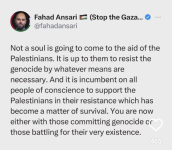
Oldenwisdom...قول بزرگ
Trusted Member
This is lowest of the low, indeed!
The lowest form.of faith. The might of world is shouldered by Gazans alone...
The rest have been afforded perchs, bought off... cornered or contracted.
Gaza stares you back, the reflection of humanity!
- Status
- Not open for further replies.
Users who are viewing this thread
Total: 19 (members: 0, guests: 19)
Pakistan Defence Latest
-
Pak Ship Collides With Indian Navy Unit, Delhi Summons Islamabad's Envoy (25 Viewers)
- Latest: mythbuster
-

-
-
-
 AJK govt bans Joint Awami Action Committee, notification issued (11 Viewers)
- Latest: Distant_Observer


