Pakistan-India Conflict 2025: News Updates and Discussion

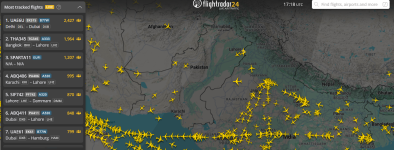
Current view as of 21:53 Pakistan time:

View attachment 120430

Not as much as a photo I had posted sometime late afternoon my TZ (12 hours behind PK). Am taking into account time of day over there.
Are you still seeing that No Fly strip on the Indian side you first picked up all those days ago ( thank you for that btw - very astute observation)
 
To view this content we will need your consent to set third party cookies.
For more detailed information, see our cookies page.
 
Is there anyone who can confirm this?
To view this content we will need your consent to set third party cookies.
For more detailed information, see our cookies page.

India don't have nuclear warheads small enough to be fitted in Brahmos.
This is fake news.
 
Are you still seeing that No Fly strip on the Indian side you first picked up all those days ago ( thank you for that btw - very astute observation)
Other than the THA and UAE flights, yes. Which is odd because a day and a half ago, quite a bit of traffic in the strip. This is as of 22:20 PK time:

1747156740403.png

@Oscar had made a comment as to why. I agree; lots of reasons why most commercial pilots would avoid the area.
 
Yawr I am not talking about their absolutely absurd fantasies, but rather the verified videos and photos circulating on media.

TLDR; I took a lot of time writing this - but I know that no one on PDF will read it - so in simple terms to answer your question - Stop going on social media for news! All will be well.
------

This question of yours requires a very academic response, I will start by explaining a few points:
1747154698499.png
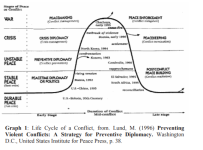
Please keep this lifecycle of conflict in the back of your mind as I write my response (we will visit it later)

Media and warfare are like two conjoined twins:

Media is a pivotal in shaping the discourse around manoeuvre warfare strategies. War not only creates a supply of news but a demand for it. So deep-rooted is the fascination in war and all things appertaining to it that...a paper has only to be able to put up on its placard 'A Great Battle' for its sales to mount up."

During the Gulf War, twenty of America's twenty-five largest circulation newspapers enjoyed circulation gains, while Cable News Network (CNN) experienced a ten-fold increase of its audience. News and images become strategic commodities in wartime.


War Reporting and Military Operations a strategic tool and tactical dilemma:

Warfare in modern context is designed to achieve a position of relative advantage over the enemy by targeting their vulnerabilities while avoiding their strengths. By focusing on agility, speed and exploiting weaknesses. The essence of manoeuvre is not just about moving forces but strategically positioning them to create the greatest impact with the least risk.

In today’s military operations, this means using intelligence, speed, and the element of surprise to outmanoeuvre the enemy, forcing them into disadvantageous positions.

The role of manoeuvre warfare has expanded with the advent of new warfighting domains such as cyberspace and the electromagnetic spectrum. These new dimensions require military leaders and planners to rethink how manoeuvre is applied across different theatres of operation.

The proliferation of real-time intelligence and surveillance technologies along with citizen journalists innocently becoming sources of IMINT and HUMIT has compromised the ability to move forces undetected, allowing adversaries to monitor and counter manoeuvres more effectively.

Specifically, the critical hurdle here is sheer visibility on the modern battlefield. Enhanced surveillance and reconnaissance technologies have made it harder to conceal movements and mass forces, reducing the effectiveness of traditional manoeuvre strategies.

This increased transparency has reduced operational tempo, making it more challenging to achieve the decisive actions that manoeuvre warfare depends on.

C3I - Strategic Information Warfare: The battlefield for minds and narratives

In his treatise of Information control during warfare - Bankston, Carl L., III is cited as saying "Wartime censorship refers to the practice of suppressing or controlling information during periods of armed conflict, often employed by governments to maintain public support, protect military secrets, and establish dominance over dissenting opinions.

Throughout history, this phenomenon has been a common response to the pressures of war, as states seek to unify their populations and restrict the flow of information that may undermine morale or reveal strategic vulnerabilities."

C31 stands for Command, Control, Communication and Intelligence. In a research paper published by Rand Corp commissioned by the US Government in a post cold-war world to review the readiness of the US as a potential target for information warfare, the report stated "There is no "front line." Strategic targets in the United States may be just as vulnerable to attack as in-theater command, control, communications, and intelligence (C3I) targets."

The report came up with 7 points which they listed as the "Basic Features of Strategic Information Warfare".

The Basic Features of Strategic Information Warfare:

The exercises highlighted seven defining features of strategic information warfare:
1.Low entry cost: Unlike traditional weapon technologies, development of information-based techniques does not require sizable financial resources or state sponsorship. Information systems expertise and access to important networks may be the only prerequisites.

2. Blurred traditional boundaries: Traditional distinctions—public versus private interests, warlike versus criminal behavior—and geographic boundaries, such as those between nations as historically defined, are complicated by the growing interaction within the information infrastructure.

3. Expanded role for perception management: New information-based techniques may substantially increase the power of deception and of image-manipulation activities, dramatically complicating government efforts to build political support for security-related initiatives.

4. A new strategic intelligence challenge: Poorly understood strategic IW vulnerabilities and targets diminish the effectiveness of classical intelligence collection and analysis methods. A new field of analysis focused on strategic IW may have to be developed.

5. Formidable tactical warning and attack assessment problems: There is currently no adequate tactical warning system for distinguishing between strategic IW attacks and other kinds of cyberspace activities, including espionage or accidents.

6. Difficulty of building and sustaining coalitions: Reliance on coalitions is likely to increase the vulnerabilities of the security postures of all the partners to strategic IW attacks, giving opponents a disproportionate strategic advantage.

7. Vulnerability of the homeland: Information-based techniques render geographical distance irrelevant; targets in the continental United States are just as vulnerable as in-theater targets.

Out of the many risks identified in the report the most relevant to any military planners have listed below:

Perception Management
Opportunities for IW agents to manipulate information that is key to public perceptions may increase. For example, political action groups and other nongovernment organizations can utilize the Internet to galvanize political support, as the Zapitistas in Chiapas, Mexico, were able to do.

Furthermore, the possibility arises that the very "facts" of an event can be manipulated via multimedia techniques and widely disseminated. Conversely, there may be a decreased capability to build and maintain domestic support for controversial political actions such as a robust Internet component as part of any public information campaign.

Lack of Strategic Intelligence:
For a variety of reasons, traditional intelligence-gathering and analysis methods may be of limited use in meeting the strategic IW intelligence challenge. Collection targets are difficult to identify; allocation of intelligence resources is difficult because of the rapidly changing nature of the threat; and vulnerabilities and target sets are not, as yet, well understood. In sum, the government may have difficulty identifying potential adversaries, their intentions, and their capabilities.

Difficulty of Tactical Warning and Attack Assessment:
This feature of warfare presents fundamentally new problems in a cyberspace environment. A basic problem is distinguishing between "attacks" and other events, such as accidents, system failures, or hacking by "thrill-seekers." The main consequence of this feature is that the target nation may not know when an attack is under way, who is attacking, or how the attack is being conducted.

Vulnerabilities to Homeland Security:
Information warfare has no front line. Potential battlefields are anywhere networked systems allow access. Global economies increasingly rely on complex, interconnected network control systems for such necessities as oil and gas pipelines, electric grids, etc. The vulnerability of these systems is currently poorly understood. In addition, the means of deterrence and retaliation are uncertain and may rely on traditional military instruments in addition to IW threats.

Weaponization of Disinformation:
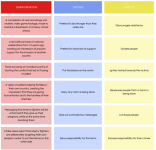
In times of war and conflict, disinformation is often the first weapon to be deployed. Constant exposure to disinformation can leave us confused, uncertain about who or what to believe or trust.

Uncertainty leads to inaction and compels us to stand aloof at a time when the world most needs our help. Thanks to the speed of the Internet and social media, false and misleading information reaches us faster and more persuasively today than ever before.
1747156702144.png

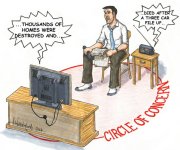
Overexposure to war-reporting can lead to viewers developing signs and symptoms of PTSD:

1747156944338.png
21751974_165276924028432_7553818000502443036_n.jpg
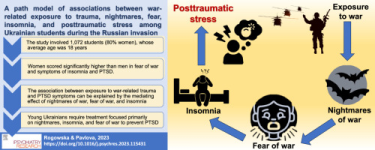
The present study examined the associations between war-related exposure, nightmares, fear, insomnia, and PTSD symptoms among university students from Western Ukraine. An online cross-sectional study was performed among 1,072 university students (80% of whom were women) during the war.
Eight questions were developed to assess exposure to war, and seven items were designed regarding nightmares of war.

War-related PTSD symptoms were assessed using an abbreviated six-item PTSD checklist (PCL-6), insomnia was measured using the Athens Insomnia Scale (AIS), and to examine fear of war, the Fear of COVID-19 Scale (FoCV-19S) was adopted. Positive correlations were found between exposure to war, nightmares of war, fear of war, insomnia, and war-related PTSD.

Blurring lines between nationalism and journalistic objectivity:

Furthermore over-reporting can lead to allegations of bias and lack of transparency, it is one of the biggest reasons why the US Military did away with the use of embedded journalists:

To view this content we will need your consent to set third party cookies.
For more detailed information, see our cookies page.


The British correspondent Max Hastings during the Falklands conflict famously remarked,

"When one's nation is at war, reporting becomes an extension of the war effort. Objectivity only comes back into fashion when the black-out comes down". Not infrequently, journalists and photographers return from war with the confession that they ceased to be mere observers and became participants. As M. Herr memorably averred, "I went to cover the war and the war covered me."

During the Falklands conflict, the then BBC chairman was adamant that "the BBC is not, and could not be, neutral as between our country and an aggressor. Our interviewers and newsreaders are not sitting on some kind of lofty Olympian fence, mediating between two equally culpable contestants.'

The BBC would thus be 'truthful' and avoid blatant identification with 'our boys', but it would not be exactly impartial either." Likewise, some American print journalists were the harshest critic of CNN's reporting from Iraq, and of what they perceived as unacceptable 'neutralism' in television coverage.

Coming back to my original point:
1747154698499.png

Increased public hysteria and weaponized misinformation is proven to cause physical, psychological and economic losses to those who are victims of conflict communication - increasing public hysteria can lead to mass-hysteria, loss of public confidence, domestic law and order situation which during conflict can easily spill into a regional security crisis.


References:
----
1: P. Virilio, War and Cinema: The Logistics of Perception (London: Sage, 1989) p. 7. Back
2: Cited by H. Lasswell, Propaganda Technique in the World War (London: Kegan Paul, 1927) p. 192. Back.
3: E. Waugh, Scoop: A Novel About Journalists, p. 42 (Harmondsworth: Penguin, 1943). Back.
4: M. Ignatieff, The Warrior's Honor: Ethnic War and the Modern Conscience (London: Chatto & Windus, 1998). Back.
5: N. Postman, Amusing Ourselves to Death: Public Discourse in the Age of Show Business (London: Methuen, 1987). Back.
6: G. Tuchman, Making News: A Study in the Construction of Reality (New York: Free Press, 1978). Back.
7: A. Ponsonby, Falsehood in Wartime, 1928 (London: George Allen & Unwin, 1928) p. 26. Back.
8: J. Simpson (1991b), From the House of War: John Simpson in the Gulf (London: Arrow, February, 1991). Back.
9: D. Morrison and H. Tumbler, Journalists at War: The Dynamics of News Reporting (London: Sage, 1988). Back.
10: M. Bell, In Harm's Way: Reflections of a War Zone Thug (London: Hamish and Hamilton, 1995) p. 10. Back.
11: Van Ginneken, Understanding Global News: A Critical Introduction (London: Sage, 1998). Back.
12: D. Berkowitz, Social Meaning of News: A Text Reader (London: Sage, 1997). Back.
13: T. Cook, 1994, 'Washington Newsbeats and Network News after the Iraq invasion in Kuwait' in Bennett and Pletz. Back.
14: Morrison and Tumbler. Back.
15: P. Taylor, War and the Media: Propaganda and Persuasion in the Gulf War (Manchester: University Press, 1992) pp. 274-5. Back.
16: D. Morrison, Television and the Gulf War (London: John Libbey, 1992). Back.
17: M. Shaw and R. Carr-Hill, Public Opinion and Media War Coverage in Britain (Britain: Gerbner and Schiller, 1992) p. 25.. Back.
18: M. Herr, Dispatches, (London: Pan, 1978). Back.
19: G. Howard, 'A speech given to the Chartered Building Societies Institute, May 6, 1982', BBC Press Release. Back.
20: S. Aubin, "Bashing the Media: Why the Public Outrage" in Smith, 1992, pp. 359-61. Back.
21: D. Hallin and T. Gitlin, "The Gulf War as Popular Culture and Television Drama" in Bennett and Paletz, 1994. Back.
22: S. Sontag, On Photography (Harmondsworth: Penguin, 1979). Back.
23: Cited by F. Stech, "Preparing for More CNN Wars" in Petrie 1994. p. 236. Back.
24: N. Gowing, "Real Time TV Coverage from War: Does it Make or Break Government Policy" in Gow, Paterson and Preston 1996 p. 83. Back.
25: M. Bell, p. 142. Back.
26: Cited in M. Alleyne, News Revolution: Political and Economic Decisions About Global Information, (London: Macmillan, 1997) pp. 10-11. Back.
27: U. Hannerz, Transnational Connections: Culture, People, Places, p. 121 (London: Routledge, 1996). Back.
28: R. Parker, "The Future of Global Television News: An Economic Perspective", Political Communication (Journal), 12, iv, 1995 pp.431-46,. Back.
29: H. Mowlana, Global Communication in Transition: The End of Diversity?, (London: Sage, 1996) p. 199. Back.
30: E. Girardet, "Reporting Humanitarianism: Are the New Electronic Media Making a Difference?" in Rotberg and Weiss, 1996, p. 45. Back.
31: J. Mueller, Retreat from Doomsday: The Obsolescence of Major War (New York: Basic Books, 1989). Back.
 
Last edited:
India don't have nuclear warheads small enough to be fitted in Brahmos.
This is fake news.
We can’t say anything like that they have infrastructure money and scientific expertise as well
 
TLDR; I took a lot of time writing this - but I know that no one on PDF will read it - so in simple terms to answer your question - Stop going on social media for news! All will be well.
------

This question of yours requires a very academic response, I will start by explaining a few points:
View attachment 120427
Please keep this lifecycle of conflict in the back of your mind as I write my response (we will visit it later)

Media and warfare are like two conjoined twins:

Media is a pivotal in shaping the discourse around manoeuvre warfare strategies. War not only creates a supply of news but a demand for it. So deep-rooted is the fascination in war and all things appertaining to it that...a paper has only to be able to put up on its placard 'A Great Battle' for its sales to mount up."

During the Gulf War, twenty of America's twenty-five largest circulation newspapers enjoyed circulation gains, while Cable News Network (CNN) experienced a ten-fold increase of its audience. News and images become strategic commodities in wartime.


War Reporting and Military Operations a strategic tool and tactical dilemma:

Warfare in modern context is designed to achieve a position of relative advantage over the enemy by targeting their vulnerabilities while avoiding their strengths. By focusing on agility, speed and exploiting weaknesses. The essence of manoeuvre is not just about moving forces but strategically positioning them to create the greatest impact with the least risk.

In today’s military operations, this means using intelligence, speed, and the element of surprise to outmanoeuvre the enemy, forcing them into disadvantageous positions.

The role of manoeuvre warfare has expanded with the advent of new warfighting domains such as cyberspace and the electromagnetic spectrum. These new dimensions require military leaders and planners to rethink how manoeuvre is applied across different theatres of operation.

The proliferation of real-time intelligence and surveillance technologies along with citizen journalists innocently becoming sources of IMINT and HUMIT has compromised the ability to move forces undetected, allowing adversaries to monitor and counter manoeuvres more effectively.

Specifically, the critical hurdle here is sheer visibility on the modern battlefield. Enhanced surveillance and reconnaissance technologies have made it harder to conceal movements and mass forces, reducing the effectiveness of traditional manoeuvre strategies.

This increased transparency has reduced operational tempo, making it more challenging to achieve the decisive actions that manoeuvre warfare depends on.

C3I - Strategic Information Warfare: The battlefield for minds and narratives

In his treatise of Information control during warfare - Bankston, Carl L., III is cited as saying "Wartime censorship refers to the practice of suppressing or controlling information during periods of armed conflict, often employed by governments to maintain public support, protect military secrets, and establish dominance over dissenting opinions.

Throughout history, this phenomenon has been a common response to the pressures of war, as states seek to unify their populations and restrict the flow of information that may undermine morale or reveal strategic vulnerabilities."

C31 stands for Command, Control, Communication and Intelligence. In a research paper published by Rand Corp commissioned by the US Government in a post cold-war world to review the readiness of the US as a potential target for information warfare, the report stated "There is no "front line." Strategic targets in the United States may be just as vulnerable to attack as in-theater command, control, communications, and intelligence (C3I) targets."

The report came up with 7 points which they listed as the "Basic Features of Strategic Information Warfare".

The Basic Features of Strategic Information Warfare:

The exercises highlighted seven defining features of strategic information warfare:
1.Low entry cost: Unlike traditional weapon technologies, development of information-based techniques does not require sizable financial resources or state sponsorship. Information systems expertise and access to important networks may be the only prerequisites.

2. Blurred traditional boundaries: Traditional distinctions—public versus private interests, warlike versus criminal behavior—and geographic boundaries, such as those between nations as historically defined, are complicated by the growing interaction within the information infrastructure.

3. Expanded role for perception management: New information-based techniques may substantially increase the power of deception and of image-manipulation activities, dramatically complicating government efforts to build political support for security-related initiatives.

4. A new strategic intelligence challenge: Poorly understood strategic IW vulnerabilities and targets diminish the effectiveness of classical intelligence collection and analysis methods. A new field of analysis focused on strategic IW may have to be developed.

5. Formidable tactical warning and attack assessment problems: There is currently no adequate tactical warning system for distinguishing between strategic IW attacks and other kinds of cyberspace activities, including espionage or accidents.

6. Difficulty of building and sustaining coalitions: Reliance on coalitions is likely to increase the vulnerabilities of the security postures of all the partners to strategic IW attacks, giving opponents a disproportionate strategic advantage.

7. Vulnerability of the homeland: Information-based techniques render geographical distance irrelevant; targets in the continental United States are just as vulnerable as in-theater targets.

Out of the many risks identified in the report the most relevant to any military planners have listed below:

Perception Management
Opportunities for IW agents to manipulate information that is key to public perceptions may increase. For example, political action groups and other nongovernment organizations can utilize the Internet to galvanize political support, as the Zapitistas in Chiapas, Mexico, were able to do.

Furthermore, the possibility arises that the very "facts" of an event can be manipulated via multimedia techniques and widely disseminated. Conversely, there may be a decreased capability to build and maintain domestic support for controversial political actions such as a robust Internet component as part of any public information campaign.

Lack of Strategic Intelligence:
For a variety of reasons, traditional intelligence-gathering and analysis methods may be of limited use in meeting the strategic IW intelligence challenge. Collection targets are difficult to identify; allocation of intelligence resources is difficult because of the rapidly changing nature of the threat; and vulnerabilities and target sets are not, as yet, well understood. In sum, the government may have difficulty identifying potential adversaries, their intentions, and their capabilities.

Difficulty of Tactical Warning and Attack Assessment:
This feature of warfare presents fundamentally new problems in a cyberspace environment. A basic problem is distinguishing between "attacks" and other events, such as accidents, system failures, or hacking by "thrill-seekers." The main consequence of this feature is that the target nation may not know when an attack is under way, who is attacking, or how the attack is being conducted.

Vulnerabilities to Homeland Security:
Information warfare has no front line. Potential battlefields are anywhere networked systems allow access. Global economies increasingly rely on complex, interconnected network control systems for such necessities as oil and gas pipelines, electric grids, etc. The vulnerability of these systems is currently poorly understood. In addition, the means of deterrence and retaliation are uncertain and may rely on traditional military instruments in addition to IW threats.

Weaponization of Disinformation:
In times of war and conflict, disinformation is often the first weapon to be deployed. Constant exposure to disinformation can leave us confused, uncertain about who or what to believe or trust.

Uncertainty leads to inaction and compels us to stand aloof at a time when the world most needs our help. Thanks to the speed of the Internet and social media, false and misleading information reaches us faster and more persuasively today than ever before.

Overexposure to war-reporting can lead to viewers developing signs and symptoms of PTSD:

View attachment 120436
View attachment 120437
The present study examined the associations between war-related exposure, nightmares, fear, insomnia, and PTSD symptoms among university students from Western Ukraine. An online cross-sectional study was performed among 1,072 university students (80% of whom were women) during the war.
Eight questions were developed to assess exposure to war, and seven items were designed regarding nightmares of war.

War-related PTSD symptoms were assessed using an abbreviated six-item PTSD checklist (PCL-6), insomnia was measured using the Athens Insomnia Scale (AIS), and to examine fear of war, the Fear of COVID-19 Scale (FoCV-19S) was adopted. Positive correlations were found between exposure to war, nightmares of war, fear of war, insomnia, and war-related PTSD.

View attachment 120433

Blurring lines between nationalism and journalistic objectivity:

Furthermore over-reporting can lead to allegations of bias and lack of transparency, it is one of the biggest reasons why the US Military did away with the use of embedded journalists:

To view this content we will need your consent to set third party cookies.
For more detailed information, see our cookies page.


The British correspondent Max Hastings during the Falklands conflict famously remarked,

"When one's nation is at war, reporting becomes an extension of the war effort. Objectivity only comes back into fashion when the black-out comes down". Not infrequently, journalists and photographers return from war with the confession that they ceased to be mere observers and became participants. As M. Herr memorably averred, "I went to cover the war and the war covered me."

During the Falklands conflict, the then BBC chairman was adamant that "the BBC is not, and could not be, neutral as between our country and an aggressor. Our interviewers and newsreaders are not sitting on some kind of lofty Olympian fence, mediating between two equally culpable contestants.'

The BBC would thus be 'truthful' and avoid blatant identification with 'our boys', but it would not be exactly impartial either." Likewise, some American print journalists were the harshest critic of CNN's reporting from Iraq, and of what they perceived as unacceptable 'neutralism' in television coverage.

Coming back to my original point:
View attachment 120427

Increased public hysteria and weaponized misinformation is proven to cause physical, psychological and economic losses to those who are victims of conflict communication - increasing public hysteria can lead to mass-hysteria, loss of public confidence, domestic law and order situation which during peace-time can easily spill into a regional security crisis.


References:
----
1: P. Virilio, War and Cinema: The Logistics of Perception (London: Sage, 1989) p. 7. Back
2: Cited by H. Lasswell, Propaganda Technique in the World War (London: Kegan Paul, 1927) p. 192. Back.
3: E. Waugh, Scoop: A Novel About Journalists, p. 42 (Harmondsworth: Penguin, 1943). Back.
4: M. Ignatieff, The Warrior's Honor: Ethnic War and the Modern Conscience (London: Chatto & Windus, 1998). Back.
5: N. Postman, Amusing Ourselves to Death: Public Discourse in the Age of Show Business (London: Methuen, 1987). Back.
6: G. Tuchman, Making News: A Study in the Construction of Reality (New York: Free Press, 1978). Back.
7: A. Ponsonby, Falsehood in Wartime, 1928 (London: George Allen & Unwin, 1928) p. 26. Back.
8: J. Simpson (1991b), From the House of War: John Simpson in the Gulf (London: Arrow, February, 1991). Back.
9: D. Morrison and H. Tumbler, Journalists at War: The Dynamics of News Reporting (London: Sage, 1988). Back.
10: M. Bell, In Harm's Way: Reflections of a War Zone Thug (London: Hamish and Hamilton, 1995) p. 10. Back.
11: Van Ginneken, Understanding Global News: A Critical Introduction (London: Sage, 1998). Back.
12: D. Berkowitz, Social Meaning of News: A Text Reader (London: Sage, 1997). Back.
13: T. Cook, 1994, 'Washington Newsbeats and Network News after the Iraq invasion in Kuwait' in Bennett and Pletz. Back.
14: Morrison and Tumbler. Back.
15: P. Taylor, War and the Media: Propaganda and Persuasion in the Gulf War (Manchester: University Press, 1992) pp. 274-5. Back.
16: D. Morrison, Television and the Gulf War (London: John Libbey, 1992). Back.
17: M. Shaw and R. Carr-Hill, Public Opinion and Media War Coverage in Britain (Britain: Gerbner and Schiller, 1992) p. 25.. Back.
18: M. Herr, Dispatches, (London: Pan, 1978). Back.
19: G. Howard, 'A speech given to the Chartered Building Societies Institute, May 6, 1982', BBC Press Release. Back.
20: S. Aubin, "Bashing the Media: Why the Public Outrage" in Smith, 1992, pp. 359-61. Back.
21: D. Hallin and T. Gitlin, "The Gulf War as Popular Culture and Television Drama" in Bennett and Paletz, 1994. Back.
22: S. Sontag, On Photography (Harmondsworth: Penguin, 1979). Back.
23: Cited by F. Stech, "Preparing for More CNN Wars" in Petrie 1994. p. 236. Back.
24: N. Gowing, "Real Time TV Coverage from War: Does it Make or Break Government Policy" in Gow, Paterson and Preston 1996 p. 83. Back.
25: M. Bell, p. 142. Back.
26: Cited in M. Alleyne, News Revolution: Political and Economic Decisions About Global Information, (London: Macmillan, 1997) pp. 10-11. Back.
27: U. Hannerz, Transnational Connections: Culture, People, Places, p. 121 (London: Routledge, 1996). Back.
28: R. Parker, "The Future of Global Television News: An Economic Perspective", Political Communication (Journal), 12, iv, 1995 pp.431-46,. Back.
29: H. Mowlana, Global Communication in Transition: The End of Diversity?, (London: Sage, 1996) p. 199. Back.
30: E. Girardet, "Reporting Humanitarianism: Are the New Electronic Media Making a Difference?" in Rotberg and Weiss, 1996, p. 45. Back.
31: J. Mueller, Retreat from Doomsday: The Obsolescence of Major War (New York: Basic Books, 1989). Back.

I think that was an excellent synopsis.
 
TLDR; I took a lot of time writing this - but I know that no one on PDF will read it - so in simple terms to answer your question - Stop going on social media for news! All will be well.
------

This question of yours requires a very academic response, I will start by explaining a few points:
View attachment 120427
Please keep this lifecycle of conflict in the back of your mind as I write my response (we will visit it later)

Media and warfare are like two conjoined twins:

Media is a pivotal in shaping the discourse around manoeuvre warfare strategies. War not only creates a supply of news but a demand for it. So deep-rooted is the fascination in war and all things appertaining to it that...a paper has only to be able to put up on its placard 'A Great Battle' for its sales to mount up."

During the Gulf War, twenty of America's twenty-five largest circulation newspapers enjoyed circulation gains, while Cable News Network (CNN) experienced a ten-fold increase of its audience. News and images become strategic commodities in wartime.


War Reporting and Military Operations a strategic tool and tactical dilemma:

Warfare in modern context is designed to achieve a position of relative advantage over the enemy by targeting their vulnerabilities while avoiding their strengths. By focusing on agility, speed and exploiting weaknesses. The essence of manoeuvre is not just about moving forces but strategically positioning them to create the greatest impact with the least risk.

In today’s military operations, this means using intelligence, speed, and the element of surprise to outmanoeuvre the enemy, forcing them into disadvantageous positions.

The role of manoeuvre warfare has expanded with the advent of new warfighting domains such as cyberspace and the electromagnetic spectrum. These new dimensions require military leaders and planners to rethink how manoeuvre is applied across different theatres of operation.

The proliferation of real-time intelligence and surveillance technologies along with citizen journalists innocently becoming sources of IMINT and HUMIT has compromised the ability to move forces undetected, allowing adversaries to monitor and counter manoeuvres more effectively.

Specifically, the critical hurdle here is sheer visibility on the modern battlefield. Enhanced surveillance and reconnaissance technologies have made it harder to conceal movements and mass forces, reducing the effectiveness of traditional manoeuvre strategies.

This increased transparency has reduced operational tempo, making it more challenging to achieve the decisive actions that manoeuvre warfare depends on.

C3I - Strategic Information Warfare: The battlefield for minds and narratives

In his treatise of Information control during warfare - Bankston, Carl L., III is cited as saying "Wartime censorship refers to the practice of suppressing or controlling information during periods of armed conflict, often employed by governments to maintain public support, protect military secrets, and establish dominance over dissenting opinions.

Throughout history, this phenomenon has been a common response to the pressures of war, as states seek to unify their populations and restrict the flow of information that may undermine morale or reveal strategic vulnerabilities."

C31 stands for Command, Control, Communication and Intelligence. In a research paper published by Rand Corp commissioned by the US Government in a post cold-war world to review the readiness of the US as a potential target for information warfare, the report stated "There is no "front line." Strategic targets in the United States may be just as vulnerable to attack as in-theater command, control, communications, and intelligence (C3I) targets."

The report came up with 7 points which they listed as the "Basic Features of Strategic Information Warfare".

The Basic Features of Strategic Information Warfare:

The exercises highlighted seven defining features of strategic information warfare:
1.Low entry cost: Unlike traditional weapon technologies, development of information-based techniques does not require sizable financial resources or state sponsorship. Information systems expertise and access to important networks may be the only prerequisites.

2. Blurred traditional boundaries: Traditional distinctions—public versus private interests, warlike versus criminal behavior—and geographic boundaries, such as those between nations as historically defined, are complicated by the growing interaction within the information infrastructure.

3. Expanded role for perception management: New information-based techniques may substantially increase the power of deception and of image-manipulation activities, dramatically complicating government efforts to build political support for security-related initiatives.

4. A new strategic intelligence challenge: Poorly understood strategic IW vulnerabilities and targets diminish the effectiveness of classical intelligence collection and analysis methods. A new field of analysis focused on strategic IW may have to be developed.

5. Formidable tactical warning and attack assessment problems: There is currently no adequate tactical warning system for distinguishing between strategic IW attacks and other kinds of cyberspace activities, including espionage or accidents.

6. Difficulty of building and sustaining coalitions: Reliance on coalitions is likely to increase the vulnerabilities of the security postures of all the partners to strategic IW attacks, giving opponents a disproportionate strategic advantage.

7. Vulnerability of the homeland: Information-based techniques render geographical distance irrelevant; targets in the continental United States are just as vulnerable as in-theater targets.

Out of the many risks identified in the report the most relevant to any military planners have listed below:

Perception Management
Opportunities for IW agents to manipulate information that is key to public perceptions may increase. For example, political action groups and other nongovernment organizations can utilize the Internet to galvanize political support, as the Zapitistas in Chiapas, Mexico, were able to do.

Furthermore, the possibility arises that the very "facts" of an event can be manipulated via multimedia techniques and widely disseminated. Conversely, there may be a decreased capability to build and maintain domestic support for controversial political actions such as a robust Internet component as part of any public information campaign.

Lack of Strategic Intelligence:
For a variety of reasons, traditional intelligence-gathering and analysis methods may be of limited use in meeting the strategic IW intelligence challenge. Collection targets are difficult to identify; allocation of intelligence resources is difficult because of the rapidly changing nature of the threat; and vulnerabilities and target sets are not, as yet, well understood. In sum, the government may have difficulty identifying potential adversaries, their intentions, and their capabilities.

Difficulty of Tactical Warning and Attack Assessment:
This feature of warfare presents fundamentally new problems in a cyberspace environment. A basic problem is distinguishing between "attacks" and other events, such as accidents, system failures, or hacking by "thrill-seekers." The main consequence of this feature is that the target nation may not know when an attack is under way, who is attacking, or how the attack is being conducted.

Vulnerabilities to Homeland Security:
Information warfare has no front line. Potential battlefields are anywhere networked systems allow access. Global economies increasingly rely on complex, interconnected network control systems for such necessities as oil and gas pipelines, electric grids, etc. The vulnerability of these systems is currently poorly understood. In addition, the means of deterrence and retaliation are uncertain and may rely on traditional military instruments in addition to IW threats.

Weaponization of Disinformation:
In times of war and conflict, disinformation is often the first weapon to be deployed. Constant exposure to disinformation can leave us confused, uncertain about who or what to believe or trust.

Uncertainty leads to inaction and compels us to stand aloof at a time when the world most needs our help. Thanks to the speed of the Internet and social media, false and misleading information reaches us faster and more persuasively today than ever before.

Overexposure to war-reporting can lead to viewers developing signs and symptoms of PTSD:

View attachment 120436
View attachment 120437
The present study examined the associations between war-related exposure, nightmares, fear, insomnia, and PTSD symptoms among university students from Western Ukraine. An online cross-sectional study was performed among 1,072 university students (80% of whom were women) during the war.
Eight questions were developed to assess exposure to war, and seven items were designed regarding nightmares of war.

War-related PTSD symptoms were assessed using an abbreviated six-item PTSD checklist (PCL-6), insomnia was measured using the Athens Insomnia Scale (AIS), and to examine fear of war, the Fear of COVID-19 Scale (FoCV-19S) was adopted. Positive correlations were found between exposure to war, nightmares of war, fear of war, insomnia, and war-related PTSD.

View attachment 120433

Blurring lines between nationalism and journalistic objectivity:

Furthermore over-reporting can lead to allegations of bias and lack of transparency, it is one of the biggest reasons why the US Military did away with the use of embedded journalists:

To view this content we will need your consent to set third party cookies.
For more detailed information, see our cookies page.


The British correspondent Max Hastings during the Falklands conflict famously remarked,

"When one's nation is at war, reporting becomes an extension of the war effort. Objectivity only comes back into fashion when the black-out comes down". Not infrequently, journalists and photographers return from war with the confession that they ceased to be mere observers and became participants. As M. Herr memorably averred, "I went to cover the war and the war covered me."

During the Falklands conflict, the then BBC chairman was adamant that "the BBC is not, and could not be, neutral as between our country and an aggressor. Our interviewers and newsreaders are not sitting on some kind of lofty Olympian fence, mediating between two equally culpable contestants.'

The BBC would thus be 'truthful' and avoid blatant identification with 'our boys', but it would not be exactly impartial either." Likewise, some American print journalists were the harshest critic of CNN's reporting from Iraq, and of what they perceived as unacceptable 'neutralism' in television coverage.

Coming back to my original point:
View attachment 120427

Increased public hysteria and weaponized misinformation is proven to cause physical, psychological and economic losses to those who are victims of conflict communication - increasing public hysteria can lead to mass-hysteria, loss of public confidence, domestic law and order situation which during peace-time can easily spill into a regional security crisis.


References:
----
1: P. Virilio, War and Cinema: The Logistics of Perception (London: Sage, 1989) p. 7. Back
2: Cited by H. Lasswell, Propaganda Technique in the World War (London: Kegan Paul, 1927) p. 192. Back.
3: E. Waugh, Scoop: A Novel About Journalists, p. 42 (Harmondsworth: Penguin, 1943). Back.
4: M. Ignatieff, The Warrior's Honor: Ethnic War and the Modern Conscience (London: Chatto & Windus, 1998). Back.
5: N. Postman, Amusing Ourselves to Death: Public Discourse in the Age of Show Business (London: Methuen, 1987). Back.
6: G. Tuchman, Making News: A Study in the Construction of Reality (New York: Free Press, 1978). Back.
7: A. Ponsonby, Falsehood in Wartime, 1928 (London: George Allen & Unwin, 1928) p. 26. Back.
8: J. Simpson (1991b), From the House of War: John Simpson in the Gulf (London: Arrow, February, 1991). Back.
9: D. Morrison and H. Tumbler, Journalists at War: The Dynamics of News Reporting (London: Sage, 1988). Back.
10: M. Bell, In Harm's Way: Reflections of a War Zone Thug (London: Hamish and Hamilton, 1995) p. 10. Back.
11: Van Ginneken, Understanding Global News: A Critical Introduction (London: Sage, 1998). Back.
12: D. Berkowitz, Social Meaning of News: A Text Reader (London: Sage, 1997). Back.
13: T. Cook, 1994, 'Washington Newsbeats and Network News after the Iraq invasion in Kuwait' in Bennett and Pletz. Back.
14: Morrison and Tumbler. Back.
15: P. Taylor, War and the Media: Propaganda and Persuasion in the Gulf War (Manchester: University Press, 1992) pp. 274-5. Back.
16: D. Morrison, Television and the Gulf War (London: John Libbey, 1992). Back.
17: M. Shaw and R. Carr-Hill, Public Opinion and Media War Coverage in Britain (Britain: Gerbner and Schiller, 1992) p. 25.. Back.
18: M. Herr, Dispatches, (London: Pan, 1978). Back.
19: G. Howard, 'A speech given to the Chartered Building Societies Institute, May 6, 1982', BBC Press Release. Back.
20: S. Aubin, "Bashing the Media: Why the Public Outrage" in Smith, 1992, pp. 359-61. Back.
21: D. Hallin and T. Gitlin, "The Gulf War as Popular Culture and Television Drama" in Bennett and Paletz, 1994. Back.
22: S. Sontag, On Photography (Harmondsworth: Penguin, 1979). Back.
23: Cited by F. Stech, "Preparing for More CNN Wars" in Petrie 1994. p. 236. Back.
24: N. Gowing, "Real Time TV Coverage from War: Does it Make or Break Government Policy" in Gow, Paterson and Preston 1996 p. 83. Back.
25: M. Bell, p. 142. Back.
26: Cited in M. Alleyne, News Revolution: Political and Economic Decisions About Global Information, (London: Macmillan, 1997) pp. 10-11. Back.
27: U. Hannerz, Transnational Connections: Culture, People, Places, p. 121 (London: Routledge, 1996). Back.
28: R. Parker, "The Future of Global Television News: An Economic Perspective", Political Communication (Journal), 12, iv, 1995 pp.431-46,. Back.
29: H. Mowlana, Global Communication in Transition: The End of Diversity?, (London: Sage, 1996) p. 199. Back.
30: E. Girardet, "Reporting Humanitarianism: Are the New Electronic Media Making a Difference?" in Rotberg and Weiss, 1996, p. 45. Back.
31: J. Mueller, Retreat from Doomsday: The Obsolescence of Major War (New York: Basic Books, 1989). Back.

Big read need little time to go in details
 
And this is the key.
Last year I met Sadiq Khan and in a chit chat with him he said - we need to invest in our kids - educate educate and educate.
Get them into do anything - medicine - journalism - law - simply anything that we can nature in the future.
Use brains to conquer. May take the next generation but we start and invest now
25 years. It takes 25 to build a generation - everyone on this thread can easily invest in the next generation. Just needs concentrated effort.
 

Users who are viewing this thread

Pakistan Defence Latest

Country Watch Latest

Back
Top