Navigation
Install the app
How to install the app on iOS
Follow along with the video below to see how to install our site as a web app on your home screen.
Note: This feature may not be available in some browsers.
More options
Style variation
You are using an out of date browser. It may not display this or other websites correctly.
You should upgrade or use an alternative browser.
You should upgrade or use an alternative browser.
Pakistan-India Conflict 2025: News Updates and Discussion
- Thread starter Ali_Baba
- Start date
More options
Who Replied?


ghazi52
THINK TANK: CONSULTANT
‘Big victory for China in terms of perception’
The odds were in New Delhi’s favour ahead of its retaliation for the April 22 terror attack. With its first strikes, India signalled a break from its traditional doctrine of strategic restraint, hitting targets not just in Pakistani-administered Kashmir and remote border regions, but in the country’s political heartland Punjab province.
India’s escalation raised international alarm bells on the second day of clashes, when it hit the Nur Khan air base in Rawalpindi, a garrison city near Islamabad. Situated just a short distance from the headquarters of Pakistan’s Strategic Plans Division, which oversees and protects the country’s nuclear arsenal, the Nur Khan base is a key hub for the country’s military.
Another surprise was Pakistan’s robust response to the Indian escalation.
Pakistan’s claim that its J-10 fighter jets brought down India’s French-made Rafales sparked exultation on Chinese social media platform, Weibo, with many users speculating that buyers will probably soon be flocking to Chinese arms manufacturers.
India’s decision to neither confirm nor deny the loss of its top-end fighter jets has added credence to the downing claims. While Rafale manufacturer Dassault Aviation did not respond to FRANCE 24’s request for a comment, Reuters reported that at least one of India’s downed fighters was a Rafale. A Washington Post analysis conducted by three ordnance experts concluded that verified images from the downing site showed the debris was “consistent with at least two French-made fighter jets flown by the Indian air force – a Rafale and a Mirage 2000".
The takeaways of the May 7-10 military engagement for Yun Sun, director of the China Program at the Washington DC-based Stimson Center, are two-fold. “The first one is that the Indian weapons system is not as effective as a lot of people thought they would be,” she noted. “The second takeaway is that the Indian strategic intent could be more ambitious than a lot of people had expected.”
While cautioning that it’s still too early to “jump to conclusions”, Carlotta Rinaudo, a China expert at the International Team for the Study of Security Verona, notes that perception is key in initial assessments. “And this was a big victory for China in terms of perception,” she said, referring to the performance of China’s J-10 jets. “For a country that hasn't fought, theoretically, any war since the war with Vietnam in 1979, for a country that hasn't really engaged in war and its own weapons don't really have that sort of global recognition as, let's say, French weapons or American weapons, this is a big, big victory in terms of perception,” she added.
Not just cheap, but good
India’s image on the global geopolitical stage has been enhanced in recent years with the country emerging as a counterweight to China in the Indo-Pacific region. Its recent arms acquisitions made headlines as Prime Minister Narendra Modi, in a bid to upgrade the country’s ageing mostly Russian-supplied arsenal, signed billion-dollar arms deals with France and the US.Read moreArms deals on parade as France's Macron hosts India's Modi
During the 2017-2021 period, India was the world’s largest arms importer, according to the Stockholm International Peace Research Institute (SIPRI), slipping to second place after Ukraine following the Russian full-scale invasion.
Pakistan meanwhile was moving away from its Cold War reliance on US weapons as Washington ended its proxy war against the Soviet Union in neighbouring Afghanistan and finally pulled out of the war-torn country in 2021 after years of US frustrations over the Pakistani military’s commitment to its war on terror.
Amid rising anti-US sentiments, Islamabad turned to its old regional ally, China, which also has territorial disputes with India, for its arms procurements. Beijing has long supported Islamabad with its cooperation on nuclear expertise while its weapons supplies were restricted to tanks, artillery and small arms.
Under President Xi Jinping, China began upgrading its arms manufacturing capabilities, increasing its weapons exports, primarily to Global South countries in Africa, Latin America and Asia. During this period, Chinese weapon exports were primarily hailed for their pricing, not technological, advantage.
“We always had the impression that Chinese weapons were the same as Chinese goods in a way. We assumed that Chinese weapons are inferior. This is not the case anymore,” said Rinaudo. “We saw China initially just selling tanks and smaller weapons, especially to Pakistan. Now we see very modern and sophisticated weapons being sold that are actually being very effective. So, the lesson that we should all take out of this is that perhaps Chinese weapons are not inferior to Western weapons. We should change that paradigm that we’ve been holding for very long.”
Sun however warns against facile assessments of Chinese arms superiority, noting that there are several factors contributing to battleground effectiveness. “It's very easy to generalise, to say this Chinese weapons system is superior. But at the same time, it’s also the training of the pilots, the coordination among different weapons systems that are important,” she said.

Chinese weapons pass combat test in India-Pakistan clash – with flying colours
The recent military engagement over Kashmir by South Asia’s arch enemies saw India deploy its French and US weapons against Pakistan’s new range of sophisticated Chinese arms. In its first battlefield…
 www.france24.com

ghazi52
THINK TANK: CONSULTANT
Pakistan launches counterattacks against India after strikes on air bases
Asia / PacificPakistan on Saturday launched what it said were retaliatory attacks against India after three of its air bases were struck by missiles. Islamabad and New Delhi have been carrying out tit-for-tat attacks since Wednesday, and fears are growing that the conflict between the two nuclear-armed neighbours could spiral out of control.
Issued on: 09/05/2025
By: FRANCE 24
To display this content from YouTube, you must enable advertisement tracking and audience measurement.

Pakistan on Saturday launched counterattacks against India after three of its air bases were struck overnight, as the conflict between the nuclear-armed neighbours spiralled toward full-blown war.
The South Asian countries have exchanged fire since Wednesday, when India carried out air strikes on sites in Pakistani territory over a deadly attack on tourists on the Indian side of the divided Kashmir region.
The clashes – which have involved missiles, drones, and exchanges of fire along the de-facto border in disputed Kashmir – are the worst in decades and have killed more than 50 civilians.
World leaders including the G7 group of industrialised nations have called for restraint, and the United States on Saturday offered help to get both sides talking as the violence intensified.
The Indian army on Saturday reported fresh Pakistani attacks along their shared border.
"Pakistan's blatant escalation with drone strikes and other munitions continues along our western border," the army said on X.
AFP journalists reported loud explosions in Srinagar, the capital of India-administered Kashmir.
The army said "multiple enemy drones were spotted flying over" a military cantonment in Amritsar in Punjab, a state adjoining Kashmir, and were "instantly engaged and destroyed by our air defence units".
Hours ahead of Pakistan's latest operation, the country's military spokesman, Ahmed Sharif Chaudhry, had accused India of having "attacked with missiles" targeting three air bases.
In the live broadcast aired by state television in the middle of the night, he said a "majority of the missiles" had been intercepted and "no flying assets" had been damaged.
One of the bases targeted, Nur Khan air base in Rawalpindi, the garrison city where the army is headquartered, is around 10 kilometres from the capital Islamabad.
To display this content from YouTube, you must enable advertisement tracking and audience measurement.

Several blasts were heard from the capital overnight.
The air base is used to receive foreign dignitaries and Saudi Minister of State for Foreign Affairs Adel Al-Jubeir had departed just hours earlier.
"Now you just wait for our response," Chaudhry warned India.
With the violence ratcheting up, Secretary of State Marco Rubio offered US help to deescalate.
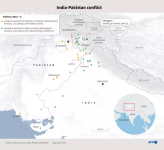
Pakistan launches counterattacks against India after strikes on air bases
Pakistan on Saturday launched what it said were retaliatory attacks against India after three of its air bases were struck by missiles. Islamabad and New Delhi have been carrying out tit-for-tat attacks…
www.france24.com
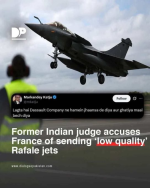


gamaji
Registered Member
God willing. In-Sha-Allah.سبق پھر پڑھ صداقت کا عدالت کا شجاعت کا
لیا جائے گا تُجھ سے کام دُنیا کی امامت کا
That in a nutshell, is Pakistan's ultimate destiny.
There is no power on earth that can undo Pakistan.
Pakistan Zindabad.

RescueRanger
Meme Lord
According to Armed Conflict Location & Event Data - A aggregator and risk management non-profile LLC registered in the US that functions as a mapping and data visualisation think tank rating and tracking conflicts around the world for policy makers:
Pakistan's risk rating and vulnerability to armed conflict at national stability was improving, compare this to the domestic security and risk of armed conflict for India was constantly concerning due to domestic security issues and regional flash-points.
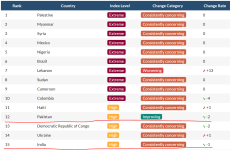
Not only does India have a higher risk of internal conflict - it also poses an increasing danger to regional stability due to flashpoints:
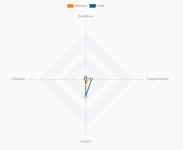
India is involved in a non-international armed conflict on its territory with the Naxalites. The tensions with Pakistan over the status of Kashmir regularly cause armed clashes leading to an international armed conflict. Furthermore, clashes between India and China amounted to an international armed conflict in 2020.
On 9 September 2022, India and China announced their soldiers started to disengage from contested areas at the border. Notwithstanding the withdrawal of troops, the IAC is not over, as China controls about 20% of Kashmir.
============================================================
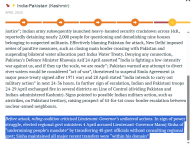
India's recent attacks in Pakistan attacks our Dams, Schools and Civilian population centres breaches her obligations to the IHL - See below;
Source: https://www.geneva-academy.ch/joomlatools-files/docman-files/The War Report 2016.pdf
============================================================
Indian State Sponsored Terrorism in Pakistan to ferment instability:
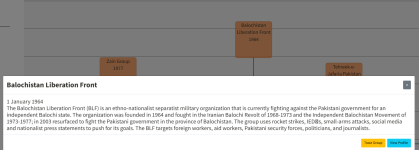
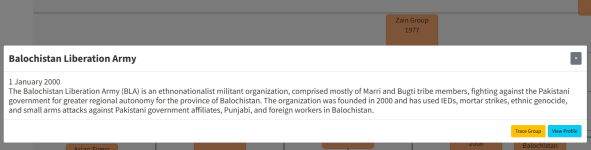
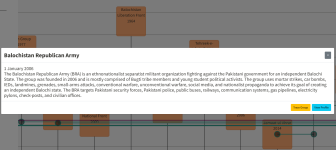
Pakistani intelligence agencies accuse Indian consulates in Kandahar and Jalalabad, Afghanistan, of providing covert arms, financial support, and training to the BLA in an attempt to destabilize Pakistan and block Chinese influence in Balochistan.[72] However, some analysts argue that such interference would be against Indian interests, as India, like Pakistan, also seeks to profit from Balochi oil and gas resources.[73]
Pakistani politicians have also claimed that U.S. and British intelligence agencies are supporting the Balochi rebellion in order to sabotage a proposed oil pipeline that could undermine U.S. control of Gulf oil.[74] The U.K. has harbored Hyrbyair Marri, an alleged BLA leader by the Pakistani government, as a refugee.[75]
The Pakistani government launched a program in 2017 that provided compensation for militants that surrendered to authorities. In this program, the government agreed to provide compensation, jobs, education and security to members of certain banned organizations including the BLA.[76]
In December 2023, a commander of the Baloch National Army (BNA) separatist militant group, who had surrendered himself to the Pakistani government, disclosed that India has been secretly supporting terrorist activities in Balochistan and financing separatist forces in the region.
According to Pakistani media sources, commander Sarfraz Ahmed Bungulzai made the announcement at a press conference in Quetta, the capital city of Balochistan. Bungulzai said that he thought his armed struggle was for Baloch rights, but later he realized that "India is involved in all these conspiracies."
Bungulzai mentioned a helicopter crash in 2022, in which six Pakistani army officials, including a general, were martyred. He said at the press conference that the secessionist group Baloch Raj Aajoi Sangar (BRAS) had taken responsibility for the incident at India's command.
"And after taking money from India, they shed the blood of their own Baloch," said Bungulzai, according to Pakistani news website Dawn.
Apart from the latest case pointing to India, a few years back, there was another case that indicated that India was probably supporting terrorism in Pakistan.
In March 2016, Pakistan's Inter Services Public Relations released a confessional video statement of an Indian spy agent named Kulbhushan Yadav, who was reportedly arrested red-handed earlier that month while attempting to infiltrate Pakistan from the border area.
According to an article by the Associated Press of Pakistan (APP), Yadav said in the video that he was a serving officer of the Indian Navy, and did intelligence gathering for Indian agencies under the cover name Hussein Mubarik Patel.
"I was picked up by RAW (the Research and Analysis Wing, India's alleged external intelligence agency) in 2013 end," Yadav said. "My purpose was to hold meetings with Baloch insurgents and carry out activities with their collaboration. These activities have been of [a] criminal nature, leading to the killing of or maiming of Pakistani citizens."
Multiple instances have been highlighted by Pakistan's security authorities on some international forums, illustrating how the RAW funds elements in Pakistan to spread unrest, observer Ali Abbas Ramay, a journalist with the City News Network Pakistan, told the Global Times.
"Proof of India's involvement in creating the BLA has been presented, including Yadav's confessions," Ramay said.
The clues of India's connection with terrorist forces in Pakistan could also be found in a few Indian media reports.
The Hindu, for instance, published an article in July 2019, stating "It is established that BLA (Baloch Liberation Army) commanders, in the past, had sought medical treatment in India's hospitals, often under disguise or with fake identities." Pakistan designated the BLA as a terrorist organization in 2006.
The Hindu article referred to BLA's militant commander who "was based in Delhi for at least six months in 2017," to receive "extensive treatment for kidney-related ailments." It is known that Baloch sardars "maintained warm personal ties with various Indian political figures," the article said.
Some of the related evidence has been made public. Many other concrete forms of evidence show that India backs terrorism in Pakistan, although they have not yet been released for a variety of reasons, said a source close to the situation in Balochistan.
"We have had the evidence long before," the source told the Global Times. He said that he was "100 percent" sure that India has been funding the terrorist forces in Balochistan.
============================================================
India's double standards when it comes to combating terrorism:
Some Pakistani scholars believe that India has a long history of continuous interference in Pakistan's affairs.
For example, scholar M. Ikram Rabbani wrote in his book Comprehensive Pakistan Studies that the interference "can be traced back to the times of independence from the British rule."
In his book, Rabbani cited Subrahmaniyam, a former director of the then Indian Institute of Defence Studies, who said during a symposium in March 1971 that "what India must realize that the breakup of Pakistan is in our interest and an opportunity which will never come again."
Worse still, while supporting separatist groups to commit terrorist attacks in regions like Balochistan, India is good at taking the habitual tactic of a thief crying "stop thief" in the international community, while slinging mad at Pakistan, Pakistani and Chinese observers noted.
India employs a consistent double standard toward terrorism, said Ye Hailin, deputy director of the National Institute of International Strategy of the Chinese Academy of Social Sciences. "If you look at India's media and think tank reports, you will find that their descriptions of the terrorist attacks in Balochistan are completely different from those of the situation in Kashmir," Ye told the Global Times.
Ramay echoed Ye's words, saying the evidence of India's adoption of double standard in countering terrorism "is evident."
He pointed out that India has sought to tarnish Pakistan's image globally by leveling serious allegations of terrorism, aiming to deter investments and striving to include Pakistan in the Financial Action Task Force (FATF) blacklist.
The blacklist contains countries that the FATF deems to be non-cooperative in the global fight against money laundering and terrorist financing.
"China firmly opposes double standard in counterterrorism," noted Chinese Foreign Ministry Spokesperson Mao Ning at a press conference on December 27, 2023, while responding to a question asking about its comments on then-recent media reports, which said that the surrendered BNA commander disclosed that India has been secretly supporting terrorist activities in Balochistan.
"Terrorism is humanity's common enemy," Mao said. "To support and use terrorist groups and let them thrive out of one's selfish interests at the expense of international and regional security benefits no one and will only backfire."
===========================================================
Source: https://www.globaltimes.cn/page/202401/1305842.shtml
===========================================================
Pakistan's risk rating and vulnerability to armed conflict at national stability was improving, compare this to the domestic security and risk of armed conflict for India was constantly concerning due to domestic security issues and regional flash-points.
Not only does India have a higher risk of internal conflict - it also poses an increasing danger to regional stability due to flashpoints:
India is involved in a non-international armed conflict on its territory with the Naxalites. The tensions with Pakistan over the status of Kashmir regularly cause armed clashes leading to an international armed conflict. Furthermore, clashes between India and China amounted to an international armed conflict in 2020.
On 9 September 2022, India and China announced their soldiers started to disengage from contested areas at the border. Notwithstanding the withdrawal of troops, the IAC is not over, as China controls about 20% of Kashmir.
============================================================
India's recent attacks in Pakistan attacks our Dams, Schools and Civilian population centres breaches her obligations to the IHL - See below;
============================================================C. Summary IHL Rules Governing International Armed ConflictThe basic principles and rules of IHL applicable to the conduct of hostilities in anIAC are set out in the 1907 Hague Regulations and the 1949 Geneva Conventionsand their 1977 Additional Protocols, and represent customary law applicable to all. The basis of the law of armed conflict is the rule of distinction. This rule obliges ‘parties to a conflict’ (in other words, the warring parties, i.e. Israel and Syria or India and Pakistan in 2013) to target only military objectives and not the civilian population, individual civilians, or civilian objects (e.g. homes, hospitals,and schools). Deliberately targeting civilians is a serious violation of IHL, as too is failing to distinguish in military operations between civilians and combatants (i.e.an indiscriminate attack), and both are war crimes under customary international law given the requisite intent (mens rea).23
Source: https://www.geneva-academy.ch/joomlatools-files/docman-files/The War Report 2016.pdf
============================================================
Indian State Sponsored Terrorism in Pakistan to ferment instability:
Pakistani intelligence agencies accuse Indian consulates in Kandahar and Jalalabad, Afghanistan, of providing covert arms, financial support, and training to the BLA in an attempt to destabilize Pakistan and block Chinese influence in Balochistan.[72] However, some analysts argue that such interference would be against Indian interests, as India, like Pakistan, also seeks to profit from Balochi oil and gas resources.[73]
Pakistani politicians have also claimed that U.S. and British intelligence agencies are supporting the Balochi rebellion in order to sabotage a proposed oil pipeline that could undermine U.S. control of Gulf oil.[74] The U.K. has harbored Hyrbyair Marri, an alleged BLA leader by the Pakistani government, as a refugee.[75]
The Pakistani government launched a program in 2017 that provided compensation for militants that surrendered to authorities. In this program, the government agreed to provide compensation, jobs, education and security to members of certain banned organizations including the BLA.[76]
In December 2023, a commander of the Baloch National Army (BNA) separatist militant group, who had surrendered himself to the Pakistani government, disclosed that India has been secretly supporting terrorist activities in Balochistan and financing separatist forces in the region.
According to Pakistani media sources, commander Sarfraz Ahmed Bungulzai made the announcement at a press conference in Quetta, the capital city of Balochistan. Bungulzai said that he thought his armed struggle was for Baloch rights, but later he realized that "India is involved in all these conspiracies."
Bungulzai mentioned a helicopter crash in 2022, in which six Pakistani army officials, including a general, were martyred. He said at the press conference that the secessionist group Baloch Raj Aajoi Sangar (BRAS) had taken responsibility for the incident at India's command.
"And after taking money from India, they shed the blood of their own Baloch," said Bungulzai, according to Pakistani news website Dawn.
Apart from the latest case pointing to India, a few years back, there was another case that indicated that India was probably supporting terrorism in Pakistan.
In March 2016, Pakistan's Inter Services Public Relations released a confessional video statement of an Indian spy agent named Kulbhushan Yadav, who was reportedly arrested red-handed earlier that month while attempting to infiltrate Pakistan from the border area.
According to an article by the Associated Press of Pakistan (APP), Yadav said in the video that he was a serving officer of the Indian Navy, and did intelligence gathering for Indian agencies under the cover name Hussein Mubarik Patel.
"I was picked up by RAW (the Research and Analysis Wing, India's alleged external intelligence agency) in 2013 end," Yadav said. "My purpose was to hold meetings with Baloch insurgents and carry out activities with their collaboration. These activities have been of [a] criminal nature, leading to the killing of or maiming of Pakistani citizens."
Multiple instances have been highlighted by Pakistan's security authorities on some international forums, illustrating how the RAW funds elements in Pakistan to spread unrest, observer Ali Abbas Ramay, a journalist with the City News Network Pakistan, told the Global Times.
"Proof of India's involvement in creating the BLA has been presented, including Yadav's confessions," Ramay said.
The clues of India's connection with terrorist forces in Pakistan could also be found in a few Indian media reports.
The Hindu, for instance, published an article in July 2019, stating "It is established that BLA (Baloch Liberation Army) commanders, in the past, had sought medical treatment in India's hospitals, often under disguise or with fake identities." Pakistan designated the BLA as a terrorist organization in 2006.
The Hindu article referred to BLA's militant commander who "was based in Delhi for at least six months in 2017," to receive "extensive treatment for kidney-related ailments." It is known that Baloch sardars "maintained warm personal ties with various Indian political figures," the article said.
Some of the related evidence has been made public. Many other concrete forms of evidence show that India backs terrorism in Pakistan, although they have not yet been released for a variety of reasons, said a source close to the situation in Balochistan.
"We have had the evidence long before," the source told the Global Times. He said that he was "100 percent" sure that India has been funding the terrorist forces in Balochistan.
============================================================
India's double standards when it comes to combating terrorism:
Some Pakistani scholars believe that India has a long history of continuous interference in Pakistan's affairs.
For example, scholar M. Ikram Rabbani wrote in his book Comprehensive Pakistan Studies that the interference "can be traced back to the times of independence from the British rule."
In his book, Rabbani cited Subrahmaniyam, a former director of the then Indian Institute of Defence Studies, who said during a symposium in March 1971 that "what India must realize that the breakup of Pakistan is in our interest and an opportunity which will never come again."
Worse still, while supporting separatist groups to commit terrorist attacks in regions like Balochistan, India is good at taking the habitual tactic of a thief crying "stop thief" in the international community, while slinging mad at Pakistan, Pakistani and Chinese observers noted.
India employs a consistent double standard toward terrorism, said Ye Hailin, deputy director of the National Institute of International Strategy of the Chinese Academy of Social Sciences. "If you look at India's media and think tank reports, you will find that their descriptions of the terrorist attacks in Balochistan are completely different from those of the situation in Kashmir," Ye told the Global Times.
Ramay echoed Ye's words, saying the evidence of India's adoption of double standard in countering terrorism "is evident."
He pointed out that India has sought to tarnish Pakistan's image globally by leveling serious allegations of terrorism, aiming to deter investments and striving to include Pakistan in the Financial Action Task Force (FATF) blacklist.
The blacklist contains countries that the FATF deems to be non-cooperative in the global fight against money laundering and terrorist financing.
"China firmly opposes double standard in counterterrorism," noted Chinese Foreign Ministry Spokesperson Mao Ning at a press conference on December 27, 2023, while responding to a question asking about its comments on then-recent media reports, which said that the surrendered BNA commander disclosed that India has been secretly supporting terrorist activities in Balochistan.
"Terrorism is humanity's common enemy," Mao said. "To support and use terrorist groups and let them thrive out of one's selfish interests at the expense of international and regional security benefits no one and will only backfire."
===========================================================
Source: https://www.globaltimes.cn/page/202401/1305842.shtml
===========================================================

AZ_HighCountry
INT'L MOD
So glad I live right next door to Mexico.
AZ_HighCountry
INT'L MOD
RR, when mentioning to Mrs. AZ_HighCountry that I would like to visit Pakland, she asked me if I was out of my mind.
I reminded her how many times I'd been to Chicago and Atlanta.
She said "yeah, you're right. You would be safer in Pakistan."
Seriously, she asked me on one trip to Chicago if I was going to take a PC with me.
I reminded her how many times I'd been to Chicago and Atlanta.
She said "yeah, you're right. You would be safer in Pakistan."
Seriously, she asked me on one trip to Chicago if I was going to take a PC with me.
Pakistan Defence Latest
-

-

-

-
 Defence Industrial Production Regulatory Agency (DIPRA) Pakistan Formed (2 Viewers)
- Latest: hasssanali8998
-

Country Watch Latest
-
 Iran - Israel/US War: Israel-US declare war on Iran, Iran responds (115 Viewers)
- Latest: Persian Gulf
-
-
Infant among 10 Bangladeshis rescued by BSF from Padma River in West Bengal (11 Viewers)
- Latest: Raj-Hindustani
-

-
 Bangladesh: Two Soldiers Killed in Tank Firing Accident in Chattogram (3 Viewers)
- Latest: Michael Corleone
Latest Posts
-
Iran - Israel/US War: Israel-US declare war on Iran, Iran responds (115 Viewers)
- Latest: Persian Gulf
-
-
-
Infant among 10 Bangladeshis rescued by BSF from Padma River in West Bengal (11 Viewers)
- Latest: Raj-Hindustani
-
