Operation Linebacker
Landscape = Varied across North Vietnam and South Vietnam
Year =
1972
Outcome =
American battlefield victory
President Johnson wanted to preserve South Vietnam but
failed to sell his agenda to the American Public. President Nixon ordered US-led forces to
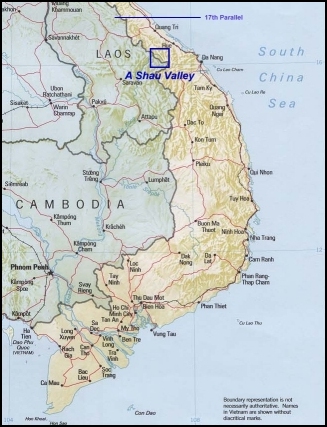
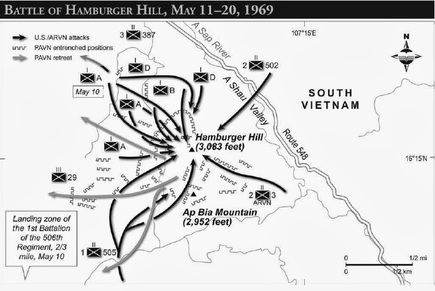
withdraw from A Shau Valley in
1969. President Nixon wanted to bring American troops home and considered phased withdrawal from South Vietnam. After the FAILURE of the Vietcong's Tet Offensive in
1968, Vietcong prepared for another offensive in
1972 that is identified as the Nguyen Hue Campaign or the Easter Offensive. Vietcong assumed that the American capacity to fight the war is waning and it might be possible to overwhelm South Vietnam this round. However, the US responded with a series of operations identified as
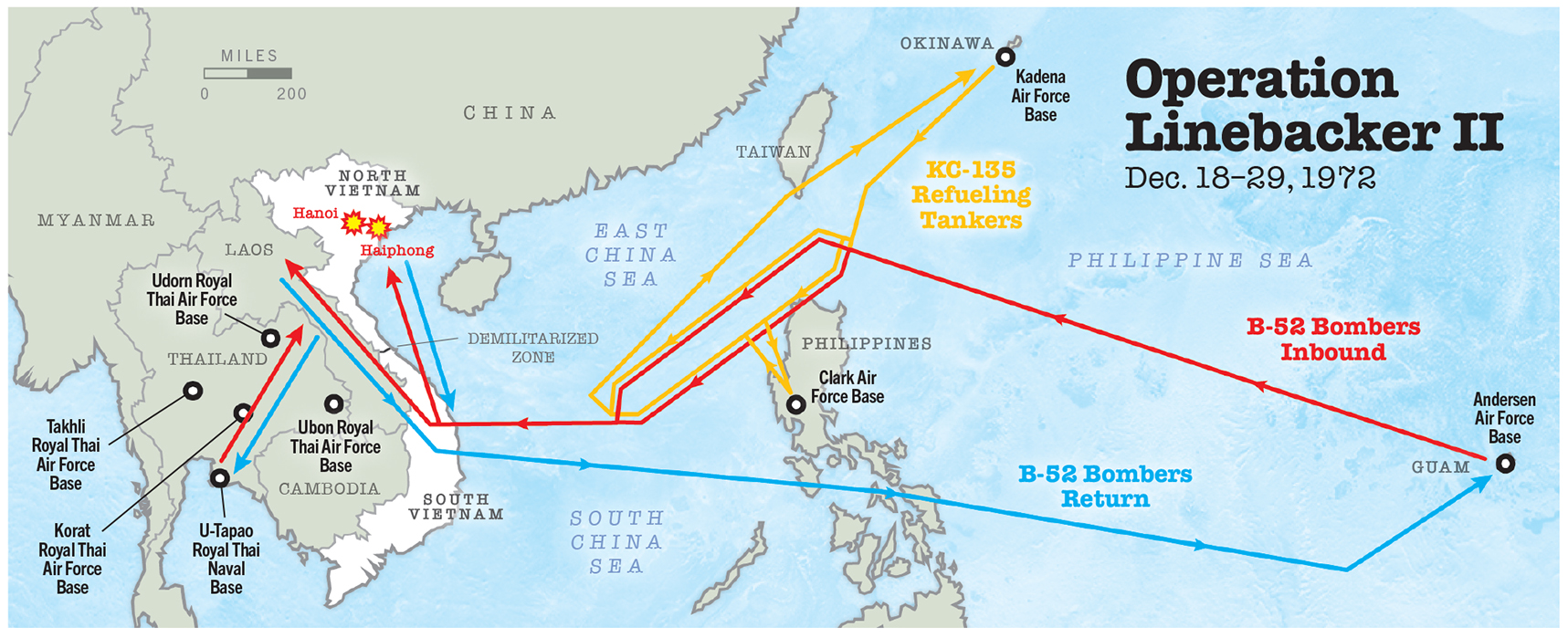
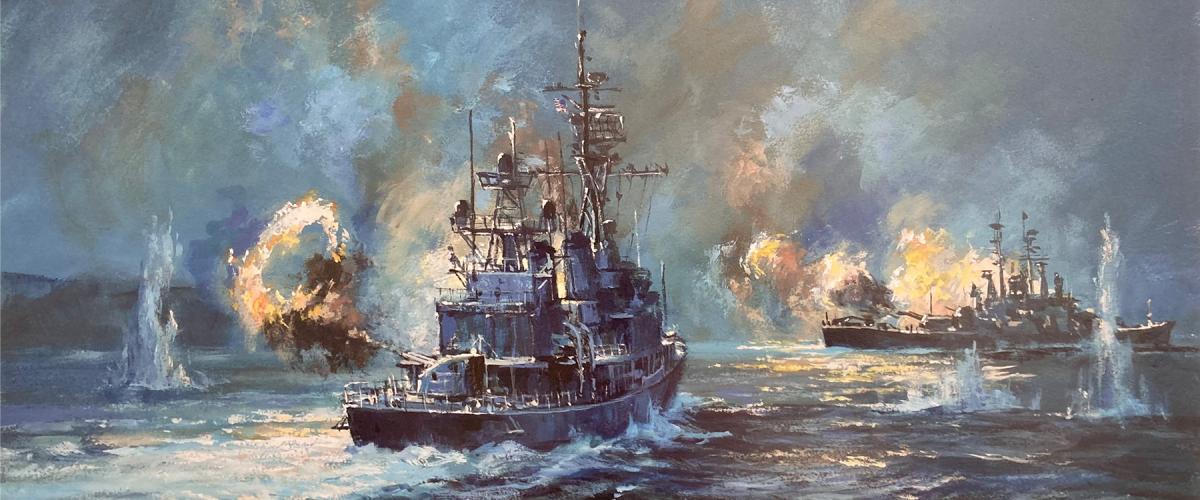
Operation Linebacker and
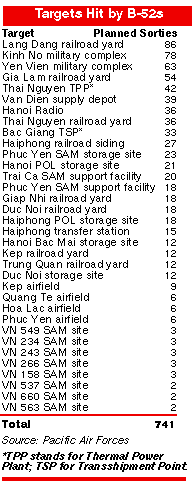
Operation Linebacker II with more accurate munitions to defeat Vietcong.
Link
General information in
here. Details in
here.
Large-scale battles also took place on the ground inside South Vietnam during
Operation Linebacker in
1972:
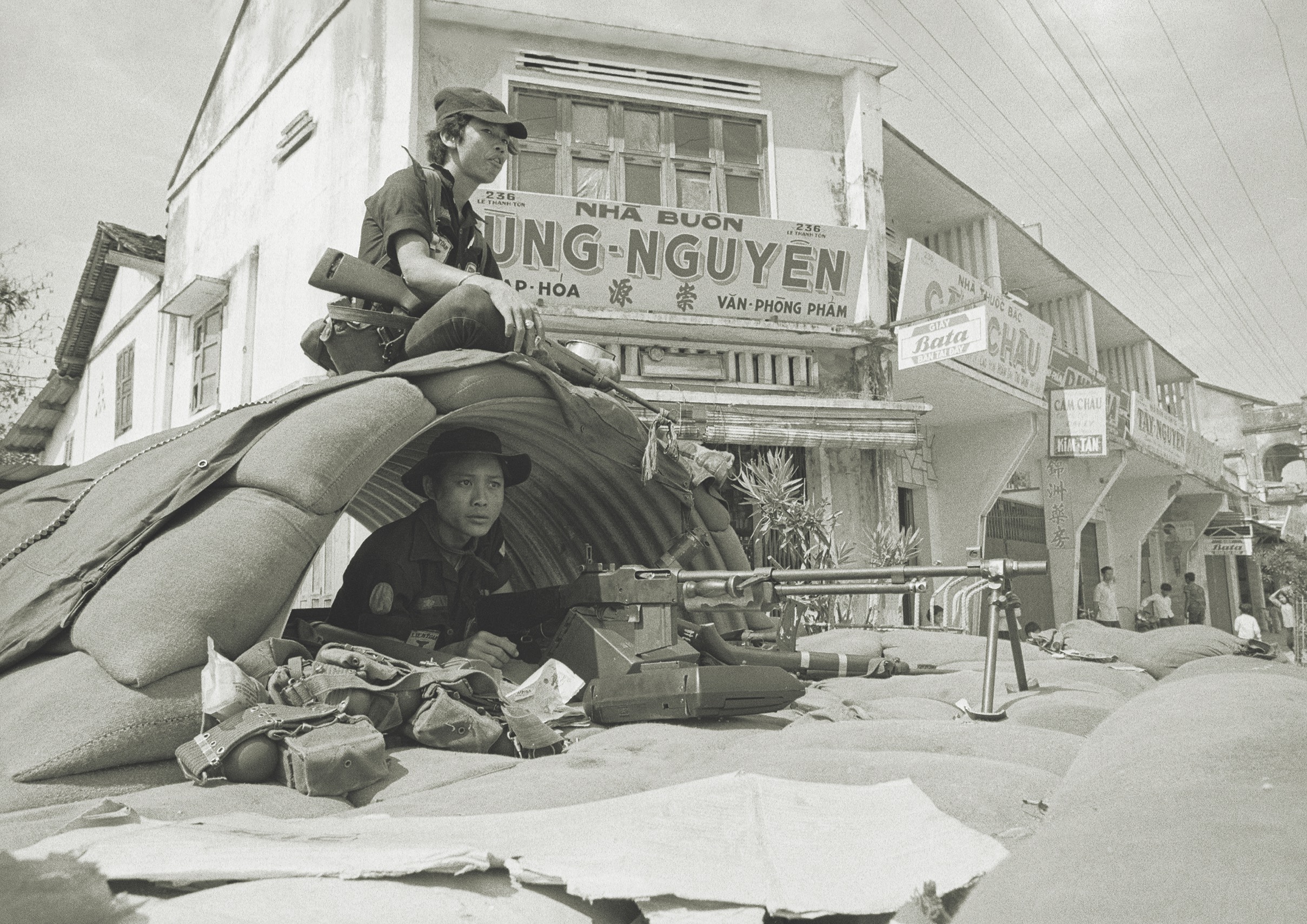
The North Vietnamese launch the Nguyen Hue Campaign, also known as the Easter Offensive, with a multipronged attack across the DMZ and the Laotian and Cambodian borders into multiple regions of South Vietnam. The attacking forces are well equipped: armed with new weapons, heavy artillery, and tanks from the Soviet Union and China. It is the largest offensive launched by the North Vietnamese Army in the war. There are fewer than 70,000 U.S. troops left in Vietnam.
U.S. military advisers play a crucial role rallying South Vietnamese units in retreat. After suffering heavy losses, the South Vietnamese army—with ample help from U.S. air support—slows and reverses the offensive by the end of the summer. They stabilize the front in Quang Tri Province and successfully hold out against attacks around Hue, Kontum, and Saigon.
The North Vietnamese lose much of their armor and equipment and as many as 100,000 troops. South Vietnamese casualties are approximately 43,000, including 10,000 killed. The Easter Offensive also results in the deaths of about 25,000 Vietnamese civilians and leaves almost one million homeless.
Link
More information in following links:
1972 - Operation Linebacker I
A look back on 50th anniversary of the Easter Offensive at how South Vietnamese victory against communist forces became a rationale for complete U.S. withdrawal and Nixon’s “peace with honor.”

www.historynet.com
1972 witnessed a full-court press by the U.S. Navy and Air Force, taking the Vietnam fight north of the 20th parallel and driving the North Vietnamese to the bargaining table.

www.usni.org
Vietcong considered ceasefire and negotiations with the US consequently. These talks are identified as
Paris Peace Talks.
----
Soviet Union and China transformed Vietcong into a well-armed fighting force and Vietcong showed impressive resolve to fight in war. The US-led forces could not apply combined arms tactics in different sectors of North Vietnam due to regional topography composed of mountains, marches and dense forests in large part. Vietcong also created
underground infrastructure and
setup traps in different locations to make it even more difficult and costly for American troops to advance inside North Vietnam. The US-led forces used Air Power to attack Vietcong positions across the region but its impact varied as WW2 era bombs were found to be largely ineffective in Vietnamese topography. These findings sparked a shift towards development of precision munitions which produced much better effects in
Operation Linebacker II as noted above. The infrastructure that could withstand WW2 era bombs was taken out in minutes. However, President Nixon did not change his mind regarding withdrawal of American troops from South Vietnam.
The US-led forces managed to fight and defeat Vietcong in large-scale battles even in less favorable conditions but American political will to fight the war eroded due to mounting losses and
anti-war activism back home. Vietcong took 3 years to recover from the blows received during
Operation Linebacker and
Operation Linebacker II and overwhelmed South Vietnam in its next offensive in
1975 when South Vietnam was abandoned and left to its own devices. However, Ho Chi Minh's unification drive came at a great cost to the region in terms of lives lost and environmental degradation. Millions of people lost their lives in this armed struggle that serves as a reminder of the horrors of war and raises a question mark on policymaking and value placed on the lives of the people by some leaders.
Unexploded U.S. shells killed four people in February alone, after the Trump administration cut funding to demining efforts.

theintercept.com