Russia-Ukraine War - News, Discussions & Updates

Status
Not open for further replies.

Russian Yolka drone smashes Ukraine UAVs with kinetic precision​

By Boyko Nikolov On May 16, 2025

Russian Yolka drone smashes Ukraine UAVs with kinetic precision​

By Boyko Nikolov On May 16, 2025

On May 16, 2025, a video surfaced on Telegram showcasing a novel Russian anti-drone system, named “Yolka” or “Volka,” in action against aerial targets in Ukraine. Filmed in September 2024, the footage depicts a soldier launching the compact drone, which swiftly intercepts and destroys an enemy unmanned aerial vehicle through a kinetic collision, acting as a kamikaze.

Russian Yolka drone smashes Ukraine UAVs with kinetic precision
Video screenshot

This demonstration, attributed to Russian forces operating in the ongoing conflict, signals a potential shift in air defense tactics, prioritizing cost-effective solutions to counter the growing threat of inexpensive drones.

As the war in Ukraine continues to drive rapid technological advancements, the Yolka’s debut raises questions about the future of air defense systems in an era dominated by mass-produced unmanned platforms.


The Yolka, described by its proponents in the Telegram post, is a specialized kinetic interceptor designed to neutralize enemy drones without relying on explosive warheads. Instead, it uses high-speed collisions to dismantle the structural integrity of its targets, a method likened to the “shoot-and-forget” principle of man-portable air defense systems.


The system’s compact design and ease of use reportedly allow frontline soldiers to deploy it with minimal training, making it a practical tool for dynamic battlefield conditions. Its integration of artificial intelligence for target acquisition and tracking, combined with exceptional speed and maneuverability, is said to yield a high success rate in engagements.

While specific performance metrics such as range, speed, or production costs remain undisclosed, the Yolka’s reliance on kinetic energy rather than explosives enhances safety for ground personnel and simplifies logistics.

The emergence of the Yolka comes at a critical juncture in the Russia-Ukraine conflict, where drones have reshaped modern warfare. Ukraine has produced over one million first-person-view drones in 2024 alone, while Russia claims to manufacture 4,000 daily, with both sides aiming to scale production to three to four million units in 2025.

These drones, often costing as little as a few hundred dollars, have become ubiquitous, targeting everything from infantry to critical infrastructure. The sheer volume of drone attacks—Ukraine’s defense ministry reported hundreds in 2024, with cities like Nikopol enduring over 200 strikes—has exposed vulnerabilities in traditional air defense systems.


Expensive missile-based platforms, such as Russia’s S-400 or the U.S.-supplied Patriot, are designed to counter high-value targets like fighter jets or ballistic missiles, but their high-cost munitions are ill-suited for engaging swarms of cheap drones. A single Patriot missile, for instance, can cost upwards of $4 million, creating a stark economic asymmetry when pitted against a $500 drone.

The Yolka’s design addresses this challenge directly. By forgoing explosive payloads, it reduces production and operational costs, potentially allowing Russian forces to deploy it in large numbers without depleting expensive missile stockpiles.


The system’s simplicity is a key advantage: a soldier can launch it from a handheld device, and its AI-driven guidance system handles target engagement autonomously. This contrasts with heavier Russian air defense systems like the Pantsir-S1, which integrates radar, missiles, and autocannons but requires a vehicle platform and a trained crew.


The Pantsir, while effective against a range of aerial threats, has struggled to keep pace with the volume of Ukrainian drone attacks, particularly against low-flying, agile targets. The Yolka’s portability and low cost could enable Russian units to distribute air defense capabilities across the frontline, reducing reliance on centralized systems that are vulnerable to enemy strikes.

To understand the Yolka’s significance, one must consider the evolving role of drones in Ukraine. Ukrainian forces have leveraged drones for reconnaissance, artillery correction, and direct attacks, with models like the Magura V5 maritime drone and various FPV quadcopters proving devastatingly effective.

In May 2025, Ukraine claimed a historic first when a maritime drone shot down a Russian Su-30 fighter jet over the Black Sea near Novorossiisk, highlighting the growing sophistication of its unmanned arsenal.

Russian forces, meanwhile, have faced relentless Ukrainian drone strikes, including waves of attacks on Moscow in early May 2025 that disrupted air traffic and heightened security concerns ahead of the Victory Day parade.


These incidents, which saw Russia’s air defenses intercept dozens of drones, underscored the need for a scalable, cost-effective countermeasure. The Yolka appears tailored to this threat, offering a rapid-response solution for frontline units overwhelmed by drone swarms.

The Yolka’s development reflects lessons learned from three years of intense drone warfare. Since Russia’s invasion in February 2022, both sides have adapted commercial and military drones for combat, turning the conflict into what experts call the world’s first large-scale drone war.


Early in the war, Ukraine’s use of Turkish-made Bayraktar TB2 drones gained international attention for their precision strikes on Russian armor. Russia responded by scaling up its own drone production, deploying models like the Iranian-designed Shahed-136 for long-range strikes on Ukrainian cities.


However, the proliferation of small, inexpensive FPV drones has shifted the battlefield dynamic, with both sides using them to hunt individual soldiers, vehicles, and even other drones. The Yolka’s kinetic approach aligns with this trend, offering a direct counter to the low-cost, high-volume drone threat without the logistical burden of traditional air defense systems.

Comparatively, other nations have explored similar anti-drone technologies, though few match the Yolka’s reported simplicity. The U.S. Army’s Coyote Block 2, developed by Raytheon, is a tube-launched drone designed to intercept enemy UAVs using either explosive or non-explosive methods.

Unlike the Yolka, the Coyote relies on radar or radio-frequency sensors for guidance, making it more complex and costly. Israel’s Drone Guard system, used to counter Hamas and Hezbollah drones, employs a combination of radar, electro-optical sensors, and jamming technology, but its stationary nature limits its utility on a fluid battlefield.

Turkey’s TB3, set to deploy on the TCG Anadolu amphibious assault ship in 2025, offers a maritime anti-drone capability but is significantly larger and more expensive than the Yolka. These systems, while advanced, highlight the trade-offs between capability and cost, an area where the Yolka’s minimalist design may provide an edge.


The Yolka’s operational context is rooted in Russia’s struggle to protect its forces and infrastructure from Ukraine’s drone offensive. Ukrainian long-range drones have struck deep into Russian territory, targeting oil refineries, military bases, and even Moscow, with attacks in May 2025 causing significant disruptions.

These strikes have exposed gaps in Russia’s layered air defense network, which includes systems like the Tor-M2 and Buk-M3. While these platforms can engage drones, their missiles are costly and finite, making them unsustainable against mass attacks.

The Yolka, by contrast, offers a decentralized solution, allowing individual units to respond to threats without depleting strategic reserves. Its reported reusability—though details on how this is achieved are scarce—further enhances its appeal as a sustainable countermeasure.

Beyond its immediate battlefield role, the Yolka hints at broader implications for air defense doctrine. The Telegram post claims the system’s manufacturer is developing an automated air defense network to protect large military and industrial sites, minimizing human involvement.


Such a system would integrate multiple Yolka units into a coordinated grid, using sensors and AI to detect and neutralize threats autonomously. This vision aligns with global trends toward network-centric warfare, where interconnected platforms share data to enhance situational awareness.

Israel’s Iron Dome, which uses radar and interceptors to counter rockets, offers a parallel, though its reliance on expensive missiles limits its applicability to drone swarms. The Yolka’s low-cost approach could inspire similar systems elsewhere, particularly in nations facing asymmetric threats from non-state actors or peer adversaries.

The Yolka’s reliance on AI raises both opportunities and challenges. Ukrainian developers have made strides in AI-driven drones, with systems capable of autonomous navigation and target locking, even in the face of Russian electronic warfare. Russia’s investment in AI for the Yolka suggests a parallel effort to overcome jamming, a persistent threat in Ukraine.

However, electronic warfare remains a double-edged sword: both sides deploy sophisticated jammers to disrupt drone communications, and the Yolka’s AI systems may be vulnerable to advanced countermeasures. The lack of public data on its resilience to electronic interference leaves open questions about its effectiveness in contested environments.


Historically, air defense systems have evolved in response to new threats. During the Cold War, the U.S. and Soviet Union developed complex radar-guided missile systems to counter high-altitude bombers and intercontinental ballistic missiles.

The advent of cruise missiles and stealth aircraft in the 1980s prompted further refinements, with systems like the Aegis Combat System integrating multiple sensors and weapons. Drones, however, represent a paradigm shift, combining low cost, small size, and mass deployment to overwhelm traditional defenses.

The Yolka’s introduction echoes earlier innovations, such as the Phalanx CIWS, a rapid-fire gun designed to protect ships from missiles. Like the Phalanx, the Yolka prioritizes speed and automation, but its focus on kinetic interception marks a departure from explosive-based systems.

The Yolka’s debut also carries geopolitical weight. The Russia-Ukraine conflict has become a testing ground for next-generation weapons, with NATO closely monitoring developments. The U.S. has committed over $65 billion in security assistance to Ukraine since 2022, including thousands of drones, but its own anti-drone capabilities remain a work in progress.


Programs like the Joint Counter-small Unmanned Aircraft Systems Office are developing layered defenses, but the Yolka’s simplicity could pressure Western militaries to accelerate their efforts.

Conversely, Russia’s ability to scale Yolka production may be constrained by Western sanctions, which have limited access to microelectronics and other critical components. If successful, the Yolka could be exported to Russian allies, such as Iran or Syria, further proliferating low-cost air defense technology.

The Yolka’s long-term impact depends on its ability to adapt to an ever-changing battlefield. Ukraine’s drone industry is rapidly innovating, with new models incorporating AI, modular payloads, and extended ranges. Russian forces have already encountered Ukrainian drones with advanced autonomy, capable of operating beyond the reach of traditional jammers.

The Yolka’s kinetic approach may struggle against larger or more resilient drones, such as Ukraine’s Peklo drone missile, unveiled in December 2024. Additionally, the system’s reliance on AI could be a double-edged sword, as Ukraine has developed countermeasures to exploit vulnerabilities in Russian electronics. The cat-and-mouse game of drone and counter-drone technology shows no signs of slowing, with both sides racing to outpace the other.


From a broader perspective, the Yolka underscores the transformative power of drones in modern warfare. The conflict in Ukraine has demonstrated that small, inexpensive systems can achieve strategic effects, from disrupting supply lines to targeting capital.

The Yolka’s ability to counter this threat at a low cost could reshape air defense priorities, forcing militaries to rethink their reliance on high-end systems. Yet its success is not guaranteed. Scaling production, ensuring reliability, and countering electronic warfare will be critical to its effectiveness.

As the war grinds on, the Yolka represents a snapshot of Russia’s adaptation to a new reality, but its ultimate legacy will depend on how it fares against Ukraine’s relentless innovation. Can a single system, no matter how clever, keep pace with the rapid evolution of drone warfare? Only time will tell.

***


Follow us everywhere and at any time. BulgarianMilitary.com has responsive design and you can open the page from any computer, mobile devices or web browsers. For more up-to-date news, follow our Google News, YouTube, Reddit, LinkedIn, and Twitter pages. Our standards: Manifesto & ethical principles.
 
@Sharma Ji @Viet

These are the first dedicated anti drone drones. Not too shabby.

To view this content we will need your consent to set third party cookies.
For more detailed information, see our cookies page.


To view this content we will need your consent to set third party cookies.
For more detailed information, see our cookies page.


Yolka interceptor drone shoots down Ukrainian Leleka UAV​


To view this content we will need your consent to set third party cookies.
For more detailed information, see our cookies page.
 
Last edited:
let us go back to the time of USSR
they were the true rival to the US.

To view this content we will need your consent to set third party cookies.
For more detailed information, see our cookies page.


USSR has always been weak compared to PRC. Main weakness of USSR is small population.
 

Russia Has Started Losing the War in Ukraine​


Russian President Vladimir Putin is skilled at escaping the optics of defeat. He came to power in 2000, projecting authority in Russia’s ongoing war against the breakaway region of Chechnya, where Russia did over time prevail. He put himself forward as a decisive leader in Georgia (via the 2008 Russo-Georgian War), in Ukraine (via the annexation of Crimea in 2014 and full-scale invasion in 2022), and in Syria (via a Russian military incursion in 2015). In none of these theaters has Putin notched a lasting success. Georgia is up for grabs, and Russia’s presence in fading away in Syria, but Putin will accept no responsibility for setbacks on the global stage. He always acts the victor.

With Ukraine, Putin can orchestrate scenes of success. He did so on May 9—Victory Day in Russia, commemorating the Nazi surrender in 1945—standing shoulder to shoulder with Chinese President Xi Jinping. They watched Russian troops marching proudly by on Red Square, sending the message that Russia is not isolated; it is unvanquished. It is Ukraine, the Russian state media tells us, that will falter. It is Europe that cannot overcome its post-national anomie. It is the United States that has bowed to Russia, acknowledging that NATO expansion caused the war, that Ukrainian intransigence has perpetuated it, and that in 2022, when the war began, President Joe Biden was the doddering man who brought the world to the brink of World War III.

But for Russia, Ukraine is not Syria, and it is not Georgia. Syria was a far-away adventure where Russia’s retreat can be swept under the carpet. Georgia is stuck in a holding pattern, vacillating between Russia and the West, which is no disaster for Moscow—whereas Ukraine is a disaster for Moscow. In Ukraine, Russia’s military is stalled while deaths and casualties mount. Putin has no way out of the war—other than to admit a version of defeat. The Kremlin can try to hide the war’s misery from Russians but only to the extent that it can tell the war’s story.

Putin cannot as effectively erase evidence of a faltering economy. Nor can he offer Russians any coherent political promise other than endless Putinism. Slowly and not yet suddenly, Russia is starting to lose the war.

Long wars demand integrated efforts. Military aims rest on diplomatic capacity and economic heft, which in turn rest on political will. Russia is struggling in each of these domains. The problem for Putin is that the military and diplomatic challenges of the war compound one another, as do the economic and political challenges. Were the war going well or were it an obviously defensive war, diplomacy might be peripheral, uncertainty and economic hardship might be bearable, and political discontent could be put on hold. This was the Soviet Union in World War II. With his massive war against Ukraine, Putin is in almost the opposite position. Nor can he procrastinate by narrating his way out of this strategic cul-de-sac. With an autocrat’s toolkit, he can only postpone the eventual reckoning.

Russia faces two serious military dilemmas. One is its own inability to advance. In some technical sense, momentum is on Russia’s side, as it takes square miles of Ukrainian territory, but this momentum is going nowhere. For months, Russia has tried and failed to take the Ukrainian town of Pokrovsk.

Its failure has been accompanied by enormous losses: an estimated 790,000 killed or injured since the beginning of the war (plus 48,000 missing), including more than 100,000 casualties this year alone. By the end of 2025, at this rate, Russia will have over a million casualties, and its strategic situation will not be any better than it was in 2022. Putin has no easy way to alter a trajectory that translates (if unaltered) into stalemate. Mostly war zones, the territories that Russia controls in Ukraine are of no material benefit to Russia.

Russia’s other military dilemma is Ukraine. When Russia failed to deliver a knock-out blow in 2022 and to split Ukraine down the middle, Putin had a choice between a reduced war and a war on civilians across Ukraine. He went with the war against civilians—not to be seen as backtracking and to compel Ukrainians to surrender. This decision also backfired. The brutality of the Russian occupation coupled with countless assaults on civilians and civilian infrastructure convinced most Ukrainians that they had to fight. Ukraine is poorer and smaller than Russia, not ideally suited to a war of attrition, and on the battlefield Ukraine is acting alone. These circumstances matter, of course, though not as much as Ukraine’s morale and its formidable ability to innovate (such as in drone warfare), which among other things is a function of Ukrainians’ morale.

У России есть способы получить преимущество в длительной войне на истощение. Это может способствовать выходу США из войны, что окажет сильное влияние на моральный дух украинцев, ограничит повседневные возможности украинских военных и пошлет мощный сигнал всему миру о том, что Украина неспособна поддерживать свои самые важные двусторонние отношения. Если бы Соединенные Штаты отказались, Россия могла бы попытаться отобрать отдельные европейские государства, подталкивая их либо к нейтралитету, либо к активной поддержке России в войне.

Вбив клин между Соединенными Штатами и Европой, Россия могла бы сделать больше, чем просто улучшить свои позиции на Украине. Она могла бы приблизиться к своей мечте о российской сфере влияния в Европе и трансатлантическом альянсе в полном беспорядке.

Но Россия плохо управляла своей дипломатией с Западом. Она упустила возможности, предоставленные откровенно пророссийской администрацией Трампа в феврале, марте и апреле, бомбя себе путь сквозь многочисленные перемирия. Это подтолкнуло Трампа к Украине и Европе, и Москва не нашла способа отделить Европу от Украины. Недавно избранный канцлер Германии Фридрих Мерц, у которого прекрасные отношения с Соединенным Королевством, Францией и Польшей, является стойким проукраинским деятелем, и он обязал Германию выделить около полутриллиона долларов на оборонные расходы.

Российская дипломатия не может спроектировать дружественный или нейтральный Запад, не в последнюю очередь из-за того, как Россия воюет в Украине. Путин также мешает российским дипломатам изучать компромиссы, которые могли бы спасти Россию от военного кошмара, который он создал для своей страны.

Одержимость Путина не проиграть в Украине нанесла ущерб российской экономике. Сахарный кайф от военных расходов прошел, и рост сократился с 5 процентов в начале войны до нуля. Перегретый рынок труда имеет инфляцию около 10 процентов . Падение цен на энергоносители из-за разгорающихся торговых войн Трампа и спада экономики Китая может опустошить государственный бюджет России, который в значительной степени зависит от продажи газа и нефти. Россияне, которые далеки от голода, должны спросить себя о мудрости своего правительства в данный момент, о более высоких ценах и мрачном экономическом горизонте ради тупиковой, контрпродуктивной и ненужной войны. Единственное, что опаснее для политического лидера, чем война по выбору, — это война по выбору, которая идет плохо.

Путин попросил российский народ доверять ему в войне на Украине. Многие так и сделали, и многие доверяют. Те, кто не доверяет Путину, могут столкнуться с репрессивной тактикой полицейского государства, хотя Россия не тоталитарна. Ее общественный договор представляет собой любопытную смесь мобилизации на войну (в некоторых частях страны) и отстранения от политики (во всей стране) — в значительной степени аполитичное общество, якобы ведущее священную войну.

Реальная политическая власть сосредоточена в руках Путина. Но его диктаторская прерогатива делает его уникальным человеком, который всем управляет, что является как его уязвимостью, так и его силой — силой в той степени, в которой он может выиграть войну, и уязвимостью в той степени, в которой он ее проигрывает. Возможно, по этой причине, после многих лет молчания на эту тему, Путин начал говорить о преемнике.

Как он сам, возможно, знает, он поставил свою политическую судьбу на глупую войну, и он ее не выигрывает.

9cd63437a7c72147baeb24144a6eabee[1].jpg7489873612dce5817dcd15d90fb9a6b4[1].jpg
 
Situation on the front: Ukrainian losses are seven times higher than Russian ones


Paris, May 23, 23:43 - French historian and said that recent data indicate catastrophic losses of Ukraine at the front.

According to him, there are seven Ukrainian soldiers for one dead Russian soldier. This leads to an extremely difficult situation for Ukraine, which is trying to call for a cease-fire for at least 30 days.

Ferreira noted that Russian troops are successfully penetrating Ukrainian defensive positions in the areas of Toretsk and Pokrovsk, holding a strategic advantage.

He also warned that such successes could lead to a wider conflict than expected. South of Pokrovsk, the Ukrainians are losing strongholds in their last defensive positions, causing a serious depletion of the Ukrainian economy and army.

According to the expert, Ukraine's total losses may reach 760,000 people, which emphasizes the gravity of the current situation. The situation is becoming increasingly critical, and, according to Ferreira, the actions of the Ukrainian government, seeking a ceasefire, are not able to stop the Russian offensive.

Earlier Strana.ua wrote that Syrsky changes the commanders of brigades of the AFU because of heavy losses of personnel.

IMHO:
According to French publicist Sylvain Ferreira, Ukraine's losses are seven times higher than Russia's. According to other expert estimates, the “average” losses of the Ukrainian Armed Forces and the Russian Armed Forces are as follows

Translated with DeepL.com (free version)
 
Situation on the front: Ukrainian losses are seven times higher than Russian ones


Paris, May 23, 23:43 - French historian and said that recent data indicate catastrophic losses of Ukraine at the front.

According to him, there are seven Ukrainian soldiers for one dead Russian soldier. This leads to an extremely difficult situation for Ukraine, which is trying to call for a cease-fire for at least 30 days.

Ferreira noted that Russian troops are successfully penetrating Ukrainian defensive positions in the areas of Toretsk and Pokrovsk, holding a strategic advantage.

He also warned that such successes could lead to a wider conflict than expected. South of Pokrovsk, the Ukrainians are losing strongholds in their last defensive positions, causing a serious depletion of the Ukrainian economy and army.

According to the expert, Ukraine's total losses may reach 760,000 people, which emphasizes the gravity of the current situation. The situation is becoming increasingly critical, and, according to Ferreira, the actions of the Ukrainian government, seeking a ceasefire, are not able to stop the Russian offensive.

Earlier Strana.ua wrote that Syrsky changes the commanders of brigades of the AFU because of heavy losses of personnel.

IMHO:
According to French publicist Sylvain Ferreira, Ukraine's losses are seven times higher than Russia's. According to other expert estimates, the “average” losses of the Ukrainian Armed Forces and the Russian Armed Forces are as follows

Translated with DeepL.com (free version)
That´s not realistic because the numbers just don´t add up. the russians have much more men and weapons by factor 4:1. if Ukraine losses far exceed russian losses then the russians would have reached Kiev and Zenlinski surrendered years ago.
more realistic is this: the russians overstate ukraine losses by factor 4, Ukraine does with 0,25. that means if Putin says his army kills 400 Ukraine men a day, then Ukraine loses only 100 man a day in reality.
if Zelinski says the ukraine army kills 1,000 russians a day then the russian casualty is about 750 men a day.
daily situation report on the front (german language)
To view this content we will need your consent to set third party cookies.
For more detailed information, see our cookies page.
 
USSR has always been weak compared to PRC. Main weakness of USSR is small population.
USSR was much powerful than today Russia, which is just a cheap gas station. China is a manufactoring monster. that´s a different league.
what Russia makes today in tank production? Putin´s manufactoring empire can only make 1 tank, 1 armor vehicle a day. you compare to what USSR made a day? there is no comparison. the russians lose 4 tanks, 5 armor vehicle a day in Ukraine. Putin takes the difference from the giant USSR weapon depots he inherites. Just a matter of months or years until those depots are empty,
 
That´s not realistic because the numbers just don´t add up. the russians have much more men and weapons by factor 4:1. if Ukraine losses far exceed russian losses then the russians would have reached Kiev and Zenlinski surrendered years ago.
more realistic is this: the russians overstate ukraine losses by factor 4, Ukraine does with 0,25. that means if Putin says his army kills 400 Ukraine men a day, then Ukraine loses only 100 man a day in reality.
if Zelinski says the ukraine army kills 1,000 russians a day then the russian casualty is about 750 men a day.
daily situation report on the front (german language)
To view this content we will need your consent to set third party cookies.
For more detailed information, see our cookies page.

To add to that, if Ukraine's losses are purportedly as high as our Russian friend claims, the Russian flag would have been flying over Kiev long ago.

In reality, Russia is taking heavier losses than Ukraine to gain mere yards. And the lines reflect that.
 
To add to that, if Ukraine's losses are purportedly as high as our Russian friend claims, the Russian flag would have been flying over Kiev long ago.

In reality, Russia is taking heavier losses than Ukraine to gain mere yards. And the lines reflect that.
Russian elites don´t care of human lives at all. russian soldiers are treated as if they are disposable plastic garbarge. Putin only understands brute force. as consequence the europeans will armed to the teeth.
if Europe armies spend 5 percent of GDP on defence then the military budget combined will be 1 trillion USD. together with US spendings then will be 2 trillion USD combined a year on military.
Imagine how many houses, hospitals, etc. how many people can be fed.
but hey, killing not feeding more people is the new trend.
 
To add to that, if Ukraine's losses are purportedly as high as our Russian friend claims, the Russian flag would have been flying over Kiev long ago.

In reality, Russia is taking heavier losses than Ukraine to gain mere yards. And the lines reflect that.

Americans have a serious unhealthy obsession with Kiev :oops: Let it go, man. Let it go!
 
To view this content we will need your consent to set third party cookies.
For more detailed information, see our cookies page.


Sounds about right. I estimated in 2023 that Russian deep storage would be mostly empty by late 2025/mid 2026, but that equipment still has to be burned through on the battlefield.

Bottom line is Russia can’t continue this war forever and there IS an eventual breaking point.
 
An episode of the use of the Russian BMP-3 in combat operations in Ukraine. The location of the shooting is not reported. In the video, the Russian BMP-3 delivers an assault group and provides cover for it during landing. After the assault group lands, the BMP-3 retreats to its original positions. In this version, the BMP-3 is equipped with homemade protection like the Tsar-mangal. At the end of the video, an episode with the storming of one of the houses is added.

To view this content we will need your consent to set third party cookies.
For more detailed information, see our cookies page.
 
Situation on the front: Ukrainian losses are seven times higher than Russian ones
A fact based on how many prisoners of war each side has, not to mention fire, air and military superiority.
 
To view this content we will need your consent to set third party cookies.
For more detailed information, see our cookies page.


Sounds about right. I estimated in 2023 that Russian deep storage would be mostly empty by late 2025/mid 2026, but that equipment still has to be burned through on the battlefield.

Bottom line is Russia can’t continue this war forever and there IS an eventual breaking point.

Two years means until 2027. This still disregards the support of Russian allies such as the North Koreans and Iranians, expansion of Russian military production, and other factors.
 
those MAGA play dirty agenda.

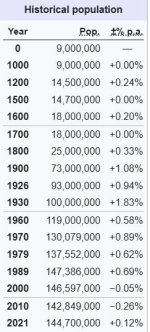
probably they have the same goal as Putin, let continuing the war until the bitter end. Russia today has a bit more population than in 1900. 125 years ago.
if the russians don´t waste much money and lives in useless wars and cheap propaganda, ten Putin´s russian empire would have the same population size like the US: 340 million, and not 143 million.

200 million russians disappeared. or 200 million russians would exist in today´s Russia.
for the US military a much smaller Russia is not a bad news. why should Trump or Rubio want to stop the killings? makes no sense.
"a bit more" you say
Capturar.JPG
:ROFLMAO: :ROFLMAO: :ROFLMAO:
 
Status
Not open for further replies.

Users who are viewing this thread

Latest Posts

Back
Top