Rogue communication devices found in Chinese solar power inverters

Hamartia Antidote

Elite Member
Joined
Nov 17, 2013
Messages
47,022
Reaction score
26,879
Reputation
622.7
Country of Origin
Country of Residence

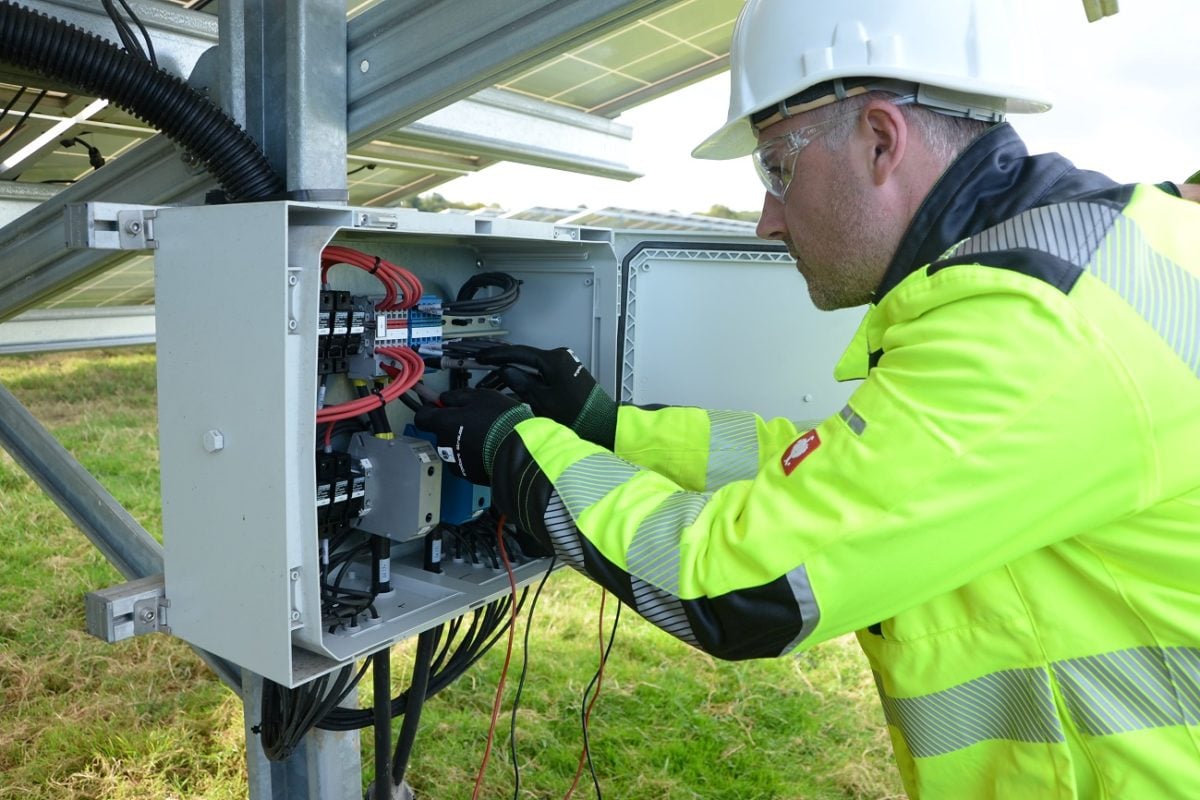
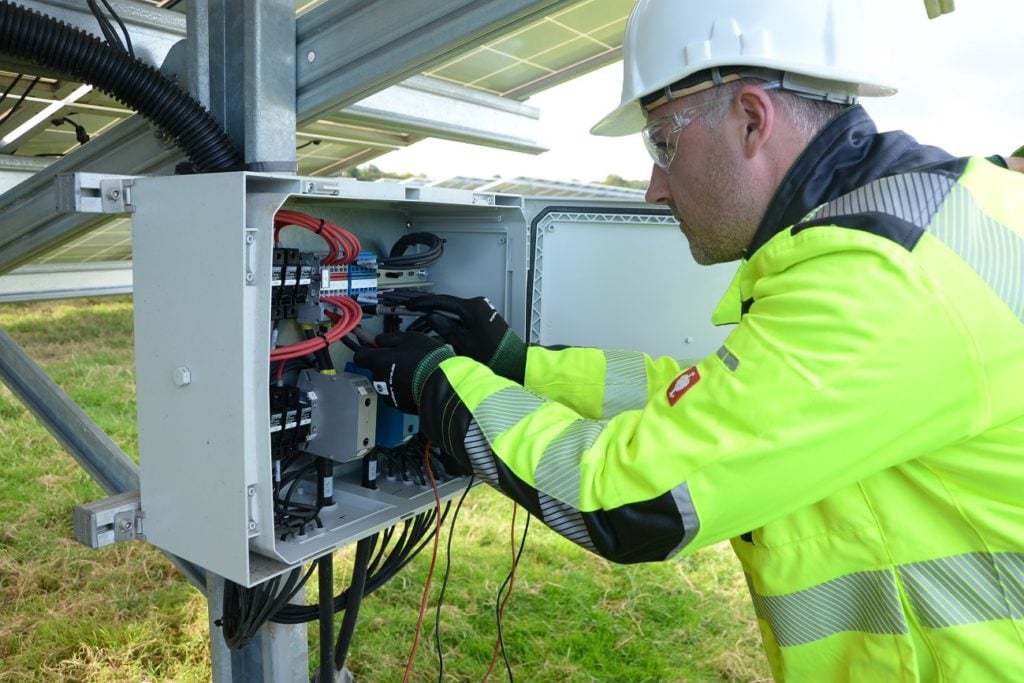
LONDON, May 14 (Reuters) - U.S. energy officials are reassessing the risk posed by Chinese-made devices that play a critical role in renewable energy infrastructure after unexplained communication equipment was found inside some of them, two people familiar with the matter said.
Power inverters, which are predominantly produced in China, are used throughout the world to connect solar panels and wind turbines to electricity grids. They are also found in batteries, heat pumps and electric vehicle chargers.

While inverters are built to allow remote access for updates and maintenance, the utility companies that use them typically install firewalls to prevent direct communication back to China.

However, rogue communication devices not listed in product documents have been found in some Chinese solar power inverters by U.S experts who strip down equipment hooked up to grids to check for security issues, the two people said.

Over the past nine months, undocumented communication devices, including cellular radios, have also been found in some batteries from multiple Chinese suppliers, one of them said.

Reuters was unable to determine how many solar power inverters and batteries they have looked at.

The rogue components provide additional, undocumented communication channels that could allow firewalls to be circumvented remotely, with potentially catastrophic consequences, the two people said.

Both declined to be named because they did not have permission to speak to the media.

"We know that China believes there is value in placing at least some elements of our core infrastructure at risk of destruction or disruption," said Mike Rogers, a former director of the U.S. National Security Agency. "I think that the Chinese are, in part, hoping that the widespread use of inverters limits the options that the West has to deal with the security issue."

A spokesperson for the Chinese embassy in Washington said: "We oppose the generalisation of the concept of national security, distorting and smearing China's infrastructure achievements."

Using the rogue communication devices to skirt firewalls and switch off inverters remotely, or change their settings, could destabilise power grids, damage energy infrastructure, and trigger widespread blackouts, experts said.

"That effectively means there is a built-in way to physically destroy the grid," one of the people said,
The two people declined to name the Chinese manufacturers of the inverters and batteries with extra communication devices, nor say how many they had found in total.

The existence of the rogue devices has not previously been reported. The U.S. government has not publicly acknowledged the discoveries.
Asked for comment, the U.S. Department of Energy (DOE) said it continually assesses risk associated with emerging technologies and that there were significant challenges with manufacturers disclosing and documenting functionalities.
 

China-made solar parts under scrutiny after Spain-Portugal power cut​


PARIS -- Recent power outages in Spain and Portugal have focused attention on Europe's solar energy infrastructure, which sources its parts almost entirely from China.

The cause of the widespread late-April blackout in the two countries is still under investigation. Officials in Spain, which trades energy with its smaller neighbor and relies on renewables to meet over half its needs, made conflicting statements this week about whether a cyberattack had been ruled out. What is certain, though, is that the outages have highlighted cybersecurity weaknesses.
 

Europe considers ban on Chinese solar inverters, citing cybersecurity concerns​


Europe is grappling with growing concerns over the cybersecurity risks posed by Chinese-made photovoltaic inverters, prompting discussions about restricting high-risk suppliers from connecting to its power systems. The debate mirrors the 2019 US ban on Huawei solar inverters, which cited potential remote control threats to the power grid, particularly during wartime.


The European Solar Manufacturing Council (ESMC) has proposed an EU "Inverter Security Toolbox," modeled after the 5G security framework, to address vulnerabilities in grid-connected inverters, particularly those from Chinese manufacturers like Huawei and Sungrow.

The urgency stems from Europe's heavy reliance on Chinese solar equipment: 95% of solar modules and over 80% of inverters are sourced from China, with Huawei and Sungrow controlling remote access to GW of Europe's solar capacity—equivalent to over 200 nuclear power plants. A SolarPower Europe report warns that a cyberattack on just GW of inverter capacity could destabilize the European grid.

In 2023, Chinese vendors supplied 70% of global secure solar inverters, with Huawei holding the largest market share. Recent developments have heightened scrutiny. Huawei has been expelled from European solar associations, including SolarPower Europe and BusinessEurope, while Eurelectric is considering suspending Huawei's membership by June.

EU and Belgian investigations since 2021 have uncovered Huawei's lobbying efforts, involving economic incentives and event invitations, leading to prosecutions and expanded bans on Huawei-linked lobbying groups.

The strategic importance of electricity, especially in conflict scenarios, amplifies these concerns. The 2019 US ban on Huawei inverters was driven by fears that adversaries could remotely disrupt critical applications like home electricity and electric vehicle charging. Although Huawei has exited the US market, other Chinese manufacturers have filled the gap, offering cost-competitive products that continue to dominate globally.

Critics argue that banning Chinese inverters could raise costs and disrupt supply chains, as European alternatives are 30-50% more expensive. The European Commission is assessing cybersecurity risks in the solar value chain, with the ESMC advocating for measures like Lithuania's 2023 ban on Chinese inverters. As Europe balances energy security and economic considerations, the proposed toolbox aims to enforce risk assessments and limit remote access by high-risk vendors.
 
So far, the only successful case of using hidden rogue comm devices to attack has been done by Israel. I guess it is really hard to fool the experts.

Sounds like a made up bullsh!t claim to use 'national security' as an excuse again to reduce competition for American suppliers.
 
Sounds like a made up bullsh!t claim to use 'national security' as an excuse again to reduce competition for American suppliers.
There may be some validity. Am going to wait to see how this develops.

FWIW, a few years ago, the company I work for excluded procurement of servers from Huawei over security issues.
 
How much electricity the solar panels generated? Oh, that’s top-tier national security—only the president is cleared to know that! :ROFLMAO: :ROFLMAO: :ROFLMAO:
 
Sounds like a made up bullsh!t claim to use 'national security' as an excuse again to reduce competition for American suppliers.

We'll find out soon enough when people start ripping their own modules apart to take a look.

It's hard to make a serious claim that some car model has bubble gum holding the battery terminals on when owners can simply pop their hoods and check for themselves. Nobody is going to junk their car without first looking.

Supply a picture of where it is...and let people look. It's as simple as that.
 
Last edited:

LONDON, May 14 (Reuters) - U.S. energy officials are reassessing the risk posed by Chinese-made devices that play a critical role in renewable energy infrastructure after unexplained communication equipment was found inside some of them, two people familiar with the matter said.
Power inverters, which are predominantly produced in China, are used throughout the world to connect solar panels and wind turbines to electricity grids. They are also found in batteries, heat pumps and electric vehicle chargers.

While inverters are built to allow remote access for updates and maintenance, the utility companies that use them typically install firewalls to prevent direct communication back to China.

However, rogue communication devices not listed in product documents have been found in some Chinese solar power inverters by U.S experts who strip down equipment hooked up to grids to check for security issues, the two people said.

Over the past nine months, undocumented communication devices, including cellular radios, have also been found in some batteries from multiple Chinese suppliers, one of them said.

Reuters was unable to determine how many solar power inverters and batteries they have looked at.

The rogue components provide additional, undocumented communication channels that could allow firewalls to be circumvented remotely, with potentially catastrophic consequences, the two people said.

Both declined to be named because they did not have permission to speak to the media.

"We know that China believes there is value in placing at least some elements of our core infrastructure at risk of destruction or disruption," said Mike Rogers, a former director of the U.S. National Security Agency. "I think that the Chinese are, in part, hoping that the widespread use of inverters limits the options that the West has to deal with the security issue."

A spokesperson for the Chinese embassy in Washington said: "We oppose the generalisation of the concept of national security, distorting and smearing China's infrastructure achievements."

Using the rogue communication devices to skirt firewalls and switch off inverters remotely, or change their settings, could destabilise power grids, damage energy infrastructure, and trigger widespread blackouts, experts said.

"That effectively means there is a built-in way to physically destroy the grid," one of the people said,
The two people declined to name the Chinese manufacturers of the inverters and batteries with extra communication devices, nor say how many they had found in total.

The existence of the rogue devices has not previously been reported. The U.S. government has not publicly acknowledged the discoveries.
Asked for comment, the U.S. Department of Energy (DOE) said it continually assesses risk associated with emerging technologies and that there were significant challenges with manufacturers disclosing and documenting functionalities.
My story of a rogue component:
So I was designing a circuit, and some ports were relaying more msgs than intended. Also, as communication started , mysteriously some of the power supplies started behaving weirdly.
After weeks of debugging, it turned out that some series resisters were running from port to port. They were causing reflections as well as supply loading as operation started.
Removed resisters, everything became ok.
Now in my opinion nothing is suspicious unless you know what it is and how to counter it.
 
My story of a rogue component:
So I was designing a circuit, and some ports were relaying more msgs than intended. Also, as communication started , mysteriously some of the power supplies started behaving weirdly.
After weeks of debugging, it turned out that some series resisters were running from port to port. They were causing reflections as well as supply loading as operation started.
Removed resisters, everything became ok.
Now in my opinion nothing is suspicious unless you know what it is and how to counter it.

As I said nobody is going to simply chuck tons of expensive parts into the trash without looking first.
 
Sounds like a made up bullsh!t claim to use 'national security' as an excuse again to reduce competition for American suppliers.

Actually it looks like Lithuania was the one who may have noticed it first as this article is from 2024

November 13, 2024

Lithuania to block Chinese inverters with cybersecurity legislation​


BayWa_r.e._inverter_cyber_security_-_BayWa_re.e.-1024x683.jpg


Lithuanian lawmakers have adopted legislation designed to limit the ability of Chinese inverter manufacturers to remotely access the country’s solar and wind power plants.

According to Lithuanian reports, 79 MPs voted in favour of the amendment to the Law on Electricity, which will impose greater security measures on electricity generation and information management systems to insulate them from the influence of “hostile countries”, as designated by the country’s National Security Strategy.
 
Last edited:

The West’s next mass blackouts might be ‘made in China’​


“Cheap, clean power, to give us energy security,” declared Ed Miliband, as he strode through a grassy field flanked by rows of solar panels.

With a film crew in tow, the Energy Secretary visited Castle Hill solar farm, in East Yorkshire, last Thursday to promote the launch of Great British Energy, the new publicly owned energy company.

If he gets his way, there will soon be many more sites like it. Under Labour’s clean power mission, the Government wants to almost triple the amount of British solar capacity by 2030.

Yet while ministers say this will ensure we “take back control of our energy system”, there are fears that sourcing large amounts of kit from China will achieve precisely the opposite.

Just hours before Miliband’s visit to Yorkshire, it was reported that American engineers had discovered the presence of secret components in Chinese-made power inverters used by US solar farms.

Power inverters take the DC electricity generated by solar panels and change it into a AC format the grid can use.

The parts, which were not included in any schematics, included communication devices such as cellular radios that would bypass other protections and allow the inverters to be remotely disabled.

In other words, it represents a potential “kill switch”.

If replicated elsewhere, experts warned it could pose a serious threat to grid security. Shutting off even three to four gigawatts (GW) of capacity at once can trigger a cascading wave of power cuts in a modern electricity network.

It was not clear this week which Chinese supplier or solar farm was involved. Nor was it immediately clear whether the presence of the hidden components was deliberate or a mistake. It is normal for equipment to have some internet-connected parts, usually to administer “over the air” software updates.

But the revelations have sent shockwaves through the solar industry and have triggered fresh scrutiny of Chinese suppliers and their role in Western infrastructure – particularly given China’s dominance over particular critical technologies.

In Britain for example, more than two fifths of imported solar panels come directly from China, according to HM Revenue & Customs. One solar panel executive said the true market share of Chinese suppliers may be even higher, given that some will be resold by companies based in Europe.
 
Actually it looks like Lithuania was the one who may have noticed it first as this article is from 2024

November 13, 2024

Lithuania to block Chinese inverters with cybersecurity legislation​


BayWa_r.e._inverter_cyber_security_-_BayWa_re.e.-1024x683.jpg


Lithuanian lawmakers have adopted legislation designed to limit the ability of Chinese inverter manufacturers to remotely access the country’s solar and wind power plants.

According to Lithuanian reports, 79 MPs voted in favour of the amendment to the Law on Electricity, which will impose greater security measures on electricity generation and information management systems to insulate them from the influence of “hostile countries”, as designated by the country’s National Security Strategy.

Same logic applies to them.
Making up stuff to protect their domestic industry without violating WTO rules.

In these days of IOT everything is supposed to be interconnected on the Web and accessible remotely -- even your toaster and fridge.
 
My story of a rogue component:
So I was designing a circuit, and some ports were relaying more msgs than intended. Also, as communication started , mysteriously some of the power supplies started behaving weirdly.
After weeks of debugging, it turned out that some series resisters were running from port to port. They were causing reflections as well as supply loading as operation started.
Removed resisters, everything became ok.
Now in my opinion nothing is suspicious unless you know what it is and how to counter it.

..and so it starts....

Denmark finds ‘suspicious’ components in key infrastructure imports​


The discovery raises concerns about espionage and energy security, say technology firms, who had intended to use the parts in green power infrastructure


Close-up of a circuit board with a microchip.

Security threats can come in the form of “hidden functions” in electronics, a Danish technology group said


Danish firms have found “suspicious” components added to east Asian circuit boards that were supposed to be built into the country’s green energy infrastructure, according to an industry body.

It has raised concerns about the potential for remote disruption of the power supply or digital espionage, coming a week after the US claimed to have identified “kill switches” in a consignment of solar panels and batteries from China.

So far the Danish authorities have been tight-lipped about the nature and apparent purpose of the extra electronics, as well as which country they had come from.

Green Power Denmark, an umbrella group for 1,500 Danish renewable technology companies, said the components from “the East” had been found during routine checks on a “development project” that had at no point been connected to the grid.

“It’s a clear warning: threats to energy security can hide in plain sight,” the organisation said. “The real danger isn’t always sabotage. It can also be unlisted components. Hidden functions. That’s why Danish energy companies dismantle and inspect before anything goes live.”

Jorgen Christensen, Green Power Denmark’s technical director, said there was no proof of foul play and it was possible that the mysterious electronics had been included to add some kind of innocent function to the circuit boards.

“It’s possible the supplier had no malicious intent,” he told Reuters. “We can’t say at this point. But that doesn’t change the fact that these components shouldn’t be there.”

Walburga Hemetsberger, head of the lobby group SolarPower Europe, said the discovery was highly concerning and called for an investigation.

However, the Danish government has yet to say whether it will intervene in the case.

In recent years experts have issued increasingly strident warnings about the security risk posed by China’s stranglehold over the supply of many categories of renewable energy components in Europe, such as batteries, turbines and the inverters used to smooth the voltage of power as it is fed into the grid.

The large-scale blackout that occurred a fortnight ago across much of Spain and Portugal, both of which depend heavily on Chinese-made solar energy infrastructure, has further concentrated minds on the issue.
 

Users who are viewing this thread

Pakistan Defence Latest

Back
Top