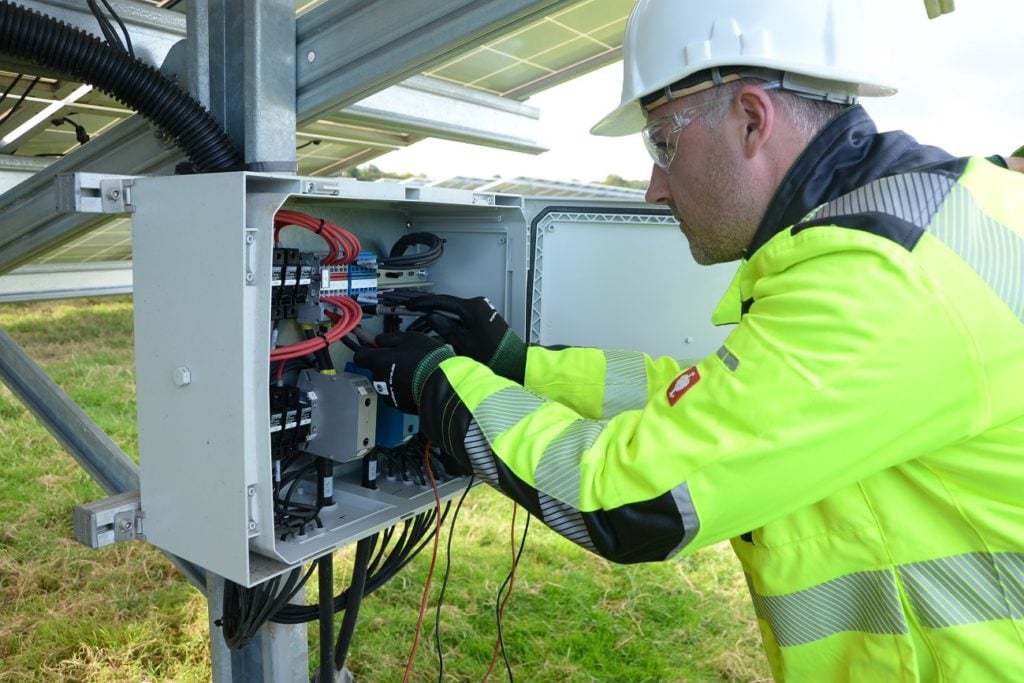
Rogue communication devices found in Chinese solar power inverters

While inverters are built to allow remote access for updates and maintenance, the utility companies that use them typically install firewalls to prevent direct communication back to China.

What does it mean by this???

So, are all USA devices plagued with inverters too?

Except, this article is complaining that China is also use the same tech, but only send data to China?
 
..and so it starts....

Denmark finds ‘suspicious’ components in key infrastructure imports​


The discovery raises concerns about espionage and energy security, say technology firms, who had intended to use the parts in green power infrastructure


Close-up of a circuit board with a microchip.

Security threats can come in the form of “hidden functions” in electronics, a Danish technology group said


Danish firms have found “suspicious” components added to east Asian circuit boards that were supposed to be built into the country’s green energy infrastructure, according to an industry body.

It has raised concerns about the potential for remote disruption of the power supply or digital espionage, coming a week after the US claimed to have identified “kill switches” in a consignment of solar panels and batteries from China.

So far the Danish authorities have been tight-lipped about the nature and apparent purpose of the extra electronics, as well as which country they had come from.

Green Power Denmark, an umbrella group for 1,500 Danish renewable technology companies, said the components from “the East” had been found during routine checks on a “development project” that had at no point been connected to the grid.

“It’s a clear warning: threats to energy security can hide in plain sight,” the organisation said. “The real danger isn’t always sabotage. It can also be unlisted components. Hidden functions. That’s why Danish energy companies dismantle and inspect before anything goes live.”

Jorgen Christensen, Green Power Denmark’s technical director, said there was no proof of foul play and it was possible that the mysterious electronics had been included to add some kind of innocent function to the circuit boards.

“It’s possible the supplier had no malicious intent,” he told Reuters. “We can’t say at this point. But that doesn’t change the fact that these components shouldn’t be there.”

Walburga Hemetsberger, head of the lobby group SolarPower Europe, said the discovery was highly concerning and called for an investigation.

However, the Danish government has yet to say whether it will intervene in the case.

In recent years experts have issued increasingly strident warnings about the security risk posed by China’s stranglehold over the supply of many categories of renewable energy components in Europe, such as batteries, turbines and the inverters used to smooth the voltage of power as it is fed into the grid.

The large-scale blackout that occurred a fortnight ago across much of Spain and Portugal, both of which depend heavily on Chinese-made solar energy infrastructure, has further concentrated minds on the issue.

That doesn't mean that U.S. technology is free from it, either.

The CIA is notorious for spying more than China.

If we create devices without backdoors for spying, we'll be accused of supporting terrorism and jailed if we don't cooperate.

Everyone knows about this not-so-secret knowledge.
 
That doesn't mean that U.S. technology is free from it, either.

Even if so...which sets off more alarm bells off in Pakistan.

1) India having the ability to sabotage your power grid.
2) China having the ability to sabotage your power grid.


1) Israel having the ability to sabotage your power grid.
2) China having the ability to sabotage your power grid.

There'a big difference in attitude and reactions.
 
Actually it looks like Lithuania was the one who may have noticed it first as this article is from 2024

November 13, 2024
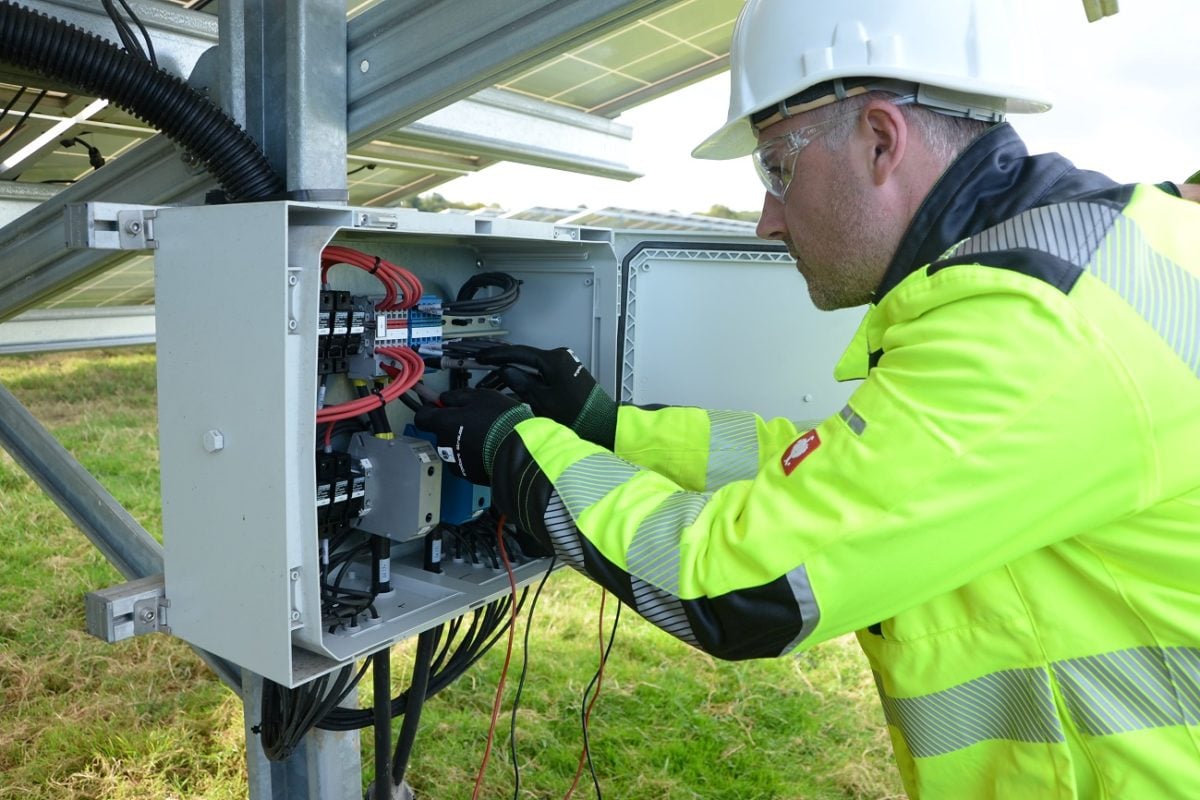
Lithuania to block Chinese inverters with cybersecurity legislation​


BayWa_r.e._inverter_cyber_security_-_BayWa_re.e.-1024x683.jpg


Lithuanian lawmakers have adopted legislation designed to limit the ability of Chinese inverter manufacturers to remotely access the country’s solar and wind power plants.

According to Lithuanian reports, 79 MPs voted in favour of the amendment to the Law on Electricity, which will impose greater security measures on electricity generation and information management systems to insulate them from the influence of “hostile countries”, as designated by the country’s National Security Strategy.

Lithuania backs to the stone age.

The word hostile means self-created enemy.
 
Even if so which sets off more alarms bells off in Pakistan.

1) India having the ability to sabotage your power grid.
2) China having the ability to sabotage your power grid.


There'a big difference in attitude.

So does USA and Germany.

The USA has a very bad reputation for sabotage, perhaps with the help of Germany.
 
So does USA and Germany.

The USA has a very bad reputation for sabotage, perhaps with the help of Germany.

Do you think Pakistan is planning on hosting Indian or Israeli troops any time soon vs the Chinese?


Seems Denmark is not even worried about any type of in-plain-view US military takeover originating from their own backyard nevermind some super-secret sabotage.
 
Last edited:
..and so it starts....

Denmark finds ‘suspicious’ components in key infrastructure imports​


The discovery raises concerns about espionage and energy security, say technology firms, who had intended to use the parts in green power infrastructure


Close-up of a circuit board with a microchip.

Security threats can come in the form of “hidden functions” in electronics, a Danish technology group said


Danish firms have found “suspicious” components added to east Asian circuit boards that were supposed to be built into the country’s green energy infrastructure, according to an industry body.

It has raised concerns about the potential for remote disruption of the power supply or digital espionage, coming a week after the US claimed to have identified “kill switches” in a consignment of solar panels and batteries from China.

So far the Danish authorities have been tight-lipped about the nature and apparent purpose of the extra electronics, as well as which country they had come from.

Green Power Denmark, an umbrella group for 1,500 Danish renewable technology companies, said the components from “the East” had been found during routine checks on a “development project” that had at no point been connected to the grid.

“It’s a clear warning: threats to energy security can hide in plain sight,” the organisation said. “The real danger isn’t always sabotage. It can also be unlisted components. Hidden functions. That’s why Danish energy companies dismantle and inspect before anything goes live.”

Jorgen Christensen, Green Power Denmark’s technical director, said there was no proof of foul play and it was possible that the mysterious electronics had been included to add some kind of innocent function to the circuit boards.

“It’s possible the supplier had no malicious intent,” he told Reuters. “We can’t say at this point. But that doesn’t change the fact that these components shouldn’t be there.”

Walburga Hemetsberger, head of the lobby group SolarPower Europe, said the discovery was highly concerning and called for an investigation.

However, the Danish government has yet to say whether it will intervene in the case.

In recent years experts have issued increasingly strident warnings about the security risk posed by China’s stranglehold over the supply of many categories of renewable energy components in Europe, such as batteries, turbines and the inverters used to smooth the voltage of power as it is fed into the grid.

The large-scale blackout that occurred a fortnight ago across much of Spain and Portugal, both of which depend heavily on Chinese-made solar energy infrastructure, has further concentrated minds on the issue.
But then investigation into the chips is not that difficult. A forensic check for chips and software may reveal some info here. Also regular monitoring of traffic generated by suspected circuits, dissection of Ethernet packets will reveal everything. Plus, emissions levels and type will also reveal almost everything.
All test must be done on the place where these components are supposed to work, as taking them out of the circuit might disable power supplies and hence nothing will be detected.
I mean little love with circuits and they will start speaking.
 
I mean little love with circuits and they will start speaking.

Well i guess that's the thing. You have "sleeper circuitry".
Only awakened when you need it. Normally acting innocently minding its own business.


Look at this mess due to a long sleep:
Their children do not speak Russian and reportedly did not know who Vladimir Putin was until their flight.


4fb5c870a20a2050896e1da191b67224

The Dultsev children do not speak Russian
 

South Korea probes security threats tied to Chinese-made inverters​


As concerns grow in the United States and other countries over the cybersecurity risks posed by Chinese-made solar inverters, the South Korean government has launched its own assessment of the domestic landscape.

The Ministry of Trade, Industry and Energy said May 26 it convened a meeting on May 21 with leading local solar power companies—including Hanwha Q CELLS, Hyundai Energy Solutions, and Hyosung Heavy Industries—to examine the current status of solar inverters in South Korea. These inverters, which convert direct current (DC) generated by solar panels into alternating current (AC) for residential and industrial use, are often described as the “brain” of solar power systems. However, their ability to operate remotely has sparked increasing concerns over potential cybersecurity vulnerabilities.

In the United States, suspicions intensified after a Chinese-made inverter was found to contain a communication device not disclosed in the product manual, raising fears that the Chinese government could exploit such hardware to interfere with power grids. Similar fears have emerged in Europe, particularly after a widespread blackout in Spain and Portugal in late April prompted speculation that a cyberattack targeting solar infrastructure may have been involved. On May 26, Japanese daily Nihon Keizai Shimbun reported that if Chinese inverters permit remote access to European power systems, the continent’s grid could face severe disruptions in the event of a cyberattack.

Industry sources estimate that between 90 and 95 percent of solar inverters used in South Korea are manufactured in China. Experts warn that these devices could be leveraged to extract sensitive information on the nation’s power grid and energy supply—or potentially be manipulated to trigger blackouts and other grid-related incidents.

Also on May 26, the Ministry announced that it will, for the first time, introduce a “security index” as a formal evaluation metric in selecting operators for wind power projects. The index will consider criteria such as the stability of power generation and supply equipment and the degree of contribution to the domestic supply chain. Companies using domestically manufactured components and infrastructure will receive higher scores, as part of a broader strategy to bolster the local industry and reduce exposure to cyber threats.
 

Published: 27 May. 2025, 17:37

Korean companies strongly argue that they have found no signs of security concerns so far.

"There have been no confirmed cases of suspicious equipment being found in inverters," a spokesperson for Hanwha Qcells told the Korea JoongAng Daily. "China-made inverters are cost-effective with reliable quality, while domestic capabilities in inverter manufacturing remain limited, with few local companies involved in production."

Inverter manufacturing isn't seen as a highly profitable venture in the domestic market, discouraging local production.

"Many firms rely on Chinese-made inverters as inverter production is not considered economically viable, as the business accounts for only a small portion of most companies’ operations," said a spokesperson for Hyosung Heavy Industries, adding that "no security-related issues have been detected in the products currently in use."
 
They then wrote this:

To view this content we will need your consent to set third party cookies.
For more detailed information, see our cookies page.
 
They then wrote this:

To view this content we will need your consent to set third party cookies.
For more detailed information, see our cookies page.


Chinese inverter security risks expose overreliance in Korea’s solar supply chain​

A massive solar panel complex in South Jeolla [JOONGANG ILBO]

A massive solar panel complex in South Jeolla [JOONGANG ILBO]


The discovery of unidentified devices in Chinese-made solar inverters in the United States has fueled tighter scrutiny in Korea — where most solar power components are imported from China — due to its heavy reliance on renewable energy tech import from its neighbor to the west.

Though the Korean government has not yet initiated a full-scale investigation, industry watchers caution that the threat is not limited to foreign markets, underscoring the urgent need for Korea to implement decisive and preemptive measures to secure its energy infrastructure.

What concerns Korea most is the potential for a security breach to expose sensitive information about the national power grid and electricity supply status — or worse, enable deliberate manipulation of inverters to trigger blackouts or large-scale grid disruptions.

Currently, around 95 percent of inverters, the key in solar panels behind the U.S. case, distributed in Korea are either manufactured in China or produced through original equipment manufacturing arrangements with Chinese factories and sold under domestic brand names. Beyond inverters, China maintains a dominant presence in Korea’s solar supply chain, particularly in the production of solar cells and modules.

“Korea may not be immune to such risks; While large firms typically conduct rigorous inspections when importing Chinese-made inverters, and may reject entire shipments if irregularities are found, smaller firms often lack the resources or technical capacity for such thorough vetting,” a source in one of the major solar firms in Korea.

“And if the Chinese suppliers were to deliberately falsify documentation or conceal malicious components, even large companies could find it virtually impossible to detect the threat in advance.”

Solar inverters, commonly regarded as the “brains” of solar power systems, play a critical role by converting the direct current (DC) electricity generated by solar panels into alternating current (AC) electricity suitable for residential, commercial, and grid applications. Inverters include remote access capabilities to enable updates and maintenance, and they are also used in a range of appliances, including wind turbines, batteries, heat pumps and vehicle chargers.

The U.S. Energy Department has discovered unexplained communication components inside China-made inverters that were not listed in product documents that may “allow firewalls to be circumvented remotely, with potentially catastrophic consequences," according to a Reuters report citing two unnamed sources from the Energy Department.

“Inverters are fundamentally software-driven devices, equipped with automatic update features that, in principle, should always notify the user of any changes. However, these functions could be exploited through covert communication modules, allowing malicious actors to remotely access systems via the network," said cybersecurity professor Lim Jong-in at Korea University, who served as the special cyber secretary under the former Yoon Suk Yeol administration.

"In worst-case scenarios, such infiltration could trigger operational shutdowns or even widespread blackouts," Lim said. “Given the ubiquity of Chinese components across the global supply chain, Korea’s industrial infrastructure is far from safe from these risks.”

The Ministry of Trade, Industry and Energy also held a meeting on May 21 with major domestic solar firms, including Hanwha Qcells, Hyundai Energy Solutions and Hyosung Heavy Industries, to review the current status of solar inverter deployment in the country and possible expected threats.

“The next steps will be determined following consultations with multiple inverter experts and industry specialists,” an official from the Industry Ministry told the Korea JoongAng Daily, adding that it currently has "no plans to conduct a comprehensive investigation into all inverters" distributed domestically.
 

U.S. authorities find no definitive evidence of hidden devices in Chinese solar inverters

New documents reveal US government found only two cases of communications in Chinese inverters that differed from official documentation. The discrepancies were deemed “non-malicious” and “non-intentional” by investigators.


January 28, 2026 Matthew Lynas

U.S. government analysis of Chinese-made inverters has found “no definitive evidence” of malicious wireless functions, according to a report seen by pv magazine examining the scope of wireless communications in inverters and the risks they pose.

The US Department of Energy (DOE) has shared its analysis with energy sector partners following media reports that indicated the presence of undocumented wireless communications in Chinese-made inverters, first broken by Reuters in May 2025.

The DOE’s National Laboratories inspected “approximately 30 inverters” and found two cases where observed communications differed from official documentation, but these were deemed “non-malicious” and “non-intentional”.

In its analysis, the DOE noted “as built” documentation often reflects only activated communications features, meaning owners and operators of inverters should verify the communication protocols on their device and disable those that are not needed. The analysis notes manufacturers could maintain access for warranty or safety purposes, but this is often specified in contract terms “as required.”

The DOE did warn that supply chain threats persist, and the “complexity of inverter supply chains” could create opportunities for cybersecurity breaches and malicious components. The department noted that undocumented or implanted communications in a single inverter would be “unlikely” to have grid-wide impacts, but coordinated manipulation across multiple sites could have larger effects, although such an attack would be more difficult to execute.

Managing supply chain risk was described by the DOE as a responsibility shared among engineers, manufacturers, integrators, service providers and system operators. The department highlighted its Supply Chain Cybersecurity Principles for suppliers and suggested operators adopt these for security and resilience activities.
 

Users who are viewing this thread

Latest Posts

Back
Top