It seems that my comment has broken the hearts of many who were surviving on scraps. I didn’t name any country or take any sides but I don’t know why some people are cheesed off.
Take Hazy videos from social media, edit them a little, add some masala and make big claims. That seems to be the bread and butter for many.
Here is a fairly well written account of this conflict. The author hasn’t taken any sides and analysed all the facts. And he has been critical of Indian effort too, so he is not taking any sides.
An early assessment of available evidence on what transpired in the recent India-Pakistan crisis and its implications

www.stimson.org
Executive Summary
Following a terrorist attack on April 22, India launched punitive strikes on Pakistan on May 7. This began a four-day conflict between India and Pakistan from May 7-10, which became the most serious military crisis in decades between the two rival nuclear states. Both sides have declared victory amid considerable misinformation and disinformation about what occurred. This essay seeks to offer a factually grounded narrative of the evolution of the crisis, while mindful of severe data limitation problems in the public domain that complicate analysis. Even with the limited or contested information currently available, some tentative conclusions are possible.
The conflict represents several military firsts:
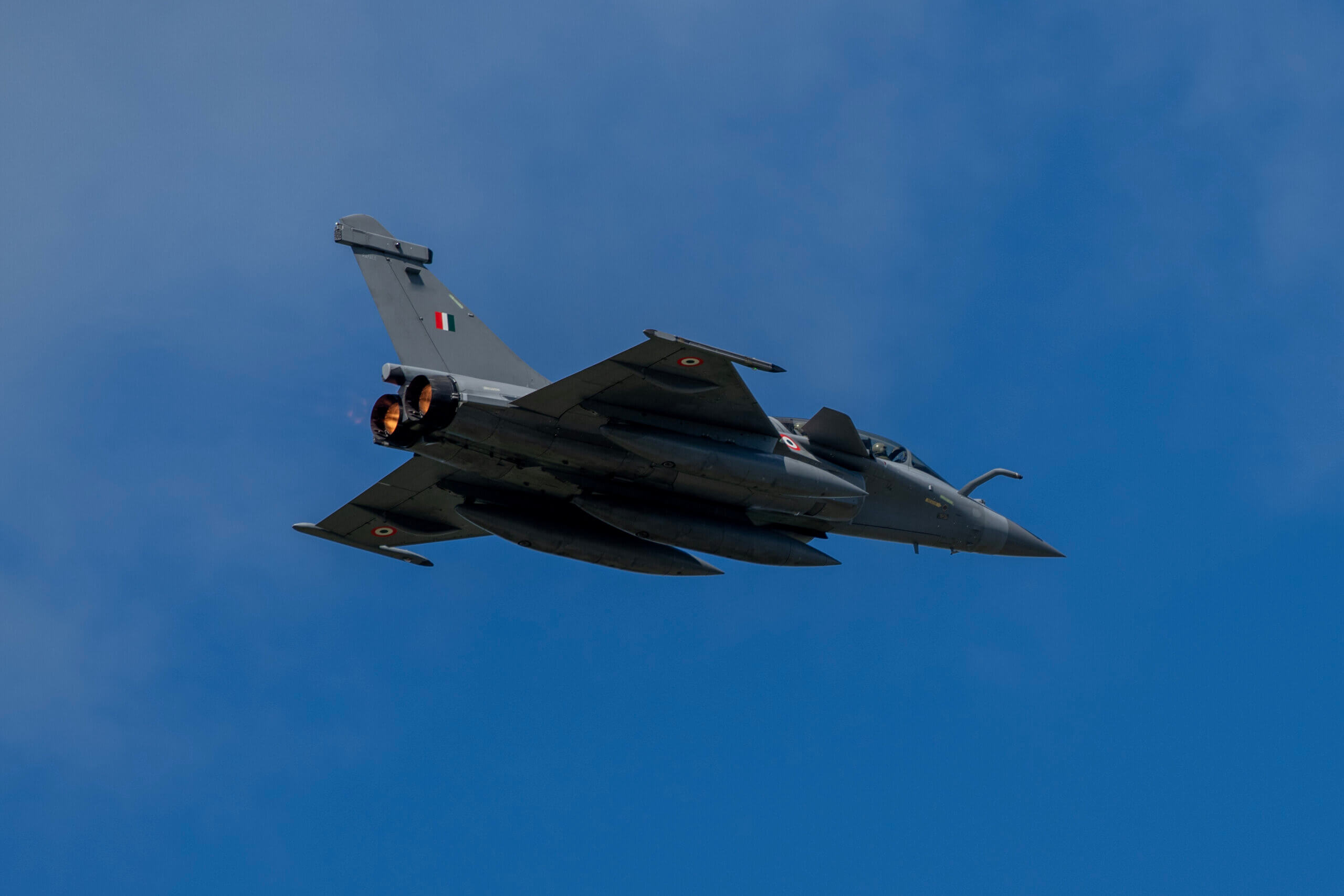
This was the first time India used cruise missiles on Pakistan, both the BrahMos cruise missile (co-developed with Russia) as well as the European SCALP-EG.
This was the first time Pakistan used conventionally armed short-range ballistic missiles on India, in the form of the Fatah-I and Fatah-II missiles and possibly other missile types.
While drones have been used sporadically along the Line of Control in Kashmir and elsewhere for smuggling, this is the first instance of drone warfare in the India-Pakistan rivalry where both sides employed drones with the intent of causing damage on the other.
Available information also permits several conclusions about the military situation during the crisis:
India demonstrated an ability to deliver precise standoff attacks across large swathes of Pakistan on each day of the conflict but especially May 7 and May 10. While Pakistani air defenses likely interfered with or intercepted some attempted strikes, Pakistan has a meaningful and serious vulnerability to Indian air attack.
There is no evidence of any manned aircraft crossing into the airspace of the other side, which indicates the seriousness with which both sides viewed the air defense threat of the other even on the final day of the conflict.
On the first day of hostilities, May 7, India likely lost several aircraft to Pakistani counterair operations. While Indian officials neither acknowledged nor denied the losses, they represent perhaps the most meaningful military costs India experienced during the Four-Day Conflict.
On May 8 through May 10, India’s integrated air and missile defense system appears to have largely defeated several waves of Pakistani drone attacks of ambiguous scope, scale, and intensity. On May 9-10, the Indian air and missile defense system appears to have worked against limited Pakistani short-range ballistic missile attacks as well.
After its apparent downing of Indian aircraft on May 7, Pakistan inflicted virtually no observable damage on Indian military units or facilities, though Indian officials have said there was some damage at four installations.
While attention focused primarily on the air and drone campaigns, most of the May 7 strikes occurred in or near Kashmir; subsequent fighting along the Line of Control in Kashmir was deadly and served as a major source of casualties for both sides.
Political conclusions are also possible:
The India-Pakistan relationship remains crisis-prone, and those crises are likely to continue to escalate in severity over time.
While the mutual possession of nuclear weapons heavily conditioned the responses of both sides, overt nuclear signaling was lower than in many prior India-Pakistan crises.
Both sides worked to calibrate escalation and showed some ability to manage escalation adequately. Both sides were sometimes surprised, however, by choices made by the other and, in some instances, likely viewed an adversary’s response as escalatory rather than proportional.
The crisis was costly in terms of human lives and expended or destroyed military equipment. Those costs will likely work to induce some caution in the bilateral relationship in the near-term, a probable principal aim of Indian policy.
The United States played a major role in crisis management, especially in the final hours of the crisis. While it is conceivable another actor could have played this role as crisis communicator of choice for both combatants, and some alternative third parties did play a role in crisis diplomacy, none of those alternative actors appear to have participated with the same efficacy as the United States.
This crisis involved the use of several weapons systems, often in innovative ways, which neither India nor Pakistan possessed at the time of their last crisis in 2019. While this crisis provides a baseline for the next India-Pakistan crisis, the pace of military technological change means that the contours of that next crisis might be meaningfully different. Both sides’ perceived setbacks and failures will serve as a major driver for defense acquisitions and doctrinal innovation.





 Federal cabinet gives nod to imposition of emergency in KP; summary sent to president (11 Viewers)

 PTI Murad Saeed in Afghanistan, was 'controlling KP govt' from there: Rana Sanaullah (1 Viewer)
 Iran - Israel/US War: Israel-US declare war on Iran, Iran responds (57 Viewers)