CSAW
Trusted Member


- Thread starter
- #256
".......
Hypersonic weapons come in two categories:
"When the enemy launches a booster stack, it's difficult to know if that warhead is going to follow a ballistic path or a hypersonic path," said Tyler.
With a traditional intercontinental ballistic missile, he explained, the warhead separates from its booster, then continues on a parabolic, gravity-driven trajectory to its target.
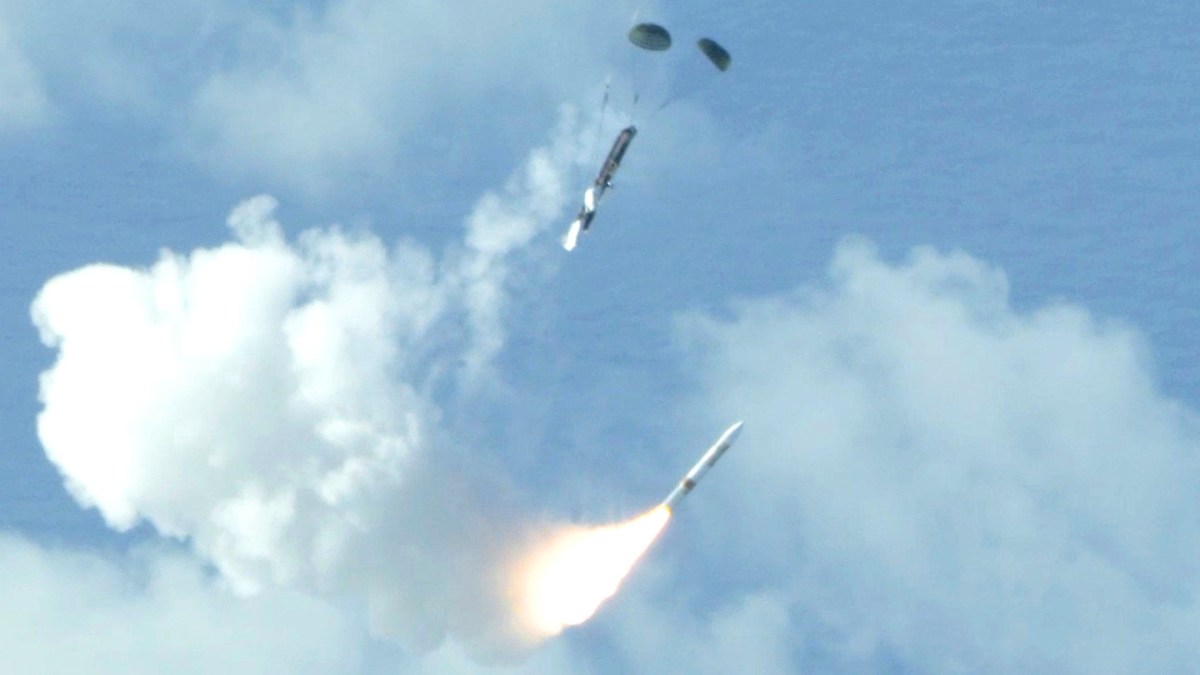
 www.twz.com
--------------------------------
www.twz.com
--------------------------------
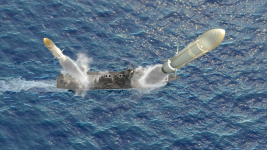
By contrast, a hypersonic weapon separates from its booster after the peak of its trajectory, accelerates toward the Earth using gravity, then performs a pitch maneuver to begin a flatter trajectory called the glide phase."
The potential solutions would be the Cold launch 360 degrees kinetic hard kill i.e hitting a Bullet with a Bullet or Soft kills .
==============================
Like any other missile fired against an air target, CAMM is subject to the missile engineer’s ‘rule of thumb’ that it needs to be able to pull a maneuver involving five times the ‘g’ of any defensive manoeuvre executed by the target.
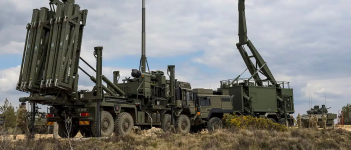
The resulting expenditure of energy by the missile will reduce its range to well below the safety distance used during missile trials. So that figure of over 25 km for the maximum range of CAMM represents a real-world value for a tactical engagement.
That said, a hostile aircraft unable or unwilling to conduct hard anti-missile manoeuvres might find it advisable to keep a slightly greater distance from a Sky Sabre battery."
Hypersonic weapons come in two categories:
- Hypersonic cruise missiles, which are powered by high-performance, air-breathing engines known as scramjets
- Hypersonic boost-glide weapons, which comprise a maneuverable glide vehicle launched on a ballistic missile or rocket booster
"When the enemy launches a booster stack, it's difficult to know if that warhead is going to follow a ballistic path or a hypersonic path," said Tyler.
With a traditional intercontinental ballistic missile, he explained, the warhead separates from its booster, then continues on a parabolic, gravity-driven trajectory to its target.
SM-6 Missile Closer To Proving Hypersonic Weapon Intercept Capability After Aegis Destroyer Test
The SM-6 is the U.S. military's most immediate option for tackling growing threats posed by advanced maneuvering hypersonic weapons.
www.twz.com
By contrast, a hypersonic weapon separates from its booster after the peak of its trajectory, accelerates toward the Earth using gravity, then performs a pitch maneuver to begin a flatter trajectory called the glide phase."
The potential solutions would be the Cold launch 360 degrees kinetic hard kill i.e hitting a Bullet with a Bullet or Soft kills .
==============================
Like any other missile fired against an air target, CAMM is subject to the missile engineer’s ‘rule of thumb’ that it needs to be able to pull a maneuver involving five times the ‘g’ of any defensive manoeuvre executed by the target.
The resulting expenditure of energy by the missile will reduce its range to well below the safety distance used during missile trials. So that figure of over 25 km for the maximum range of CAMM represents a real-world value for a tactical engagement.
That said, a hostile aircraft unable or unwilling to conduct hard anti-missile manoeuvres might find it advisable to keep a slightly greater distance from a Sky Sabre battery."
Last edited: